
Malatya Apricots
Malatya apricots are the apricots grown in the upper Euphrates basin of eastern Türkiye, where cold winters and hot, dry summers shape the fruit that is mostly dried and traded far beyond the province.
Malatya apricots are the fruit of apricot trees (Prunus armeniaca) grown around the city of Malatya in eastern Türkiye, in the upper basin of the Euphrates (Fırat) river. The province's continental climate, with long hot dry summers and genuinely cold winters, together with its fertile valley soils, gives the fruit its deep orange colour, firm flesh and pronounced sweetness. Most of the crop is not eaten fresh: it is dried, and the dried apricots of Malatya reach markets well beyond Türkiye. Apricots are the crop most closely identified with the province, and the name of the place has become attached to the product itself — the Malatya apricot has been granted geographical indication protection in Türkiye.
Where Apricots Grow in Malatya Province
Apricot orchards spread across the Malatya plain and onto the surrounding slopes, particularly in the districts of Battalgazi, Yeşilyurt, Akçadağ and Darende, as well as in villages around the provincial centre. The city stands at roughly 950 metres above sea level, and orchards are found both on the valley floor and higher up the hillsides, where air drainage and slightly later ripening can influence the harvest.
Cultivation is not confined to one valley. Apricot growing continues into neighbouring parts of the upper Euphrates basin and adjoining provinces, but the concentration of orchards, drying yards and related trades around Malatya is what has made the province the recognised centre of apricot production in Türkiye. The country is among the world's leading suppliers of dried apricots, and Malatya accounts for a large share of that supply.
Why the Climate and Soil Suit the Apricot
Apricot trees need a period of winter cold to break dormancy and flower properly, and Malatya's cold winters provide it. The summers that follow are hot, bright and dry, with low humidity and very little rainfall during the ripening period. These conditions allow the fruit to build sugar and to develop the firm texture that survives halving, pitting and drying.
Rain is more of a risk than a benefit at harvest time. Wet weather during ripening can split the fruit and encourage fungal problems, and the same dry air that ripens the crop also makes open-air drying possible: apricots can be cut and laid out to dry in the sun without spoiling, which is central to the region's apricot economy. Irrigation, drawn from rivers and snowmelt, carries the orchards through the dry summer months.
The recurring threat is spring frost. Because apricots flower early, a cold snap after blossoming can damage the crop, and growers in Malatya and other apricot districts watch the forecast closely every spring.
Varieties Grown Around Malatya
Several apricot varieties are grown in the province, and they are not interchangeable. Hacıhaliloğlu is the classic drying apricot of Malatya: relatively small, firm-fleshed and very sweet, it dries to the dense, deep orange fruit most closely associated with the region. Kabaaşı and Hasanbey produce larger fruit, valued both for eating fresh and for drying, while Soğancı, Çataloğlu and Alyanak are also cultivated. The mix allows growers to spread picking and processing across several weeks and to supply both the fresh market and the drying trade.
Blossom, Ripening and Harvest
Apricot trees in Malatya flower in early spring, generally in March, when the orchards briefly turn white and pink before the trees leaf out. Fruit develops quickly through late spring, and harvesting begins in summer. Early varieties are picked first, with the main drying crop, above all Hacıhaliloğlu, gathered through July and into August. Ripe fruit colours to orange and softens slightly, and picking is still largely done by hand so that the fruit reaches the drying stage intact.
The Drying Tradition
Drying is the defining step between orchard and market. Apricots are halved and stoned, then laid out in the sun on cloths, wooden frames or flat rooftops — a sight that becomes familiar across Malatya in high summer. The hot, dry air does the rest, concentrating flavour and sugar and giving the fruit a leathery, pliable texture. Some fruit is treated to hold its bright orange colour; apricots that are simply sun-dried without treatment darken to a browner tone and are known in Türkiye as gün kurusu, or sun-dried. The stones are not wasted either: the kernels are cracked out and eaten as a snack, while the shells have traditionally been burned as fuel.
How the Fruit Is Used
Fresh Malatya apricots are eaten in season, but the dried fruit has the longer reach. It is eaten as a snack and used in compotes, jams and stuffings, and it appears in both sweet and savoury cooking — dried apricots are a common addition to rice pilafs and to slow-cooked meat dishes, where their sweetness balances the other flavours. Apricot jam and apricot paste are long-established staples in Turkish kitchens, and apricot kernels are also pressed for oil.
Apricots in the Life of the Region
Apricot growing shapes the agricultural year in Malatya and much of the local economy built around it: nurseries, orchards, picking crews, drying yards, sorting and packing. The spring blossom and the summer drying season are part of the rhythm of the province, and the crop gives Malatya an identity that extends well past its borders. What makes the apricot of Malatya distinctive is not a single factor but the combination — cold enough winters for healthy flowering, hot and rainless summers for ripening and drying, and a long tradition of handling the fruit in the open air. For anyone following the links between land and produce in Türkiye, Malatya apricots are one of the clearest cases: a fruit that thrives in one particular set of soils, winters and dry summers, and a region that has organised itself around it.
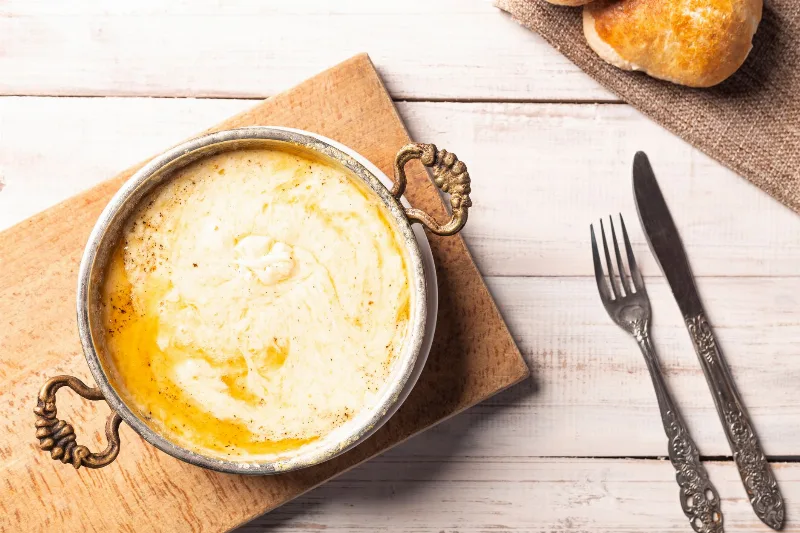
Kuymak
A soft, stretchy cornmeal dish cooked with butter and cheese, kuymak — also known as mıhlama — is a Black Sea breakfast staple served hot from the pan and eaten with bread.
Explore →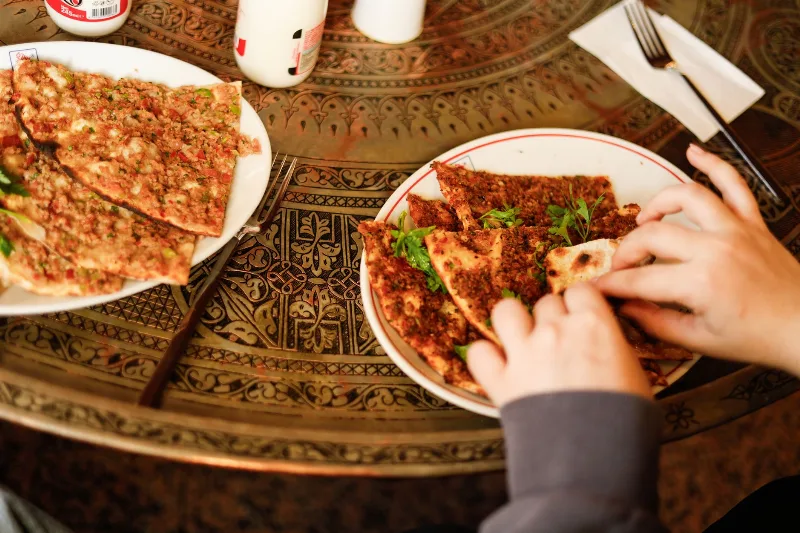
Lahmacun
Lahmacun is a thin, round flatbread spread with finely minced meat, tomato, pepper and spices, baked quickly at high heat and served with lemon and fresh parsley. It is one of Türkiye's most recognisable street and oven foods, with strong regional traditions across the southeast and beyond.
Explore →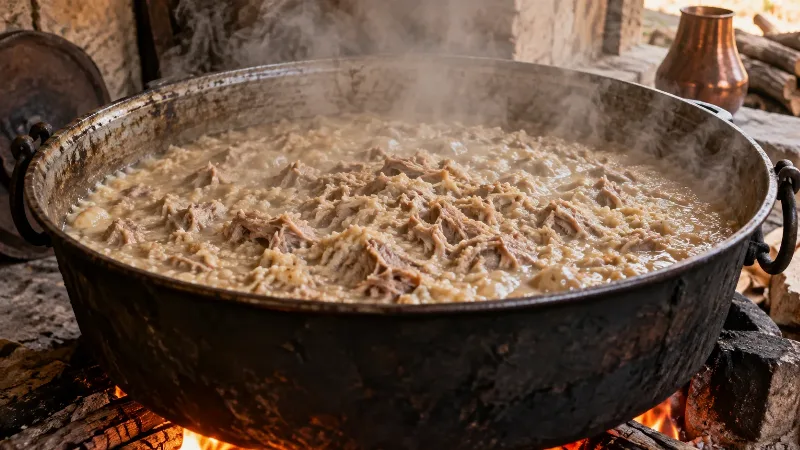
Keşkek
Keşkek is a traditional Anatolian dish made by cooking hulled whole wheat together with meat and pounding the softened mixture into a thick, dense mass. It is best known as a communal celebration food, especially at weddings.
Explore →Related content
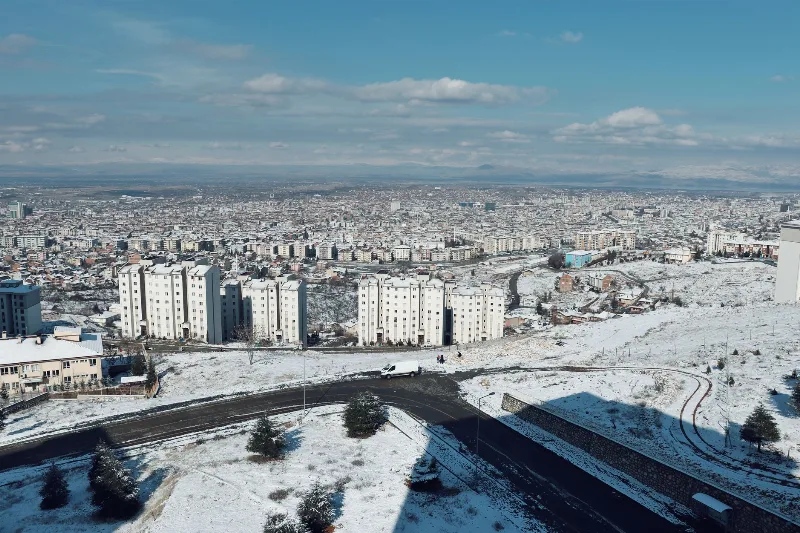
Malatya
Malatya is a metropolitan city in eastern Türkiye and the heart of the country's apricot industry. Its layered history reaches back to the Chalcolithic settlement at Arslantepe, a UNESCO World Heritage Site beside the modern urban centre.
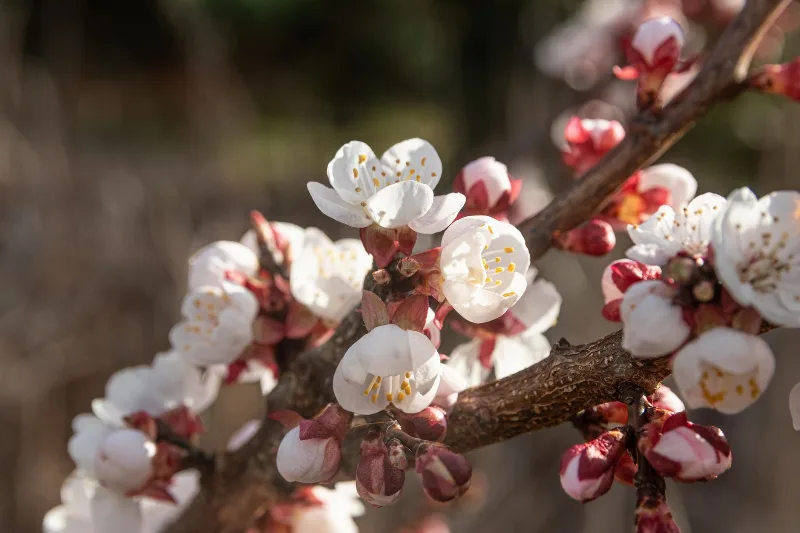
Apricot Blossom in Malatya
Each spring, the apricot orchards around Malatya in eastern Türkiye turn white and pale pink as the trees come into bloom, a short and weather-dependent window that shapes the summer harvest.
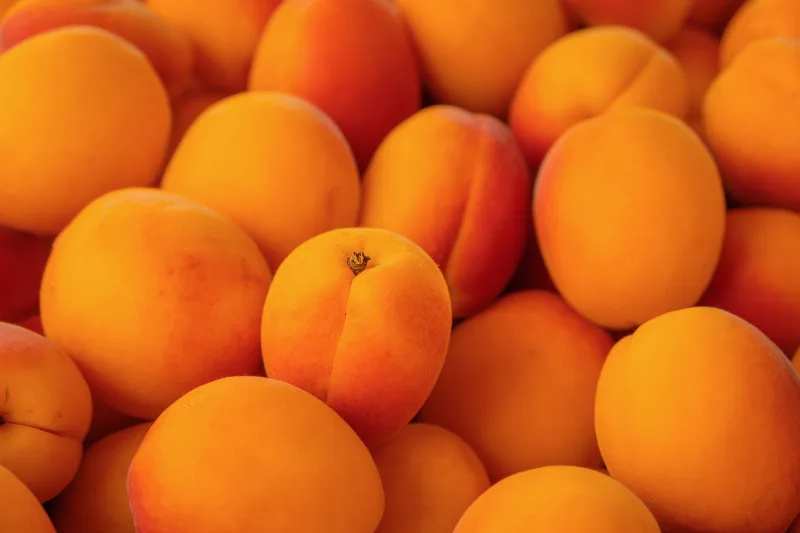
Elazığ Apricots
Elazığ apricots are a regional apricot product from eastern Türkiye, valued for their juicy, flavorful fruit. The province’s climate and fertile soils support both fresh use and traditional drying.
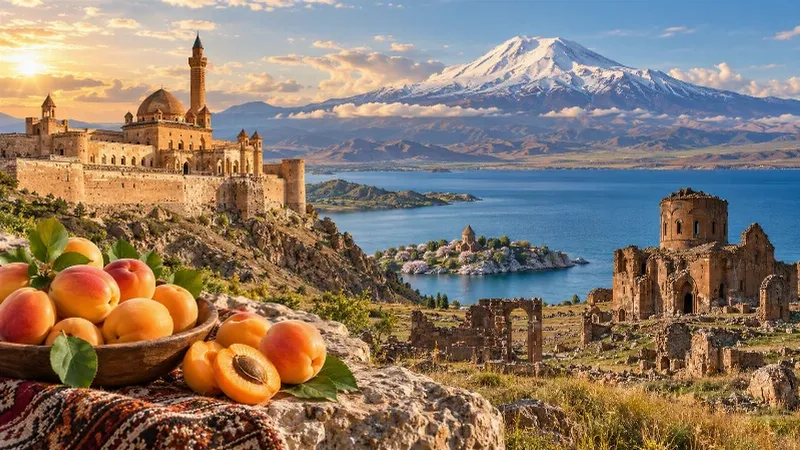
Eastern Anatolia Region
Eastern Anatolia is a region of majestic mountains, vast highlands, beautiful lakes and ancient cultural heritage. Home to Mount Ararat, Lake Van and historic settlements, it offers some of Türkiye's most dramatic natural landscapes alongside distinctive architecture, local traditions and regional cuisine.
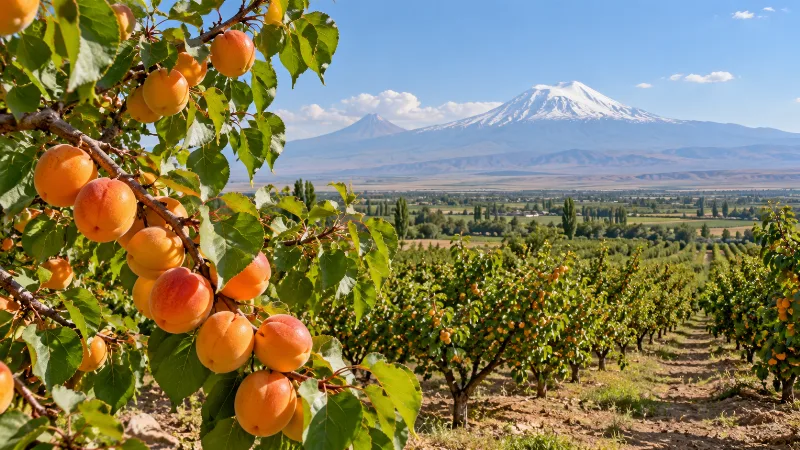
Iğdır Apricots
Iğdır apricots are the sweet, aromatic apricots grown on the warm Aras River plain in eastern Türkiye, where hot dry summers and cold winters shape fruit that is eaten fresh and dried in large quantities.
How the Landscape Shapes Food Across Turkey
From Black Sea hazelnuts to Aegean olive oil and southeastern pistachios, Turkey’s regional food is closely connected with geography and agriculture.