
The Coastal Town of Kaş on the Mediterranean
STORIES FROM TÜRKİYE
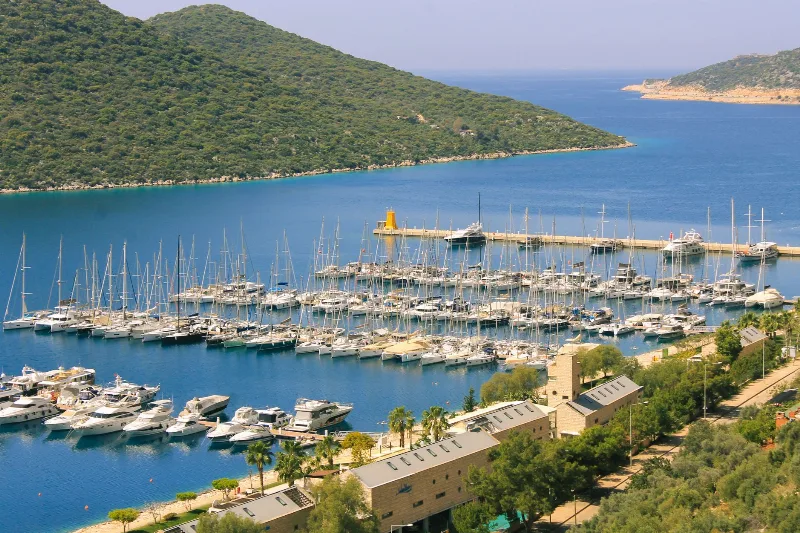
Kaş is a small coastal town on the Mediterranean shore of Antalya province, where the Teke Peninsula meets clear blue water. Whitewashed houses and bougainvillea-covered lanes step down toward a sheltered harbour, and daily life moves at a gentle pace. The relaxed atmosphere, warm sea and rugged mountain backdrop make the town a natural base for exploring ancient ruins and enjoying the sea.
A Town Shaped by the Sea
Kaş faces the Greek island of Meis, known as Kastellorizo, which lies just a short distance offshore. On clear days the island seems close enough to swim to, and the channel between them is one of the calmer stretches of this coastline. The harbour sits at the centre of town, where fishing boats and wooden gulets rest alongside each other.
Behind Kaş, the slopes of the Akdağlar rise steeply, while the Çukurbağ Peninsula reaches west with quiet coves and footpaths. The contrast between dry, pine-covered hills and the vivid blue of the Mediterranean defines the landscape here. Narrow lanes, white houses and stone walls give the town a character that feels distinctly Mediterranean.
Clear Water and Diving
The sea around Kaş is appreciated for its clarity and generally gentle currents, which makes it appealing for diving at many levels of experience. Underwater canyons, rocky reefs and drop-offs lie a short boat ride from the harbour. Divers often encounter groupers, octopus, moray eels, sea bream and dense sponges among the rocks.
Several sites include the remains of sunken vessels, and the surrounding waters hold traces of a long maritime history. Sheltered bays also offer calm places to swim for much of the year. Warm water from late spring to autumn makes the coast a natural place to spend time in the sea.
Walking the Lycian Way
The Lycian Way is a long-distance walking route of roughly 500 kilometres that runs between Fethiye and Antalya. It is marked with red and white flashes and passes directly through the Kaş area, linking villages, olive groves and ancient sites. Sections near the town combine coastal views with stretches through pine forest and rocky hillside.
Spring and autumn are the most comfortable seasons for walking, when temperatures are mild and wildflowers or autumn colours appear along the path. The route takes its name from Lycia, the ancient civilisation that once governed this peninsula. Walkers can join shorter stages rather than the full route, following paths that have connected settlements for centuries.
Antiphellos and Ancient Lycia
Kaş stands on the site of Antiphellos, an ancient Lycian town whose name means “the place opposite Phellos”. A Hellenistic theatre carved into the hillside still faces the sea, and Lycian rock tombs and sarcophagi appear among the houses and gardens. The town museum displays finds from the surrounding area, including pottery and inscriptions.
Nearby sites deepen the picture of the region. The sunken ruins of Kekova lie east along the coast, visible beneath shallow water, while the castle and village of Kaleköy, ancient Simena, overlook the same bay. Inland, the ruins of Phellos sit on a hilltop above the plain. Together these places show how densely settled Lycia once was.
Local Flavours and Seasons
Mezes, olive oil dishes and freshly caught fish shape the everyday food of the coast, often served with plenty of greens and herbs. Local produce includes olives and olive oil, citrus fruit, almonds and thyme honey gathered from the surrounding hills. The region's cooking reflects a long Mediterranean tradition of simple, seasonal ingredients.
Summers are hot and dry, winters mild and occasionally wet, and snow can settle on the higher mountains inland. Spring brings almond blossom and wildflowers, while autumn offers warm sea and quieter lanes. Each season gives the town a slightly different rhythm, from the busy warmth of July to the calm light of January.
Historic places
Explore history →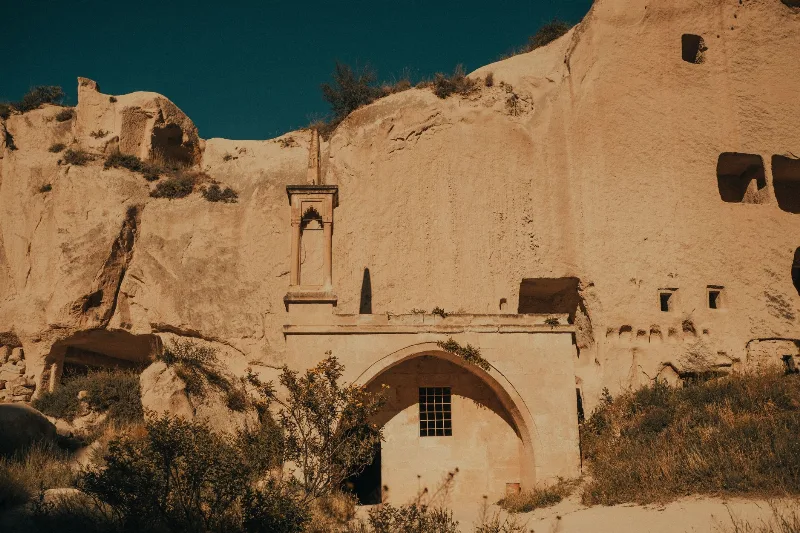
Göreme Open Air Museum
Göreme Open Air Museum is a rock-cut Byzantine monastic complex in the Göreme valley of Cappadocia, Nevşehir Province, whose churches preserve fresco cycles painted between the 10th and 13th centuries. It forms part of the UNESCO World Heritage Site of Göreme National Park and the Rock Sites of Cappadocia.
Explore →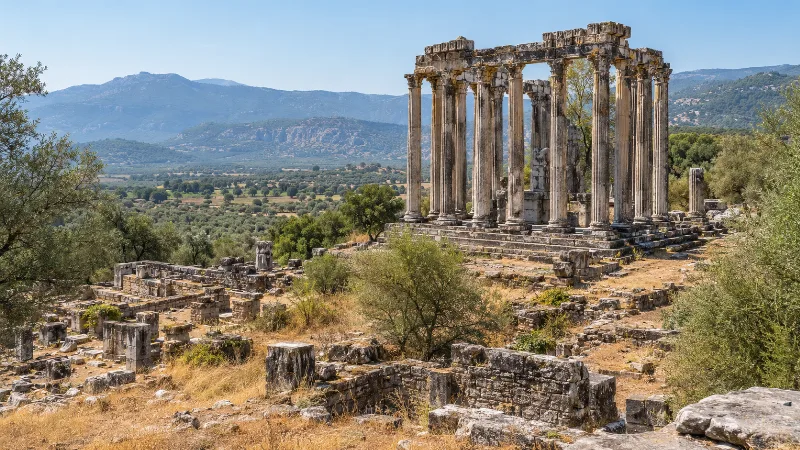
Euromos
Euromos is an ancient Carian city in Muğla Province, Türkiye, whose standing Temple of Zeus Lepsynos is among the best-preserved Roman-period temples in the country. Its theatre, agora, bath and city walls survive on a low hill above the Milas plain.
Explore →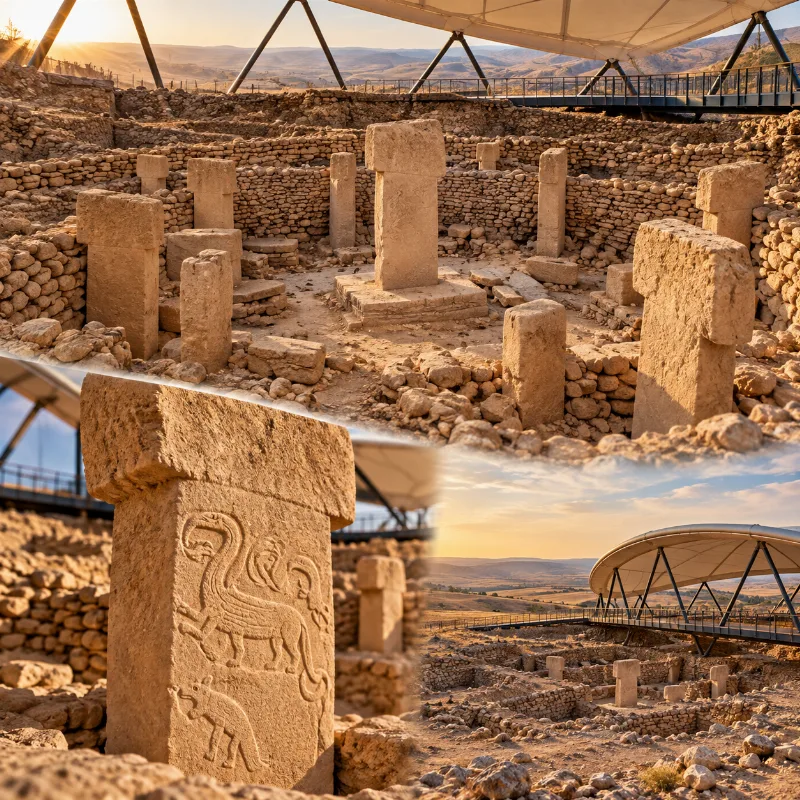
Göbeklitepe
A major Neolithic archaeological site near Şanlıurfa, known for its monumental stone enclosures and carved T-shaped pillars.
Explore →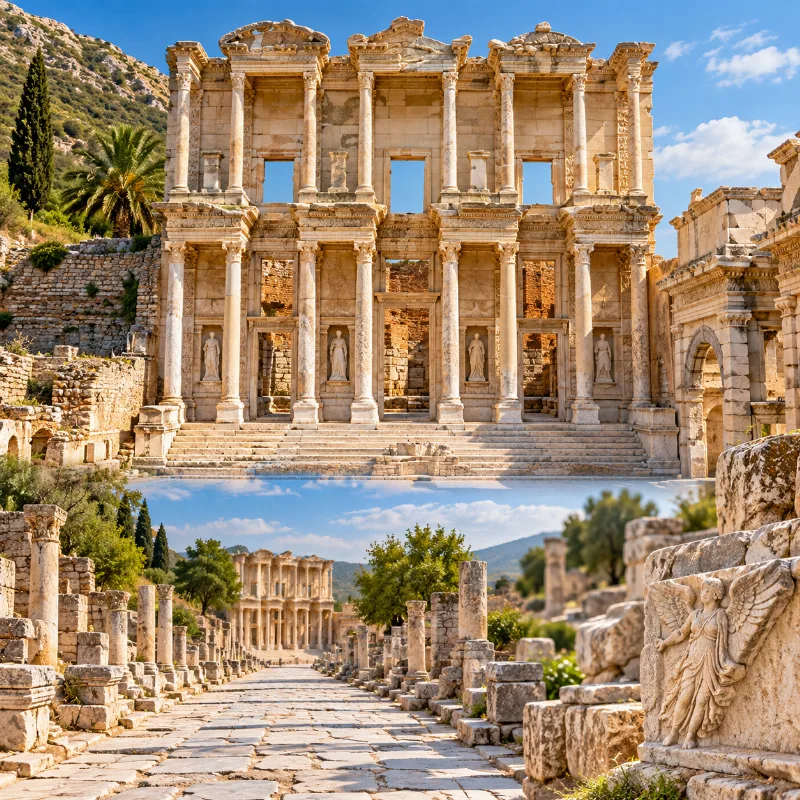
Ephesus
One of the best-preserved ancient cities in the Aegean, known for its monumental streets, library, theatre and Roman-era remains.
Explore →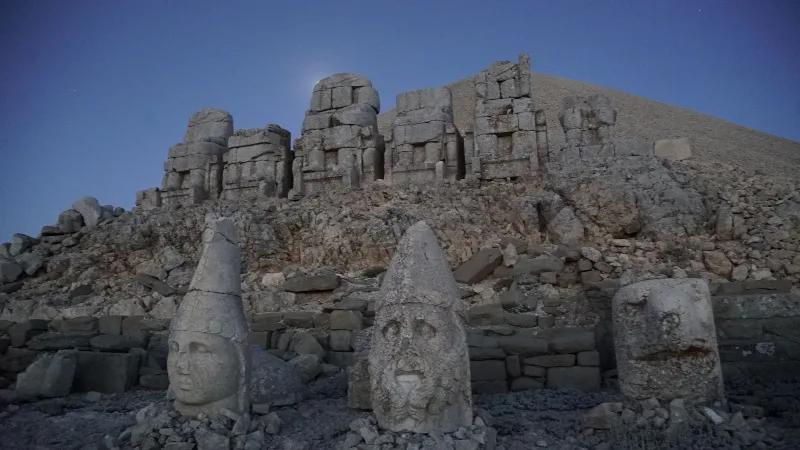
Mount Nemrut
Mount Nemrut in Adıyaman Province is the summit hierothesion of King Antiochus I of Commagene, where colossal statues of gods and a royal ruler stand on terraces above an artificial stone tumulus. The site is a UNESCO World Heritage property whose Greek inscriptions and reliefs record a Hellenistic kingdom of the first century BC.
Explore →Related content
Antalya
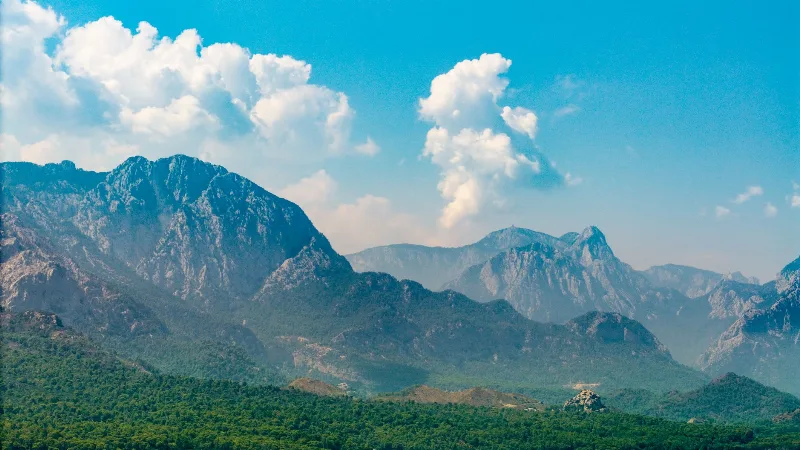
Antalya offers a unique blend of vibrant history and stunning natural beauty, making it a must-visit destination in Türkiye.
Fethiye
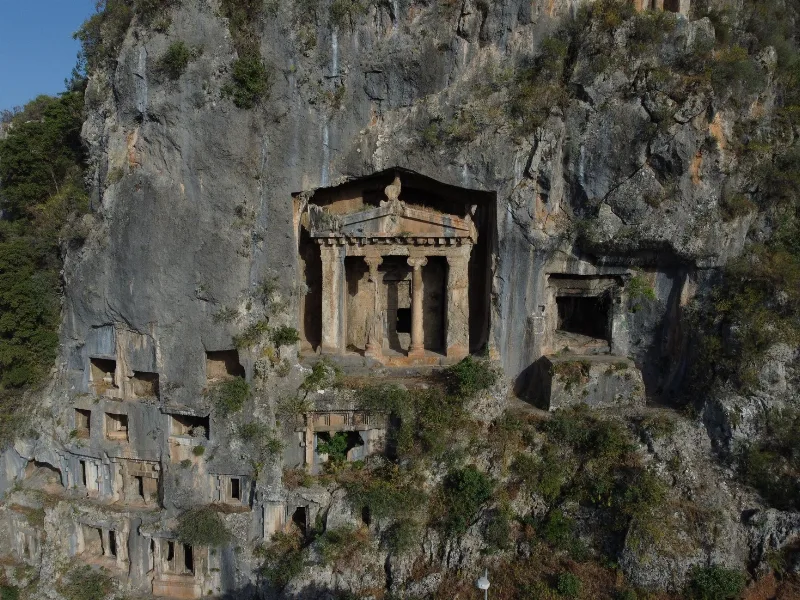
Fethiye is a captivating coastal town known for its stunning blue lagoon, thrilling paragliding experiences, and ancient rock tombs.
5-Day Antalya to Fethiye Coastal Route
A five-day driving itinerary along Turkey's Mediterranean shore, linking Antalya, Phaselis, Olympos, Demre, Kekova, Kaş, Kalkan, Patara and Fethiye. The route is linear, coastal for most of its length, with short inland detours to Lycian ruins.
6-Day Mediterranean Coast Route: Antalya to Marmaris
A six-day linear route along Türkiye's Mediterranean coast, linking Antalya, Olympos, Demre, Kekova, Kaş, Kalkan, Patara, Fethiye and Dalyan before finishing in Marmaris. It mixes ancient cities, long beaches and small harbour towns on a continuous westward drive.
5-Day Fethiye to Kaş Lycian Coast Route
A five-day linear route along the Lycian coast from Fethiye to Kaş, linking Ölüdeniz, Kabak, the Xanthos valley, Patara and Kalkan by road and on foot.
4-Day Lycian Coast Route
A four-day route along Turkey's Lycian coast, driving from Fethiye and Ölüdeniz through Kalkan, Kaş, Kekova, Demre and Olympos to finish in Antalya.