
The Traditional Turkish Breakfast Spread Across Türkiye
STORIES FROM TÜRKİYE
Turkish breakfast, known as kahvaltı, is a cherished morning tradition that brings people together around a table filled with small dishes. Across Türkiye, from bustling cities to quiet villages, the first meal of the day is often a leisurely affair, savored with family and friends. The spread typically includes a variety of cheeses, olives, fresh bread, and endless glasses of tea, reflecting the country's rich culinary heritage and regional diversity.
The Meaning of Kahvaltı
The word kahvaltı comes from the Ottoman Turkish "kahve altı," meaning "before coffee." In the past, this meal was eaten before drinking coffee, which was an important part of social life. Today, kahvaltı has evolved into a substantial and enjoyable meal in its own right. It is often a weekend ritual, when families and friends gather to linger over multiple courses and conversation. In many homes, breakfast can last for hours, especially on Sundays. It is also a common daily practice, though the weekend version tends to be more elaborate.
Core Elements of the Spread
A traditional Turkish breakfast features an array of small plates and bowls. White cheese (beyaz peynir) is a staple, often accompanied by kaşar, a yellow cheese, and tulum, a crumbly cheese from the Black Sea region. Olives, both green and black, are served with tomatoes, cucumbers, and peppers. Bread comes in many forms: simit, a sesame-crusted ring; bazlama, a flatbread; and pide, a soft flatbread. Eggs are commonly prepared as menemen, scrambled with tomatoes and peppers, or sucuklu yumurta, fried with spicy sucuk sausage. Sweet touches include honey and kaymak, a thick clotted cream, as well as jams, tahin (sesame paste), and pekmez (grape molasses). The number of dishes can range from a modest few to a lavish table of twenty or more small plates, depending on the occasion.
Regional Breakfast Traditions
Different regions of Türkiye have their own breakfast specialties. In the Black Sea region, mıhlama (also called kuymak) is a warm dish of cornmeal, butter, and cheese, often eaten with bread. The Aegean region favors fresh herbs, olive oil, and local cheeses like lor. In the southeast, katmer, a flaky pastry filled with pistachio and kaymak, is a popular morning treat. The city of Van is known for its extensive breakfast spread, which includes otlu peynir (herbed cheese) and kavut, a roasted wheat flour dish. In central Anatolia, a simple spread of cheese, olives, and bread with tea is common. These regional variations highlight the use of local ingredients and seasonal produce.
Tea and Social Ritual
Turkish tea, or çay, is an essential part of kahvaltı. It is served in small, tulip-shaped glasses and is constantly refilled throughout the meal. The tea is brewed in a double teapot, with a strong brew on top and hot water below, allowing each person to adjust the strength. The small glasses are designed to keep the tea hot and are often held by the rim to avoid burning fingers. Breakfast is a social occasion, with dishes placed in the center of the table for everyone to share. It is a time for relaxed conversation, storytelling, and hospitality. In villages, breakfast might include fresh milk, homemade butter, and village bread, while city dwellers might enjoy a similar spread in their homes.
Seasonal and Local Touches
Seasonality plays a role in the Turkish breakfast. In summer, tables may feature fresh figs, apricots, grapes, and melon. Winter brings citrus fruits like oranges and mandarins, along with preserved jams and vegetables. Spring offers wild greens and fresh herbs, while autumn adds quince and apples. In the Black Sea region, breakfast may include local honey and walnuts, while the Aegean offers fresh figs and olives. Local olives, cheeses, and honey vary from region to region, giving each breakfast a distinct character. This connection to the land and the seasons keeps the tradition vibrant and ever-changing.
Historic places
Explore history →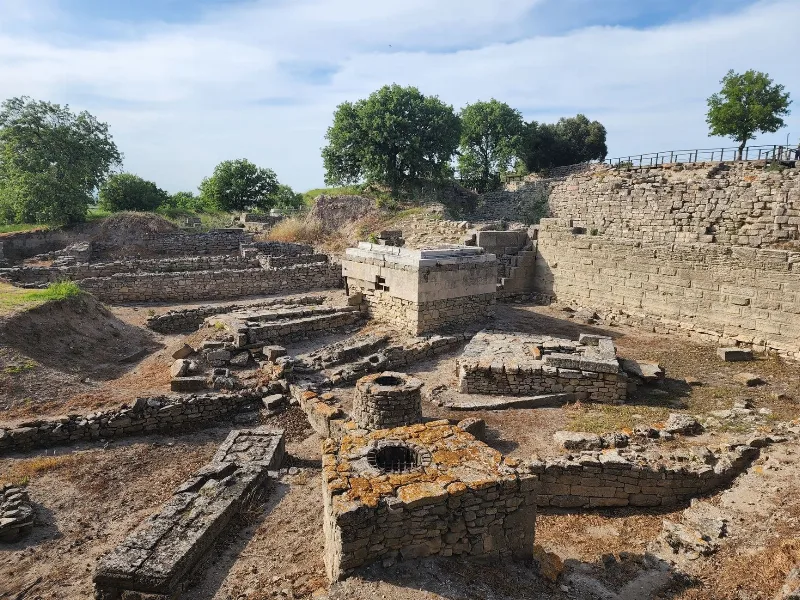
Troy
Troy is the excavated mound of Hisarlık in Çanakkale Province, Türkiye, inhabited from the Early Bronze Age to the Roman era and linked with the Ilion of Homer's Iliad. Its nine settlement layers and surviving Bronze Age fortifications make it one of the most important stratified sites in the eastern Mediterranean.
Explore →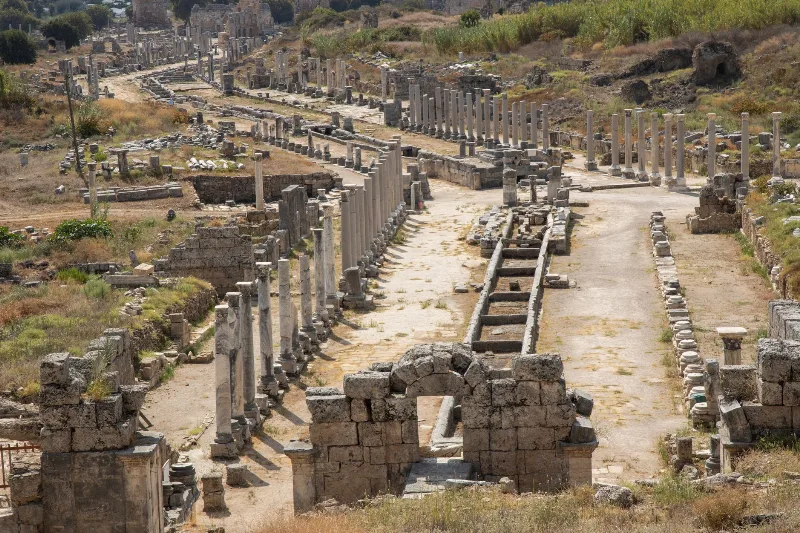
Perge
Perge is a Graeco-Roman city in the Pamphylian plain east of Antalya, Türkiye, whose surviving urban plan includes two colonnaded streets with central water channels, a hillside Roman theatre and one of Anatolia's best-preserved stadiums.
Explore →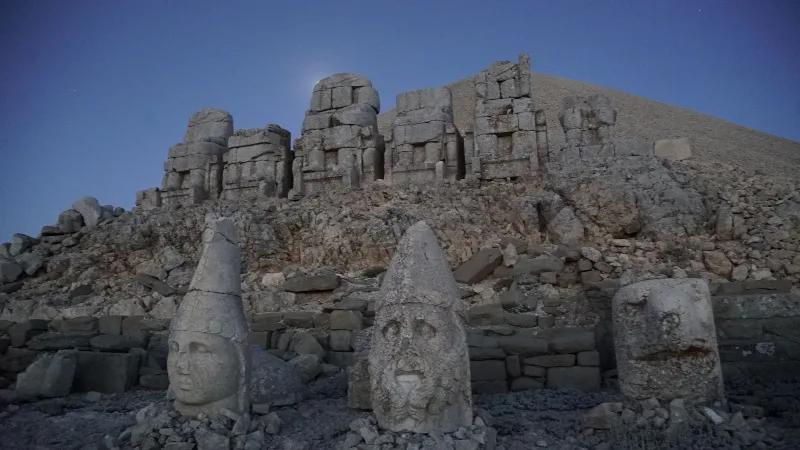
Mount Nemrut
Mount Nemrut in Adıyaman Province is the summit hierothesion of King Antiochus I of Commagene, where colossal statues of gods and a royal ruler stand on terraces above an artificial stone tumulus. The site is a UNESCO World Heritage property whose Greek inscriptions and reliefs record a Hellenistic kingdom of the first century BC.
Explore →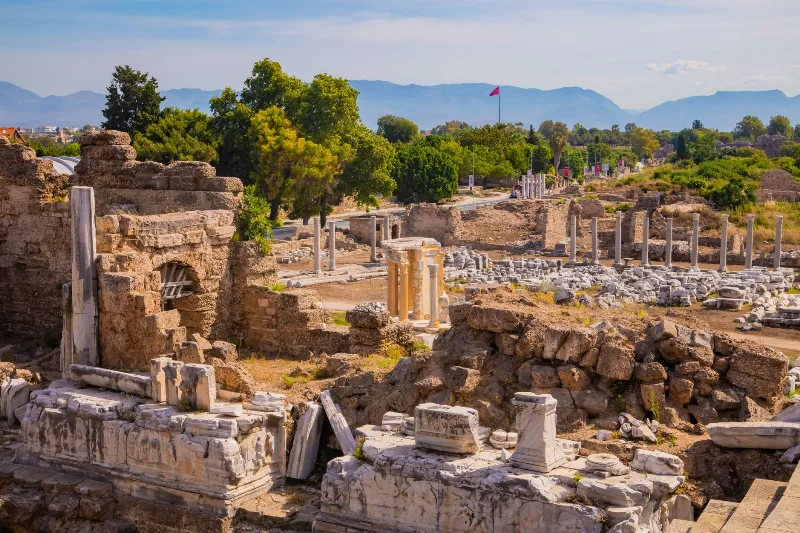
Anemurium
Anemurium is an ancient city on a windswept promontory at Cape Anamur, the southernmost point of Anatolia, in Mersin Province. Its Roman and Byzantine ruins — theatre, baths, walls and a vast necropolis — make it one of the most substantial archaeological sites on Turkey's Mediterranean coast.
Explore →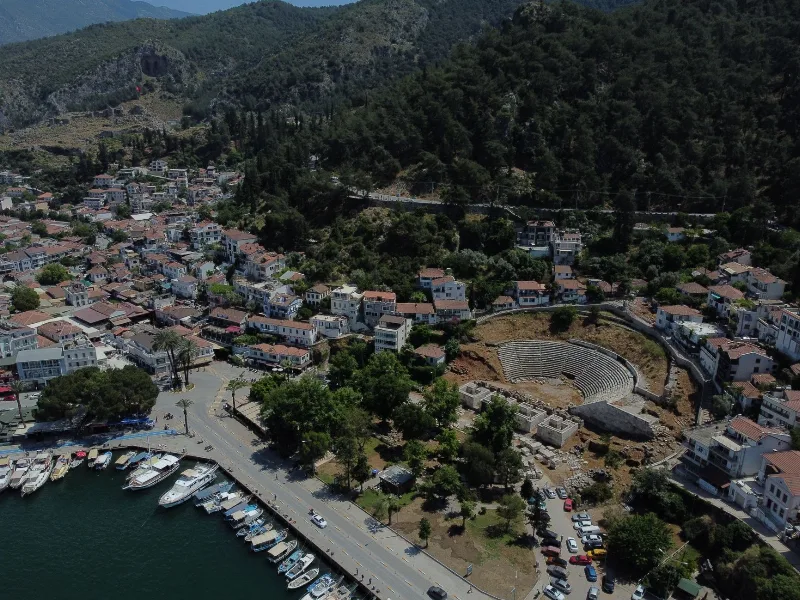
Phaselis
Phaselis is an ancient Greek and Roman harbour city on a low peninsula near Kemer in Antalya Province, known for its three harbours, a long paved main street and a triple-arched gate built in honour of the emperor Hadrian.
Explore →Related content
Menemen
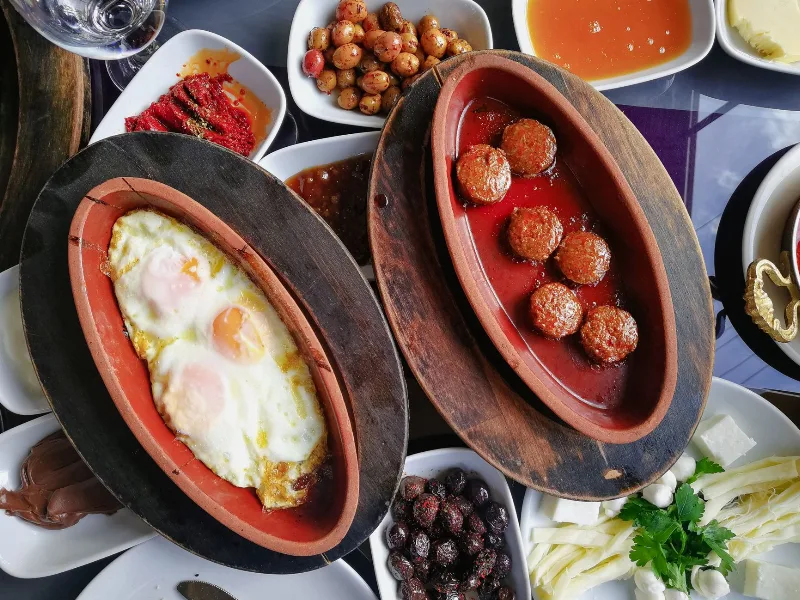
Menemen is a Turkish breakfast dish of eggs cooked with tomatoes and green peppers in olive oil or butter, traditionally eaten with bread. It takes its name from a district of İzmir Province and is prepared in households across Türkiye.
Boyoz
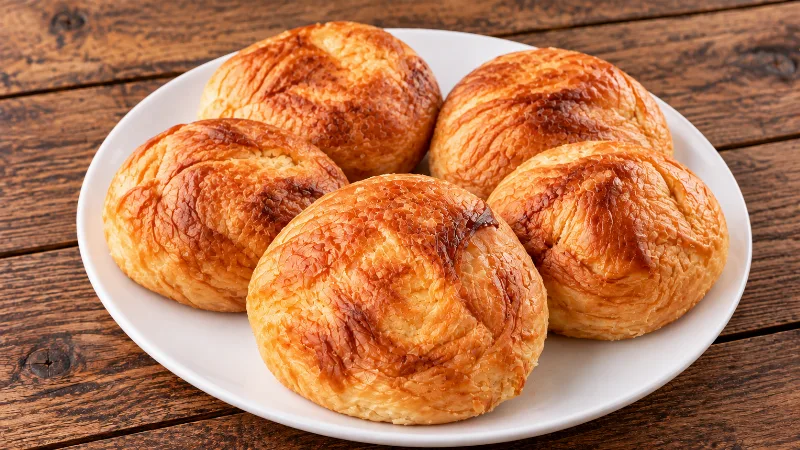
A flaky baked pastry closely associated with İzmir and commonly eaten as part of breakfast.
Kuymak
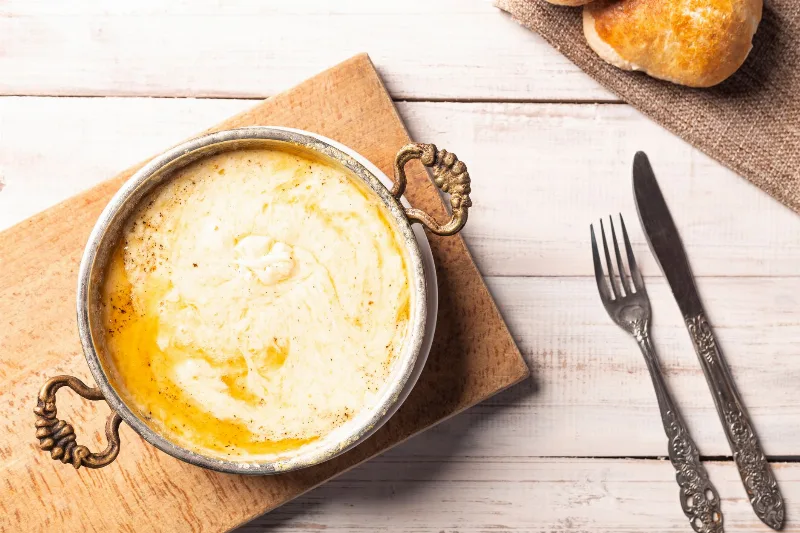
A soft, stretchy cornmeal dish cooked with butter and cheese, kuymak — also known as mıhlama — is a Black Sea breakfast staple served hot from the pan and eaten with bread.
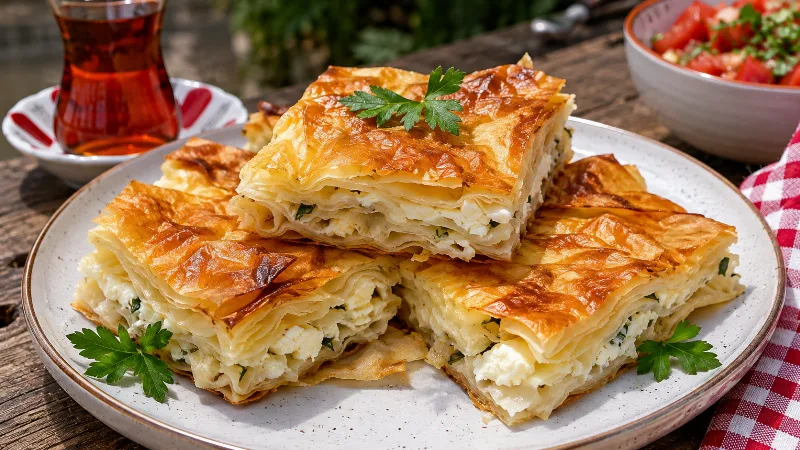
Su Böreği
Su Böreği is a layered Turkish savory pastry made by briefly boiling thin yufka sheets, then baking them with cheese and parsley. Its soft interior and golden top distinguish it within the wider börek family.
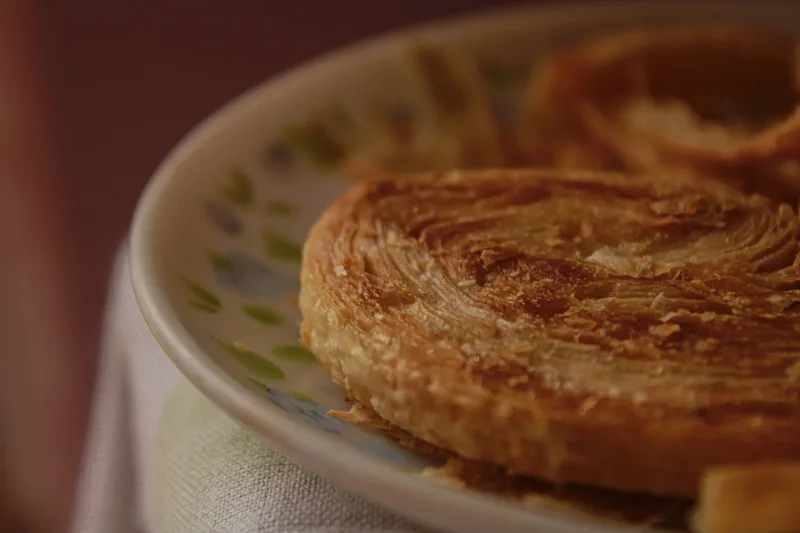
Boyoz
Boyoz is a round, flaky pastry from İzmir, made from a coiled flour-and-oil dough and traditionally eaten at breakfast with a boiled egg and tea.
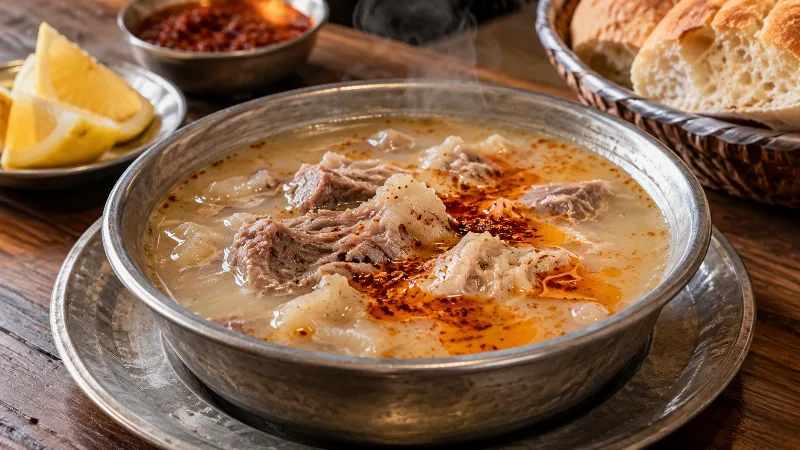
Kelle Paça Çorbası
Kelle Paça Çorbası is a traditional Turkish soup made from sheep's head and feet, known for its thick, gelatinous texture and restorative qualities. It is especially popular in Eastern and Southeastern Anatolia and is commonly eaten for breakfast or as a late-night meal.