
Nazilli
Nazilli is an inland district of Aydın Province in Türkiye's Aegean region, set in the Büyük Menderes valley and known for figs, cotton and its long-standing market town character.
Nazilli is a district of Aydın Province in the Aegean region of Türkiye, situated inland rather than on the coast. It lies in the broad valley of the Büyük Menderes river, roughly midway along the corridor that connects Aydın to the west with Denizli to the east. Nazilli is a sizeable administrative and commercial town rather than a resort: its identity is built on agriculture, trade and a market tradition that reaches back through the Ottoman period into the present day, and it functions as the main urban centre for a wide stretch of the surrounding plain.
The Geography of the Menderes Valley
The town sits on the northern edge of the Büyük Menderes plain, with the Aydın Mountains rising to the south. This position defines almost everything about the district. The river and its tributaries have laid down deep, fertile alluvial soils across the valley floor, while the slopes to the south are steeper, drier and more wooded. Nazilli's built-up area spreads across the flat ground and gradually climbs the lower hillsides, so the town has a recognisable orientation: farmland and water to the north, mountain ridges to the south.
The valley acts as a natural routeway. Roads and the railway between İzmir, Aydın and Denizli run through it, and Nazilli has grown as a service point along that line. The result is a district that feels connected and commercial rather than remote, even though it has no coastline of its own.
An Inland Market Town and Its Bazaar
Nazilli's centre is organised around trade. The old bazaar quarter is the historic heart of the town, a dense area of small workshops, food sellers and traders that still performs a genuine everyday function for people from the surrounding villages rather than existing purely for visitors. Around it, the modern town has expanded into a grid of avenues, apartment blocks and administrative buildings typical of a Turkish district centre of this size.
What distinguishes Nazilli from the coastal districts of Aydın is this working, agricultural personality. It is a place where the agricultural calendar is visible in the street: produce arrives from the fields, is sorted, packed and moved on, and the commercial life of the town follows the rhythms of harvest rather than the tourist season.
Agriculture and Regional Produce
Farming is the backbone of the district's economy. Nazilli is particularly associated with figs, and the wider Aydın province is one of the most important fig-producing areas in Türkiye, with dried figs being the form most closely tied to the region's reputation. Cotton has also long been cultivated on the irrigated plain, alongside other field crops, olives and fruit.
For travellers interested in food and regional produce, the district is best understood as part of the wider Aegean agricultural landscape rather than as a destination in itself. The markets of the town centre are where that landscape becomes tangible, and the surrounding countryside — irrigation channels, orchards and harvested fields — is what gives the valley its character.
Industrial Heritage and Modern Identity
Nazilli's development in the twentieth century was shaped by industry as well as agriculture. A state-built textile printing factory established in the 1930s became a landmark of early Republican industrial planning in the region and, for a long period, an important source of employment and civic pride. Its presence helped turn a market town into a more substantial urban centre and left a mark on how the town sees itself: practical, productive and oriented towards work rather than display.
The Surrounding Countryside and Nearby Places
Beyond the town, the district includes a large rural hinterland of farming settlements scattered across the plain and along the lower slopes. To the south, the Aydın Mountains offer a different landscape of ridges, valleys and upland villages, with cooler conditions and more limited agriculture than the irrigated floor below.
Nazilli's position makes it a useful base for understanding the wider region. The ancient city of Nysa lies near Sultanhisar to the west, in the neighbouring district, and belongs to the area's classical heritage rather than to Nazilli itself. Further afield, the marble city of Aphrodisias near Karacasu and the terrace pools at Pamukkale near Denizli are both reachable within the broader Aydın–Denizli corridor.
Aydın, the provincial capital, lies to the west and provides the main urban and administrative reference point for the district. Denizli to the east is the other large centre on the same route. Smaller neighbouring districts such as Kuyucak, Bozdoğan and Yenipazar share the valley's agricultural economy and mountain-edge geography. Coastal Aydın districts such as Kuşadası and Didim belong to a different world entirely, and the contrast is instructive: Nazilli is the inland, productive Aegean, not the seaside one.
Climate and When to Visit
The district has a Mediterranean climate with hot, dry summers and mild, wet winters. Summer heat in the valley can be intense, and the plain is at its most parched in July and August. Spring brings green fields, almond and fruit blossom in the surrounding countryside, and comfortable temperatures; autumn is the season of harvest activity, figs and cotton among them, and is generally the most rewarding time to see the district functioning at full pace. Winter is quiet, cooler and wetter, with occasional rain sweeping in across the valley.
Getting There and Getting Around
Nazilli lies on the main overland route through the Büyük Menderes valley, with road and rail connections linking it to Aydın, İzmir and Denizli. The railway station places the town directly on the regional line, and the surrounding districts are reached by short journeys along the valley roads. Because the town is compact and the centre is walkable, the bazaar area and main streets can be explored on foot, while the rural parts of the district require a vehicle.
Understanding Nazilli means understanding its setting: a fertile river plain, mountains to the south, a working market tradition and an economy built on figs, cotton and trade. It is a district that explains inland Aegean Türkiye rather than one that presents itself to visitors.
Discover Food in Türkiye
All food →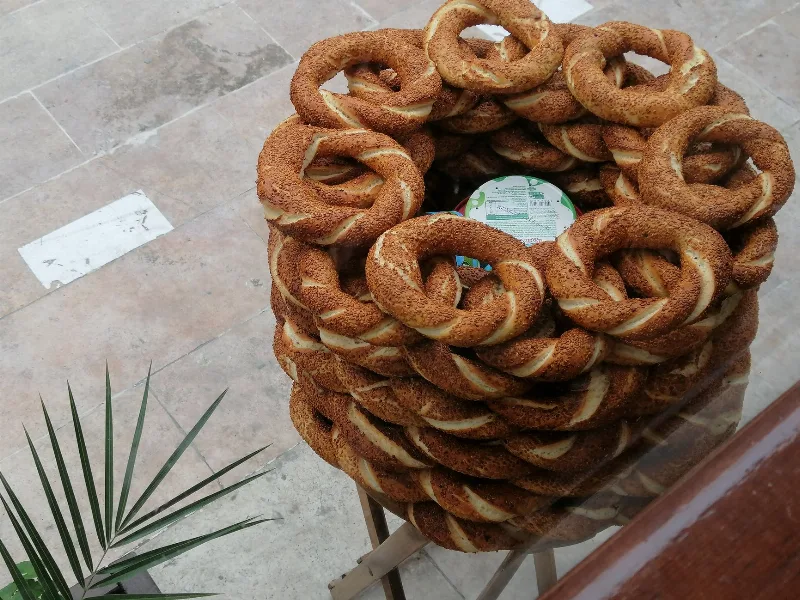
Simit
Simit is a ring-shaped Turkish bread covered in sesame seeds, strongly associated with Istanbul and sold as everyday street food. It is eaten fresh, most often with tea, and has a crisp crust around a chewy crumb.
Explore →
Bazlama
Bazlama is a soft, thick Turkish flatbread made from a leavened dough and cooked on a hot griddle. It is a staple of village baking across Anatolia, eaten warm with butter or used to wrap other foods.
Explore →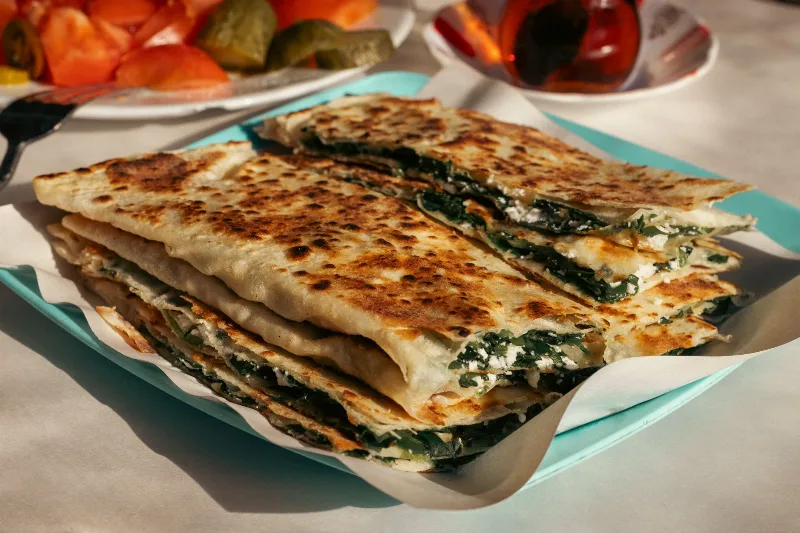
Gözleme
Gözleme is a thin, hand-rolled Anatolian flatbread folded around savory fillings such as cheese, spinach, or minced meat and cooked on a sac griddle. The article covers its regional variations, cooking method, texture, and traditional serving style.
Explore →Related content
Aydın
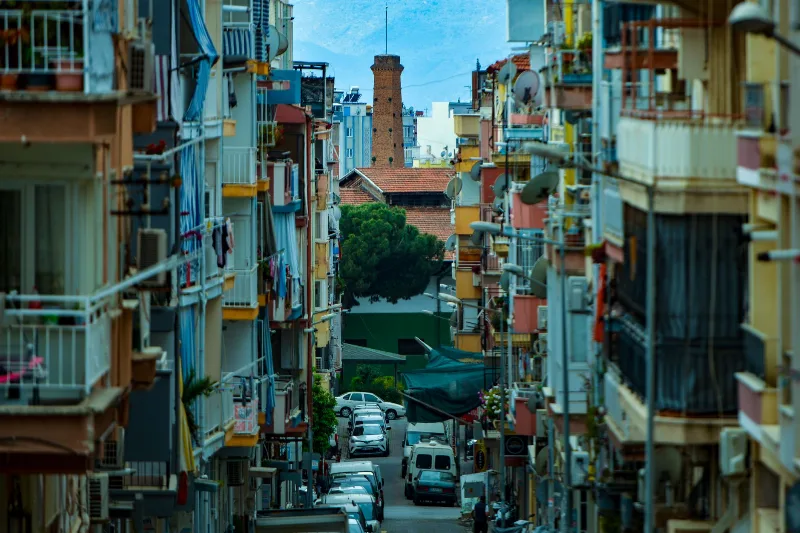
Aydın is the inland capital of Aydın Province in Türkiye's Aegean region, recognised for its fig production and its position between the fertile Büyük Menderes valley, the coastal district of Kuşadası and several major ancient sites.
Denizli
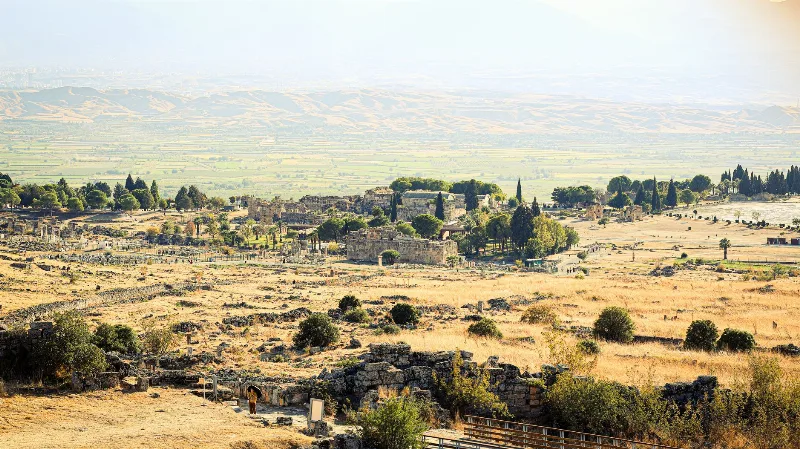
Denizli is the inland capital of Denizli Province in Türkiye's Aegean region, known internationally for the Pamukkale travertine terraces and ancient Hierapolis, and at home as a major textile city with its own long-crowing rooster breed.
Aphrodisias
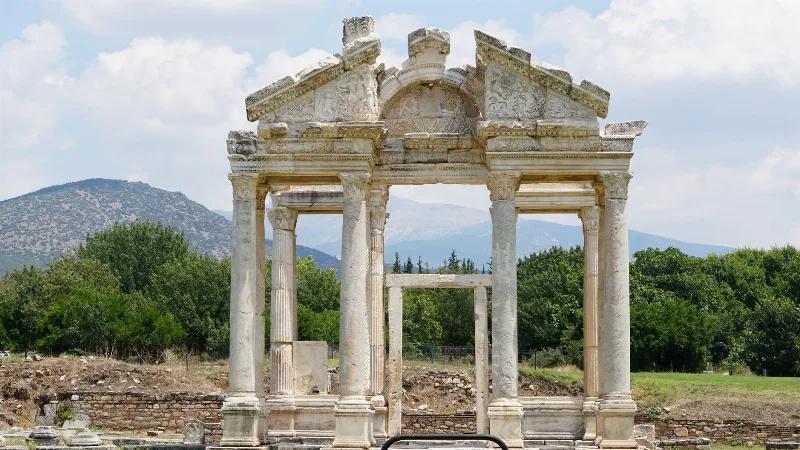
Aphrodisias is an ancient city in Aydın Province, Türkiye, built around a sanctuary of Aphrodite and celebrated for its marble sculpture and remarkably intact public buildings. It has been a UNESCO World Heritage Site since 2017.
Aphrodisias
Aphrodisias is an ancient Greek city in Aydın Province dedicated to the goddess Aphrodite, a UNESCO World Heritage Site known for its stadium, temple and rich marble sculpture tradition.
6-Day Aegean Ancient Cities Route
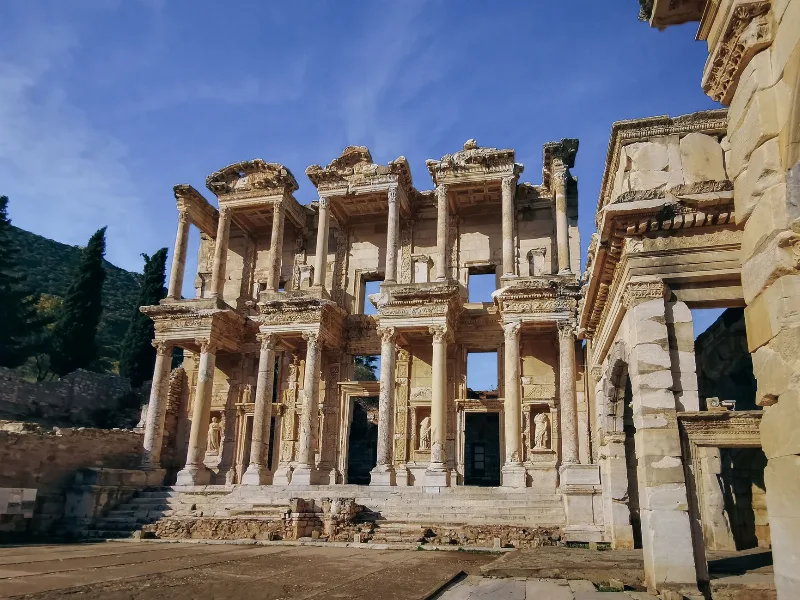
A six-day linear journey from Izmir to Denizli through the great ancient cities of the Aegean, linking Ephesus, Priene, Miletus, Didyma, Lake Bafa, Pamukkale, Laodicea and Aphrodisias in one coherent corridor.
The Ancient City of Aphrodisias in Aydın
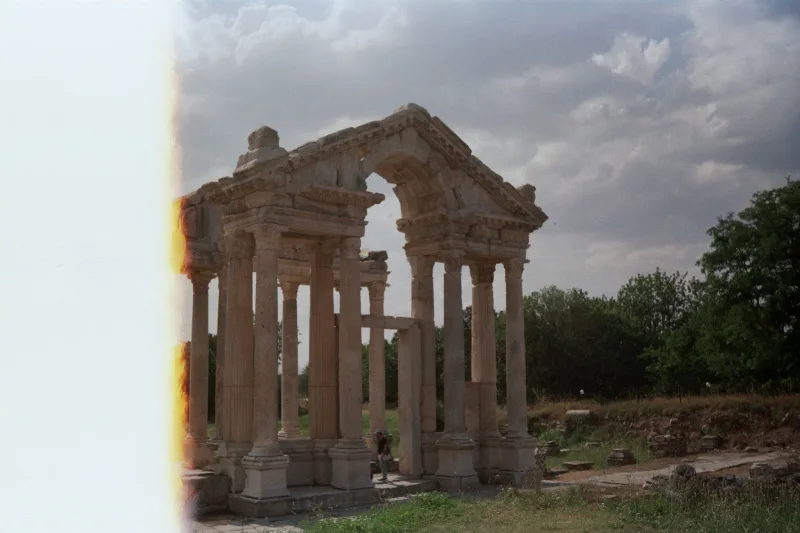
Aphrodisias in Aydın province is an ancient city dedicated to the goddess Aphrodite, celebrated for its stadium, temple and marble sculpture workshops.