
Kokoreç
Kokoreç is a Turkish street food of lamb intestines wound around a skewer, grilled over charcoal and chopped with hot pepper and oregano. It is most often eaten stuffed into half a loaf of bread, and its two best-known styles come from Istanbul and İzmir.
Kokoreç is a Turkish street food made from lamb small intestines — goat is used in some places — that are cleaned, wound in a tight coil around a long skewer and grilled over charcoal. Once cooked, the coil is chopped and seasoned, usually with hot pepper flakes, oregano, black pepper and salt, and served either inside a split loaf of bread or on a plate with bread alongside. Its two strongest homes are Istanbul, where it is a fixture of late-night street eating, and İzmir, whose version is prepared differently enough to be named after the city. Wrapping offal in intestine and roasting it over fire is an old practice shared across the Balkans and the eastern Mediterranean; Greek kokoretsi is the closest relative.
What Kokoreç Is Made From
The defining ingredient is the small intestine of a young lamb, together with the fat that clings to it. The intestine is both the structure and the substance of the dish: it holds the coil together and gives the finished food its springy bite. Nothing about kokoreç is delicate. It belongs to the same broad family as other Turkish offal preparations in which an animal's least expensive parts are turned into something people actively seek out.
The work that matters most happens before any fire is lit. Intestines are turned, emptied and washed repeatedly, then soaked and rinsed again until the water runs clear; salt, vinegar or lemon are used at different stages by different producers. In commercial kitchens this cleaning is a controlled step, and the reputation of a kokoreç seller rests on it as much as on the grilling. A coil that has not been properly cleaned cannot be rescued later on the fire.
It is worth separating kokoreç from products that look similar in a butcher's display. Mumbar is intestine that has been filled with a rice or meat mixture and cooked like a large sausage; kokoreç is not stuffed at all. It is the intestine itself, wound and grilled, with nothing cased inside it.
How the Coil Is Formed and Grilled
Long strands of cleaned intestine are threaded onto a metal skewer and wound around it in overlapping turns until they form a dense cylinder, usually thicker at the middle. The skewer is then set over charcoal, upright or horizontal, and turned slowly. The outside browns and crisps while the interior cooks more gently, and rendered fat drips onto the coals — a large part of why the smell carries so far down a street.
Once the surface is ready, the cook either shaves the browned outer layer away, lets the newly exposed surface catch the heat, and repeats, or takes the whole coil down and chops it. Grilling is only half the method; the second half happens on a flat griddle. Chopped kokoreç is tossed briefly with tomato, green pepper and seasoning, just long enough to warm through and let the juices mix. It should not stew. Well-made kokoreç reaches the bread juicy but not wet, with some pieces still crisp at the edges.
İzmir Style and Istanbul Style
Two broad approaches are recognised, and the difference is real enough that people name them after cities.
In İzmir the meat is typically chopped finer and cooked with more onion, tomato and green pepper, sometimes with cumin and oregano. The result is softer and more stewed, with a sharper, more vegetable-led flavour, and it is often served in bread with grilled peppers tucked in alongside. Some İzmir sellers treat the dish as much a pan preparation as a grilled one.
The Istanbul style is leaner in its ingredients: the grilled coil is chopped on the griddle with hot pepper flakes, oregano, black pepper and salt, and relatively little tomato, so the taste of the intestine and the charcoal stays at the front. It is a drier, more intensely savoury version.
Neither is the single authentic form. Both are long established, and shops in either city may follow either method. Other cities have their own habits, and families who prepare offal at home handle it differently again.
Texture and Flavour
The first thing people notice is the texture: chewy, elastic and slightly resistant, with crispness on the pieces that spent longest near the coals. It is not soft like liver and not crumbly like braised meat. The fat gives a richness that sits close against the bread, while the seasoning does a great deal of the work — hot pepper for heat, oregano for a dry herbal note, black pepper for bite.
The flavour of the intestine itself is strong, mineral and savoury, closer to other offal than to muscle meat. People who dislike kokoreç usually object to that specific taste rather than to the chew. In İzmir style, tomato and onion soften it; in Istanbul style it is deliberately exposed.
How It Is Served and Eaten
The default serving is in bread. A loaf is split, sometimes held over the coals for a moment, and filled with the chopped kokoreç; portions are usually ordered as a half loaf or a quarter. On a plate, the same mixture comes with bread on the side and often a small salad of onion, parsley and sumac. Pickled peppers or turnip juice and glasses of ayran are the usual accompaniments.
Kokoreç is overwhelmingly evening and late-night food. It belongs to the hours after a concert, a match or a long evening out, and the shops that specialise in it often keep exactly those hours. It is eaten standing at the counter, walking, or at plain tables with no ceremony.
Kokoreç, Kokoretsi and the Wider Offal Tradition
Binding chopped or whole offal with intestine and roasting it is not unique to Türkiye. Greek kokoretsi is the closest relative: a roll of liver, lung, heart and sweetbreads wrapped in intestine, roasted on a spit and traditionally associated with Easter. Similar preparations exist elsewhere in the Balkans. The Turkish word is generally traced to the Greek name, which points to a shared kitchen history across the region rather than to a single point of origin. Exactly which community in which city sold it first cannot be stated with confidence.
Within Türkiye, kokoreç moved from butcher and neighbourhood trade into a codified street food over the twentieth century. Because it is offal, its sale has been subject to food-safety regulation, and modern vendors work under rules covering cleaning, cold storage and the grilling setup. It also carries a faint outsider appeal: for decades it was the food that respectable households pretended not to know about, and it remains a dish people are either devoted to or entirely indifferent to.
How It Differs from Şırdan, Mumbar and Other Offal Dishes
Şırdan, strongly associated with Adana, is a sheep's abomasum filled with a spiced rice and meat mixture and simmered until tender; it is a stuffed dish, mild and soft, and it is not grilled on a skewer. Mumbar is stuffed intestine, again a filled preparation. Kokoreç stands apart from both because nothing goes inside it. The intestine is the entire substance of the dish, and the flavour comes from the fire and the seasoning rather than from a filling.
Compared with liver dishes, kokoreç is heavier and chewier and is more firmly a bread food. Compared with kokoretsi, the Turkish version is chopped and finished with pepper and herbs on a griddle rather than sliced from a spit and served as a roast.
Where Kokoreç Belongs
Ask where the dish comes from and two answers return: Istanbul, for the street-corner version and the late-night culture built around it; İzmir, for the softer, onion-heavy style that bears the city's name. Both are accurate descriptions of a food with no single home town, and both explain why the same word can produce two noticeably different sandwiches.
Related content
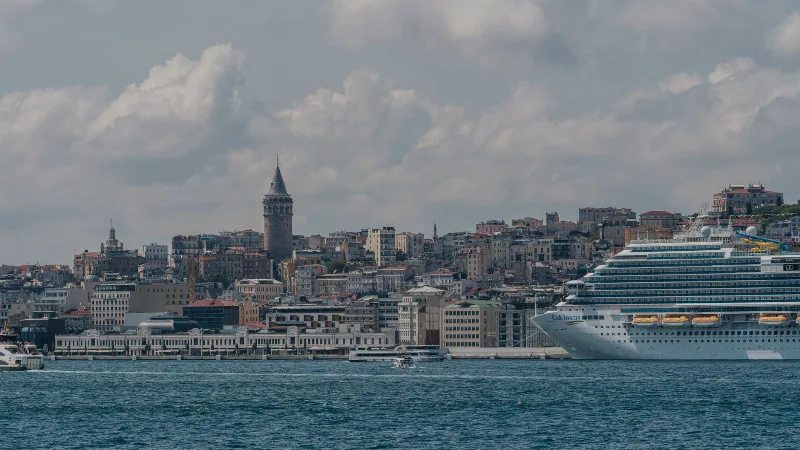
Istanbul
Istanbul is Türkiye's largest city and the country's only metropolis that spans two continents, divided by the Bosphorus strait into a European and an Asian half. Its long run as an imperial capital left a historic core of palaces, mosques and bazaars that still shapes the city's identity.
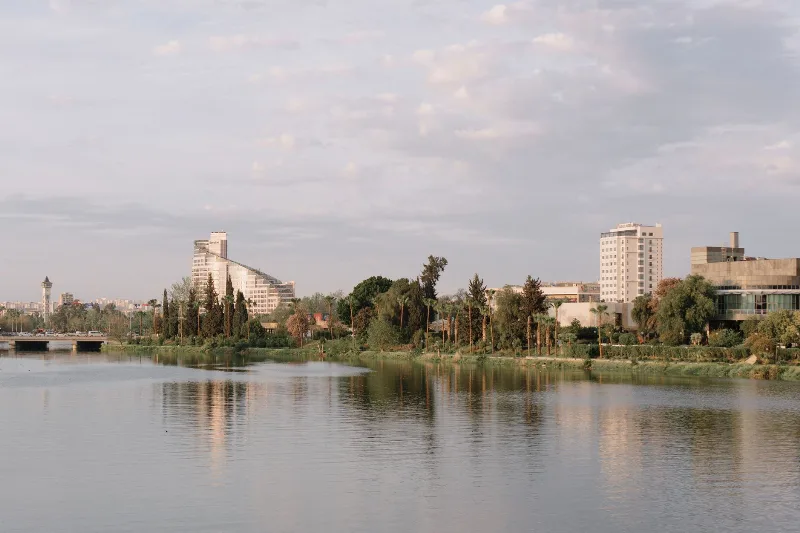
Adana
Adana is a major metropolitan city in southern Türkiye and the urban heart of the Çukurova plain, defined by the Seyhan River, a Roman-era stone bridge and a deeply rooted kebab and agricultural culture.
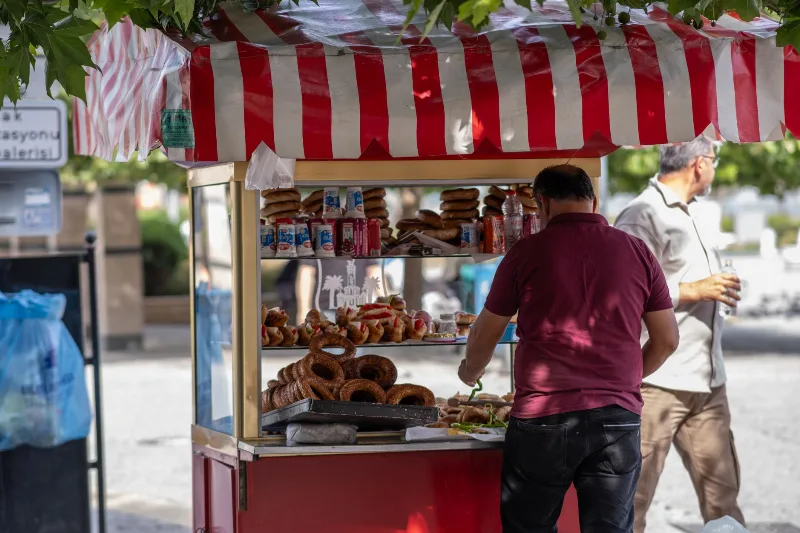
Sampling the Unique Flavors of İzmir's Street Food
İzmir's street food follows its own calendar, from sesame gevrek at sunrise to stuffed mussels and grilled kokoreç after dark. The city's Aegean setting shapes a cuisine built on olive oil, herbs and seafood.
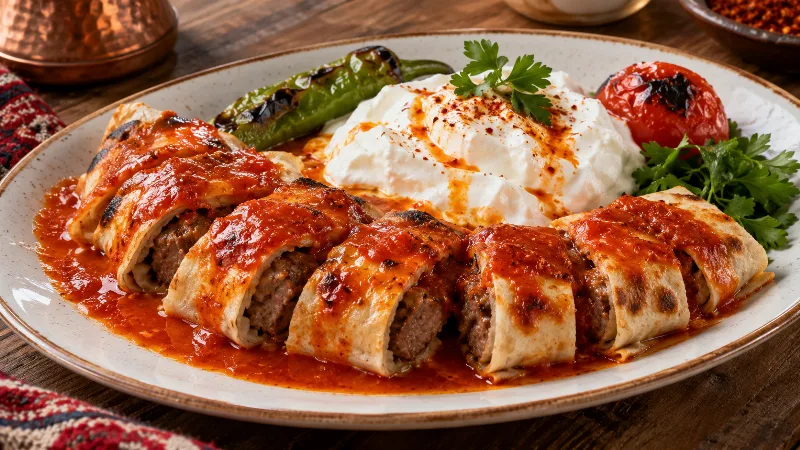
Beyti Kebabı
Beyti Kebabı is a Turkish kebab of grilled minced meat rolled inside thin lavash bread, dressed with warm tomato sauce and yogurt. It is a modern Istanbul dish rather than an old regional specialty, and it differs from İskender or Adana kebab in both its meat and its serving style.
Why Turkish Food Changes from Region to Region
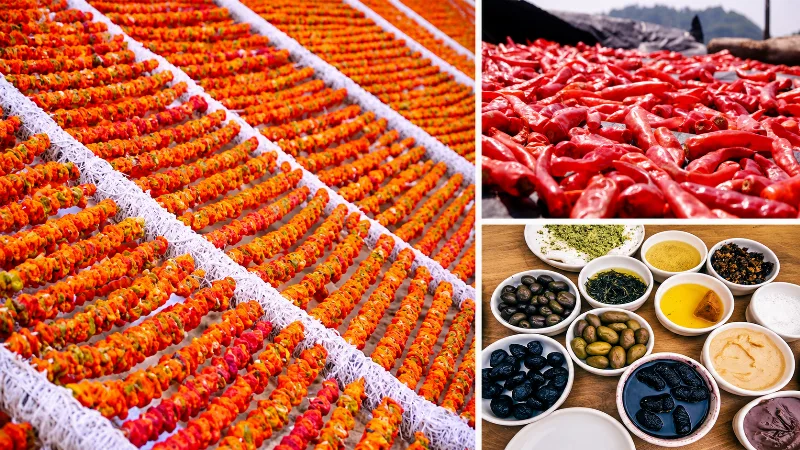
Climate, geography, agriculture and local history shape the ingredients, cooking methods and everyday dishes found across Türkiye. Türkiye’s cuisine is often described as a single national tradition, but food changes considerably from one region to another. Coastal climate, mountain geography, agricultural production, local history and available ingredients all influence what is cooked and how meals are prepared. A dish common on the Black Sea coast may be uncommon in southeastern Türkiye, while ingredients associated with the Aegean can play a much smaller role in the interior. These regional differences form one of the main characteristics of Turkish food culture.

The Seven Geographical Regions of Turkey
An introduction to Turkey’s seven geographical regions and the landscapes, climates and cultural characteristics that distinguish them.