
Midye Tava
Midye tava is a Turkish street food of battered, deep-fried mussels on skewers, eaten hot with tarator sauce and lemon. It is closely tied to Istanbul and the mussel-rich Marmara and Aegean coasts.
Midye tava is a Turkish street food made from mussels threaded onto thin skewers, coated in a light batter and deep-fried, then served hot with lemon and tarator — a sharp, garlicky sauce that is usually thickened with stale bread or ground walnuts. The name pairs midye (mussel) with tava, the shallow pan in which the skewers are fried. It is most strongly identified with Istanbul and with the coastal towns of the Marmara and Aegean regions, where mussels are farmed in quantity and eaten in several different forms, and it belongs to the same street-food repertoire as midye dolma, the stuffed mussels often sold from the same carts.
What Makes Midye Tava Distinct
Unlike midye dolma, in which cooked mussel meat is mixed with rice and herbs and packed back into the shell, midye tava uses only the shucked meat. The mussels are cleaned, briefly cooked or blanched, then pushed onto wooden or metal skewers, four to six to a stick. The skewer is what separates midye tava from other fried mussel preparations: it holds the small, irregular pieces together so that they fry as one unit and can be eaten with the fingers while walking.
The coating is deliberately thin. A heavy crust would bury the mussel entirely, so the batter is typically a loose mixture of flour and water, sometimes with egg or a little beer or carbonated water for lightness, and sometimes with nothing more than seasoned flour. The result is a crisp, pale-gold shell that gives way immediately to the soft, briny meat inside.
Where It Belongs
Midye tava is not a dish with a documented single place of invention. Fried mussels appear in several eastern Mediterranean and Black Sea kitchens, and the Turkish version sits within that broader coastal pattern rather than in a fixed hometown. What is clear is its urban identity: it became a fixture of Istanbul's evening street trade, sold from glass-fronted carts and small stands that also sell midye dolma, and it remains most visible in coastal cities where fresh mussels arrive daily.
Mussel cultivation in Türkiye is concentrated in the Marmara and Aegean seas, and the shells used for midye tava and midye dolma generally come from those waters. The dish is therefore tied less to a specific town than to a working coastline and to the street-corner economy of the cities along it.
How It Is Traditionally Prepared
Fresh mussels are scrubbed and opened, the meat removed and any grit or beard trimmed away. The meat is often given a short preliminary cooking so that the skewers fry evenly, then seasoned lightly with salt and sometimes pepper. Threading comes next, and it is the fiddliest part of the process: the pieces must be compact enough not to fall through the skewer during frying.
The skewers are dipped in batter and lowered into hot oil in a shallow pan, turned once, and lifted out as soon as the coating sets and colours. They are drained briefly and eaten almost immediately, because the contrast between crisp batter and moist mussel collapses quickly once the skewer cools. Salt, and in some stalls a dusting of paprika or a squeeze of lemon, is added at the moment of serving.
Tarator: The Sauce That Defines the Dish
Tarator is the constant companion. In the context of midye tava it is a pourable, garlic-forward sauce, most commonly built on bread soaked in water and squeezed dry, crushed with garlic, lemon juice, olive oil and often ground walnuts, which give it body and a faint bitterness. Some versions are looser and more acidic, closer to a vinaigrette; others are thick enough to cling to the batter.
It is worth noting that tarator is a flexible name in Turkish cooking and refers to more than one sauce. Yogurt-based tarator is served with fried vegetables and fish elsewhere, and walnut-based versions appear with different dishes in different regions. The sauce sold with midye tava in Istanbul is generally the garlicky, bread-and-walnut type, but stalls vary and no single formula is enforced.
How It Is Eaten
Midye tava is snack food rather than a seated meal. Skewers are handed over on a small plate or in paper, with a spoonful of tarator alongside and a lemon wedge to squeeze over the batter. In a form known as midye tava ekmek, the fried mussels are slipped into a split half-loaf of white bread with tarator and eaten as a sandwich — a substantial late-evening purchase rather than a garnish.
The dish appears in the same hours as midye dolma: in the afternoon and, more heavily, in the evening, when the carts set up. It also turns up as a meze on meyhane tables, where the acidity of the tarator and lemon works alongside rakı. Because frying is quick and the mussels do not keep well once cooked, it is overwhelmingly food to be eaten on the spot.
Texture, Flavour and Appearance
A good skewer is pale gold and slightly uneven, with batter clinging irregularly to the mussels rather than forming a smooth shell. The first bite is crisp and faintly salty; beneath it the mussel is tender, dark-edged and distinctly marine, with a sweetness that the lemon sharpens. The tarator adds garlic heat, acidity and a nutty thickness that offsets the oil. Eaten without the sauce, the skewer can taste flat, which is why the two are treated as a pair.
Variations and Related Dishes
Midye tava should not be confused with fried calamari, which is more common on restaurant menus and is usually served in rings with a mayonnaise-based sauce. The mussel's flavour is sweeter and more pronounced, and the skewered format is particular to this dish.
Judging a Good Skewer
Because the ingredient is inexpensive and the cooking is fast, midye tava depends on turnover. Freshly opened mussels, a batter mixed in small batches and oil that is changed often make the difference between a clean-tasting skewer and a heavy one. The sauce should taste of garlic and lemon rather than of stale bread, and the batter should still be warm when it reaches the hand. These are the practical signs most regular customers look for, and they explain why the dish stays a street-corner food rather than moving into closed kitchens.
Related content

Istanbul
Istanbul is Türkiye's largest city and the country's only metropolis that spans two continents, divided by the Bosphorus strait into a European and an Asian half. Its long run as an imperial capital left a historic core of palaces, mosques and bazaars that still shapes the city's identity.
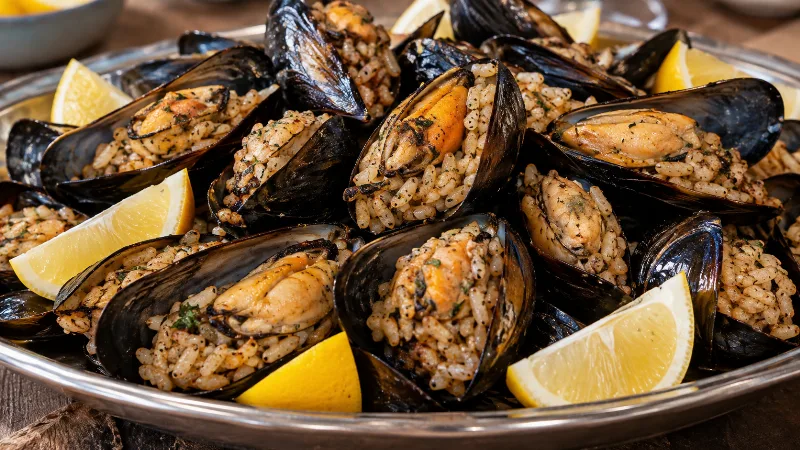
Midye Dolma
Midye dolma are mussels filled with a spiced rice mixture of pine nuts, currants and herbs, sold from trays on street corners and prepared at home along Türkiye's Aegean and Marmara coasts.
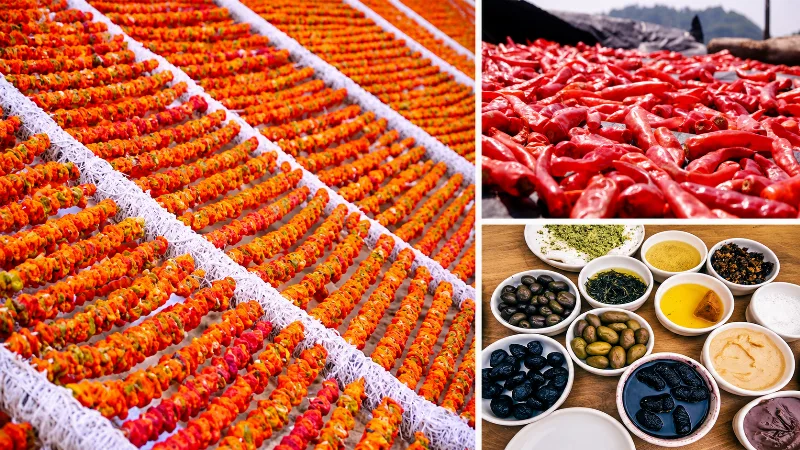
Why Turkish Food Changes from Region to Region
Climate, geography, agriculture and local history shape the ingredients, cooking methods and everyday dishes found across Türkiye. Türkiye’s cuisine is often described as a single national tradition, but food changes considerably from one region to another. Coastal climate, mountain geography, agricultural production, local history and available ingredients all influence what is cooked and how meals are prepared. A dish common on the Black Sea coast may be uncommon in southeastern Türkiye, while ingredients associated with the Aegean can play a much smaller role in the interior. These regional differences form one of the main characteristics of Turkish food culture.
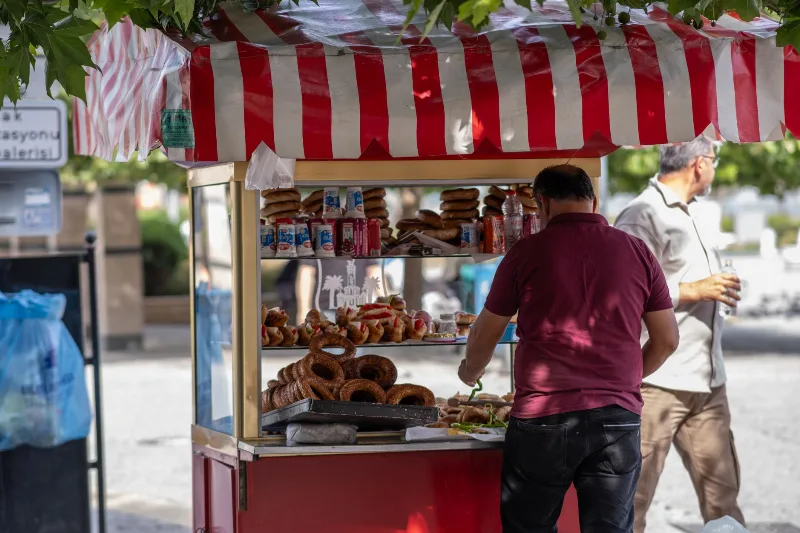
Sampling the Unique Flavors of İzmir's Street Food
İzmir's street food follows its own calendar, from sesame gevrek at sunrise to stuffed mussels and grilled kokoreç after dark. The city's Aegean setting shapes a cuisine built on olive oil, herbs and seafood.

Izmir's Coastal Charm
İzmir is a western Turkish city built around a gulf of the Aegean Sea, where a long waterfront, nearby coves, ancient sites and Aegean cooking shape its coastal character.
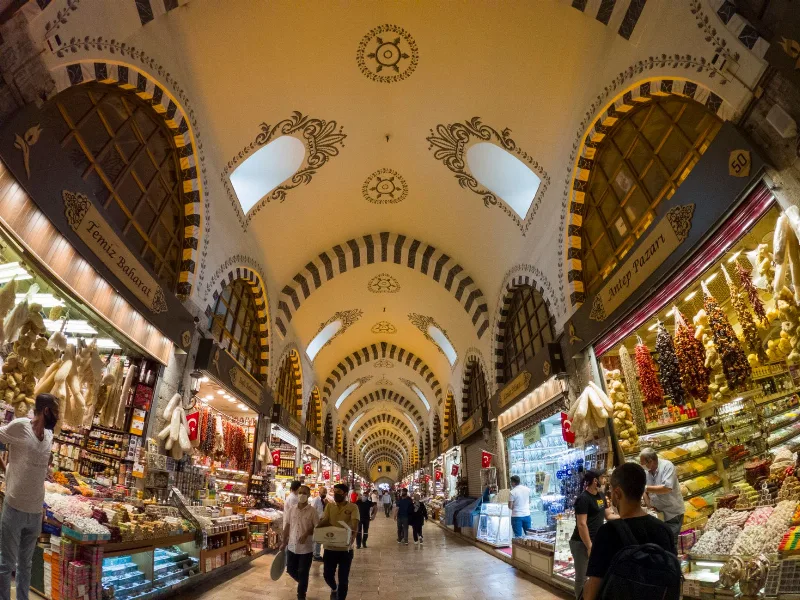
The Vibrant Markets of Istanbul: A Cultural Experience
Explore the bustling markets of Istanbul, where vibrant colors, sounds, and aromas create an immersive cultural experience.