
Midye Dolma
Midye dolma are mussels filled with a spiced rice mixture of pine nuts, currants and herbs, sold from trays on street corners and prepared at home along Türkiye's Aegean and Marmara coasts.
Midye dolma is a Turkish dish of mussel shells filled with a seasoned rice mixture, usually built around onion, pine nuts, currants, herbs and warm spices. The mussels are cleaned, stuffed while still raw, then cooked together so the rice absorbs the liquor released by the shellfish. The name comes from the verb dolmak, "to be filled", the same root behind the family of stuffed vegetable dishes known collectively as dolma. Although it is made in households along the Aegean and Marmara coasts, midye dolma is best known as a street food, sold from wide trays lined with ice and handed over with a wedge of lemon.
What midye dolma is, and how it differs from other mussel dishes
Midye dolma belongs to the stuffed-dish family rather than to the seafood stews. In a dolma, the filling is the point: the mussel acts as both container and flavouring, lending its briny liquor to the rice. This makes it quite different from midye tava, in which mussels are battered and deep-fried and served with a garlic sauce, or from midye pilaki, where the shellfish is cooked in olive oil with carrots, potatoes and tomato. In those dishes the mussel itself is the main ingredient. In midye dolma the mussel is the casing, and the rice is what the eater notices first.
The dish is also distinct from other Turkish dolmas. Vine leaves, peppers, aubergines and courgettes are all stuffed in Turkish cooking, and most of those fillings are built on rice with herbs and, often, minced meat. Midye dolma is normally meatless, and its filling leans sweet-savoury rather than savoury alone.
Istanbul, İzmir and the coastal identity of the dish
Midye dolma is strongly tied to the coastal cities of western Türkiye, above all Istanbul and İzmir, and to the Aegean and Marmara shorelines in general. It is there that mussels are plentiful, that the street trade in the dish is concentrated, and that home cooks are most likely to prepare it themselves. Mussels used for the dish come from both wild harvesting and cultivated beds along these coasts.
The precise origin of the dish is not clearly documented. Stuffed mussels are widely described as a coastal urban food that took shape in the late Ottoman cities, but a single point of origin is not reliably established, and claims that it belongs to one city exclusively should be treated cautiously. What is clear is the pattern: a seafood that was cheap and abundant, a rice filling familiar from the wider dolma tradition, and a form that could be sold piece by piece on the street.
The rice filling
The filling is what gives midye dolma its character. Finely chopped onion is softened and combined with short-grain rice, then flavoured with pine nuts, currants, black pepper and often cinnamon and allspice. Fresh herbs, usually parsley and frequently dill, are folded in. Some cooks add a little tomato or pepper paste, sugar or lemon for balance. The mixture is used raw or partly prepared, but not fully cooked: the rice finishes cooking inside the mussel, soaking up the released juices.
The combination of currants and pine nuts is typical of a broader Ottoman-influenced rice style that also appears in pilafs and in some other dolmas. It gives the dish a sweet-savoury profile that surprises first-time eaters who expect a purely savoury seafood snack.
Cleaning, stuffing and cooking
Preparing midye dolma by hand is laborious, which is one reason it is bought from vendors as often as it is made at home. The mussels are scrubbed and their shells opened slightly, either by careful manipulation or by briefly heating them, so that the filling can be pushed in without breaking the shell. The rice is packed in firmly, and the shells are then closed or pressed together.
Cooking is gentle. The stuffed mussels are arranged tightly in a pot, often with the shells wedged against one another so the filling does not escape, and cooked with a little water, oil and sometimes lemon. They are usually steamed or simmered rather than boiled vigorously, and left to rest so the rice settles. The result is a mussel that holds its shape and a filling that is moist rather than soupy.
Texture, flavour and appearance
A good midye dolma has rice that is tender but still distinct, not collapsed into porridge. The mussel should taste of the sea without being overpowering, and the filling should carry a gentle sweetness from the currants, a resinous note from the pine nuts, and a warmth from cinnamon and allspice. Herbs keep it fresh. Lemon, squeezed over at the moment of eating, sharpens everything.
Visually, the dish is modest: dark, ridged shells packed in rows, the rice visible where the shells gape slightly, often garnished with lemon wedges. The contrast between the black-blue exterior and the pale, speckled filling is part of what makes a tray of them recognisable.
How it is served and eaten
Midye dolma is eaten cold or at room temperature, never hot. Street vendors keep the mussels on beds of ice and serve them with lemon. To eat one, the shell is opened completely, the empty half is pulled away, and that half is often used to scoop or to squeeze lemon over the rice before the whole thing is tipped into the mouth in one bite. In homes, the mussels are arranged on a plate with lemon wedges and served as part of a spread of meze or as a snack with other cold dishes.
The dish is not tied to a particular mealtime. It appears as an evening street snack, as a starter, and as one of several cold dishes laid out for guests. In coastal towns it is strongly associated with summer and with eating outdoors.
Variations
Recipes differ from household to household and from vendor to vendor. Some fillings are quite plain, emphasising rice, onion and herbs; others are strongly spiced, with more cinnamon or with a noticeable sweetness. The amount of pine nuts and currants varies considerably, partly because they are the most expensive components. Whether tomato paste appears at all is a matter of local habit. Dill is common in some kitchens and absent in others.
Mussel size also shapes the result: small mussels give a higher ratio of shellfish to rice, while larger ones hold more filling. Vendors in different cities may prefer one or the other. There is no single authoritative version, and it is more accurate to speak of a shared technique with a range of seasoning habits.
What the dish means in coastal food culture
Midye dolma sits at the intersection of two Turkish traditions: the sophisticated stuffed-rice cooking associated with Ottoman kitchens and the practical street trade of the Aegean and Marmara ports. That combination explains its character. It is inexpensive enough to be an everyday snack and refined enough in its seasoning to appear on a meze table. For anyone reading a menu in Istanbul or İzmir, recognising it as a cold stuffed-rice dish rather than a hot seafood main is the key to understanding what will arrive.
Related content
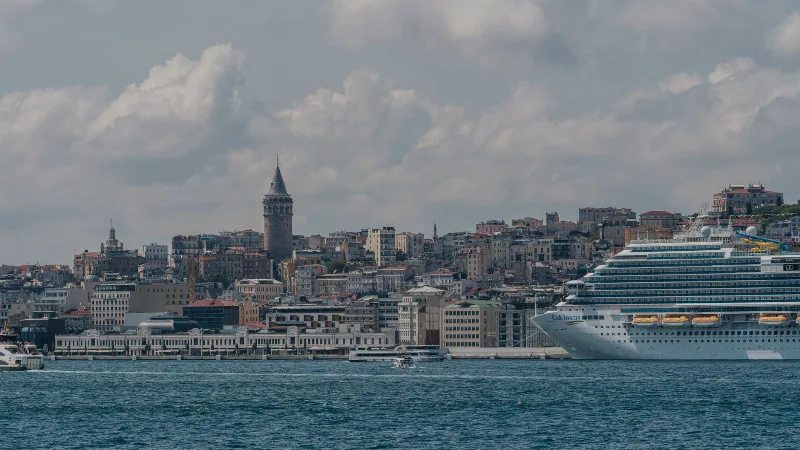
Istanbul
Istanbul is Türkiye's largest city and the country's only metropolis that spans two continents, divided by the Bosphorus strait into a European and an Asian half. Its long run as an imperial capital left a historic core of palaces, mosques and bazaars that still shapes the city's identity.
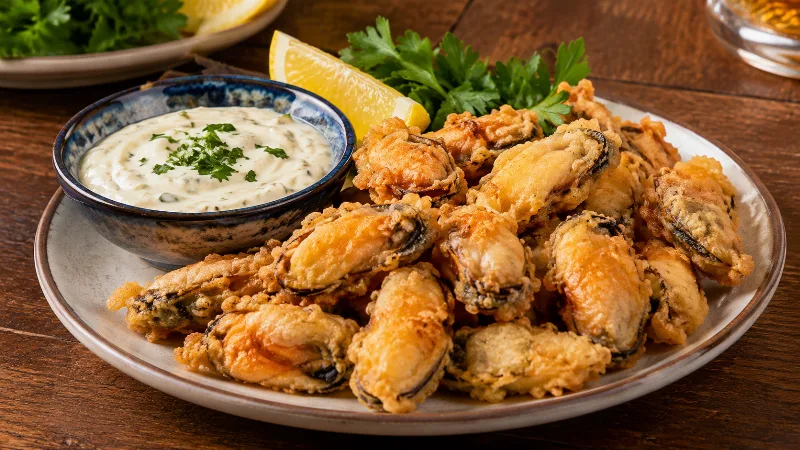
Midye Tava
Midye tava is a Turkish street food of battered, deep-fried mussels on skewers, eaten hot with tarator sauce and lemon. It is closely tied to Istanbul and the mussel-rich Marmara and Aegean coasts.
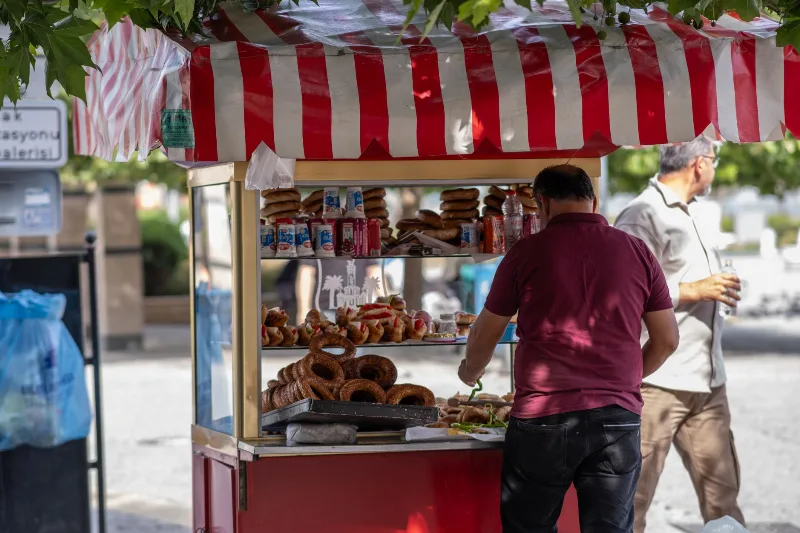
Sampling the Unique Flavors of İzmir's Street Food
İzmir's street food follows its own calendar, from sesame gevrek at sunrise to stuffed mussels and grilled kokoreç after dark. The city's Aegean setting shapes a cuisine built on olive oil, herbs and seafood.
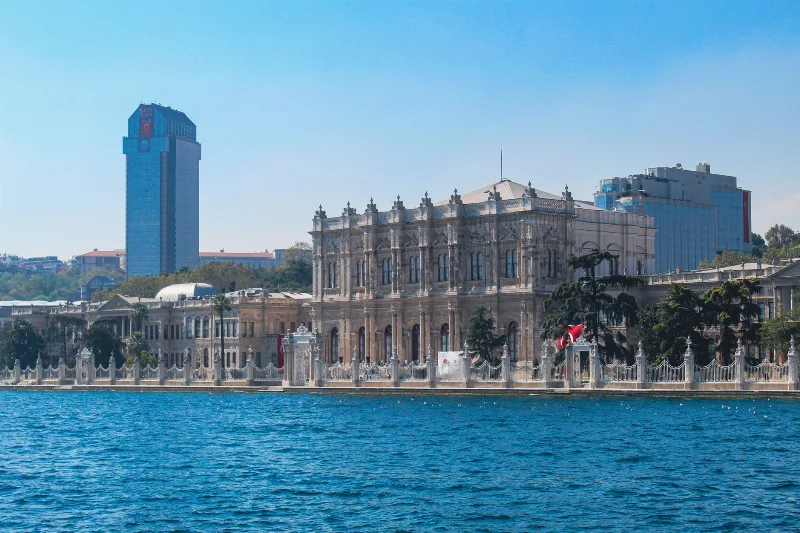
Dolmabahçe Palace
Dolmabahçe Palace is the 19th-century Ottoman palace on the European shore of the Bosphorus in Istanbul, built under Sultan Abdülmecid I as the empire's main administrative centre. It was the sultans' residence in the empire's final decades and the place where Mustafa Kemal Atatürk died in 1938.

Izmir's Coastal Charm
İzmir is a western Turkish city built around a gulf of the Aegean Sea, where a long waterfront, nearby coves, ancient sites and Aegean cooking shape its coastal character.

The Bosphorus Strait and Its Historic Mansions
The Bosphorus is the winding strait that divides Istanbul between Europe and Asia, and its shores are lined with wooden Ottoman-era waterfront mansions known as yalıs.