
The Bosphorus Strait and Its Historic Mansions
STORIES FROM TÜRKİYE
The Bosphorus is the winding channel of water that runs through the middle of Istanbul, separating the European side of the city from its Asian side. It links the Black Sea in the north with the Sea of Marmara in the south, and it has shaped the daily rhythm of the city for thousands of years. Along its banks stand elegant wooden waterfront houses from the Ottoman era, known as yalıs, which give the strait a character found almost nowhere else.
A Waterway Between Two Continents
The strait is roughly thirty kilometres long and relatively narrow, though its width changes noticeably from one stretch to another. In places the two continents feel close enough to call across the water, while in others the channel opens into broader bays and inlets. Its depth varies as well, reaching well over fifty metres in several sections.
Two currents move through the Bosphorus at the same time. A surface flow carries less salty water from the Black Sea towards the Marmara, while a deeper current pushes denser, saltier water in the opposite direction. This constant movement keeps the water oxygenated and helps fish migrate between the seas, which is one reason the strait has always been rich in marine life.
The name itself comes from Greek, meaning something close to “cow passage”, and ancient stories told of a figure crossing the water in the form of a heifer. Whatever the legend, the strategic value of this narrow passage was understood by every civilisation that settled on its shores.
The Yalı Tradition
A yalı is a waterfront residence built directly on the edge of the Bosphorus, usually with its own pier or boathouse. Most were constructed between the seventeenth and nineteenth centuries for Ottoman officials, merchants and members of the imperial court. They are typically made of timber, with a stone or masonry ground floor that protects the structure from damp, and upper storeys that project outwards over the water.
Those projecting sections, supported on wooden brackets, create shaded balconies and wide windows that catch the breeze from the strait. Interiors were often decorated with painted ceilings, carved panels and fine woodwork, and gardens were planted with plane trees, cypresses and flowering shrubs. The oldest surviving example, the Amcazade Hüseyin Paşa Yalısı in Kanlıca, dates from the late seventeenth century.
Many yalıs were lost to fires over the centuries, since timber neighbourhoods burned easily, and others were rebuilt in later styles. Those that remain are now protected as cultural heritage, and a number of them still stand in family hands.
Villages Along the Shores
The European shore is marked by a string of old settlements that grew up around small harbours and ferry landings. Bebek, Arnavutköy, Yeniköy, Tarabya and Sarıyer each have their own atmosphere, with narrow streets running uphill from the water and clusters of historic houses facing the strait.
On the Asian side, neighbourhoods such as Kuzguncuk, Kandilli, Çengelköy and Beykoz offer a quieter counterpart, with wooden houses, tea gardens and views back towards the European skyline. Ferries connect the two shores throughout the day, and the short crossings remain one of the simplest ways to understand how the city is laid out.
Fortresses, Palaces and Lighthouses
Two fortresses guard the narrowest point of the strait. Rumelihisarı was built in 1452 by Sultan Mehmed II shortly before the conquest of Constantinople, while Anadoluhisarı on the opposite shore was completed in the 1390s under Bayezid I. Together they controlled passage through the channel.
Further south, grand imperial buildings face the water, including the palaces of Dolmabahçe and Beylerbeyi and the smaller pavilion of Küçüksu. The Maiden's Tower sits on a tiny islet off Üsküdar, and at the northern entrance two lighthouses, Rumeli Feneri and Anadolu Feneri, mark the meeting point with the Black Sea.
Seasons and Everyday Life
The strait changes character with the seasons. Spring brings the blooming of Judas trees, whose purple flowers appear along the slopes in April and May. Autumn is associated with the migration of bluefish, a favourite catch known locally as lüfer, when small boats gather in the current.
Winter can bring mist that softens the outlines of the mansions and the minarets behind them, while summer evenings fill the water with the sound of ferries and the calls of seagulls. Cormorants dry their wings on old wooden posts, and fishing lines are cast from the quays at almost any hour.
For residents and visitors alike, the Bosphorus works as a shared public space. People cross it on commuter boats, walk its promenades, and watch the light change over the water between the two continents. The yalıs standing along the shoreline remain the clearest reminder of how architecture here has always been designed to face the sea.
Historic places
Explore history →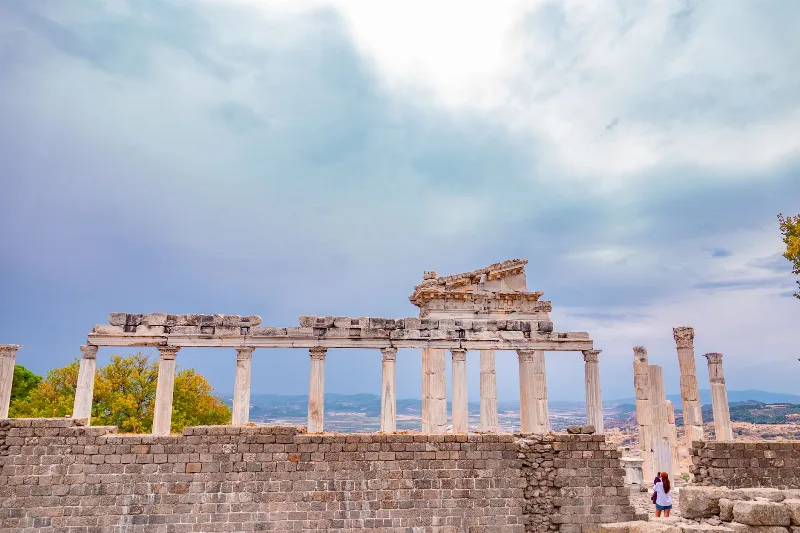
Pergamon
Pergamon was the Hellenistic capital of the Attalid dynasty in western Türkiye, built around a steep acropolis above the modern town of Bergama. Its Great Altar, theatre and Sanctuary of Asclepius make it one of the most important archaeological sites in Anatolia and a UNESCO World Heritage Site.
Explore →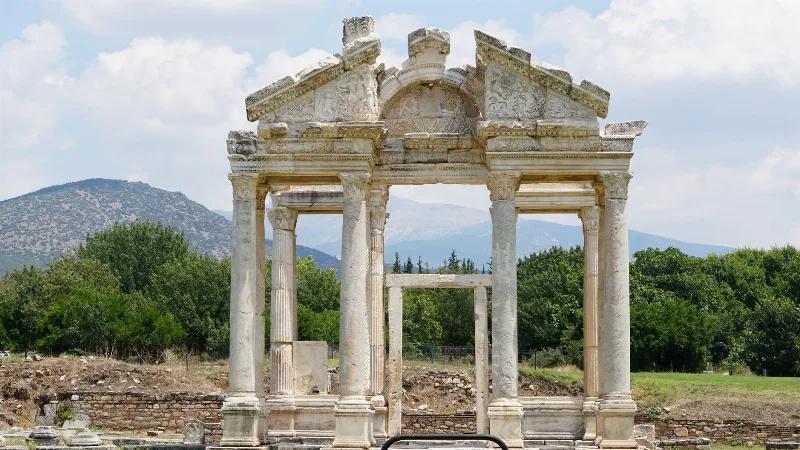
Aphrodisias
Aphrodisias is an ancient city in Aydın Province, Türkiye, built around a sanctuary of Aphrodite and celebrated for its marble sculpture and remarkably intact public buildings. It has been a UNESCO World Heritage Site since 2017.
Explore →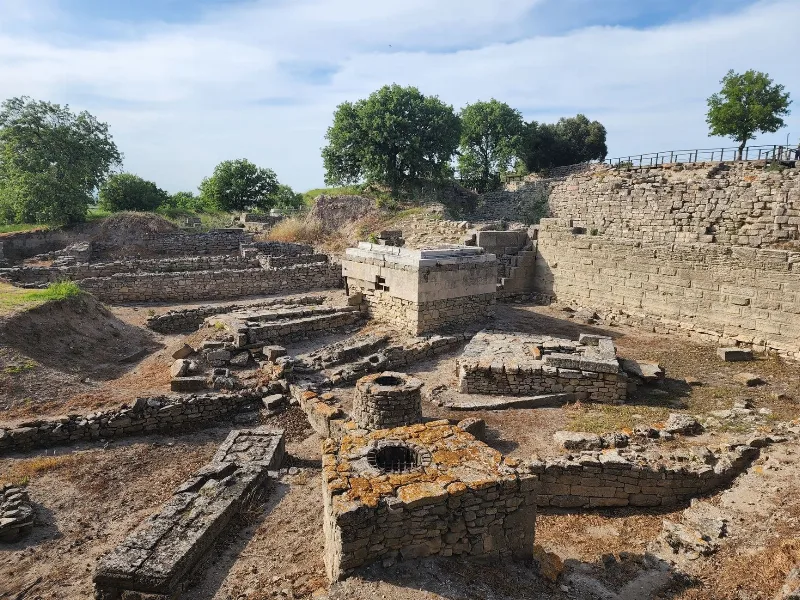
Troy
Troy is the excavated mound of Hisarlık in Çanakkale Province, Türkiye, inhabited from the Early Bronze Age to the Roman era and linked with the Ilion of Homer's Iliad. Its nine settlement layers and surviving Bronze Age fortifications make it one of the most important stratified sites in the eastern Mediterranean.
Explore →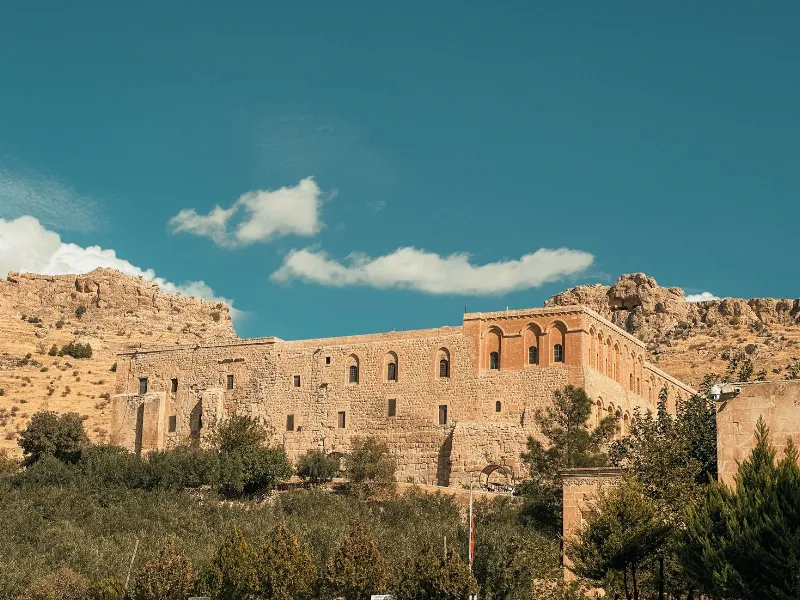
Alahan Monastery
Alahan Monastery is a 5th-century early Christian complex in the Taurus Mountains of Mersin Province, Türkiye, whose basilicas, baptistery, colonnade and rock-cut tombs preserve the plan of a late antique monastery.
Explore →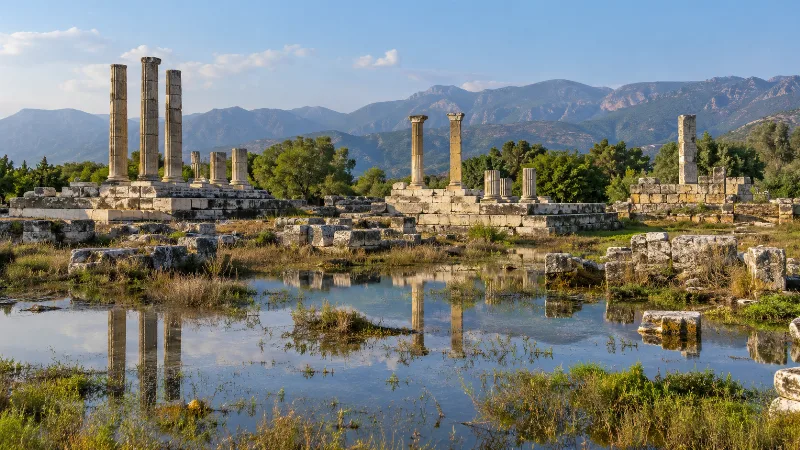
Letoon
Letoon is the ancient Lycian sanctuary of Leto near Xanthos in Muğla Province, home to three temples and the trilingual inscription that helped decipher the Lycian language.
Explore →Related content
Istanbul
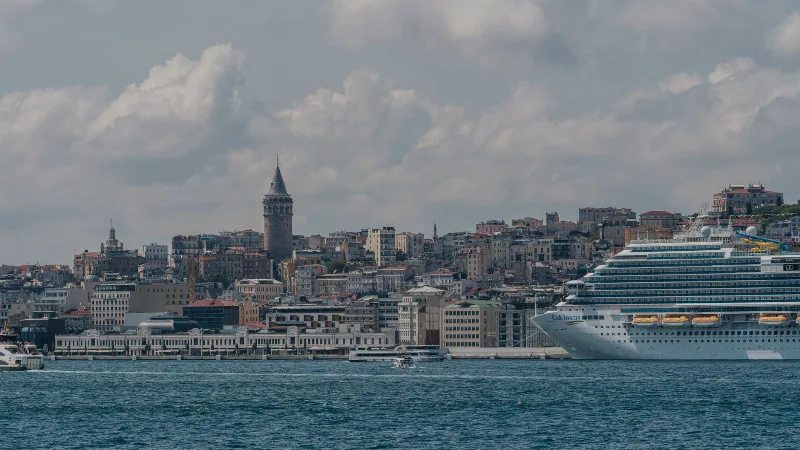
Istanbul is Türkiye's largest city and the country's only metropolis that spans two continents, divided by the Bosphorus strait into a European and an Asian half. Its long run as an imperial capital left a historic core of palaces, mosques and bazaars that still shapes the city's identity.
2-Day Istanbul Bosphorus Route
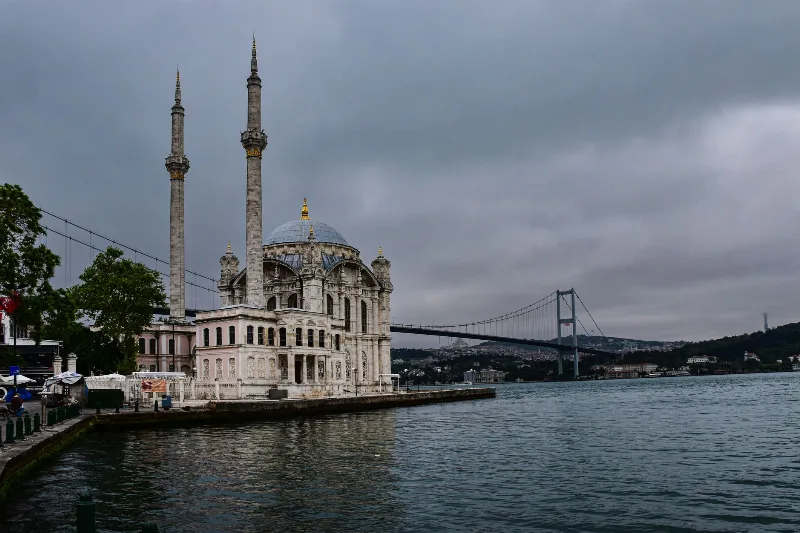
A two-day Bosphorus route that starts on Istanbul's European shore at Ortaköy and Bebek, includes a ferry cruise up the strait, then crosses to the Asian side for Kadıköy and Üsküdar.
Anadolu Hisarı
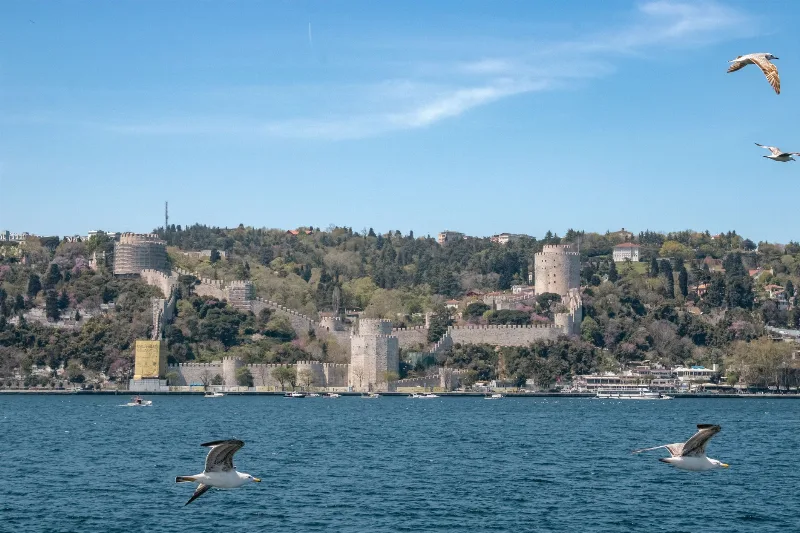
Anadolu Hisarı is an Ottoman fortress built by Sultan Bayezid I in 1393–1394 on the Asian shore of the Bosphorus in Istanbul, commanding the narrowest stretch of the strait. Long described as the oldest surviving Ottoman building in the city, it was later reinforced by Mehmed II in preparation for the conquest of Constantinople.
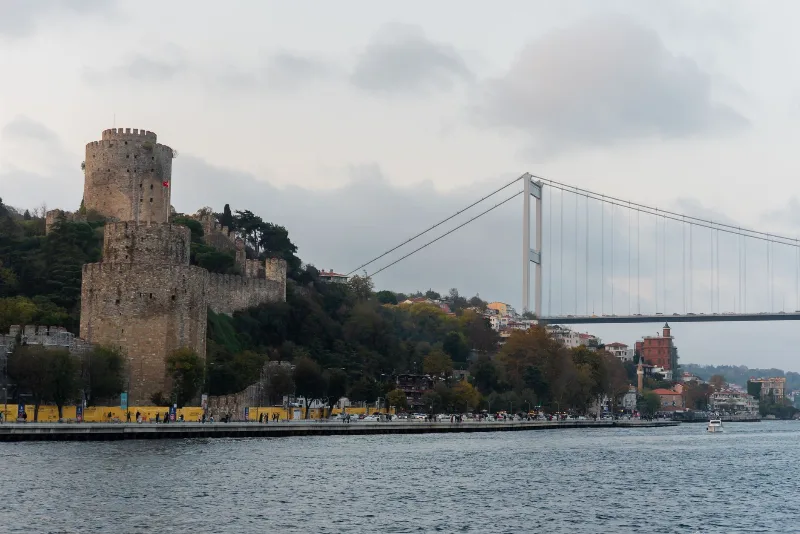
Rumeli Hisarı
Rumeli Hisarı is a 15th-century Ottoman fortress on the European shore of the Bosphorus in Istanbul, built by Sultan Mehmed II in 1452 to control the strait before the conquest of Constantinople. It survives today as a monumental open-air museum.
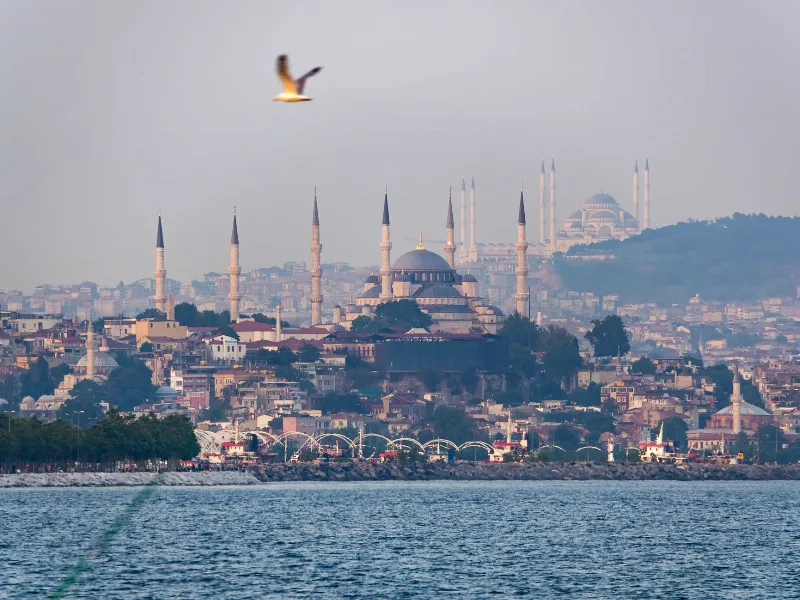
Istanbul's Historic Sultanahmet
Sultanahmet is Istanbul's historic core, a walkable peninsula of Byzantine and Ottoman monuments facing the Bosphorus and the Sea of Marmara.
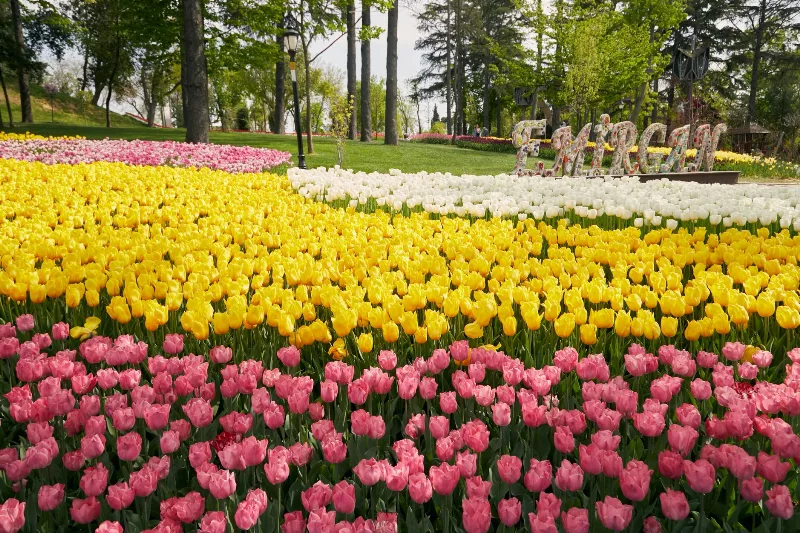
Tulip Bloom in Emirgan Park, Istanbul
Each spring, millions of tulips are planted across the terraced hillsides of Emirgan Park on the Bosphorus, turning Istanbul's largest public garden into a concentrated display of colour that usually peaks between late March and mid-April.