
Kütahya Ceramic Tile Art and Workshops
Kütahya's ceramic tradition rests on quartz-rich clay, Ottoman-era motifs and small family workshops where tiles are still shaped and painted by hand.
Kütahya, a city in the inland highlands of western Anatolia, has been associated with pottery for centuries. Its name is closely tied to çini, the glazed and painted ceramic tiles and vessels that decorate mosques, fountains, homes and tables across Türkiye. What distinguishes the city is not only the finished work but the living system behind it: small workshops, hand-prepared clay and painters who learn their motifs by repetition, following forms that have been passed down through generations.
A City Shaped by Clay and Quartz
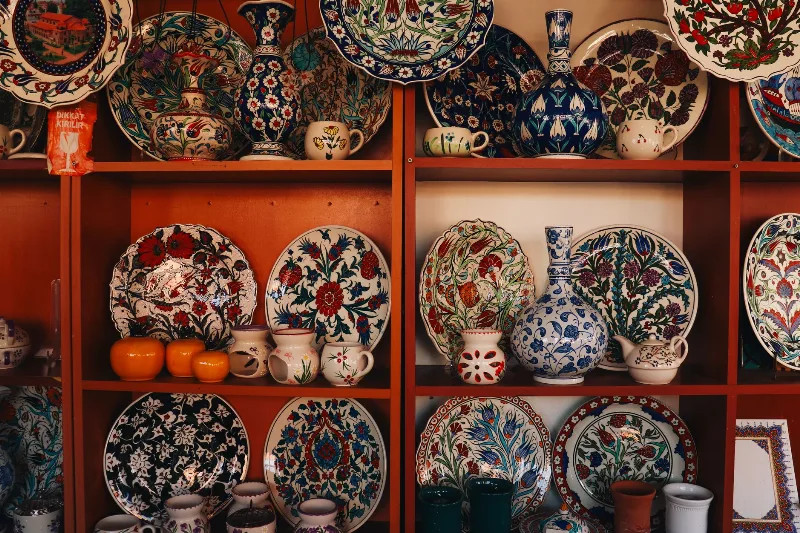
The character of Kütahya ceramics begins with the material. Local potters work with a composite body in which quartz, clay and a glassy frit are combined, a technique often described as fritware. This mixture produces a pale, dense surface that holds a white slip and glaze particularly well, allowing painted decoration to sit brightly on top. Because the body is fired twice, once before decoration and once after glazing, the finished tile has a smooth, glassy face that reflects light and resists damp.
The surrounding region supplies much of what the workshops need. Clay pits, quartz sources and fuel for kilns made the area practical for pottery long before the city became well known for tiles. Even today, many studios prepare and age their own clay rather than buying a ready-made body, and the texture of the raw material remains a point of pride among craftspeople.
The Ottoman Legacy of Painted Tiles
Kütahya's tile production is usually discussed alongside the celebrated workshops of İznik, which reached their height in the sixteenth century with bold cobalt blues, turquoise and a distinctive raised red. As İznik production declined towards the end of the seventeenth century, potters in Kütahya continued and gradually absorbed the demand for architectural tiles and tableware. The city's workshops developed their own balance of colours, often favouring a softer blue, a clear turquoise, a warm coral red and a muted green.
This history is visible in the built environment. Tile panels appear in mosque interiors, on fountains, in bathhouses and on the façades of public buildings, while ceramic vessels and plates found their way into ordinary homes. The craft therefore sits at the meeting point of architecture and domestic life, which helps explain why it has survived as a working trade rather than only a museum subject.
Inside a Kütahya Workshop
A visit to a workshop reveals a sequence of slow, separate stages. Plates are thrown on a wheel or pressed into plaster moulds, tiles are cut flat and left to stiffen, and everything is dried gradually to prevent cracking. The first firing hardens the body. Painting follows: outlines are drawn in fine strokes, colour is applied in flat washes, and the painter works from memory rather than a printed pattern.
Glazing comes next, usually by dipping or pouring, and the second firing fuses glaze and pigment into a single surface. Each stage has its own specialist, and in many small studios the same family covers several of them. Apprentices typically begin with borders and repeating leaf forms before attempting a full composition, a training that can take years.
Motifs, Colours and Meanings
The vocabulary of decoration is largely botanical and geometric. Tulips, carnations, hyacinths, roses, vine leaves, grapes and stylised birds recur across plates, jugs and tile panels. On tiles, designs are arranged in repeating units so that small panels can be combined into larger schemes; on plates, the composition usually spirals outward from a central rosette. Symmetry, rhythm and the balance of empty white ground matter as much as the painted motif itself.
An Everyday Craft Beyond the Display Case
Ceramics remain part of daily life in Kütahya. Tiles are used for house signs, shop fronts, memorials and small panels in modern buildings, while painted bowls and jugs are sold as household objects rather than only as collectibles. The city also holds collections of historic pieces in its ceramics museum and in the older quarters, where restored traditional houses show how tilework was once integrated into domestic interiors.
Reading the Craft as a Visitor
For anyone interested in handicraft, the pleasure of Kütahya lies in close looking. Brush marks remain visible under the glaze, colours vary slightly from piece to piece, and the edges of a hand-cut tile are rarely perfectly straight. These small irregularities are evidence of handwork rather than defects, and they connect a modern plate directly to the sixteenth-century panels that inspired it. Understanding the material, the sequence of firings and the inherited motifs turns a simple tile into a legible record of a regional craft.
Related content
Turkish Ceramics and Pottery
Turkish ceramics and pottery reflect centuries of Anatolian craftsmanship, from Ottoman İznik tiles to the clay workshops of Avanos and Kütahya. Their colours, forms and motifs remain part of Türkiye's living cultural heritage.
Traditional Crafts of a Turkish Bazaar
Türkiye's bazaars are living archives of craft, where copper, çini ceramics, kilims and ebru marbling are still shaped by hand. This page explores the trades, materials and traditions behind them.
Cultural Heritage of Anatolia
Anatolia's cultural heritage spans millennia, blending ancient civilizations, architectural marvels, and living traditions across Türkiye.
Eskişehir
Eskişehir is a university city on the Porsuk River in northwestern Central Anatolia, where a restored Ottoman-era quarter and a modern, pedestrian-friendly centre sit side by side.
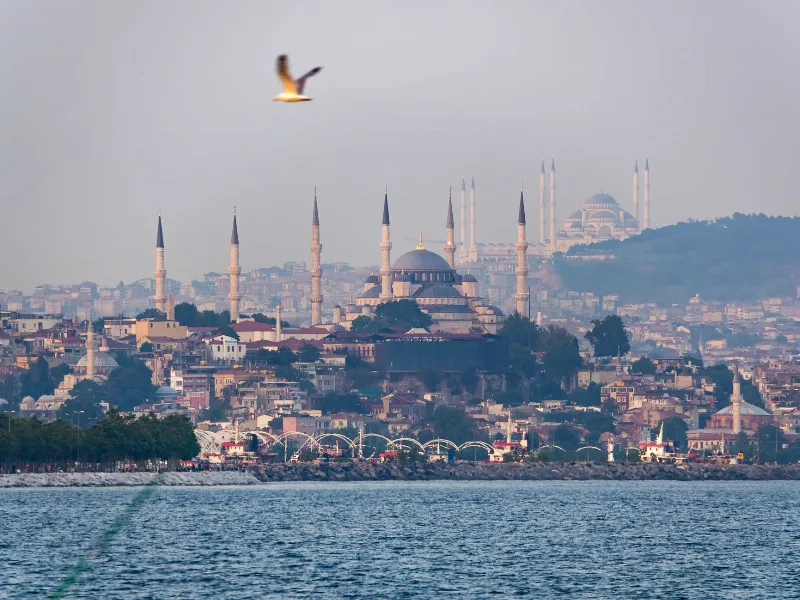
Istanbul's Historic Sultanahmet
Sultanahmet is Istanbul's historic core, a walkable peninsula of Byzantine and Ottoman monuments facing the Bosphorus and the Sea of Marmara.
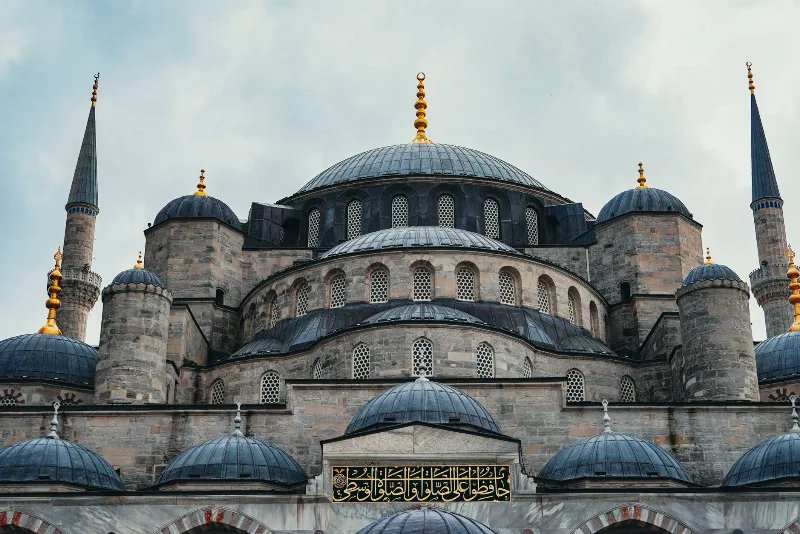
Blue Mosque
The Blue Mosque, known formally as the Sultan Ahmed Mosque, is an early 17th-century Ottoman mosque in Istanbul famous for its hand-painted blue Iznik tiles and six minarets.
4-Day Marmara Sea Route
A four-day loop around the Sea of Marmara that starts in Istanbul, crosses to Yalova, travels inland to Bursa and finishes among the ruins of Troy and the memorials of the Gallipoli peninsula. The itinerary is built around short, logical daily drives rather than long transfers.
Afyonkarahisar Marble Quarries and Stonework Tradition
Afyonkarahisar's marble quarries have shaped the province's buildings, crafts and working life for centuries. The region's pale stone travels from hillside pits to workshops where carvers keep a long stoneworking tradition alive.