
Turkish Ceramics and Pottery
Turkish ceramics and pottery reflect centuries of Anatolian craftsmanship, from Ottoman İznik tiles to the clay workshops of Avanos and Kütahya. Their colours, forms and motifs remain part of Türkiye's living cultural heritage.
Türkiye has shaped clay into art for thousands of years, and ceramics remain one of the country's most recognizable cultural expressions. From the banks of the Kızılırmak to the workshops of western Anatolia, pottery and tile-making link Hittite, Roman, Byzantine, Seljuk and Ottoman traditions into a single continuous story. This heritage appears on mosque walls, in museum collections, on historic fountains and in village studios, where the potter's wheel and the kiln still set the rhythm of daily work.
Clay, Rivers and Anatolian Geography
Avanos, in the Cappadocia region of Nevşehir province, is among the most familiar pottery centres in Türkiye. The red clay carried by the Kızılırmak, the longest river within the country, has supported local workshops for generations, and the soft volcanic tuff of the surrounding valleys has long provided both material and inspiration. Other traditions developed around Menemen in İzmir province, known for bright hand-painted plates, and Sille near Konya, where local clay was shaped into domestic vessels. Each area worked with the earth available to it, so the colour and texture of Anatolian pottery vary noticeably from one region to another.
İznik and the Ottoman Tile Tradition
İznik, a town in Bursa province beside Lake İznik, gave its name to the most celebrated tiles in Ottoman art. During the fifteenth and sixteenth centuries, workshops there produced a white-bodied ceramic made with a quartz-rich paste and decorated under a clear glaze. Cobalt blue, turquoise and a distinctive tomato-red were applied in bold floral designs such as tulips, carnations, hyacinths and the stylised saz leaf. These tiles cover the interiors of mosques, palaces and mausoleums in İstanbul, Bursa and Edirne, turning whole walls into gardens of colour. The craft declined later, but its vocabulary of motifs still defines how Ottoman decorative art is recognised around the world.
Kütahya and Çanakkale
Kütahya, in the inner Aegean region, became the other great ceramic centre. As İznik production faded, Kütahya workshops continued and expanded, producing tiles, plates, cups and small figurines with a lighter, often pastel palette. The city's long association with tile-making is still visible in its architecture and museums. Çanakkale, on the Dardanelles strait, developed a different style, with vessels such as jugs, vases and bowls shaped by hand and finished in earthy tones. Its position between the Aegean and Marmara worlds encouraged a decorative language that feels distinct from both İznik and Kütahya.
Forms, Motifs and Technique
Beyond tiles, Turkish pottery covers a wide range of forms: the testi, a narrow-necked water jug; the çömlek, a rounded cooking pot; wide serving plates; oil lamps; and decorative panels. Potters usually shape the clay on a kick wheel, allow it to dry, then decorate it by hand before a first firing and glazing. Motifs often repeat across centuries — the tulip, the rose, the vine leaf, the crescent and geometric bands — and colour choices carry regional meaning. Cobalt and turquoise recall early Ottoman work, while warm reds and greens belong to later styles. Learning these patterns takes patience, since a single tile may pass through several pairs of hands.
Where Ceramic Heritage Can Be Seen
Ceramic traditions are woven into Türkiye's built heritage. The tiled interiors of the Yeşil Mosque and Yeşil Türbe in Bursa, the Rüstem Paşa Mosque in İstanbul and the mausoleums of the Ottoman sultans show how tiles were used for both ornament and architecture. Museums in İznik, Kütahya and Çanakkale hold collections that trace techniques and designs over time, and archaeological museums across the country display older Anatolian ceramics, including Hittite and Phrygian examples. In Cappadocia, visitors can watch potters at work in Avanos and see how local families pass the craft from one generation to the next. Together these places show that ceramics are not a frozen tradition but a living practice.
Related content
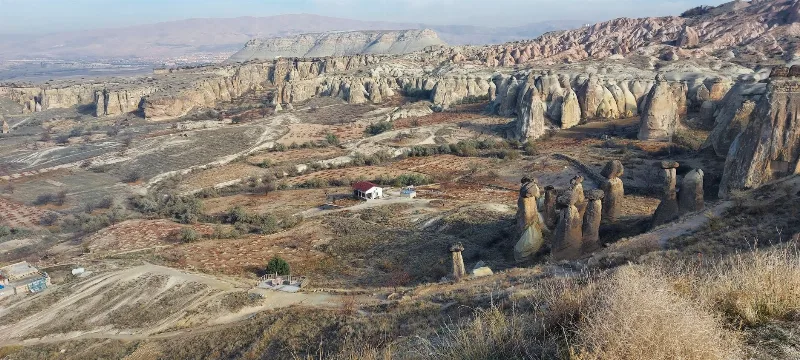
Cappadocia
Cappadocia is a region of Central Anatolia in Turkey defined by eroded volcanic tuff, rock-cut Byzantine churches and multi-level underground cities. This guide explains how the landscape formed, what the main valleys and sites actually contain, and what to know before visiting.
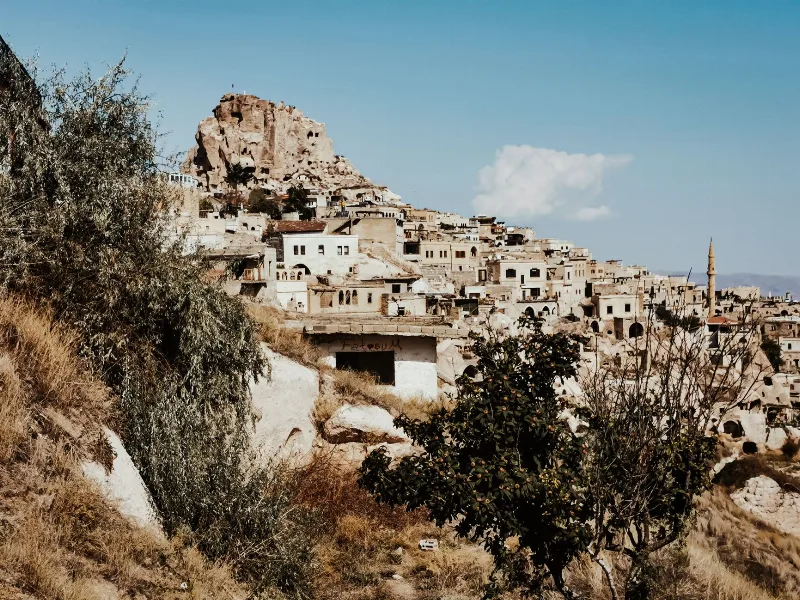
Nevşehir
Nevşehir is a provincial capital in Central Anatolia and the main urban base for the rock landscapes, underground settlements and balloon flights of the Cappadocia region.
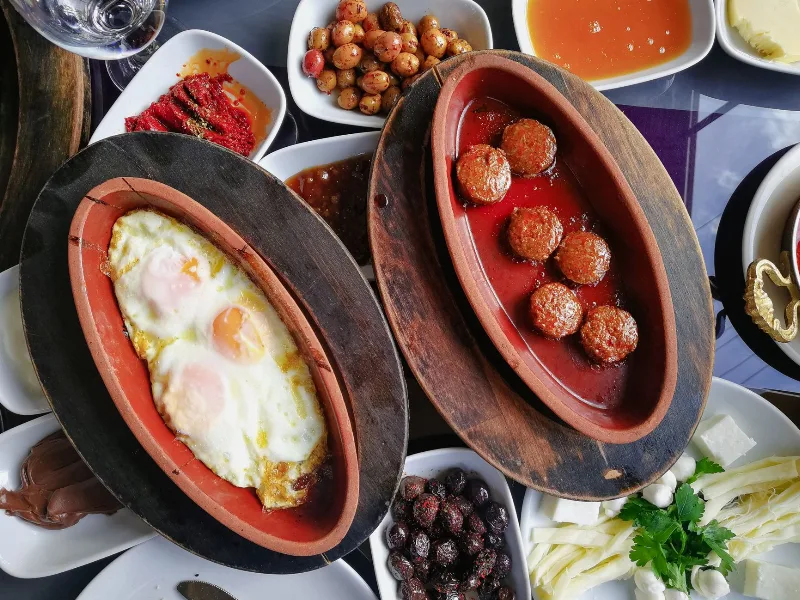
Menemen
Menemen is a Turkish breakfast dish of eggs cooked with tomatoes and green peppers in olive oil or butter, traditionally eaten with bread. It takes its name from a district of İzmir Province and is prepared in households across Türkiye.
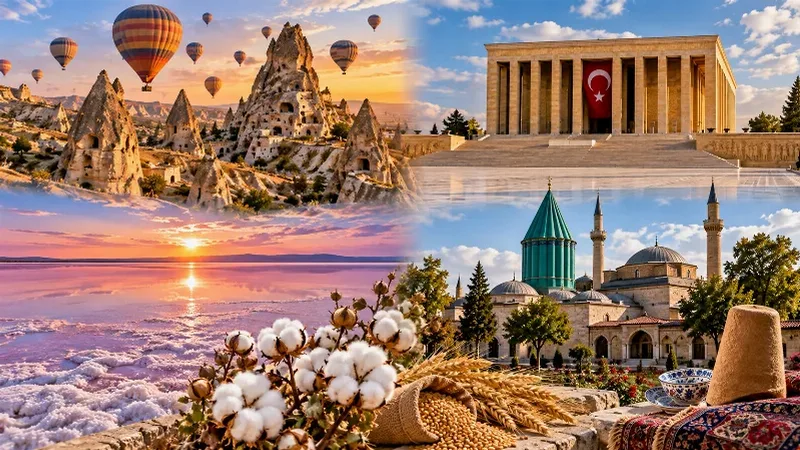
Central Anatolia Region
Central Anatolia is the historic heartland of Türkiye, known for its wide plains, extraordinary rock formations, ancient civilizations and traditional towns. From the fairy chimneys of Cappadocia to the cultural landmarks of Ankara and Konya, the region reveals the rich history and natural beauty of inner Anatolia.
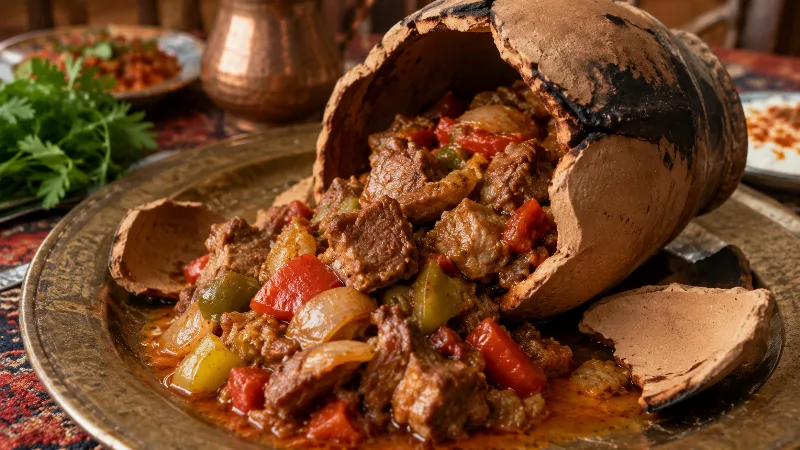
Testi Kebabı
Testi Kebabı is a traditional Turkish dish from Cappadocia where meat and vegetables are slow-cooked in a sealed clay pot that is broken open at the table. The result is tender meat and rich, aromatic vegetables.

3-Day Cappadocia Route
A practical three-day Cappadocia route that starts in Göreme, heads south to the underground cities and the Ihlara Valley, then continues north through Zelve and Avanos before finishing in Ürgüp.
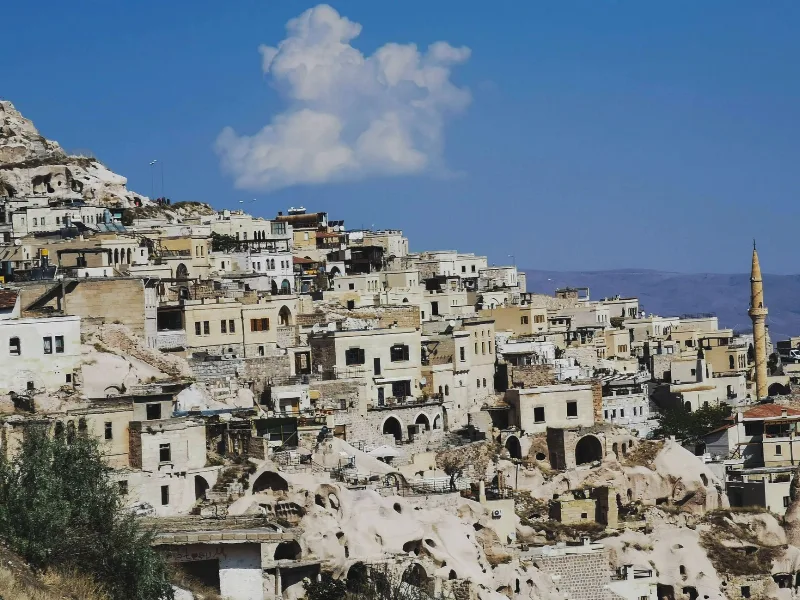
Çavuşin: Cappadocia's Old Cave Village and Its Rock-Cut Churches
Çavuşin is a village in Nevşehir Province, Cappadocia, split between an abandoned settlement of cave dwellings carved into a tuff outcrop and a newer village on the plain below. Its rock-cut Church of St. John the Baptist is among the largest in the region.
Kütahya Ceramic Tile Art and Workshops
Kütahya's ceramic tradition rests on quartz-rich clay, Ottoman-era motifs and small family workshops where tiles are still shaped and painted by hand.