
Çavuşin: Cappadocia's Old Cave Village and Its Rock-Cut Churches
Çavuşin is a village in Nevşehir Province, Cappadocia, split between an abandoned settlement of cave dwellings carved into a tuff outcrop and a newer village on the plain below. Its rock-cut Church of St. John the Baptist is among the largest in the region.
Çavuşin is a village in Nevşehir Province, in the Cappadocia region of central Türkiye, on the road that connects Göreme with Avanos. It is distinctive because it exists in two parts at once: an older settlement of cave dwellings and rock-cut churches carved into a steep outcrop of volcanic tuff, and a newer village of conventional houses built on flatter ground beside the road below. That split, more than any single monument, defines the place.
Where Çavuşin Sits in Cappadocia
Çavuşin lies in the heart of the Cappadocian volcanic plateau, roughly between Göreme to the south and Avanos to the north. The landscape here is formed from soft tuff laid down by ancient eruptions and later eroded into cones, ridges and gullies. The village occupies a position at the edge of that eroded zone: behind and above it rise the carved cliffs and fairy chimneys, while in front of it the ground flattens toward farmland and the valley of the Kızılırmak river system around Avanos.
The setting is rural rather than urban. Small plots of vines, fruit trees and field crops surround the modern village, and the horizon is a mix of low ridges and eroded rock. Because Çavuşin sits on the main route between two of Cappadocia's most visited centres, it is easy to place geographically, yet it retains the pace of an agricultural village rather than a resort.
The Two Villages: Old and New Çavuşin
The older settlement, often called Old Çavuşin, climbs the flank of a tall rock outcrop and is hollowed into it. Houses, storerooms, stables, cisterns and churches were all cut directly into the tuff, and many facades are still visible as rows of dark openings stacked up the slope. During the twentieth century the old settlement was progressively abandoned, largely because of the risk of falling rock, and residents moved down to the new village built along the road. As a result, the old quarter is now mostly empty: a standing shell of carved rooms, worn steps and crumbling walls.
The new village below is an ordinary working settlement with houses, a small square and everyday infrastructure. Walking between the two parts takes only a few minutes, but the contrast is sharp — one half is a functioning village, the other a fossil of one.
The Rock-Cut Churches of Çavuşin
Çavuşin's best-known monument is the Church of St. John the Baptist, a large basilica cut into the rock at the base of the old settlement. It is one of the biggest rock-cut churches in Cappadocia, with a nave, side aisles, columns and an apse, all carved from the same block of tuff. Traces of fresco decoration survive on the walls and ceiling, including figures and scenes that show the church was painted in more than one period. The structure is generally understood to have late antique origins, with later phases of decoration added over the following centuries.
Ascending through the old village, visitors pass several smaller carved spaces, some of which served as chapels. Not all of them are open at any given time, and some entrances are fenced or locked. The condition of the interiors varies considerably, and painted surfaces are fragile.
Cave Dwellings and Carved Architecture
The dwellings of Old Çavuşin show how Cappadocian communities adapted to a landscape of soft stone. Rooms were excavated rather than built, often with flat carved fronts, small windows and slots cut for wooden beams. Some spaces were used for storage, some for animals, and some as kitchens with hearths and chimney holes cut through the rock. Tunnels and stepped paths link different levels of the slope.
Because tuff is easy to cut but also easy to erode, many openings have lost their original edges. Doorways slump, roofs collapse and debris gathers on the terraces. That decay is part of what makes the site legible: you can read how the village was organised by following the surviving cuttings in the cliff.
Walking Through the Old Village
A walk through Old Çavuşin is short but uneven. Paths are rocky, sometimes steep, and there are few if any handrails. Sturdy shoes are advisable, and the ground can be slippery after rain or snow. The climb to the upper parts of the outcrop rewards effort with a wide view over the plain toward Avanos and back toward Göreme, with the carved cliffs of the surrounding valleys visible on both sides.
Because the old quarter is not a manicured site, expect loose stone, uneven steps and unmarked edges. Visitors should keep to obvious paths, avoid climbing on unstable rock, and treat the carved interiors with care. Some sections may be closed without notice for safety reasons.
The Valleys Around Çavuşin
Çavuşin sits near the heads of several of Cappadocia's walking valleys. To the south and southwest, routes lead down toward Göreme and the Rose and Red valleys, where the tuff takes on pink and russet tones and the trail passes carved churches and pigeon niches cut into the cliffs. To the north, the landscape opens toward the Paşabağ and Zelve areas, known for their clusters of fairy chimneys and further rock-cut settlements.
These valleys are popular for hiking, and Çavuşin works well as a starting or finishing point for a half-day walk. Trails are not always well marked, and it is worth carrying water and having an offline map, since paths fork frequently among the vineyards and rock formations.
How to Reach Çavuşin
Çavuşin lies on the main road between Göreme and Avanos, a few kilometres north of Göreme. The most straightforward approach is by road: the village is directly on the route, and the old settlement is immediately beside it. Local minibuses and dolmuş services run along this corridor between Göreme, Çavuşin and Avanos, and the journey is short. Taxis and organised transfers are also common in the area.
It is also possible to arrive on foot from Göreme through the valleys, though this requires several hours of walking over rough ground and is best done with a clear route in mind. However you arrive, the old village is uphill from the road, and the churches are reached by continuing up the slope.
Best Time to Visit
Spring, from roughly April to June, and autumn, from September to November, are generally the most comfortable periods. Temperatures are moderate, the light is clear, and the ground is usually dry enough for walking. Summer can be very hot, particularly on the exposed rock, and shade is limited in the old village. Winter brings cold, and occasional snow or ice can make the carved steps and paths genuinely hazardous.
Early morning and late afternoon are better than the middle of the day for both temperature and the way the low sun falls across the carved facades.
Practical Points Before You Go
- Wear shoes with grip; the paths in the old village are stony and uneven.
- Carry water, as there are no reliable facilities within the old quarter.
- Access to some carved spaces changes without warning; not everything can be entered.
- Do not touch painted surfaces, and avoid climbing on loose or cracked rock.
- The site is not fully adapted for wheelchairs or for visitors with limited mobility.
Nearby Places Linked to Çavuşin
Because of its position, Çavuşin fits naturally into a wider Cappadocia itinerary. Göreme, with its open-air museum of rock-cut churches, lies just to the south. Avanos, a town known for pottery and for its riverside setting on the Kızılırmak, is a short distance north. The Zelve and Paşabağ areas, with their dense concentrations of fairy chimneys and abandoned cave settlements, are close by. Uçhisar, Ürgüp and the provincial centre of Nevşehir are all within reasonable driving distance and share the same tuff landscape and Byzantine-era rock architecture.
For travellers interested in the older layers of Cappadocia rather than its busiest attractions, Çavuşin offers something specific: a village where the abandoned and the inhabited parts stand side by side, and where the region's rock-cut building tradition can still be read directly in the cliff.
From the land
Find All →
Beypazarı Carrots
Beypazarı carrots are the sweet, crisp orange carrots grown in the stream-fed valley of Beypazarı, a district of Ankara Province in Central Anatolia. Deep alluvial soils, irrigation water and a long vegetable-growing tradition have tied the district's name to this single root crop.
Explore →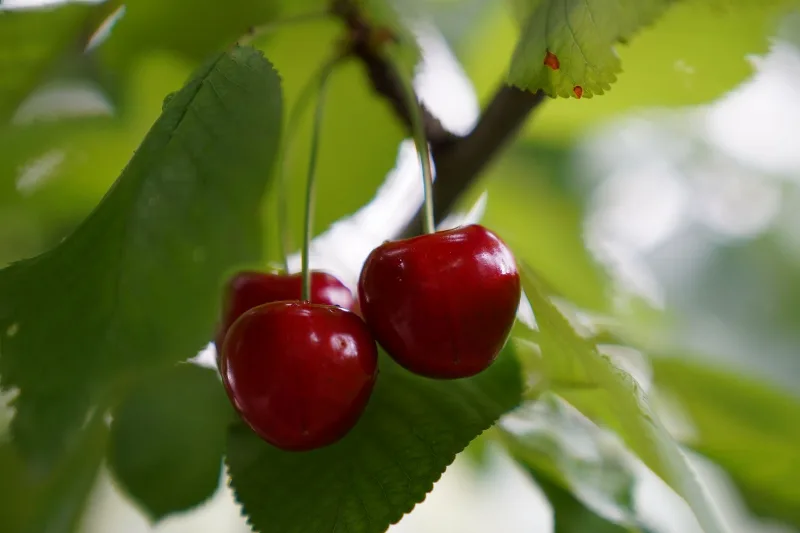
Isparta Cherries
Isparta cherries are the sweet cherries of Türkiye's Lakes Region, grown on high ground where cold winters and dry, sunlit summers give the fruit its size and sweetness.
Explore →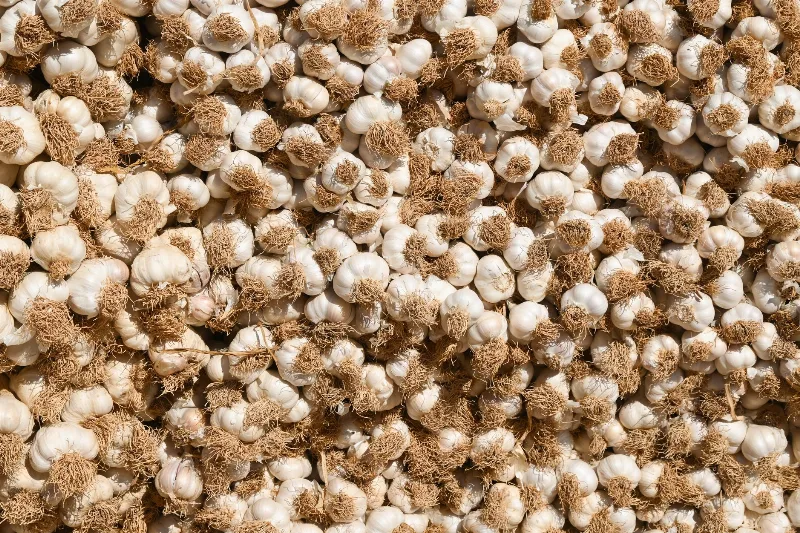
Çanakkale Garlic
Çanakkale garlic comes from the peninsulas of Türkiye's far northwest, where maritime weather and fertile valley soils give the bulbs a firm texture and a sharp, persistent aroma.
Explore →Related content
Cappadocia
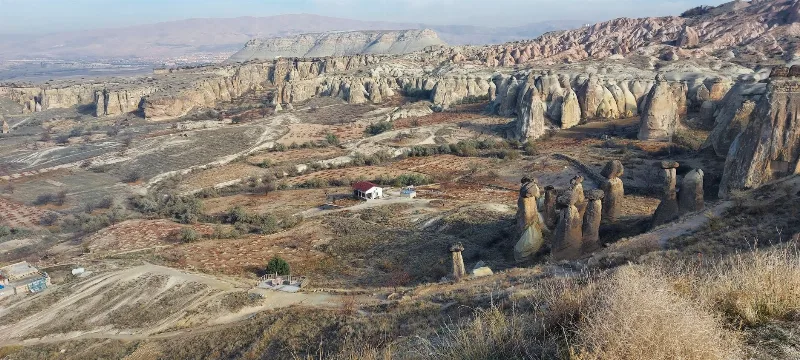
Cappadocia is a region of Central Anatolia in Turkey defined by eroded volcanic tuff, rock-cut Byzantine churches and multi-level underground cities. This guide explains how the landscape formed, what the main valleys and sites actually contain, and what to know before visiting.
Nevşehir
Nevşehir is a provincial capital in Central Anatolia and the main urban base for the rock landscapes, underground settlements and balloon flights of the Cappadocia region.
Uçhisar
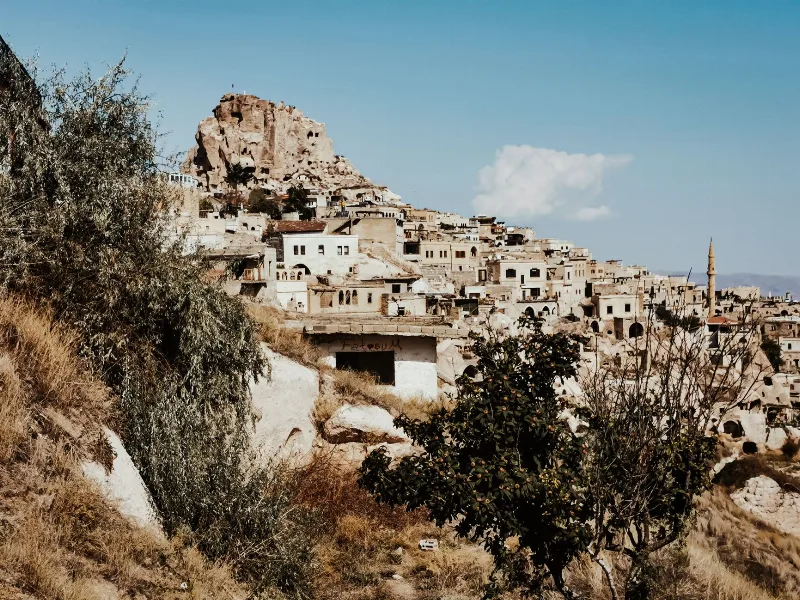
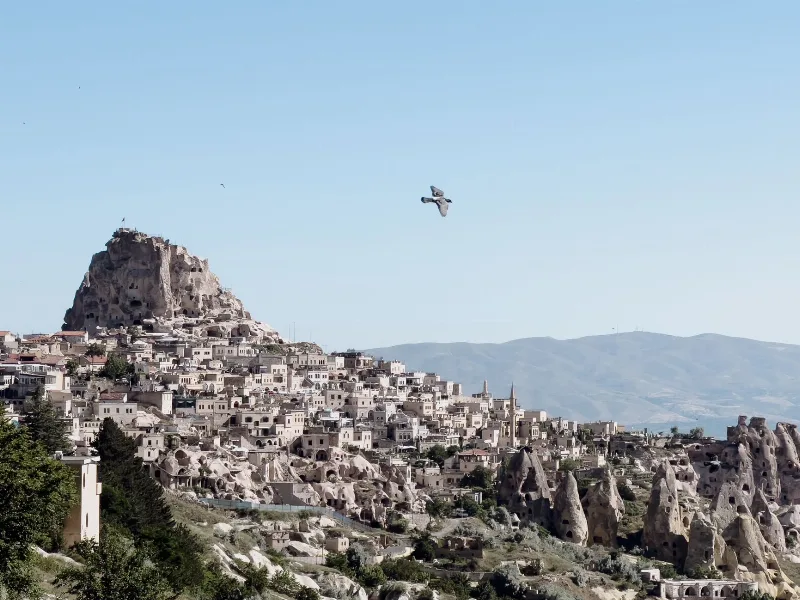
Uçhisar is a small town in the Nevşehir province of Cappadocia, built around a huge volcanic rock fortress that rises above the surrounding valleys and fairy chimneys.
4-Day Cappadocia to Konya Route
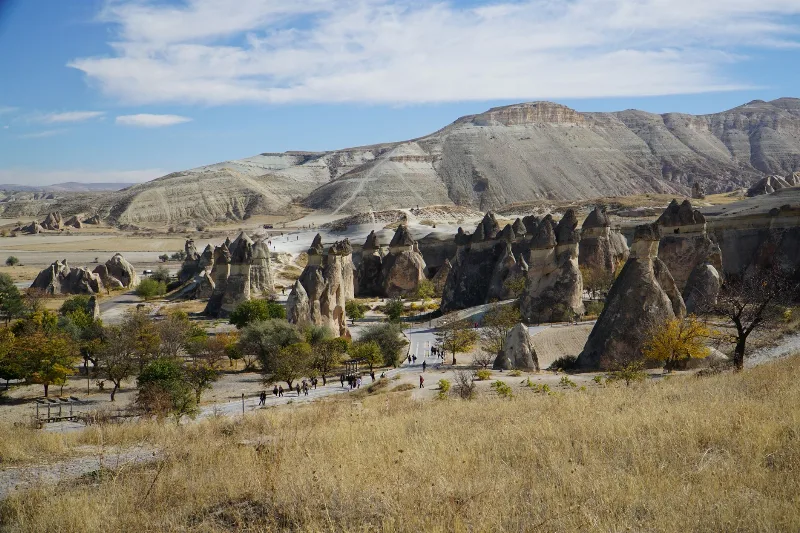
A four-day southbound route from Cappadocia's rock-cut valleys to Konya, linking the underground cities of Derinkuyu and Kaymaklı, the Ihlara canyon, Selime Monastery and the Mevlana Museum. It is a linear, self-drive journey across the volcanic plateau of Central Anatolia into the Konya plain.
3-Day Cappadocia Route
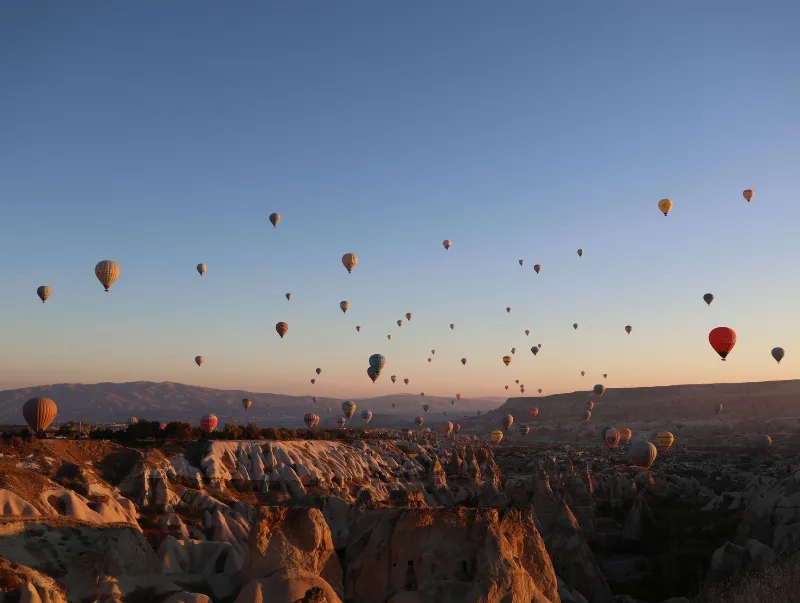
A practical three-day Cappadocia route that starts in Göreme, heads south to the underground cities and the Ihlara Valley, then continues north through Zelve and Avanos before finishing in Ürgüp.
Mustafapaşa
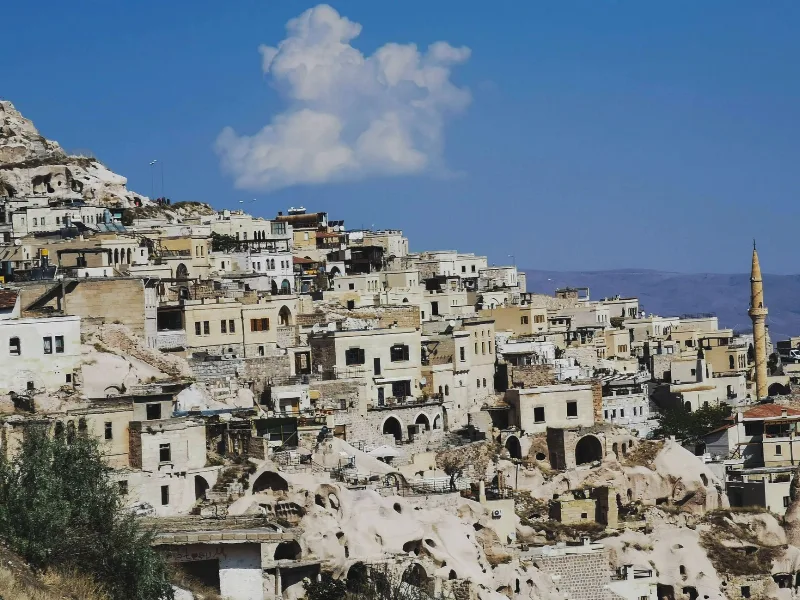
Mustafapaşa is a historic village in the Cappadocia region of Nevşehir, close to Ürgüp, known for its surviving Greek mansions, stone streets and rock-cut churches.