
Beypazarı Carrots
Beypazarı carrots are the sweet, crisp orange carrots grown in the stream-fed valley of Beypazarı, a district of Ankara Province in Central Anatolia. Deep alluvial soils, irrigation water and a long vegetable-growing tradition have tied the district's name to this single root crop.
Beypazarı carrots are the carrot crop grown in and around Beypazarı, a district of Ankara Province in Türkiye's Central Anatolia region. The district sits in a valley where stream-fed plots and deep, workable soils support a long-standing vegetable-growing tradition, and the carrot has become the crop most closely identified with it. In Türkiye the place name and the vegetable are used almost as a single term, in the same way that certain districts become shorthand for the produce they grow: a specific valley, a specific root, and a body of local knowledge about sowing, lifting and keeping it that has been passed down and refined across generations.
A Valley District West of Ankara
Beypazarı lies in the western part of Ankara Province, where the open plateau of Central Anatolia begins to break into steeper, more wooded country. The town centre sits at roughly 700 metres above sea level, in a folded landscape of slopes and stream corridors rather than the flat, treeless plains often associated with the region. This position matters for agriculture. The higher ground around the town is dry and thin-soiled, while the valley floors carry the water, the deeper earth and the heat retention that vegetables need. Carrot growing follows that line almost exactly: the fields are concentrated on the lower ground where irrigation is possible, not on the exposed slopes above them.
The district also has a strong market-town tradition, with a historic centre and a weekly trading role for the villages around it. A crop that is heavy, perishable and needs to be moved quickly after lifting fits naturally into that pattern. Proximity to Ankara, one of Türkiye's largest urban markets, gives the district a reliable outlet that has helped keep carrot growing economically worthwhile even as other forms of farming in the area have changed.
Why the Valley Floor Suits Carrots
Carrots are a root crop, and root crops are demanding about ground. They need soil that is deep enough for the root to run straight down without obstruction, loose enough to be pushed aside as the root thickens, and free of stones and hard layers that cause forking, splitting and stubby shapes. The alluvial material carried down by streams and deposited across the valley floors around Beypazarı provides exactly this kind of medium: fine, deep and relatively stone-free, and it stays workable across a long season.
Water is the second condition. Central Anatolia has a continental climate, with hot, dry summers, cold winters and a wide swing between day and night temperatures. Rainfall alone is not enough for a market vegetable, so irrigation is essential, and the district's stream corridors make it feasible. The combination of reliable water and deep soil produces the steady, even growth that a good carrot requires; where the same seed is sown on dry, shallow ground, the roots come out shorter, harder and less uniform.
The temperature pattern helps as well. Warm summer days build sugar in the root, while cooler nights slow respiration and reduce the loss of what has been built up. That diurnal contrast is one of the reasons carrots from this kind of inland valley are noted for their sweetness rather than simply their size.
From Spring Sowing to Autumn Lifting
Carrot growing in the district follows the rhythm of the Anatolian plateau. Sowing generally begins in spring, once the valley floor has warmed sufficiently for germination, and continues across a spread of weeks so that the harvest is staggered rather than arriving all at once. The seed goes into fine, well-prepared beds, often on raised or carefully levelled ground so that irrigation water is distributed evenly.
- Germination is slow compared with many vegetables, so the seedbed is kept consistently moist in the first weeks.
- Seedlings are thinned once they are established, because crowded roots compete for space and produce thin, distorted shapes.
- Weeding is done by hand on smaller plots and mechanically on larger ones, since young carrot plants are easily damaged.
- Irrigation continues through the dry summer, tapering as the roots approach maturity.
Lifting starts in summer and continues into autumn, when the roots reach usable size and the sugar content is at its best. On the smaller and more irregular plots that characterise parts of the valley, harvesting is still largely manual: the crop is loosened, pulled, topped and gathered into crates or sacks the same day. Larger fields increasingly use lifting machinery. Timing matters, because roots left too long in warm, wet ground lose quality, while roots lifted too early have not developed their full flavour.
What Distinguishes a Beypazarı Carrot
The carrots grown here are the familiar orange-rooted vegetable, sold fresh rather than processed, and their reputation rests on three qualities that growers and traders in the district consistently emphasise: sweetness, a crisp snap when broken, and a strong, even colour running through the root. Those characteristics are not a matter of a special variety so much as the result of soil depth, controlled irrigation and harvest timing in a valley where the crop has been grown long enough for practice to be well tuned. A carrot grown quickly in light, over-watered ground tends to be watery and pale; the same plant grown steadily in deep alluvial soil, with moisture managed rather than poured on, develops denser flesh and more sugar.
Uniform shape matters commercially as well. Because the valley soils are fine and largely free of stones, a high proportion of the crop comes out straight and clean, which is what the fresh market in Ankara expects. Bunched carrots, sold with their tops on, are a familiar sight in the district and in city markets during the season.
Storing the Crop Beyond the Season
Carrots keep better than most vegetables, and in Beypazarı that quality has practical value. After lifting, the crop is usually topped, washed where it is destined for the fresh market, and graded by size. Roots not sold immediately are held in cool, dark conditions, and the traditional practice of keeping carrots in sand or earth in cellars, or in simple clamps in the field, extends their availability well into the cold months when the ground is frozen and nothing is growing. Cold Anatolian winters, which make field work impossible for part of the year, are precisely why this storage knowledge developed alongside the growing itself.
Carrots in the Local Kitchen
Fresh carrots from the valley are eaten in straightforward ways: grated into salads, sliced into stews and braises, added to bulgur and rice dishes, and pressed for juice, which is a common drink in the district and in Ankara. Carrots are also pickled, both on their own and alongside other vegetables, a use that makes sense in a place where the crop is abundant at harvest and needs to be preserved afterwards. The district's wider food identity is built on several products, but the carrot remains the one most directly tied to the fields around the town.
Nearby Growing Areas and the Regional Name
Carrot cultivation is not confined to the town itself; it extends through the villages along the valley and on the more sheltered lower ground around the district. Carrots are grown elsewhere in Ankara Province and in other parts of Türkiye as well, but the district name carries weight because it signals a specific set of growing conditions and a long local association with the crop. For a buyer, "Beypazarı" is not simply a place of origin but an indication of how the carrot was likely grown: in deep valley soil, under irrigation, and lifted at the point when sweetness and crispness are at their height.

Hamsili Pilav
Hamsili Pilav is a baked rice pilaf from Türkiye's Black Sea coast, in which fresh anchovies are layered with seasoned rice and cooked together in a pan. It is one of the region's most distinctive ways of using hamsi, the small anchovies that define Black Sea cooking.
Explore →
Beyti Kebabı
Beyti Kebabı is a Turkish kebab of grilled minced meat rolled inside thin lavash bread, dressed with warm tomato sauce and yogurt. It is a modern Istanbul dish rather than an old regional specialty, and it differs from İskender or Adana kebab in both its meat and its serving style.
Explore →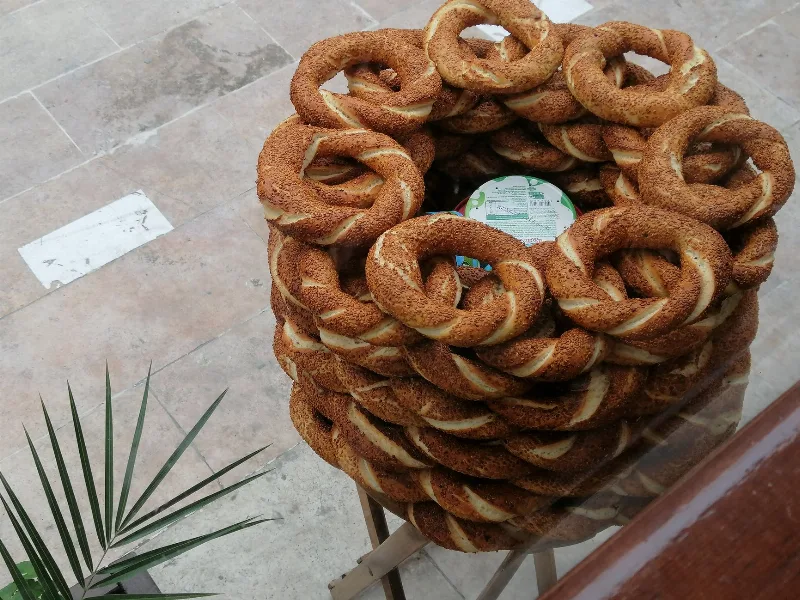
Simit
Simit is a ring-shaped Turkish bread covered in sesame seeds, strongly associated with Istanbul and sold as everyday street food. It is eaten fresh, most often with tea, and has a crisp crust around a chewy crumb.
Explore →Related content
Beypazarı
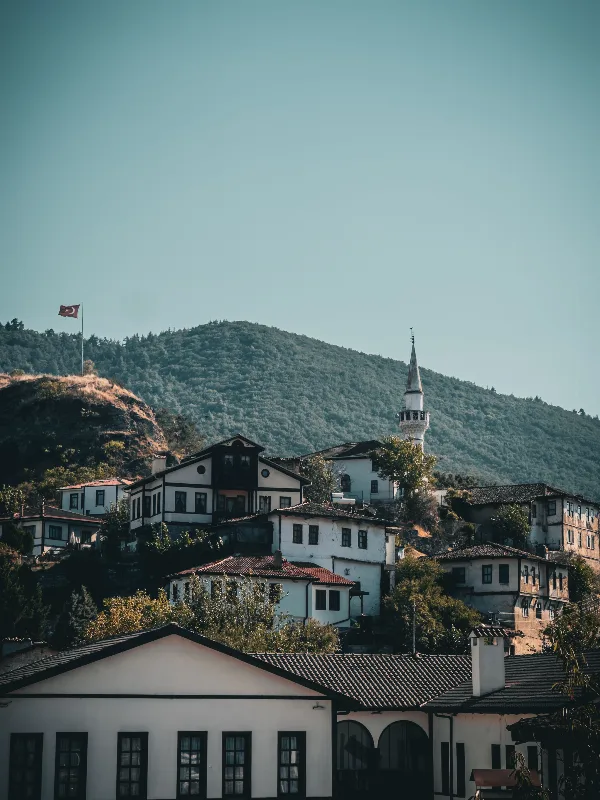
Beypazarı is a district town in Ankara Province where a large stock of Ottoman-era houses still lines the old streets, and where mineral water springs, silver filigree work and carrot growing shape daily life. It is an easy inland counterpart to the better-known historic towns of Anatolia.

Ankara
Ankara is the capital of Türkiye and the country's second-largest city, set on the high plateau of Central Anatolia and defined by its republican institutions, its long pre-Ottoman history and the mausoleum of Mustafa Kemal Atatürk.
Beypazarı Traditional Houses and Silver Work in Ankara
Beypazarı, a district town in Ankara Province, is known for its well-preserved Ottoman-era houses and a silver-working tradition that still fills its old market streets.
Konya Carrots
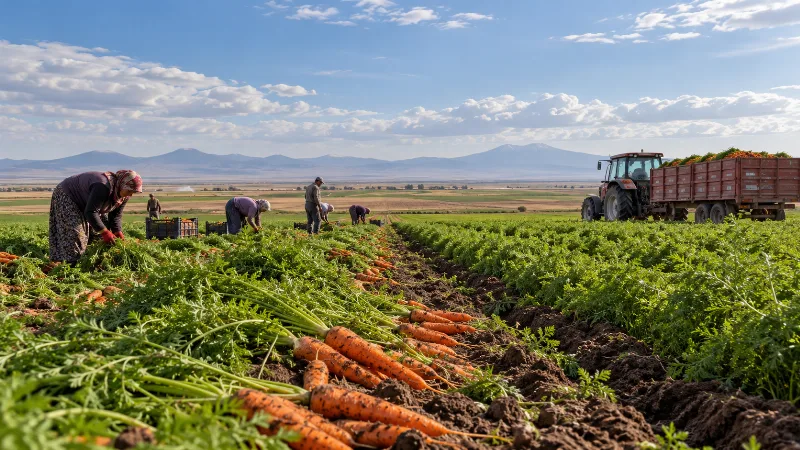
Konya carrots are grown on the irrigated plains of central Türkiye, where deep alluvial soils and a continental climate produce firm, sweet and crunchy roots.
Traditional Villages of Türkiye
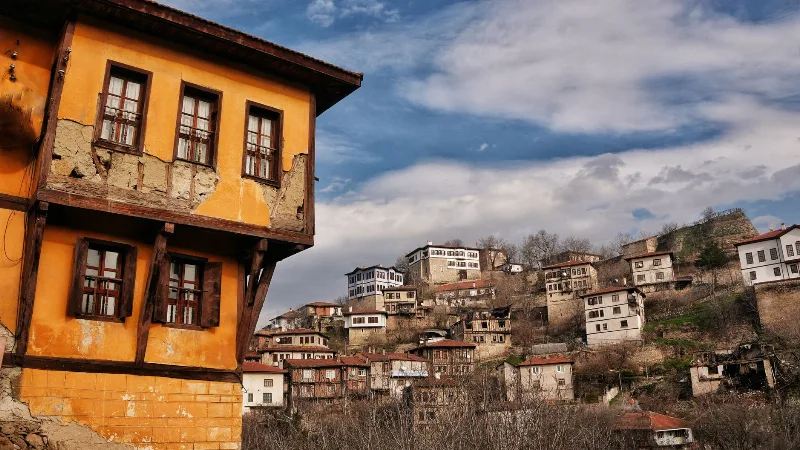
Türkiye's traditional villages blend stone houses, timber balconies and seasonal customs into landscapes that reveal the country's rural heritage.
The Local Cuisine of Hatay
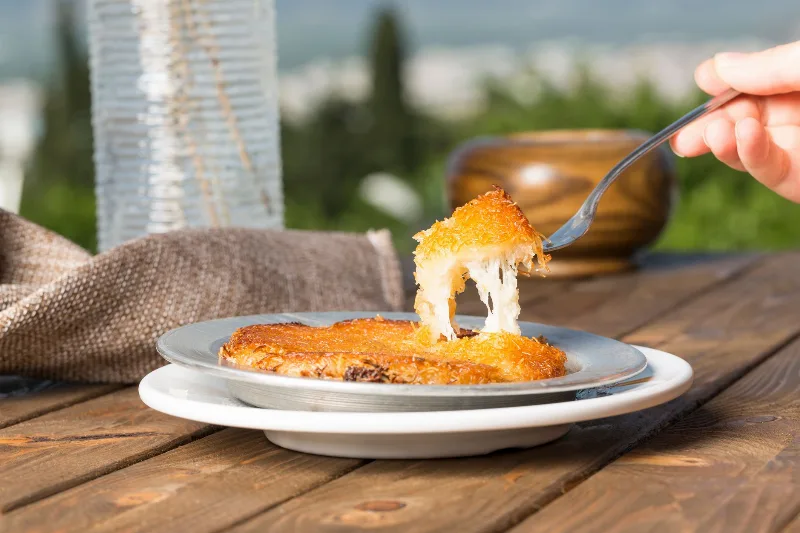
Hatay's cuisine reflects centuries of cultural exchange, offering spicy kebabs, vibrant mezze, and distinctive desserts such as künefe. The food traditions of Antakya and the surrounding region are shaped by local ingredients and seasonal rhythms.