
Beypazarı: Traditional Houses and Silver Work in Ankara's Countryside
Beypazarı, a district town in Ankara Province, is known for its well-preserved Ottoman-era houses and a silver-working tradition that still fills its old market streets.
Beypazarı is a district town in Ankara Province, set in a green valley roughly a hundred kilometres west of the capital. Its old quarter holds one of the richest concentrations of Ottoman-era domestic architecture in central Anatolia, and alongside those streets a local silver-working tradition has continued from one generation of craftsmen to the next. The two features together — timber-framed houses and fine silver jewellery — give the town a character quite unlike the larger and busier destinations elsewhere in the region.
A Historic Town on the Old Ankara Road
The town grew up where routes between Ankara and the western districts crossed a fertile basin, and for centuries it served as a market centre for the surrounding villages. That trading role left its mark on the layout of the old quarter, where narrow lanes wind between courtyard walls and small shops cluster near the centre. Many of the buildings were constructed during the eighteenth and nineteenth centuries, when local merchants and landowners commissioned substantial family houses. Because the town escaped the heavy redevelopment seen in some larger Anatolian cities, a remarkable number of these structures survived into the modern period, and a long programme of restoration has brought many of them back to something close to their original appearance.
The Traditional Houses of Beypazarı
The houses follow a recognisable pattern. The ground floor is usually built of stone, providing a cool, stable base, while the upper storeys are timber-framed and finished in white plaster or whitewashed render. Above the street, the upper floors project outwards on wooden supports, creating the bay windows that are the town's most photographed feature. These projecting rooms catch the light and give residents a view along the lane while shading the wall beneath.
Inside, the arrangement is equally practical. Rooms open onto a central hall, with built-in cupboards, shelving and shallow alcoves set into the walls, and wooden ceilings often decorated with painted or carved patterns. Courtyards behind the street façade hold small gardens, fruit trees, wells and storerooms. Many houses remain private family homes, which is part of why the quarter feels lived in rather than staged; a number of others have been restored and opened as cultural houses where visitors can see the interior layout and domestic fittings.
Silver Work: A Craft Passed Down
Beypazarı is also associated with telkari, the filigree technique in which very fine silver wire is bent, curled and soldered into delicate floral and geometric patterns. The work requires patience rather than heavy equipment: a craftsman draws or purchases thin wire, shapes it with small pliers and tweezers, assembles the motifs on a bed of solder-resistant material, and then joins the whole piece with careful heat. Finished articles include brooches, earrings, necklaces, bracelets, belt buckles and hair ornaments, some of them set with coloured stones.
The skill is traditionally learned through apprenticeship inside family workshops, and several small ateliers in the old market area still take on young trainees. Designs draw on older Anatolian motifs as well as on shapes requested by customers, so the craft sits somewhere between heritage and everyday trade. Visitors wandering the market streets will often see workbenches set up at the front of shops, with the tools and half-finished pieces visible to passers-by.
Local Life and the Surrounding Countryside
The town's economy has long rested on agriculture as much as on craft. The surrounding fields and gardens are known for carrot growing, and the local cuisine reflects a rural pantry of vegetables, bulgur, yoghurt and slow-cooked stews. A dry, crisp ring-shaped pastry is among the town's best-known food products and is sold in small bakeries along the main streets.
Beyond the houses, the landscape adds another layer to a visit. The İnözü valley close to town is cut into soft rock, with chambers and passages carved into the cliff walls, and the surrounding hills offer views across the basin. Orchards, poplar lines and kitchen gardens fill the ground between the town edge and the slopes, changing colour through the seasons.
Exploring the Old Quarter on Foot
The historic centre is compact enough to cover on foot in an afternoon. A natural route begins near the market, follows the lanes past the projecting façades, and climbs gradually to the higher ground above the town for a general view of the rooftops. Spring and autumn are particularly comfortable for walking, and early morning light is kind to the white walls and wooden bays. Because the quarter is a working neighbourhood rather than a closed site, quiet respect for residents and their doorways is part of the experience, and the reward is a town that shows its architecture and its craft as living parts of daily life.
Related content
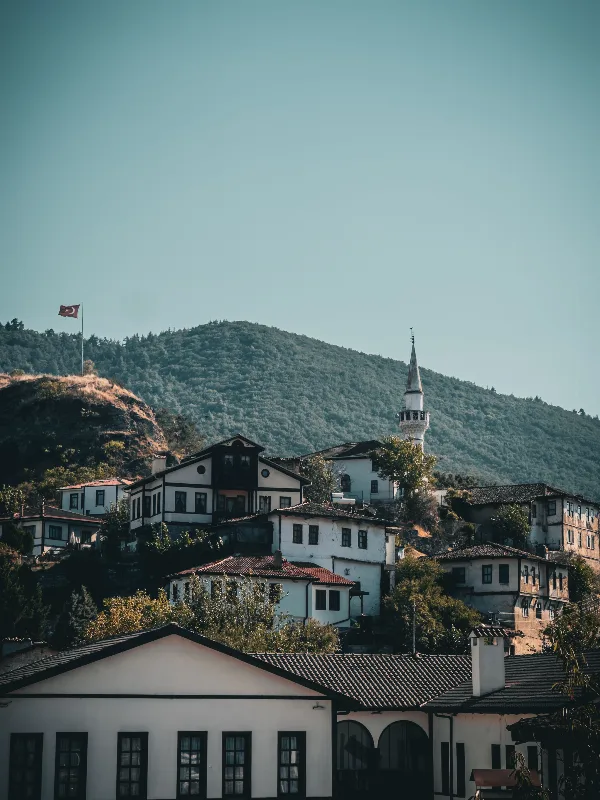
Beypazarı
Beypazarı is a district town in Ankara Province where a large stock of Ottoman-era houses still lines the old streets, and where mineral water springs, silver filigree work and carrot growing shape daily life. It is an easy inland counterpart to the better-known historic towns of Anatolia.
Ankara
Ankara is the capital of Türkiye and the country's second-largest city, set on the high plateau of Central Anatolia and defined by its republican institutions, its long pre-Ottoman history and the mausoleum of Mustafa Kemal Atatürk.

Beypazarı Carrots
Beypazarı carrots are the sweet, crisp orange carrots grown in the stream-fed valley of Beypazarı, a district of Ankara Province in Central Anatolia. Deep alluvial soils, irrigation water and a long vegetable-growing tradition have tied the district's name to this single root crop.

Konya Carrots
Konya carrots are grown on the irrigated plains of central Türkiye, where deep alluvial soils and a continental climate produce firm, sweet and crunchy roots.
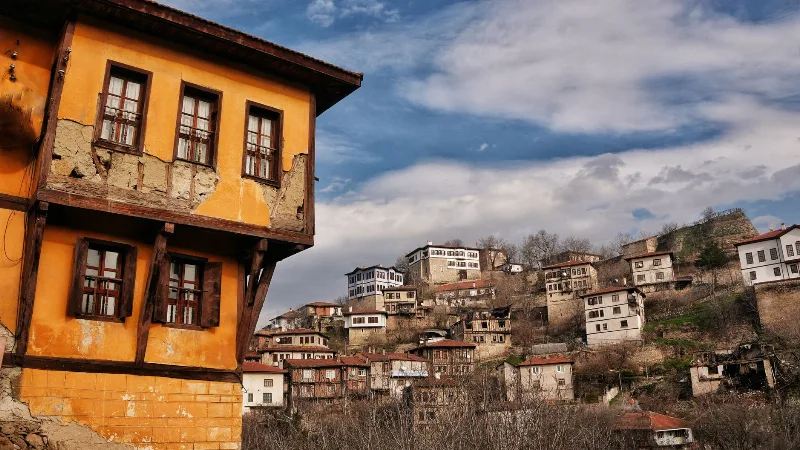
Traditional Villages of Türkiye
Türkiye's traditional villages blend stone houses, timber balconies and seasonal customs into landscapes that reveal the country's rural heritage.
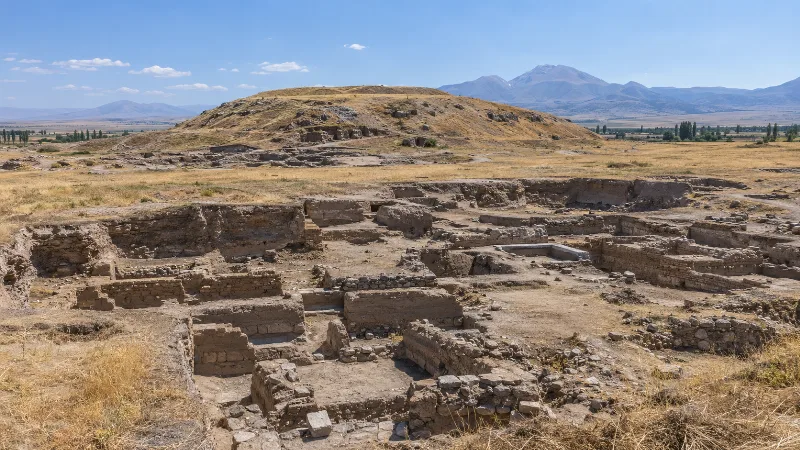
Kültepe
Kültepe, the ancient city of Kanesh, is a Bronze Age mound and lower-city site northeast of Kayseri in central Türkiye. Its Assyrian merchants left behind thousands of cuneiform tablets, the earliest written records discovered in Anatolia.

Central Anatolia Region
Central Anatolia is the historic heartland of Türkiye, known for its wide plains, extraordinary rock formations, ancient civilizations and traditional towns. From the fairy chimneys of Cappadocia to the cultural landmarks of Ankara and Konya, the region reveals the rich history and natural beauty of inner Anatolia.
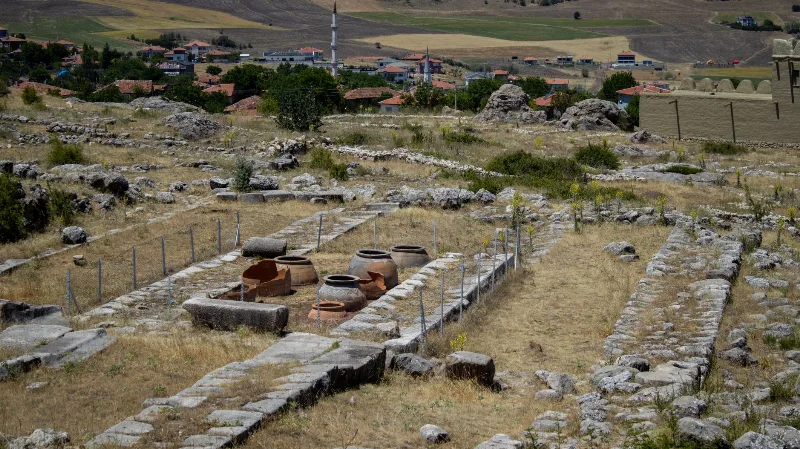
Alacahöyük: A Hittite City and Early Bronze Age Royal Tombs in Çorum
Alacahöyük is an excavated mound in Çorum Province that holds both Early Bronze Age royal tombs and a monumental Hittite gate flanked by carved sphinxes. It is one of the key sites for reading the pre-Hittite and Hittite past of central Anatolia.