
Mustafapaşa
Mustafapaşa is a historic village in the Cappadocia region of Nevşehir, close to Ürgüp, known for its surviving Greek mansions, stone streets and rock-cut churches.
Mustafapaşa is a village in the Ürgüp district of Nevşehir Province, in the Cappadocia region of central Türkiye. It sits in a shallow valley just a few kilometres south of Ürgüp, surrounded by the soft volcanic tuff that defines the wider Cappadocia landscape. What sets the settlement apart from the many other villages in the area is its unusually intact stock of nineteenth-century Greek mansions, built when the village was home to a large Greek Orthodox community. Alongside those grand stone houses stand several rock-cut churches and carved monastic spaces, so the village combines two very different architectural traditions in a single compact area.
Where Mustafapaşa Sits in Cappadocia
The village lies roughly between Ürgüp and the town of Nevşehir, in a basin of eroded tuff and basalt. It is part of the historical region once known as Cappadocia, whose boundaries loosely follow the volcanic plateau of central Anatolia. To the east and south of the village, the terrain rises into ridges and valleys cut by seasonal streams, while to the north the land opens toward Ürgüp and the better-known valleys of Göreme and Çavuşin.
Because Mustafapaşa grew where water and good farmland were available, its setting is greener than the bare rock valleys nearby. Orchards, small fields and poplar trees surround the built-up area, giving the village a slightly agricultural feel in contrast to the more purely scenic centres of Cappadocia.
The Old Greek Character of the Village
For centuries Mustafapaşa had a mixed population, and before the population exchange between Greece and Türkiye in the 1920s it was largely Greek Orthodox. The village, then known under a Greek name, was a prosperous community of merchants and craftsmen who invested their wealth in large stone houses. When the exchange took place, the Greek residents left and the houses were gradually occupied or abandoned, but the buildings themselves survived in large numbers.
This history is the main reason Mustafapaşa looks different from most Turkish villages in the region. Its old quarter is dominated by tall, finely built mansions rather than the simpler rural houses found in many neighbouring settlements.
Traditional Architecture and Stone Mansion Houses
The most striking buildings in Mustafapaşa are the two- and three-storey mansions built from local cut stone. Their facades are carefully proportioned, with rows of rectangular windows, carved door surrounds and, in several cases, decorative stonework above the entrance. The larger houses often have a central hall, rooms arranged on two levels and a flat roof used for drying produce.
Behind the main facades, many of these houses still contain original details such as wooden ceilings, carved cupboards and interior doorways. Some have been restored, while others remain in a partially ruined state, which is part of the village's quiet, lived-in atmosphere.
Rock-Cut Churches and Carved Spaces
Mustafapaşa is also notable for the number of rock-cut churches and carved spaces in and around the settlement. Several churches are cut directly into the tuff outcrops and include carved columns, arches and, in a few cases, traces of painted decoration. A large rock-cut complex stands near the village, where former monastic rooms, halls and the remains of a larger church are carved into the soft stone.
Together with the stone mansions, these carved structures show how the local population used the geology of Cappadocia both for everyday housing and for religious buildings.
Streets, Squares and what a walk shows
Walking through Mustafapaşa is straightforward and rewarding. The centre has a small square area with a prominent historical building that once served as a communal institution, and from there narrow lanes lead into the old quarter. The streets are paved but uneven in places, and several of the most interesting buildings sit on gentle slopes.
Visitors can realistically see the facades of the mansions, a number of rock-cut churches, old fountains and the general layout of the historic core within a couple of hours on foot. There are no large monumental sites in the manner of Göreme's open-air museum; the appeal here lies in the village as a whole rather than in one single attraction.
Landscape and Surrounding Nature
The countryside around Mustafapaşa includes shallow valleys, low ridges and clusters of rock formations typical of Cappadocia. Hiking tracks link the village with nearby valleys, and the terrain is generally open, with wide views over fields and tuff outcrops. Because the land is less developed than in some other parts of the region, the surroundings feel comparatively rural.
The area is also agricultural, with vines, fruit trees and small plots worked by local families, a reminder that Cappadocia has long been a farming region as well as a tourist destination.
Getting to Mustafapaşa
Mustafapaşa is reached by road from Ürgüp, which is a short drive to the north. Nevşehir, the provincial capital, lies further northwest and is the main transport hub of the region, with bus connections to larger Turkish cities. From Nevşehir or Ürgüp, the village can be reached by car, taxi or local minibus services that run between the surrounding towns.
Because the village is close to Ürgüp, Göreme and Nevşehir, it is easy to combine with a wider Cappadocia itinerary. Driving distances within the region are short, and the roads are generally in good condition.
Best Time to Visit
Spring and autumn are the most comfortable periods for walking through Mustafapaşa. Summer days can be hot and dry, with strong sun and little shade in the open parts of the village, while winters are cold and occasionally snowy. Mornings and late afternoons are the most pleasant times to explore the old quarter throughout the warmer months.
Practical Notes Before You Go
The ground in the old quarter is uneven, with cobbled and stony lanes, so sturdy shoes are useful. Some rock-cut churches and historic buildings may be closed or in fragile condition, and access is not always signposted. It is worth allowing time simply to walk without a fixed route, since much of the character is in the streets themselves.
Because this is a small working village, facilities are limited compared with Ürgüp or Nevşehir, and visitors should plan accordingly. Respecting the privacy of residents and the fabric of the old buildings is important, as many houses are still in everyday use.
Nearby Places Worth Knowing
Mustafapaşa sits close to several well-known Cappadocian settlements. Ürgüp lies just to the north, Göreme and its rock-cut churches are within easy reach, and the town of Nevşehir provides larger-scale services and transport links. The valleys around Çavuşin and the wider Ürgüp area share the same tuff landscape and offer additional walking and sightseeing options for anyone spending several days in the region.
From the land
Find All →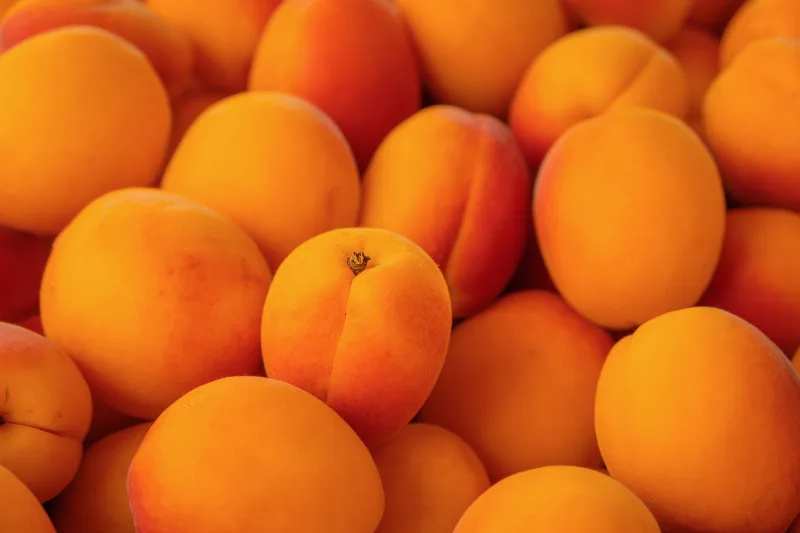
Elazığ Apricots
Elazığ apricots are a regional apricot product from eastern Türkiye, valued for their juicy, flavorful fruit. The province’s climate and fertile soils support both fresh use and traditional drying.
Explore →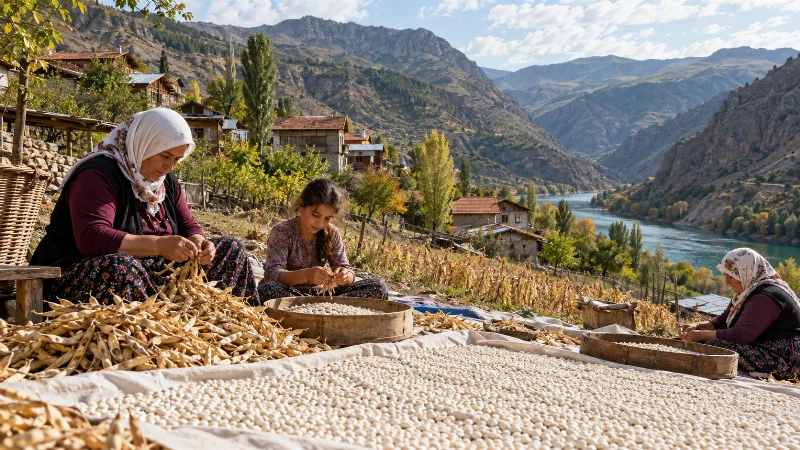
İspir Beans
İspir beans are dried beans grown in the high Çoruh valley of Erzurum province, where cold nights and a short growing season give them a firm texture and earthy flavour prized in Turkish home cooking.
Explore →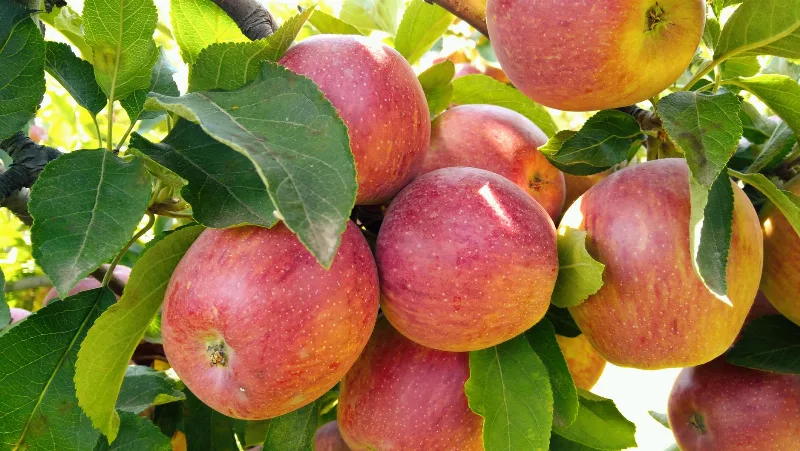
Amasya Apples
Amasya apples are apples grown in the sheltered river valleys of Amasya province in northern Türkiye, where cold winters and warm summers shape fruit known for its firm, crisp bite and balanced sweet-tart flavour.
Explore →Related content
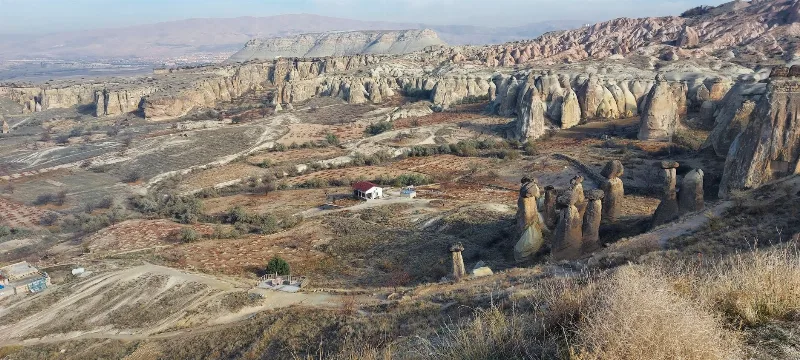
Cappadocia
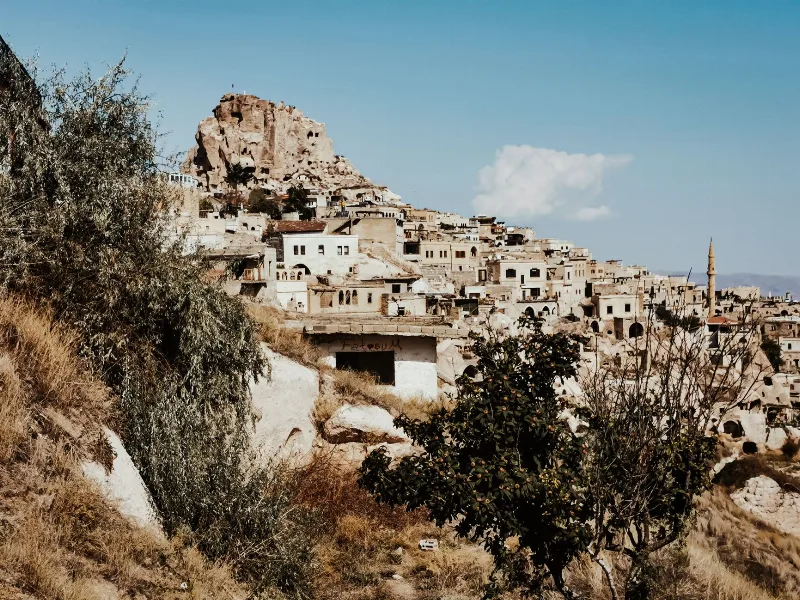
Cappadocia is a region of Central Anatolia in Turkey defined by eroded volcanic tuff, rock-cut Byzantine churches and multi-level underground cities. This guide explains how the landscape formed, what the main valleys and sites actually contain, and what to know before visiting.
Nevşehir
Nevşehir is a provincial capital in Central Anatolia and the main urban base for the rock landscapes, underground settlements and balloon flights of the Cappadocia region.
Nature
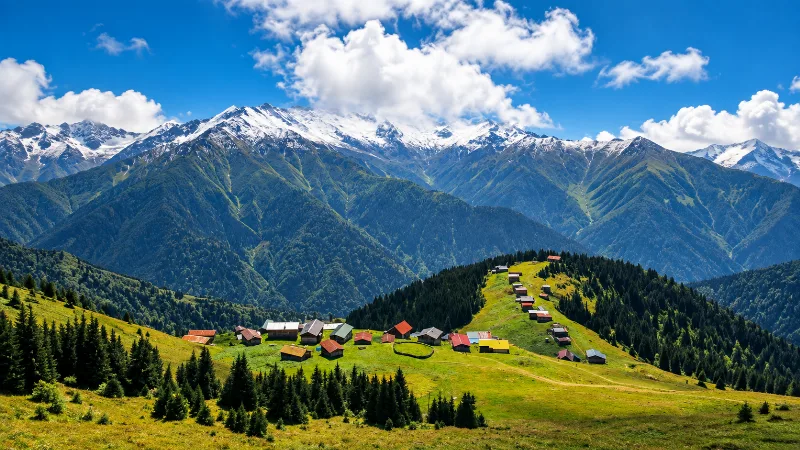
Lakes, forests, rivers, canyons, mountains, wetlands and national parks across Türkiye.
Mustafapaşa Village Greek Architecture in Nevşehir
Mustafapaşa, once known as Sinasos, is a Cappadocian village near Ürgüp where carved stone mansions and old Greek churches record a layered and unusually cosmopolitan past.
Ortahisar
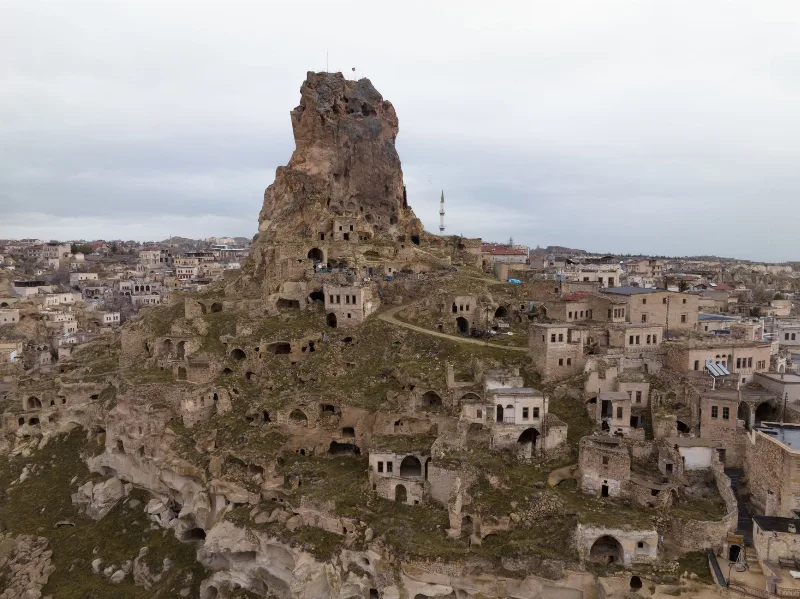
Ortahisar is a small Cappadocian town in Nevşehir Province, built around a massive rock castle and shaped by carved cave houses, stone streets and old storage tunnels.
2-Day Cappadocia Underground Cities Route
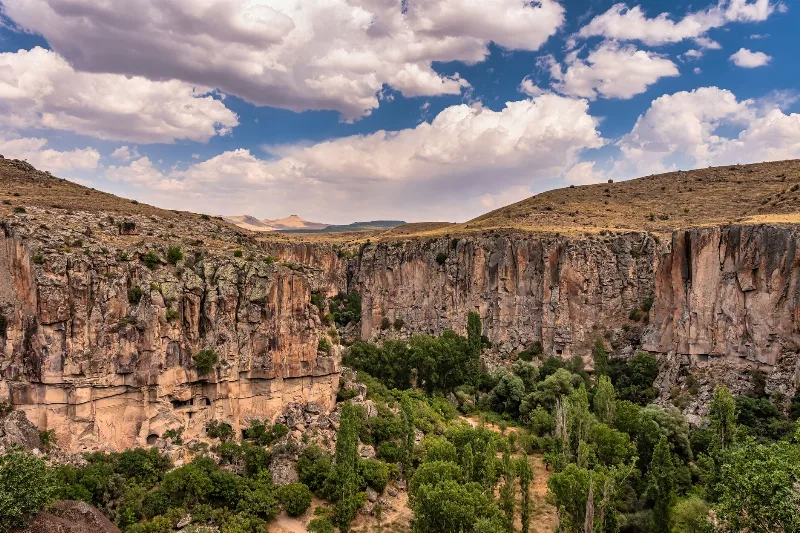
A two-day route from Nevşehir through the underground cities of Kaymaklı and Derinkuyu, finishing with a walk through the Ihlara Valley and the rock-cut complex at Selime.