
Mustafapaşa: Greek Stone Architecture in Nevşehir
Mustafapaşa, once known as Sinasos, is a Cappadocian village near Ürgüp where carved stone mansions and old Greek churches record a layered and unusually cosmopolitan past.
Mustafapaşa sits in the Ürgüp district of Nevşehir Province, a little south of the better-known town of Ürgüp and within easy reach of the main Cappadocian valleys. Until the population exchange of the 1920s the village was called Sinasos, and it was home to a prosperous community of Cappadocian Greeks. That heritage is still visible in the streets today, where tall stone houses with carved facades stand beside rock-cut dwellings, chapels and a handful of public buildings. The result is a settlement that looks quite different from the cave villages usually associated with the region.
Sinasos and the Greek Heritage of Mustafapaşa
The name Sinasos appears in Ottoman records and in the accounts of travellers who passed through Cappadocia in the nineteenth century. Its Greek inhabitants were known for trade and craft, particularly for their connections with Constantinople and the Black Sea ports, and money earned abroad was often spent on new houses at home. This helps to explain the confidence of the architecture: these are not modest farmhouses but urban-style mansions built in a rural setting, with symmetrical windows, decorative stonework and generous courtyards.
After 1924 the Greek population left and families from Thessaloniki and other parts of Greece settled in their place. The village was renamed Mustafapaşa. The buildings remained, and many of the later residents kept the older houses in use, which is one reason so much of the fabric has survived.
Stone Houses and Carved Facades
The architecture of Mustafapaşa combines local tuff with dressed stone. Many houses are two storeys tall, with a rough stone ground floor used for storage and animals and a lighter upper floor for living. Doorways and window surrounds are often carved with rosettes, geometric bands and stylised plant motifs, and some facades carry dates or initials above the lintel. Interiors typically include a wide hall, small rooms opening off it, and built-in niches and hearths.
Roofs are flat or gently pitched and covered with local stone, and many courtyards contain a small garden, a well or a stone oven. A number of these houses have been repaired and are used again as homes, workshops or small guesthouses, which keeps the streets lived-in rather than museum-like. Wandering the lanes, it is worth looking up at the upper storeys, where the carving is usually concentrated.
Churches, Chapels and Public Buildings
Several Greek Orthodox churches survive in and around the village. The most prominent is the Church of Constantine and Helen, a substantial basilica with a carved stone facade, columns and a painted interior. Other churches, such as those dedicated to St Theodore and to the Archangels, are smaller and more weathered, sometimes cut partly into the rock. A medrese, fountains and a few communal buildings from the Ottoman period complete the picture, giving the village centre an unusual mix of Islamic and Christian architecture within a few minutes' walk.
Valleys and Ancient Sobesos
Mustafapaşa is a good base for walking. The Gomeda valley, sometimes called the Pancarlık valley, opens nearby and offers rock-cut churches, dovecotes and quiet paths between vineyards. Just outside the village, near Şahinefendi, lie the remains of Sobesos, a late Roman and early Byzantine settlement where excavations have revealed mosaic floors and stone-built structures. These sites are far quieter than the main Cappadocian attractions and reward slower exploration.
Village Life, Food and Seasonal Traditions
Farming and viticulture remain part of local life, and the surrounding fields produce grapes, apricots and other fruit as well as the pumpkins and seeds Cappadocia is known for. The village is associated with a distinctive local kitchen in which dishes such as testi kebab, stuffed vegetables and pastries made with thin dough feature strongly. Grapes are still pressed for wine and syrup in the traditional way, and the autumn harvest is a busy period.
Each year the village hosts a cultural festival that remembers its Sinasos heritage, bringing together former residents, their descendants and current inhabitants. For visitors interested in architecture, migration history and rural Cappadocian life, Mustafapaşa offers a compact and rewarding stop, where the past is written directly into the stone.
Related content
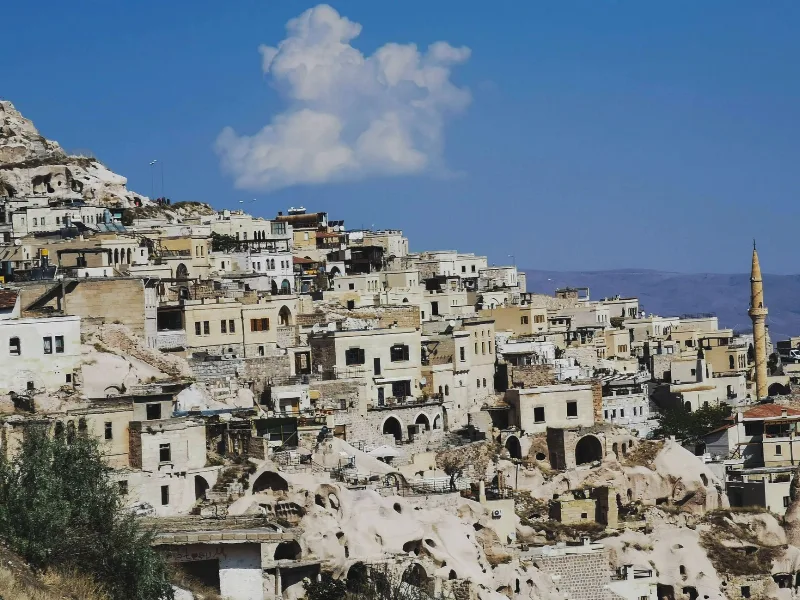
Mustafapaşa
Mustafapaşa is a historic village in the Cappadocia region of Nevşehir, close to Ürgüp, known for its surviving Greek mansions, stone streets and rock-cut churches.
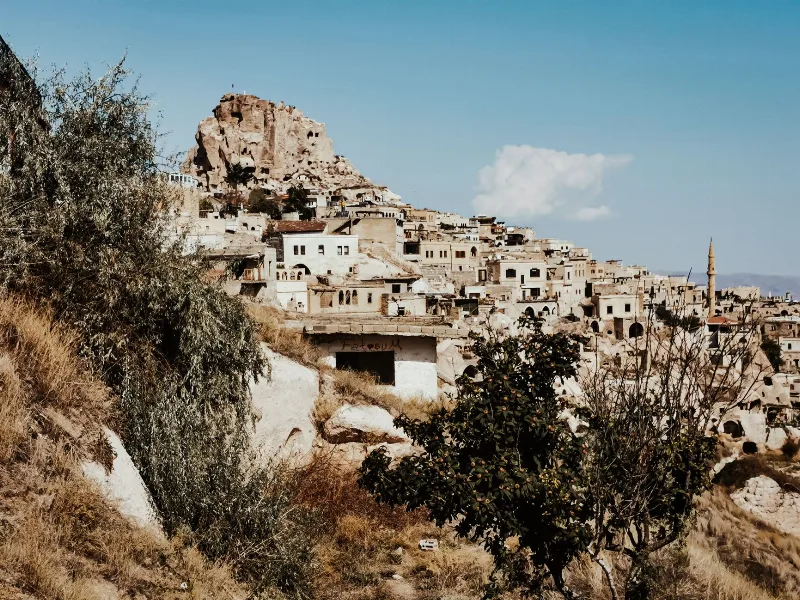
Nevşehir
Nevşehir is a provincial capital in Central Anatolia and the main urban base for the rock landscapes, underground settlements and balloon flights of the Cappadocia region.
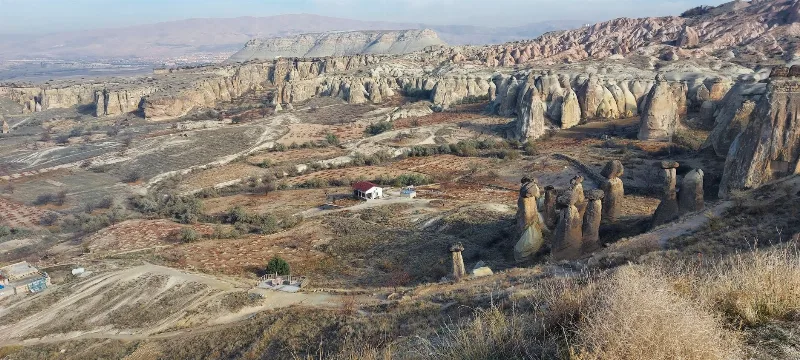
Cappadocia
Cappadocia is a region of Central Anatolia in Turkey defined by eroded volcanic tuff, rock-cut Byzantine churches and multi-level underground cities. This guide explains how the landscape formed, what the main valleys and sites actually contain, and what to know before visiting.
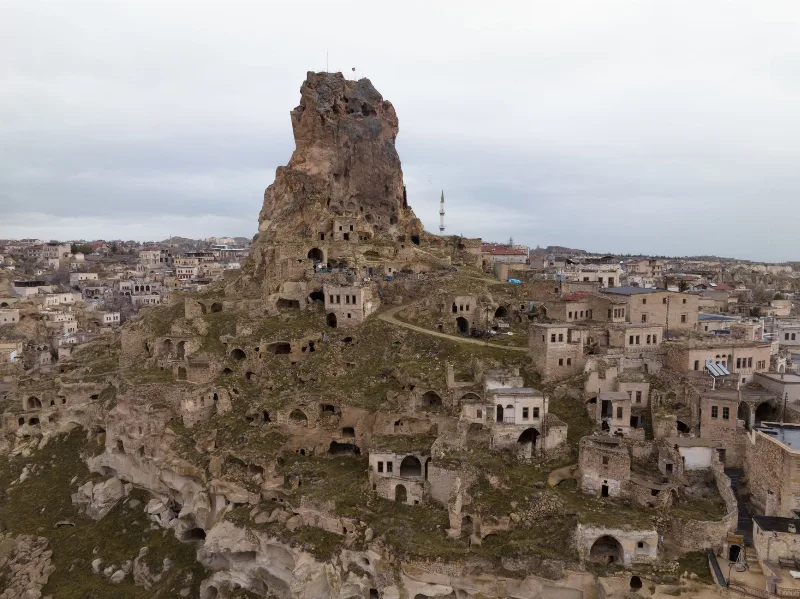
Ortahisar
Ortahisar is a small Cappadocian town in Nevşehir Province, built around a massive rock castle and shaped by carved cave houses, stone streets and old storage tunnels.
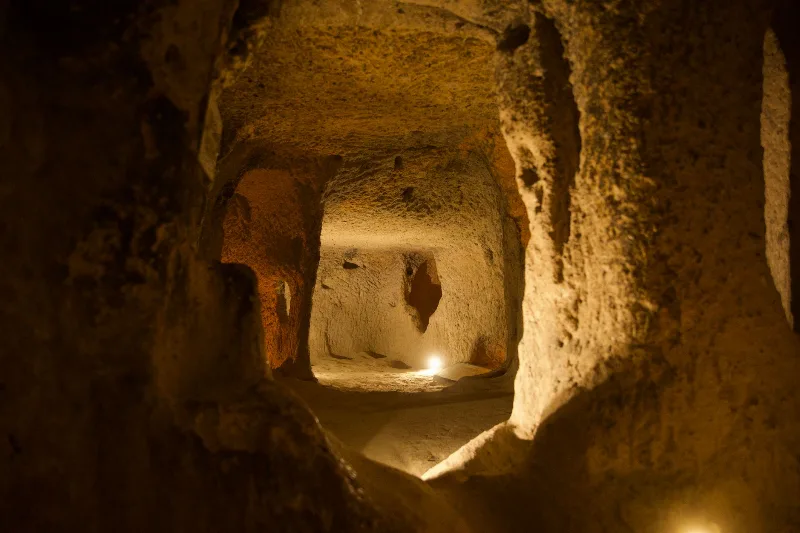
Derinkuyu Underground City
Derinkuyu Underground City is a multi-level rock-cut settlement beneath the town of Derinkuyu in Nevşehir Province, the deepest known underground city in Cappadocia and one of Anatolia's most complete examples of subterranean architecture.
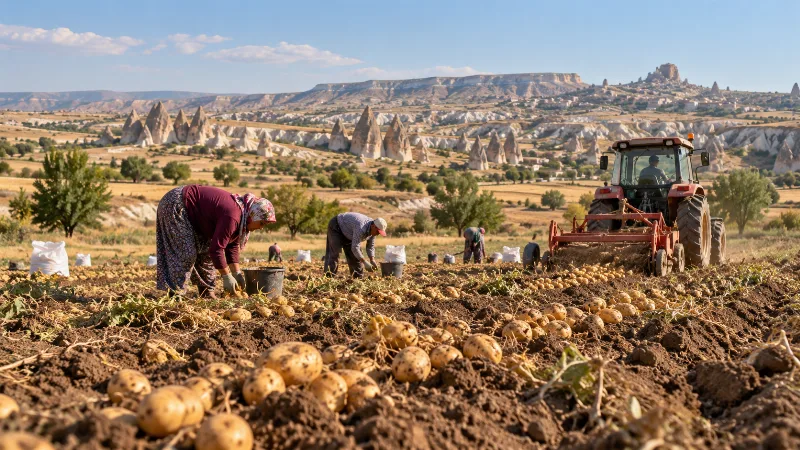
Nevşehir Potatoes
Nevşehir potatoes are grown on the volcanic plateau of Cappadocia in central Türkiye, where tuff-derived soils, cold winters and warm dry summers shape a crop that is harvested in late summer and kept in the region's cool rock-cut storage chambers.
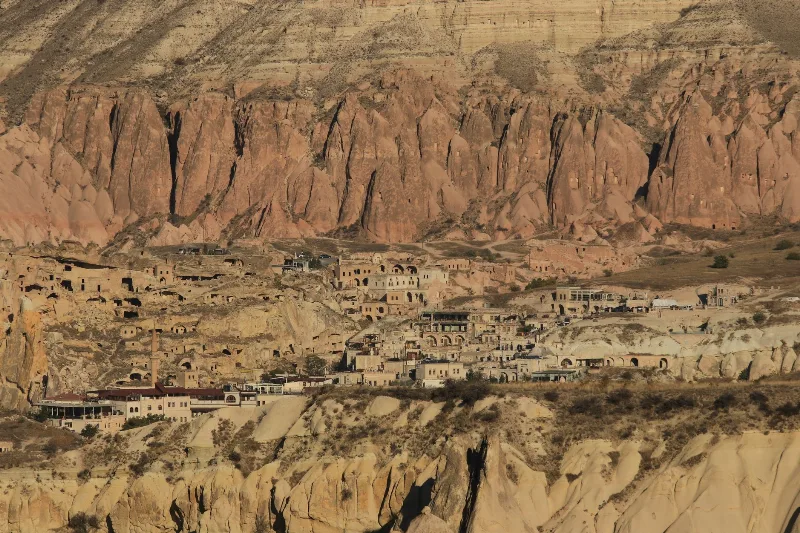
İbrahimpaşa
İbrahimpaşa is a farming village in Nevşehir Province, Cappadocia, known for a rock-cut underground city and traditional cave dwellings. It offers a quieter, far less developed look at Cappadocian village life near Ürgüp.
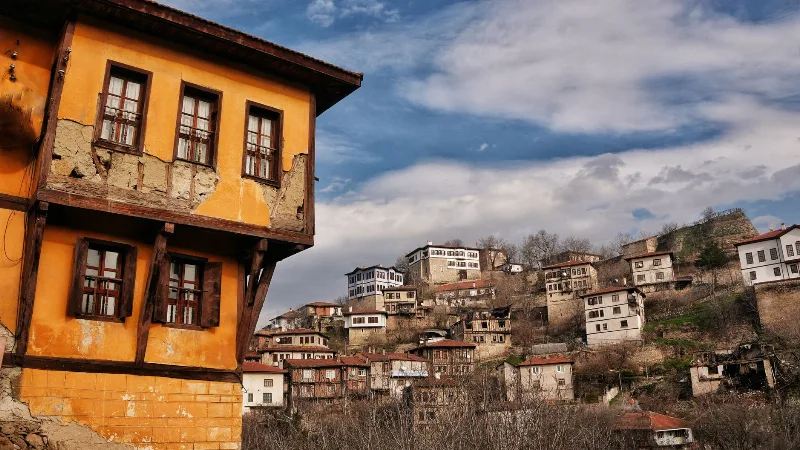
Traditional Villages of Türkiye
Türkiye's traditional villages blend stone houses, timber balconies and seasonal customs into landscapes that reveal the country's rural heritage.