
Nevşehir Potatoes
Nevşehir potatoes are grown on the volcanic plateau of Cappadocia in central Türkiye, where tuff-derived soils, cold winters and warm dry summers shape a crop that is harvested in late summer and kept in the region's cool rock-cut storage chambers.
Nevşehir potatoes are potatoes grown in Nevşehir Province, on the high inland plateau of Cappadocia in central Türkiye. The province has long been a potato-growing district, and the crop's connection to Nevşehir rests on a combination of factors: soils formed largely from volcanic material, a continental climate with sharply defined seasons, irrigation drawn from the region's rivers and groundwater, and a tradition of storing harvested tubers in the cool, rock-cut chambers for which Cappadocia is known.
Where Nevşehir Potatoes Grow
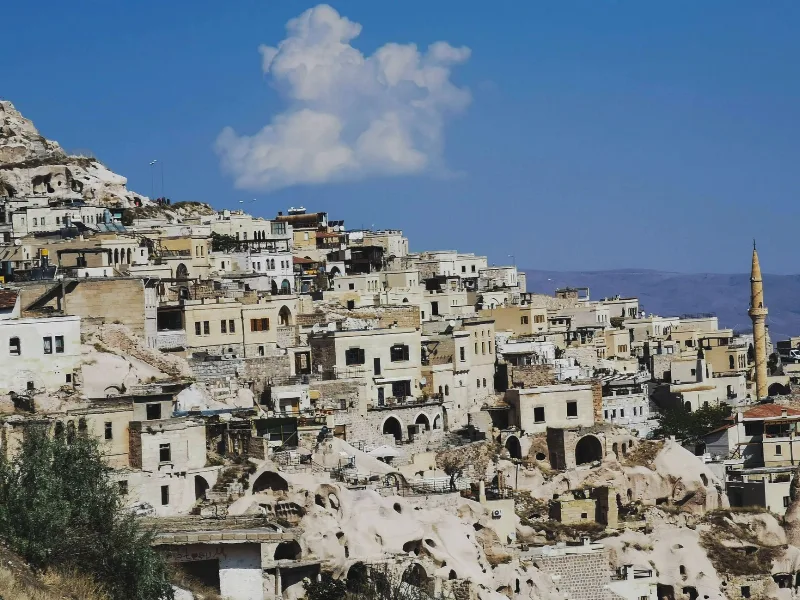
Nevşehir sits in the heart of Cappadocia, an area shaped by the eruptions of volcanoes such as Erciyes, Hasan Dağı and Göllü Dağ. Those eruptions left thick layers of tuff, a soft rock formed from compacted volcanic ash, which over time weathered into the soils that now cover much of the province. The cultivated land spreads across the plateau and through the valleys between the characteristic cones and ridges of the region, with potato fields concentrated in the flatter, irrigable ground around districts such as Derinkuyu and Kaymaklı and near the towns of the Nevşehir plain.
The wider agricultural neighbourhood matters too. The neighbouring province of Niğde, immediately to the south and west, forms part of the same broad potato-growing belt of central Anatolia, and the two provinces together sit in one of Türkiye's established potato-producing zones. Growers in Nevşehir therefore work within a regional agricultural tradition that extends beyond a single provincial boundary.
Why the Plateau Suits the Potato
Potatoes perform best where summers are warm but not scorching, where nights cool down, and where the soil drains well while still holding moisture. The Cappadocian plateau offers much of this. Elevation across the province is considerable, and at height the growing season brings strong sunlight by day and noticeably cooler temperatures after sunset. Tubers develop steadily under these conditions rather than being pushed too quickly.
The climate is continental: winters are cold, with frost and occasional snow, and summers are warm and dry with limited rainfall. Because precipitation alone is not enough for a thirsty crop like the potato, cultivation depends on irrigation. Water is drawn from the Kızılırmak and other local sources and from wells that tap the groundwater of the plateau. Where irrigation is available, the fields can support potatoes reliably; where it is not, the same land is more often given over to cereals and other dryland crops.
Volcanic soils are the second half of the equation. Tuff-derived ground tends to be light, workable and reasonably well drained, which is helpful for root and tuber crops, and the mineral content inherited from volcanic ash supports healthy plant growth. The softness of the local rock has also given Nevşehir an unusual agricultural asset that has nothing to do with the soil itself — the network of excavated chambers that make the province exceptional for storing produce.
The Plant and Its Growing Cycle
The potato is a tuber-forming member of the nightshade family, grown as an annual field crop. Planting follows the last serious frosts of winter, generally in spring, when soil temperatures have risen enough for the seed tubers to sprout. The plants first develop leafy stems and then flower, with white to pale violet blossoms appearing on the plants in the middle of the season. Flowering marks the point at which the underground tubers begin to swell, and the period of tuber bulking that follows is when the crop's final size and quality are largely determined.
Above ground, the foliage keeps working through the warm summer, drawing on irrigation water and sunlight to fill the tubers below. As the season advances the tops begin to yellow and die back, a signal that the crop is approaching maturity. Harvest in Nevşehir generally falls in late summer and autumn, though some early potatoes are lifted sooner for immediate sale. Tubers intended for storage are left until the skins have set, which helps them keep through the winter months.
Harvest, Curing and Underground Storage
After lifting, the potatoes are typically left to cure for a short period so that the skin toughens and small wounds heal before the crop is put away. This curing step is important in a province that expects to hold a large part of its harvest for months rather than selling it all at once.
The storage stage is where Nevşehir differs from most potato-growing areas. Cappadocia's soft volcanic rock has been hollowed out over centuries to create underground rooms, cellars and entire subterranean complexes, originally cut for shelter and later used for preserving food. These chambers maintain a naturally cool and remarkably steady temperature, and they protect stored crops from frost in winter and from summer heat. Potatoes are among the products traditionally kept in such spaces, and the practice ties the crop to the region's geology in a way that is difficult to reproduce elsewhere. The same logic that made Cappadocia valuable for long-term food storage — stable cool air in carved stone — continues to serve the local potato harvest.
What Sets the Local Crop Apart
Potatoes grown on the Nevşehir plateau are typically medium to large, with a fairly firm flesh and skins that hold well in storage. Growers in the region value varieties that combine reliable yield with keeping quality, since the crop is often marketed over a long period rather than only at harvest time. The combination of slow, steady development in a cool upland climate and long storage in stable conditions is generally credited with giving the province's potatoes a solid, even texture that behaves well whether they are boiled, roasted or fried.
Potatoes in the Local Farm Economy and Kitchen
Potatoes are one of the crops that define farming in parts of Nevşehir Province, alongside the region's vineyards, fruit growing and cereals. They provide income to growers and work for the seasonal labour that gathers at harvest, and they occupy land that would otherwise be limited to dryland grains. The crop also supports the transport and storage businesses that move produce out of the province through the colder months.
In local kitchens, Nevşehir potatoes are used in much the same everyday ways as potatoes across Türkiye: added to stews and vegetable dishes, boiled and dressed as a salad, roasted alongside meat, or sliced and fried. They also appear in home baking, including savoury pastries and filled flatbreads, where the potato serves as an inexpensive, filling ingredient. The emphasis in the region is on the raw tuber and its keeping qualities rather than on any single prepared dish.
Understood as a whole, the Nevşehir potato is a crop that makes sense of its landscape: volcanic soils and a high, dry, irrigated plateau for growing, and hollowed stone for keeping the harvest safe until it is needed.
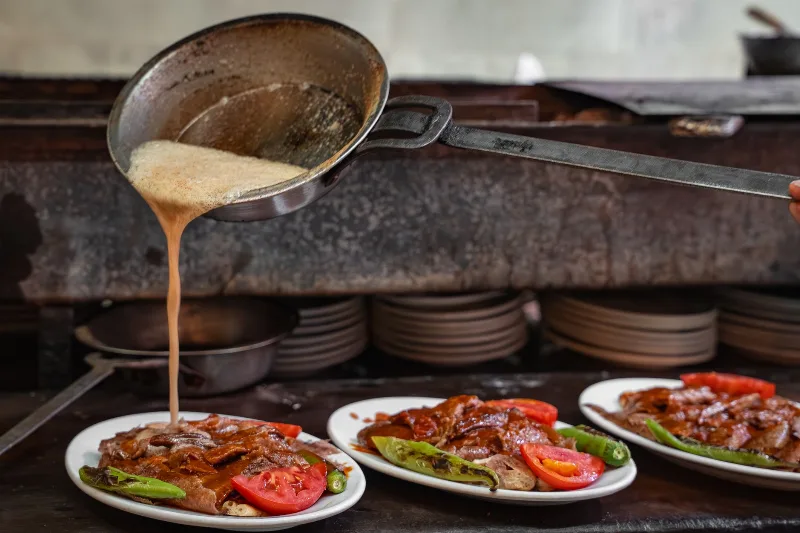
İskender Kebabı
İskender Kebabı is a Bursa dish made of sliced döner kebab laid over pieces of pita bread, dressed with warm tomato sauce and melted butter, and served with yogurt on the side.
Explore →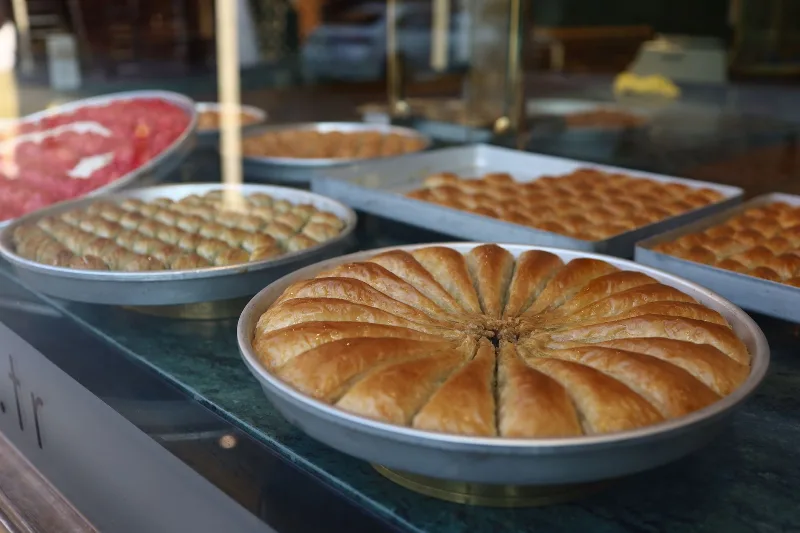
Baklava
Baklava is a traditional Turkish dessert made of layered phyllo dough, filled with nuts and sweetened with syrup. Strongly associated with Gaziantep, it is a staple of celebrations and a symbol of Turkish hospitality.
Explore →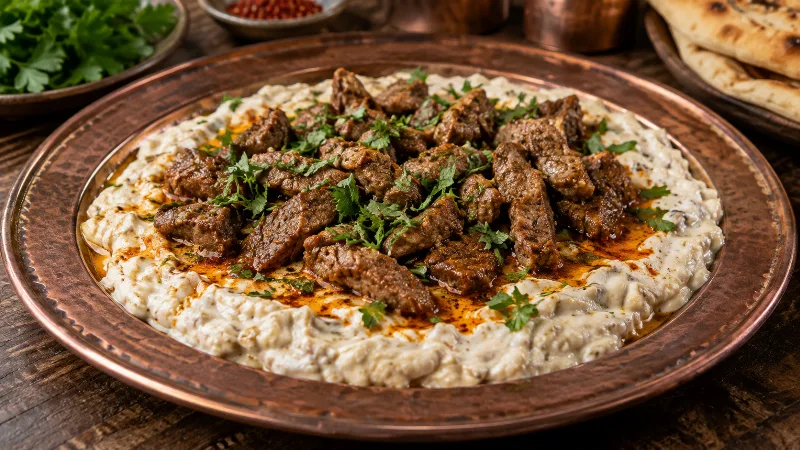
Ali Nazik
Ali Nazik is a Gaziantep specialty in which grilled lamb is served over a smoky roasted eggplant puree mixed with garlicky yogurt and finished with melted butter and red pepper flakes.
Explore →Related content
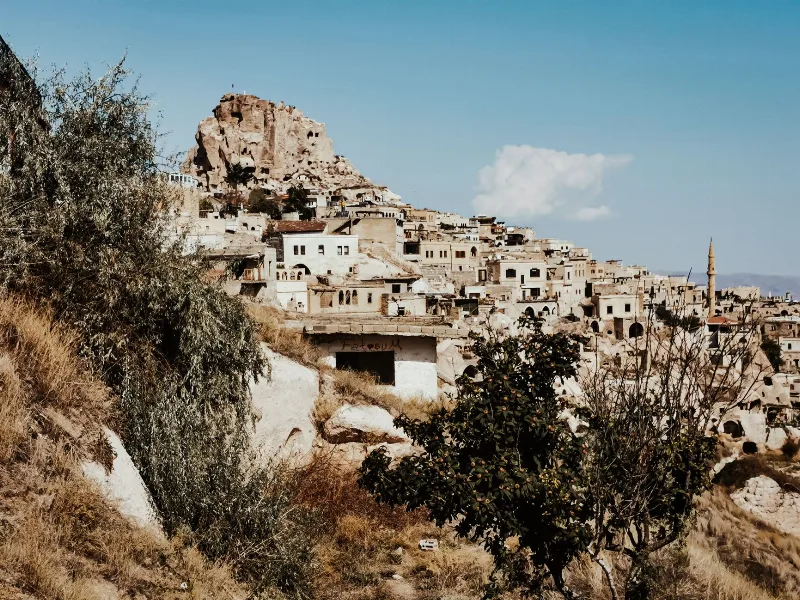
Nevşehir
Nevşehir is a provincial capital in Central Anatolia and the main urban base for the rock landscapes, underground settlements and balloon flights of the Cappadocia region.
Cappadocia
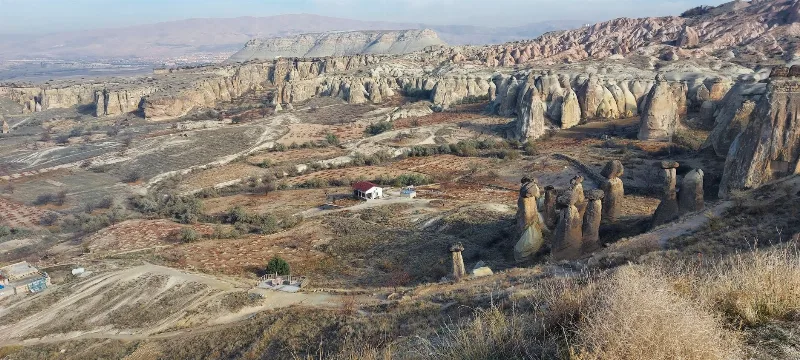
Cappadocia is a region of Central Anatolia in Turkey defined by eroded volcanic tuff, rock-cut Byzantine churches and multi-level underground cities. This guide explains how the landscape formed, what the main valleys and sites actually contain, and what to know before visiting.
Nevşehir Grapes
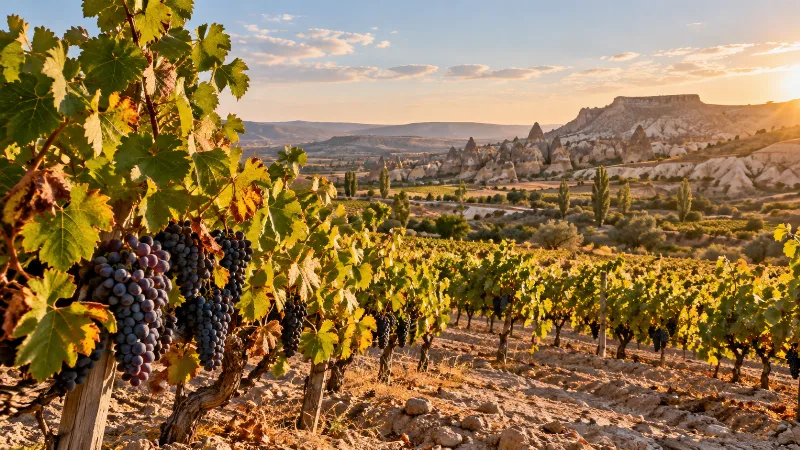
Nevşehir grapes come from the volcanic plateau of Cappadocia in central Türkiye, where thin tuff soils, high elevation and dry summers support vineyards grown for wine, grape molasses and drying.
Grape Harvest in Nevşehir
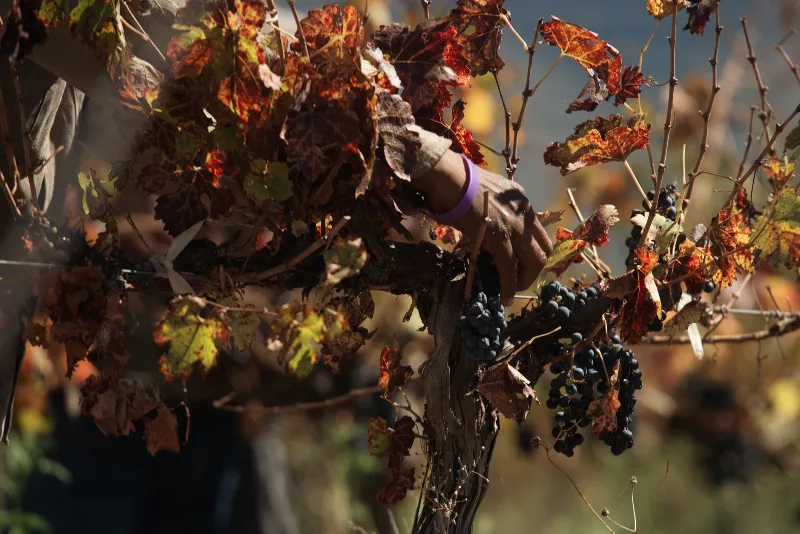
Each autumn the volcanic slopes around Nevşehir turn to grape picking, when families gather fruit for wine and molasses across the Cappadocia vineyards.
İbrahimpaşa
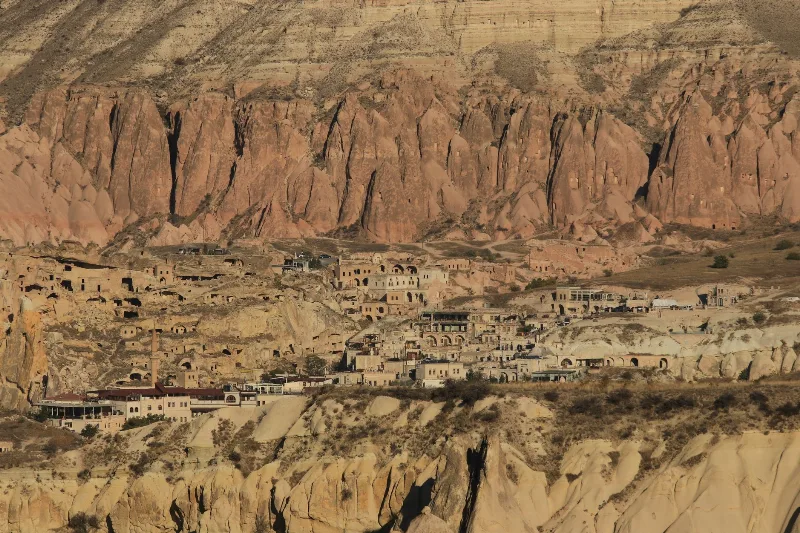
İbrahimpaşa is a farming village in Nevşehir Province, Cappadocia, known for a rock-cut underground city and traditional cave dwellings. It offers a quieter, far less developed look at Cappadocian village life near Ürgüp.
Mustafapaşa
Mustafapaşa is a historic village in the Cappadocia region of Nevşehir, close to Ürgüp, known for its surviving Greek mansions, stone streets and rock-cut churches.