
Midyat Stone Houses and Syriac Churches in Mardin
Midyat in Mardin is a town of honey-coloured limestone houses, narrow lanes and Syriac churches, set on the historic Tur Abdin plateau of south-eastern Türkiye.
Midyat, known in Syriac as Midyad, is a town in the province of Mardin in south-eastern Türkiye, set on the broad limestone uplands of Tur Abdin. Its old quarter is built almost entirely from a warm, honey-coloured stone that takes on a golden tone in low sunlight, and its lanes are punctuated by the walls and bell towers of Syriac churches. The combination gives the place a character of its own: a working Anatolian market town whose architecture and religious life have grown out of the same landscape.
A Town on the Tur Abdin Plateau
Tur Abdin means “mountain of the servants of God” in Syriac, a name given to the tableland that stretches east of Mardin towards the Tigris. The plateau is not mountainous in the alpine sense; it is a rolling country of pale, fissured limestone, divided by shallow valleys where cereals, lentils and vines are grown. Summers are hot and dry, winters cold enough for snow, and water has always been precious — a fact reflected in the many rock-cut cisterns and wells that serve the town.
Midyat developed where routes across the plateau met, and it prospered as a market centre for the villages around it. That role is still visible in the old bazaar quarter, where shops and small workshops occupy stone-vaulted rooms beneath the street level of the houses. The town is also home to several communities — Syriac Christians, Arabic-speaking families, Kurds and others — and several languages are still heard in its markets and tea houses.
Honey-Coloured Stone Houses
The local limestone, quarried in the surrounding hills, is soft enough to be sawn when it is first cut and hardens as it dries. This quality made it possible to build walls of regular blocks and to carve them with relative ease, and it shaped the whole appearance of the town. Houses are generally two storeys high, with thick walls, small windows and flat roofs that serve as extra working space in summer.
The heart of a traditional Midyat house is a walled courtyard, often shaded by a vine and shaded further by high stone walls. A stone staircase usually climbs from the courtyard to the upper floor and the roof, and the ground floor is given over to service rooms, storage and cellars cut directly into the bedrock. Dark wooden doors studded with iron open through round or pointed arches, framed by bands of carved ornament: rosettes, geometric interlacing, animal figures and occasionally an inscription recording the builder and the date of construction.
Inside, rooms are arranged for summer and winter use, with high ceilings, deep window recesses and built-in niches and cupboards. The upper storeys often stand slightly forward of the ground floor, so that the lanes below are narrow, shaded and cool even at midday. Many of the older houses have been repaired in recent decades using the same local stone and traditional techniques, which has helped the old quarter keep its coherence.
Churches of the Syriac Tradition
Midyat lies at the centre of a region that has been continuously Christian since late antiquity, and the town itself contains a remarkable concentration of churches belonging to the Syriac denominations. Among the best known are the churches of Mor Barsavmo, Mor Shmoni, and Mor Hobil with Mor Abrohom, all standing within the old quarter. Services are conducted in Classical Syriac, a form of Aramaic, and the liturgy is one of the oldest in the Christian world.
These buildings share a family resemblance: thick stone walls that keep out heat, small windows, interiors of great simplicity, carved stone doorways and courtyards with a well or a fountain at the centre. Several have bell towers added in the nineteenth and twentieth centuries, built in the same pale limestone as the houses around them, so that church and street read as one fabric.
Mor Gabriel Monastery
The best known of the region’s monasteries, Mor Gabriel — also called Deyrulumar — stands in open country east of Midyat and traces its foundation to the late fourth century, when the monks Mor Samuel and Mor Shemun settled on the site. For centuries it has been a centre of Syriac learning and the seat of a bishop. Its buildings are gathered within a protective wall and include domed churches, courtyards, terraces and farmland, with a small monastic community in residence.
Mor Dimet and the Village Churches
Smaller monasteries and village churches are scattered across the plateau around the town. Mor Dimet Monastery rises on a rocky slope above the village of Alagöz, known in Syriac as Beth Kustan, and is partly built and partly cut into the stone. Further east, the village of Anıtlı, or Hah, holds a church counted among the oldest in Tur Abdin. These places are best reached with local guidance, as many stand on private or monastic land.
Filigree Silverwork and Craft Traditions
Midyat has long been associated with telkari, the filigree work in which fine silver wire is twisted, coiled and soldered into delicate scrollwork. The technique is used for earrings, bracelets, brooches and small decorative vessels, and it depends on patient hands and simple tools: pliers, a small anvil, a spirit lamp and a bowl of borax. Silversmiths in the bazaar still produce work in this style alongside plainer pieces, and stone carving continues in the workshops that supply restoration projects.
The surrounding villages contribute to the town’s markets as well, bringing in grapes from small vineyards, pulses, dried fruit, nuts and dairy produce. The cooking of the region draws on these ingredients, with stuffed vegetables, bulgur dishes, slow-cooked meats and syrupy pastries appearing on family tables and in the modest eateries near the bazaar.
The Old Quarter on Foot
The old quarter is compact and best explored slowly. A walk might begin near the market streets, pass several church courtyards and the mosques built in the same pale stone, and continue into residential lanes where the carved doorways and projecting upper floors of the houses are at eye level. Shaded tea gardens provide a natural pause, and in the late afternoon the stonework turns from cream to amber as the sun drops towards the plateau.
Spring, when the plateau is green and the almond trees flower, and autumn, when the vineyards are harvested, are especially rewarding seasons to see the town and its surroundings. Midyat rewards attention to detail: a carved lintel, a worn threshold, a bell tower seen above a flat roof. Its appeal lies not in a single monument but in the way buildings, crafts and centuries-old communities hold together within one small stone town.
Related content
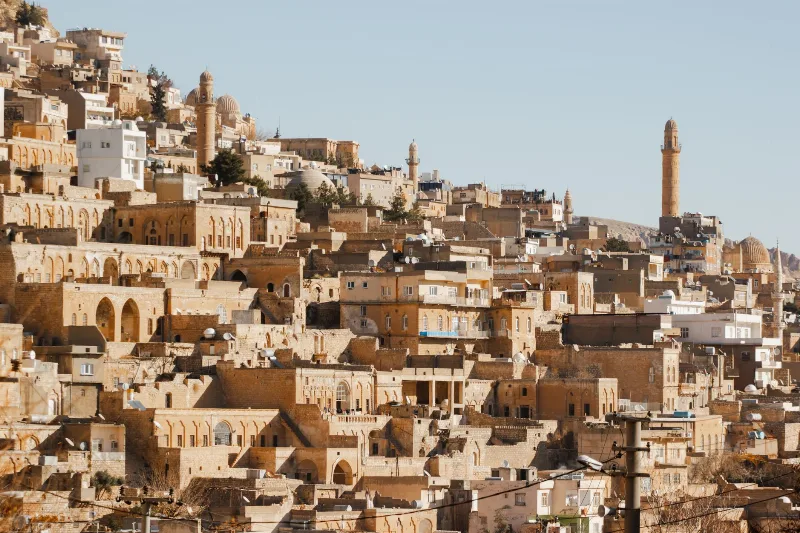
Mardin
Mardin is a historic city in southeastern Türkiye, built on a rocky hillside above the Mesopotamian plain and known for its honey-coloured stone architecture and Syriac Christian heritage.
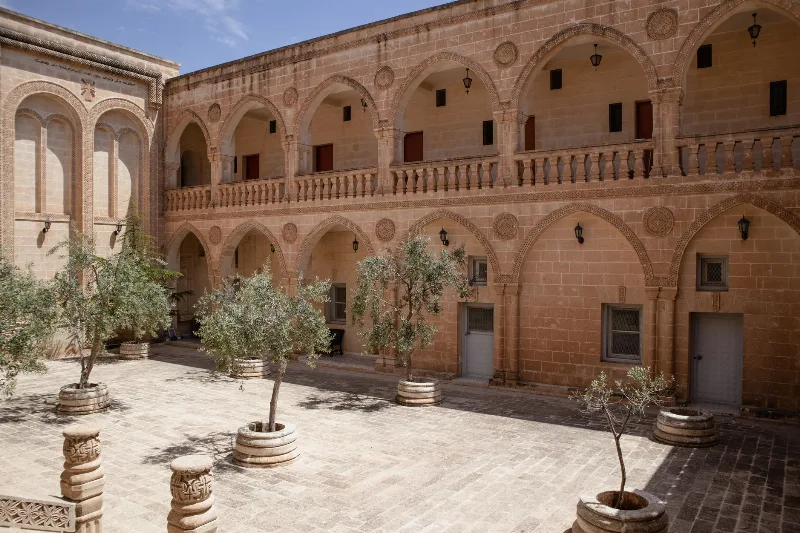
Mor Gabriel Monastery
Mor Gabriel Monastery is a working Syriac Orthodox monastery on the Tur Abdin plateau in Mardin Province, southeastern Turkey, founded in 397 AD and still home to monks and nuns. It is one of the oldest monastic communities in the world that remains in continuous use.
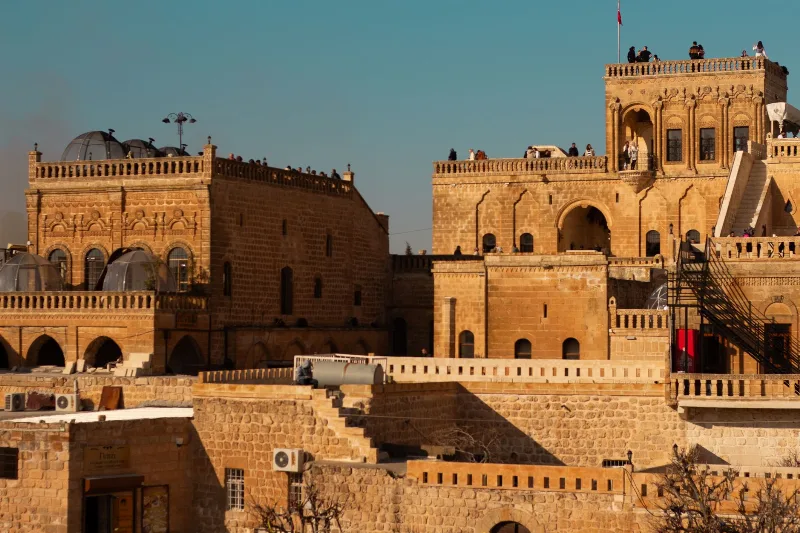
3-Day Mardin and Midyat Route
Explore the stone architecture of Mardin's old city and the historic monasteries of Midyat on this 3-day route through southeast Türkiye. The itinerary starts in Mardin, travels east to Midyat, and visits Deyrulzafaran and Mor Gabriel monasteries.
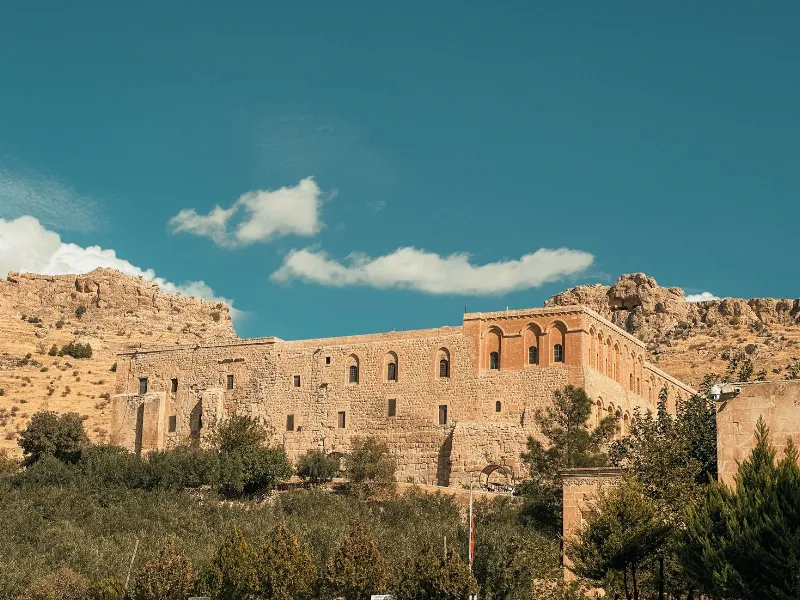
Deyrulzafaran Monastery
Deyrulzafaran, also called Mor Hananyo, is a working Syriac Orthodox monastery near Mardin that was built over a much older pagan sun temple and long served as the seat of the Syriac Orthodox Patriarchate.
5-Day Tigris and Euphrates Route
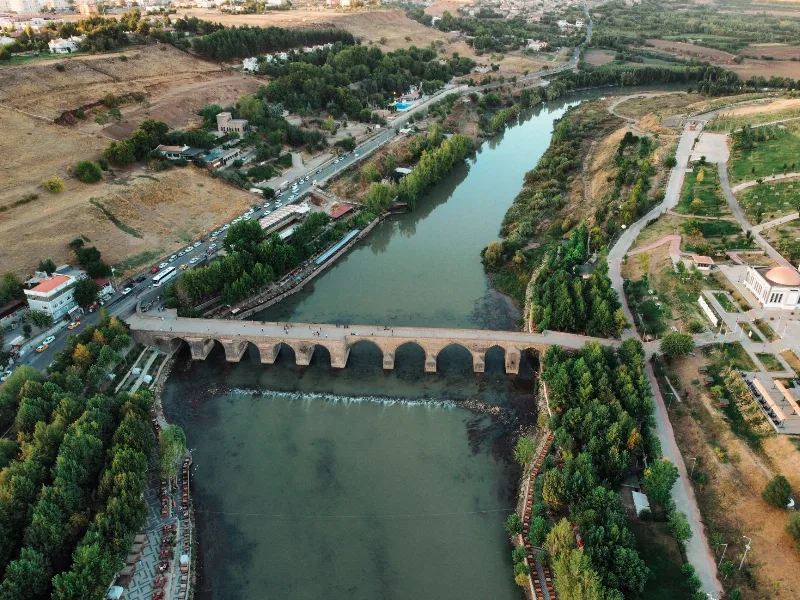
A five-day, east-to-west journey across Southeastern Anatolia from Diyarbakır to Gaziantep, following the Tigris and Euphrates through Mardin, Şanlıurfa, Göbeklitepe and Harran.
4-Day Southeastern Anatolia Route: Gaziantep to Mardin via Şanlıurfa
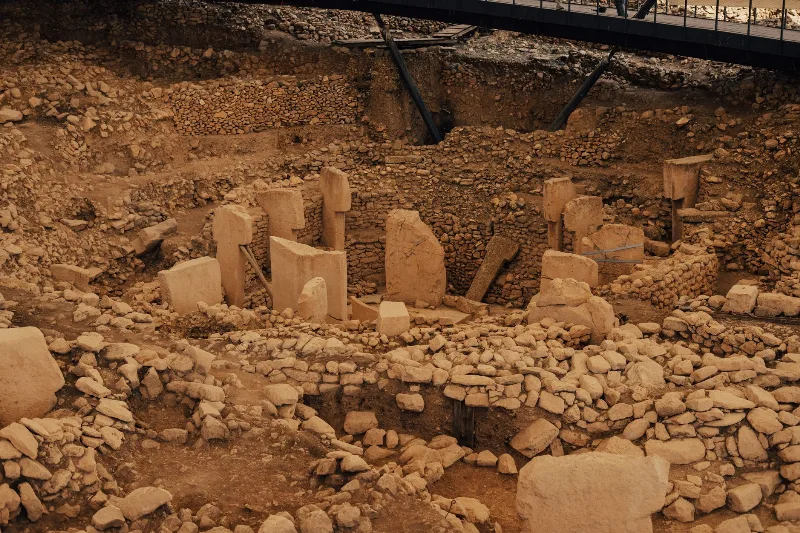
A four-day linear route across Southeastern Anatolia, linking the historic cities of Gaziantep, Şanlıurfa and Mardin by road, with the Neolithic site of Göbeklitepe and the ancient settlement of Harran fitted into the middle of the journey.
Ottoman Architecture of Mardin
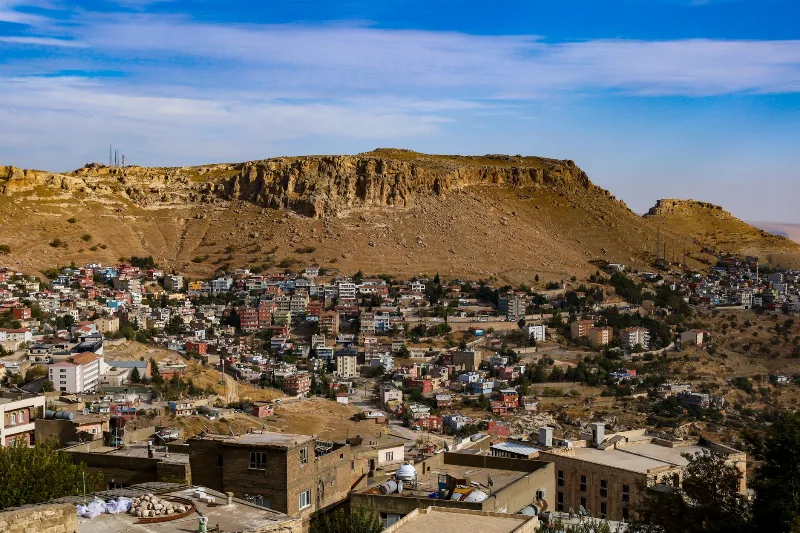
Mardin's historic centre shows how Ottoman design merged with local stone-building traditions in south-eastern Türkiye. Its domes, minarets, hans and courtyard houses form a distinctive urban landscape.
Mardin's Stone Architecture
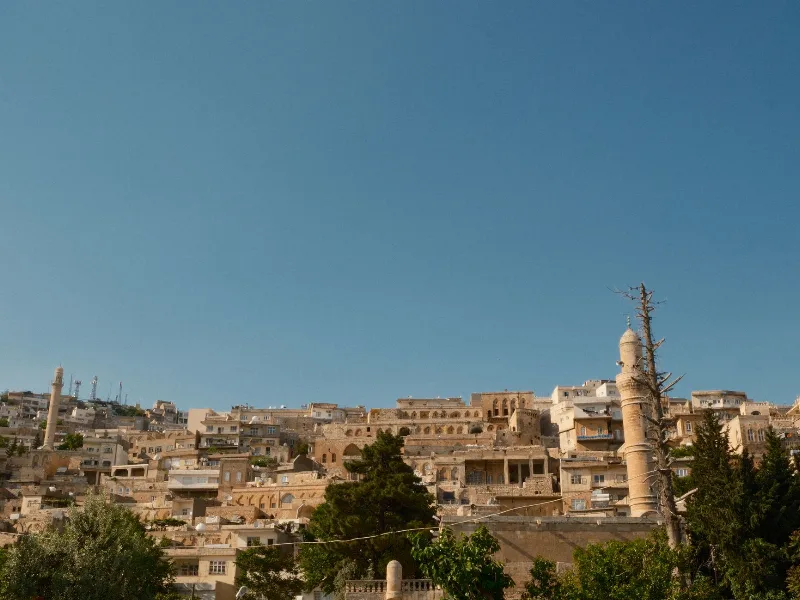
Mardin is a historic city in southeastern Türkiye where honey-coloured limestone shapes houses, arcades and terraces across a hillside above the Mesopotamian plain.