
Deyrulzafaran Monastery
Deyrulzafaran, also called Mor Hananyo, is a working Syriac Orthodox monastery near Mardin that was built over a much older pagan sun temple and long served as the seat of the Syriac Orthodox Patriarchate.
Deyrulzafaran Monastery is a working Syriac Orthodox monastery located about five kilometres from the old town of Mardin, in southeastern Turkey. It is also known as Mor Hananyo Monastery, and it was founded in the early fifth century on ground that had already been used for worship for more than a thousand years before that. For a long stretch of its history it was the seat of the Syriac Orthodox Patriarchate, and it continues to function as an active religious community that receives visitors. The name Deyrulzafaran means "Monastery of Saffron", a reference to the saffron that was once cultivated in the surrounding fields and to the warm yellow limestone from which the complex is built.
Where the Monastery Stands
The monastery occupies a low, open site on the plain just below Mardin, a city that rises sharply on a hillside above it. From the monastery grounds the historic town is visible as a compact mass of pale stone terraces and towers on the slope. The surrounding landscape is dry, rocky and lightly wooded, with olive, almond and fig trees scattered across shallow valleys. The soil and the local building stone share the same pale honey-brown tone, which is one reason the monastery blends so closely into its setting.
The site sits in Mardin Province, close to the road that leads east from the city toward the villages of the plain. Because Mardin itself is the main urban centre of the area, most people reach the monastery as part of a visit to the city rather than as a separate destination.
Why Deyrulzafaran Is Distinctive
What sets Deyrulzafaran apart is the way several religious eras are stacked on a single site. Beneath the Christian monastery lies an older temple complex, and the monastery buildings themselves were raised directly over and around those earlier chambers. Visitors therefore walk through a place where an ancient Mesopotamian place of worship, a Late Antique monastic foundation and a long-running patriarchal residence share the same walls.
The monastery is also unusual for how long it has been in continuous religious use. It has not been preserved as a ruin or a museum piece; monks still live and pray there, and Syriac Christian liturgy is still recited in a language descended from Aramaic. For the Syriac Orthodox community worldwide, the monastery is one of the most important surviving centres of its tradition.
The Sun Temple Beneath the Monastery
The most striking feature of Deyrulzafaran is the structure underneath it. Long before the monastery was founded, the site held a temple dated to the second millennium BC, generally associated with the worship of Shamash, the sun deity of Mesopotamia. Elements of that older building were not demolished when the monastery was built; instead they were reused and adapted.
Several of the underground chambers survive, cut and built from large blocks of stone. Some of these spaces were later used as cisterns, storerooms and burial places by the monks. The heavy stone lintels, columns and thick walls of these rooms are visibly older and more massive than the later Christian masonry above them. The contrast between the two building phases is one of the clearest things a visitor can observe, and it explains why the monastery is often described as standing on top of a temple rather than simply near one.
Architecture and What Can Be Seen
The monastery is a walled complex built almost entirely from local limestone, arranged around courtyards and connected by passages and stairways. Its plan follows the contours of the older temple foundations, so the buildings step down across the slope rather than sitting on a single flat platform. Domes, vaulted ceilings and arched openings are used throughout, and the interior spaces are cool even in summer.
Within the complex there are several churches and chapels used for daily prayer and for the major Syriac Orthodox feast days. The walls carry inscriptions and carved decoration in Syriac and other scripts, and the monastery also holds a collection of Syriac manuscripts that reflects its long role as a centre of learning. The courtyards, the stone paving, the bell tower and the tombs of former patriarchs are among the features that visitors most often stop to look at. Much of the interior is dim and deliberately plain, with light coming from small windows and lamps rather than large openings.
The Syriac Orthodox Patriarchate
From the late thirteenth century until the early twentieth, Deyrulzafaran served as the residence of the Syriac Orthodox Patriarch, making it the administrative and spiritual heart of the church for roughly six centuries. During that period the monastery was enlarged and repaired repeatedly, and it became a centre for copying manuscripts, training clergy and receiving pilgrims.
The Syriac Orthodox Church is one of the Oriental Orthodox churches, and its liturgy is celebrated in Syriac, a language closely related to the Aramaic of the region. When the patriarchal seat was later moved away from Mardin, the monastery lost its administrative role but kept its religious importance. It is still headed by a bishop and remains a functioning monastery rather than a monument.
Visiting the Monastery
Deyrulzafaran is normally open to visitors, and it can be reached easily by car or taxi from Mardin in around fifteen to twenty minutes. Many people combine it with a walk or drive through the old town in the same half-day. As at any active religious site, modest dress is expected: shoulders and knees should be covered, and women are usually asked to cover their heads with a scarf. Loud conversation and flash photography inside the churches are discouraged, and visits may be briefly paused during services.
The terrain inside is uneven. There are stone steps, narrow doorways and low, dimly lit underground chambers, some of which require bending down. Visitors with limited mobility should expect a partial visit, since not every part of the complex is step-free. Because the monastery is still in use, opening arrangements can change, so it is worth confirming locally before setting out.
Best Time to Visit
The climate here is continental and dry. Spring, from roughly April to May, and autumn, in September and October, bring the mildest conditions, green fields and comfortable walking temperatures. Summer is genuinely hot, with daytime temperatures often climbing well above 30°C, and the stone courtyards offer little shade at midday. Winter can be cold and wet, and occasional snow falls on Mardin and the surrounding plain. Early morning is generally the most pleasant time to arrive, both for cooler air and for better light on the yellow stone.
Nearby Places Worth Knowing
Mardin's old town, with its terraced stone houses, mosques, medreses and bazaar streets, is the natural companion to a visit to the monastery and lies only a short drive away. East of Mardin, the wider Tur Abdin plateau around Midyat is home to other historic Syriac Christian sites, including the ancient monastery of Mor Gabriel. The ruins of the old city of Dara, with its rock-cut tombs and cisterns, also lie within reach of Mardin and share the region's layered history. Together these places make southeastern Turkey's limestone plateau one of the most concentrated areas of early Christian and pre-Christian heritage in the country.
Related content
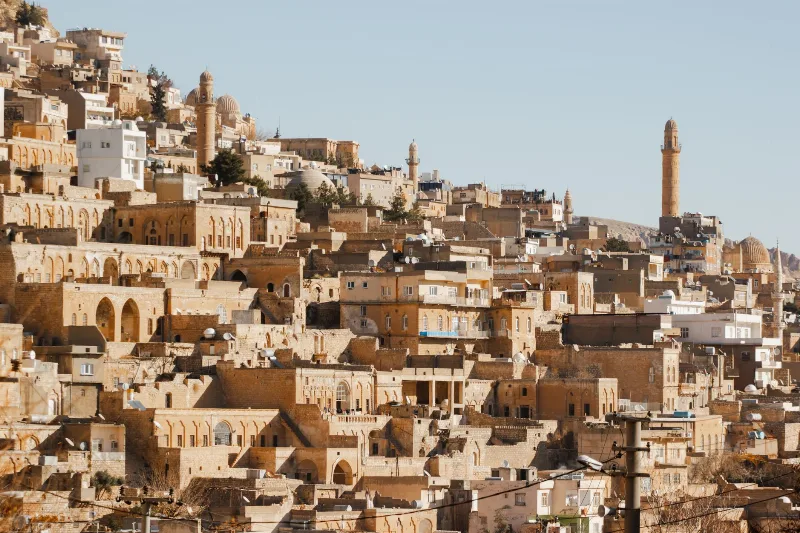
Mardin
Mardin is a historic city in southeastern Türkiye, built on a rocky hillside above the Mesopotamian plain and known for its honey-coloured stone architecture and Syriac Christian heritage.
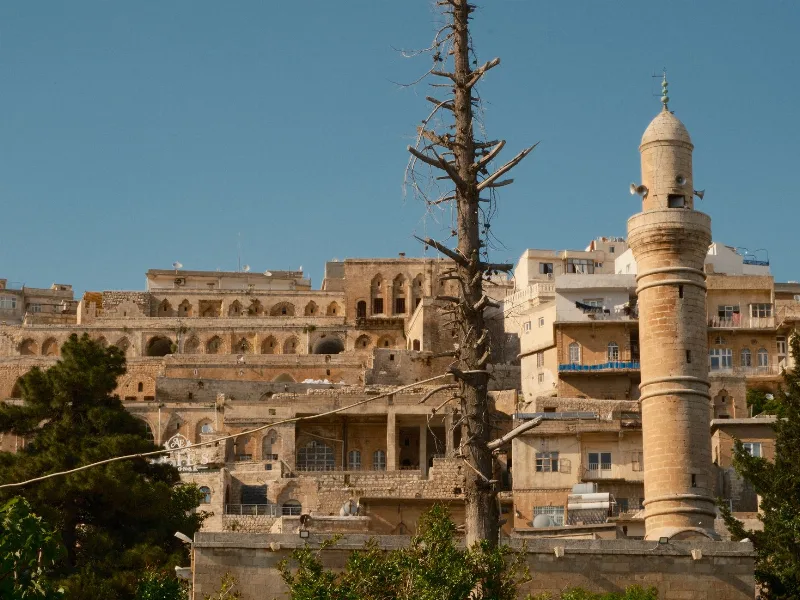
The Architectural Wonders of Mardin
Mardin showcases a blend of ancient architectural styles and natural landscapes, reflecting its rich history and cultural heritage.
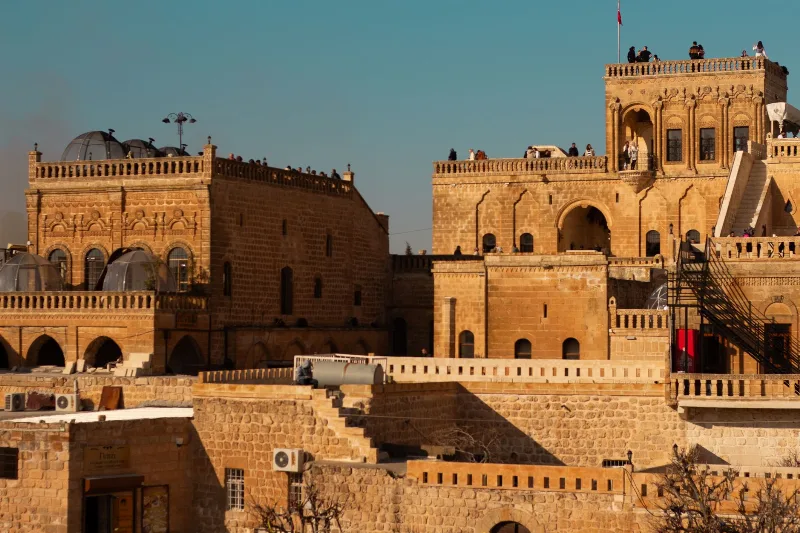
3-Day Mardin and Midyat Route
Explore the stone architecture of Mardin's old city and the historic monasteries of Midyat on this 3-day route through southeast Türkiye. The itinerary starts in Mardin, travels east to Midyat, and visits Deyrulzafaran and Mor Gabriel monasteries.
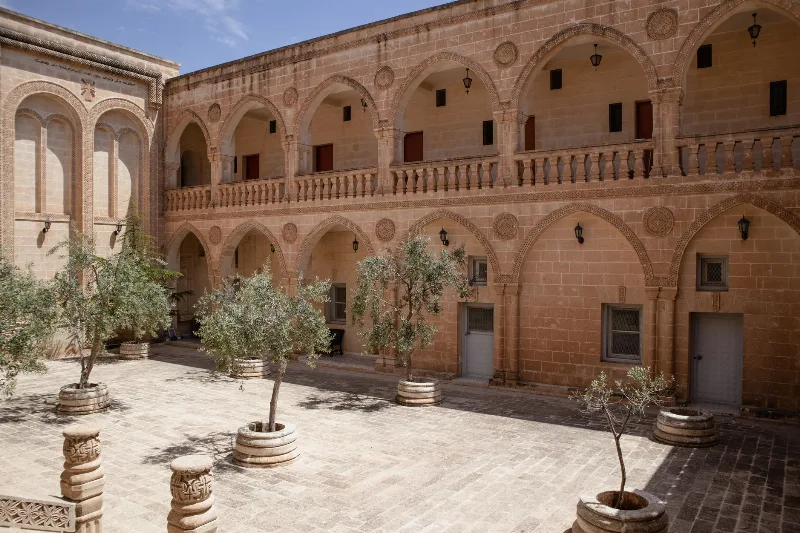
Mor Gabriel Monastery
Mor Gabriel Monastery is a working Syriac Orthodox monastery on the Tur Abdin plateau in Mardin Province, southeastern Turkey, founded in 397 AD and still home to monks and nuns. It is one of the oldest monastic communities in the world that remains in continuous use.
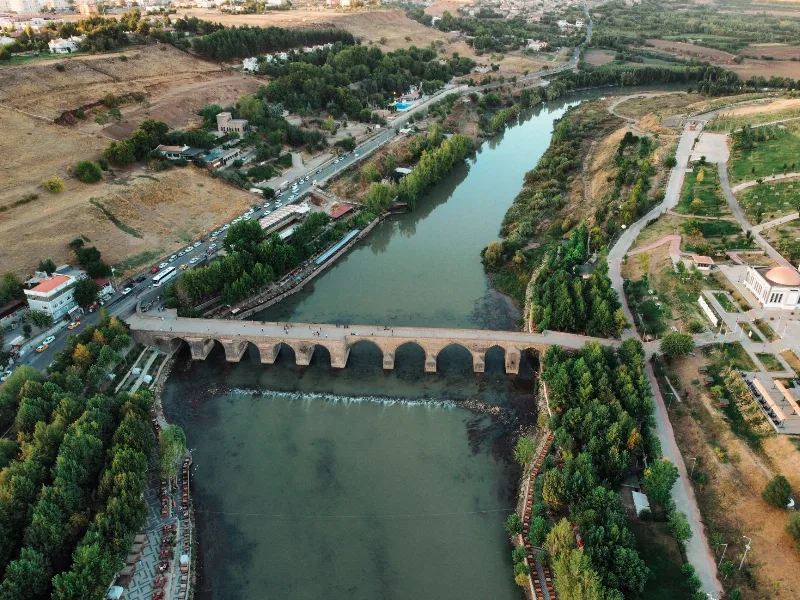
5-Day Tigris and Euphrates Route
A five-day, east-to-west journey across Southeastern Anatolia from Diyarbakır to Gaziantep, following the Tigris and Euphrates through Mardin, Şanlıurfa, Göbeklitepe and Harran.
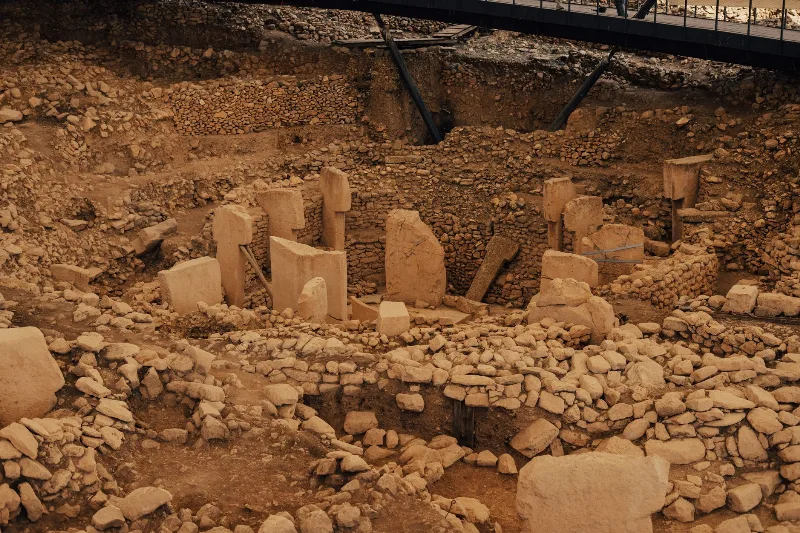
4-Day Southeastern Anatolia Route: Gaziantep to Mardin via Şanlıurfa
A four-day linear route across Southeastern Anatolia, linking the historic cities of Gaziantep, Şanlıurfa and Mardin by road, with the Neolithic site of Göbeklitepe and the ancient settlement of Harran fitted into the middle of the journey.