
Manavgat Waterfall
Manavgat Waterfall is a broad, low cascade on the spring-fed Manavgat River in Antalya Province, close to the town of Manavgat and the Mediterranean coast. Its defining feature is width and steady water volume rather than height.
Manavgat Waterfall is a wide, low waterfall on the Manavgat River in Antalya Province, on Türkiye's southern Mediterranean coast. It lies close to the town of Manavgat, which shares its name, only a few kilometres inland from the coast and a short distance from the ancient harbour site of Side. The fall is not a tall drop: instead, the river spills across much of its own width in a broad, shallow cascade. For that reason it is known more for its breadth and the volume of moving water than for vertical height.
A Wide Cascade Rather Than a Tall Drop
The Manavgat is essentially a step in the riverbed, where the water loses a small amount of elevation across a wide front. Standing near it, the dominant impression is horizontal — a long, broken line of green-white water stretching from one bank toward the other. Because the drop is modest, the sound and spray are spread out rather than concentrated, and the whole river surface appears to shift and fold as it crosses the ledge. Upstream and downstream of the fall, the Manavgat remains a full, fast-flowing river rather than a narrow stream.
A River Fed by Karst Springs
A large part of what makes this waterfall distinctive is where its water comes from. The Manavgat River is fed substantially by karst springs that emerge from the limestone country of the Taurus Mountains inland. Karst springs release groundwater that has travelled through permeable rock, so the river carries a comparatively steady supply even in the driest part of the Mediterranean summer. This is why the cascade keeps running through the hot months, when many smaller rivers in the region shrink to a trickle or dry out entirely. The water is characteristically clear and cool.
The Landscape Around the River
The waterfall sits in the lower Manavgat valley, where the river runs through relatively gentle terrain before turning toward the sea. The banks are lined with riparian vegetation — trees and dense green growth that lean over the water — and the surrounding land is a mix of farmland, low hills and pockets of woodland typical of the Antalya coastal belt. The valley here is broader and softer than the deep gorges found further inland in the Taurus range. The river's colour, a deep green in quieter stretches, comes largely from depth and reflected vegetation rather than sediment.
Seasonal Changes and Water Conditions
The Manavgat's flow follows the Mediterranean pattern, but with the buffer of its springs. Late autumn, winter and spring, when rain and snowmelt recharge the aquifer, generally bring higher and faster water. In spring the cascade can look heavier and more turbulent, and the river itself runs fuller. Summer and early autumn usually see lower but still substantial flow, since the springs continue to feed the channel. Summer is also the hottest and busiest period along the coast, with high temperatures and strong sun in the valley; winter can be mild but wetter, and the light on the water is softer and more changeable.
What Can Be Seen in the Area
The main subject is the moving water itself, both at the ledge and along the reaches immediately above and below it. The riverside setting supports birds and river life, and the contrast between the wide green river surface and the surrounding trees is the core of the scene. Views change with water level: a fuller river produces a broader, more continuous sheet of water across the ledge, while lower levels can reveal more of the rocky bed and break the flow into distinct channels.
Reaching the Manavgat Area
The waterfall is easily placed within the Antalya region. Manavgat town sits on the main coastal corridor east of Antalya, and the fall is a short distance from the town, with the coast and Side nearby. Visitors travelling along the Antalya–Alanya coastal route pass through this area, and the site is commonly combined with the wider river valley rather than treated as a remote destination. Because it lies near a built-up district and a busy coastline, it is an accessible river landscape rather than a wilderness setting.
Practical Natural Considerations
Water is the defining element here, so flow levels matter more than anything else for how the fall looks. Ground near a large river can be damp and, after rain, slippery, and banks may be uneven. Summer heat along the Antalya coast is significant, and the most comfortable conditions for simply observing the river tend to fall outside the hottest hours. As with any fast-flowing river, the current downstream of the ledge is strong and the water is cold, so the cascade should be treated as moving water to watch rather than a still pool.
The River Downstream and Nearby Natural Places
Following the Manavgat toward the sea leads to the river mouth, where it meets the Mediterranean and forms a delta-shaped wetland area at the coast. Upstream, the river is held back by the Oymapınar reservoir, a large body of water set among the hills that is often described by its green colour. Further inland in the wider Antalya region, the Köprüçay valley and the Köprülü Canyon offer a very different, much more enclosed river landscape in deep limestone walls. Together these places show the range of the province's river and mountain scenery, from this broad, low cascade to reservoirs and narrow gorges.
Beaches & bays
See the coast →
Related content
Antalya
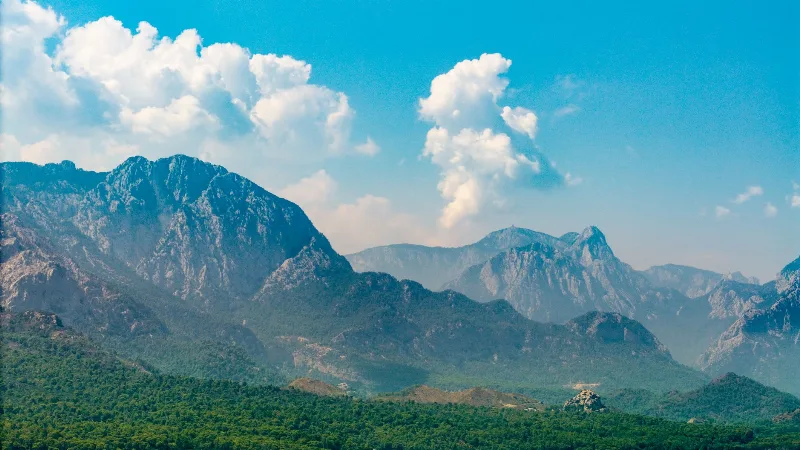
Antalya offers a unique blend of vibrant history and stunning natural beauty, making it a must-visit destination in Türkiye.
Alanya
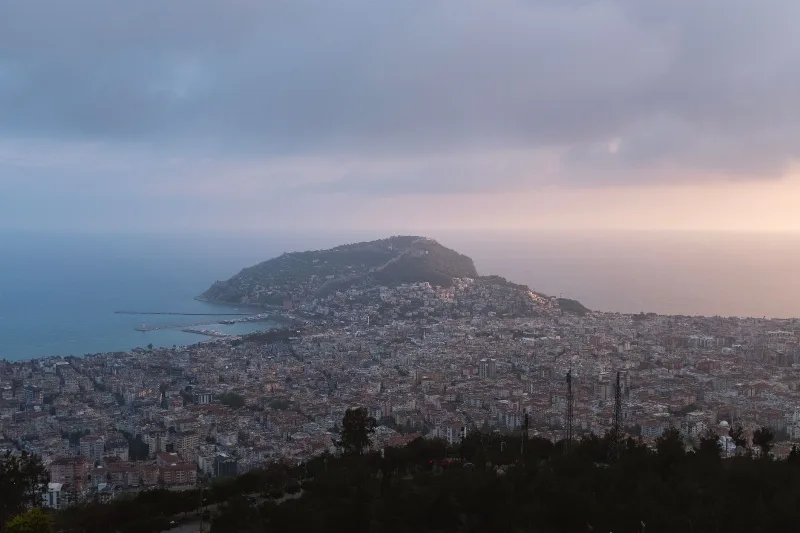
Alanya is a district and coastal city in eastern Antalya Province, Türkiye, built around a Seljuk fortress peninsula that carries the Red Tower, a medieval shipyard and an inhabited old town. Long beaches, a mountain backdrop and a long warm season shape its character.
Köprülü Canyon
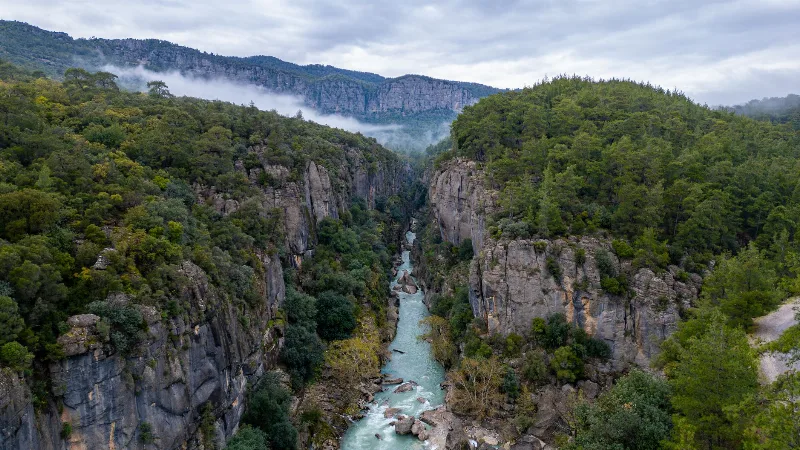
Köprülü Canyon is a deep river canyon in Antalya Province, carved by the Köprüçay River. It is part of a national park and is known for its steep walls, Mediterranean vegetation, and seasonal river conditions.
3-Day Alanya and Side Route
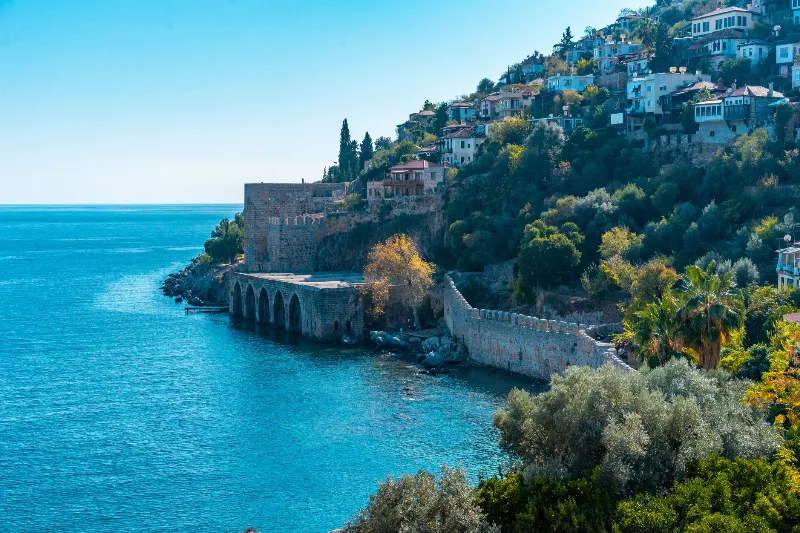
A three-day route along Türkiye's eastern Mediterranean coast, starting at Alanya Castle, continuing west to the ancient city of Side, and ending at the Manavgat Waterfalls.
3-Day Antalya to Side Ancient Coast Route
A three-day coastal journey from Antalya to Side that links the archaeological sites of Perge and Aspendos with the Manavgat Waterfall and the ruins of Side, with a clear day-by-day sequence of stops.
Side
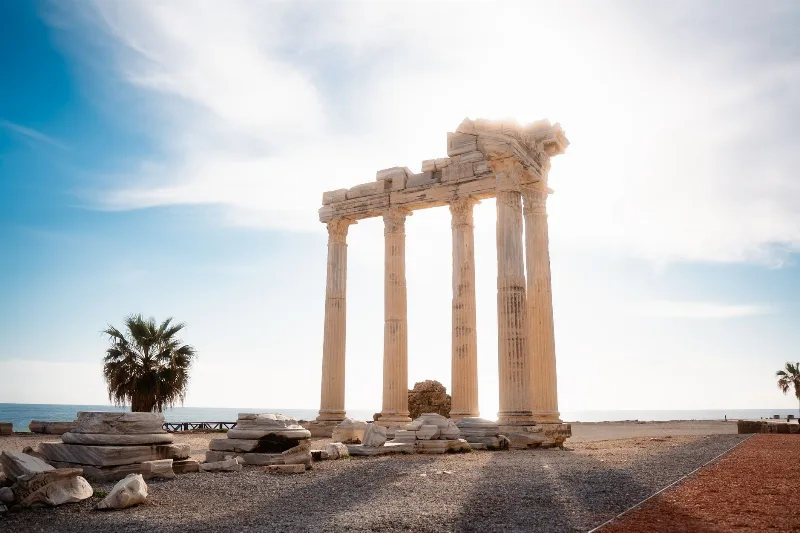
Side is an ancient Greek harbour city on Türkiye's Mediterranean coast, known for the Temple of Apollo, a large Roman theatre and streets of ruins that visitors can still walk through. Its remains sit inside a modern town in the Manavgat district of Antalya Province.