
Niğde Potatoes
Grown on the high, dry plains of Niğde province in central Türkiye, Niğde potatoes are known for their firm texture and high starch content. Cool nights, sunny summer days and light sandy soils shape the character of this regional crop.
Niğde potatoes are the potato crop grown in and around the province of Niğde, an inland province on the Central Anatolian plateau in the centre of Türkiye. The term describes the potatoes produced in this particular agricultural landscape rather than a single registered variety, and it is closely tied to the province's high altitude, cool growing season and light, sandy soils, which are associated with tubers of firm texture and high starch content. In Niğde, potatoes are not a marginal crop; they are part of the farming identity of the province.
A Potato Province on the Central Anatolian Plateau
Niğde sits in the interior of Türkiye, framed by high ground: the Melendiz Mountains and the Aladağlar to the east and south-east, volcanic peaks such as Hasandağı on the western side, and broad plains between them. The farmland that matters most for potatoes lies on the flat and gently sloping ground around the city of Niğde and in the districts of Bor, Çiftlik, Altunhisar and Ulukışla. These are open, largely treeless landscapes in the Anatolian style, where irrigation and crop rotation rather than shelter define the fields. The province's association with potatoes rests on this combination of plateau climate and workable soil.
Why the Climate Suits the Crop
The potato is a cool-season crop that dislikes heat stress, and Niğde's climate is well suited to it despite the region's southerly latitude. Summer days are warm and sunny, but the nights are distinctly cool, and the gap between day and night temperatures is wide. Cool nights slow respiration in the plant, so more of the energy produced during the day is directed into the tubers rather than lost. The growing season is long enough for the crop to bulk up properly, while the dry summer air of the interior keeps humidity low, which is less favourable to the humidity-driven foliage diseases that trouble potatoes in wetter, coastal regions. Cold winters are not a problem for a crop that is planted in spring and lifted before the hardest weather returns.
Sandy Soils and the Volcanic Landscape
The soils around Niğde are one of the reasons the province is associated with potatoes. Much of the farmland is light-textured and sandy, often developed over weathered volcanic material, tuff and ash laid down by the region's long history of volcanic activity. Sandy soils warm early in spring, drain freely, and are easy for tubers to expand in and for growers to lift cleanly at harvest. Good drainage matters in a crop that rots readily in waterlogged ground, and the light structure of the soil allows roots and stolons to develop with little resistance. This is a landscape where the geology and the crop are directly connected.
The Plant and the Growing Cycle
Niğde potatoes come from the familiar potato plant, Solanum tuberosum, a low-growing herbaceous species grown from seed potatoes — small tubers planted whole or cut. Planting follows the last of the spring frosts, once the soil has warmed, and the crop spends the early part of the season building leafy growth. Small flowers appear in early summer, and below ground the stolons begin to swell into tubers. As the season advances, the foliage starts to die back, a sign that the tubers are maturing and their skins are setting. Harvest generally falls in the later summer and autumn, when the tops have dried and the crop can be lifted and left briefly on the ground to cure before being gathered.
Starch, Texture and Kitchen Character
The characteristic most often attached to Niğde potatoes is their high starch content, and this shapes how they behave in the kitchen. Starchy, high dry-matter potatoes have a floury, mealy texture when cooked; they break down readily, which makes them well suited to mashing, puréeing, baking and roasting, and they take on a crisp exterior when fried. They are less suited to dishes where a potato is expected to hold a neat, waxy shape. This difference in texture — the floury crumb against the firm, clean bite of a waxy potato — is one of the practical reasons cooks pay attention to where their potatoes come from.
Irrigation in a Dry Interior
Niğde's rainfall is limited and largely falls outside the main growing months, so irrigation is essential rather than optional. Potato fields around the province are watered from regional reservoirs, canals and wells, with growers using both furrow and sprinkler methods. Water management is one of the main skills of potato growing here: the crop needs steady moisture while the tubers are swelling, but excess water late in the season can damage quality and storage life. The balance between a dry, sunny climate and controlled irrigation is what allows a moisture-sensitive crop to thrive on a semi-arid plateau.
After Harvest: Sorting and Storage
Once lifted, Niğde potatoes are typically left to cure so the skin firms up, then sorted by size and quality. Because the harvest is seasonal and the market is not, storage is central to the crop's value. Farmers use ventilated stores and cold storage to hold potatoes through the winter, controlling temperature and humidity to limit sprouting, shrinkage and rot. Well-stored potatoes from the autumn harvest keep the province's markets supplied for months after the fields have been cleared.
Potatoes in the Niğde Landscape and Economy
Potatoes fit into the wider pattern of Central Anatolian field agriculture, rotating with cereals such as wheat and barley and with other broad-acre crops. As a relatively high-value crop, they give growers a cash alternative to grain, and the need to plant, irrigate, lift, sort and store them supports work across the rural calendar. The crop is visible in the landscape as an orderly, low green canopy in early summer, turning to bare, ridged ground in autumn as the crop is lifted. Potato growing also reaches into the province's food culture, where locally grown tubers appear in home cooking and in the everyday dishes of the region.
Similar Potatoes Elsewhere
Potatoes are grown across much of the Central Anatolian plateau, and comparable conditions — altitude, cool nights, sandy soils — extend into neighbouring provinces. What distinguishes the Niğde crop within that wider picture is the concentration of growing in one province and the way the name itself has become shorthand for the potato of this particular plateau landscape. Buyers and cooks who ask for Niğde potatoes are, in effect, asking for the product of a specific combination of land, climate and farming tradition, not simply for a potato grown somewhere in Türkiye.
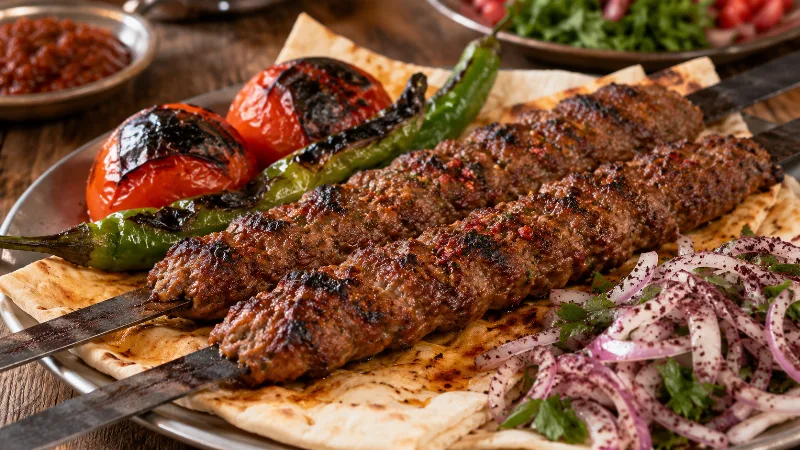
Urfa Kebap
Urfa Kebap is a charcoal-grilled minced lamb kebab from Şanlıurfa, seasoned without hot chilli and shaped around flat skewers. Its mildness is what sets it apart from the region's other minced kebabs.
Explore →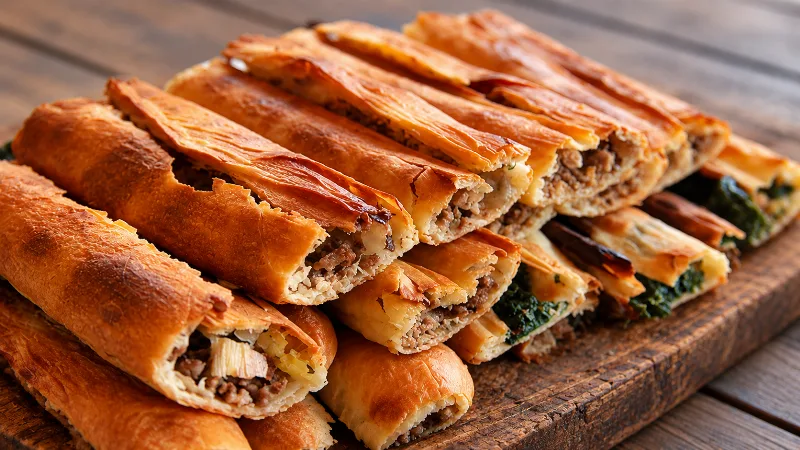
Bafra Pidesi
Bafra Pidesi is a soft, boat-shaped Turkish pide from the Bafra district of Samsun on the Black Sea coast, filled with ground meat, cheese or vegetables and baked quickly in a very hot oven.
Explore →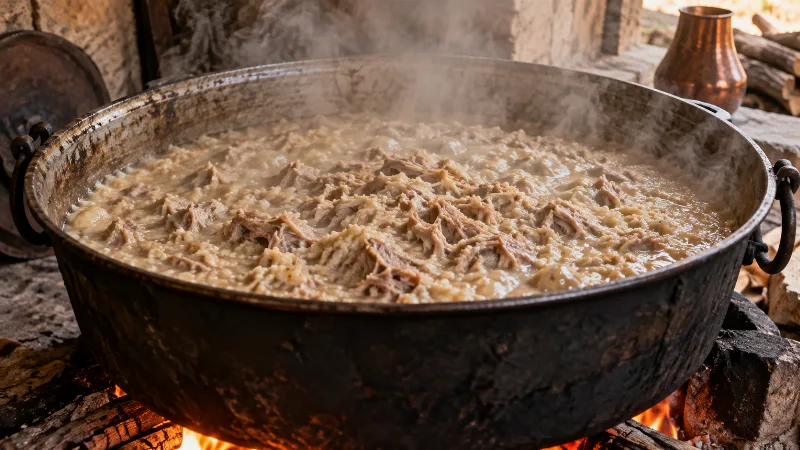
Keşkek
Keşkek is a ceremonial Anatolian dish of whole wheat berries and meat, slow-cooked and then pounded until the two merge into a thick, smooth mass. It belongs to Central Anatolia and the Aegean region, where it is still prepared in large cauldrons for weddings and religious holidays.
Explore →Related content
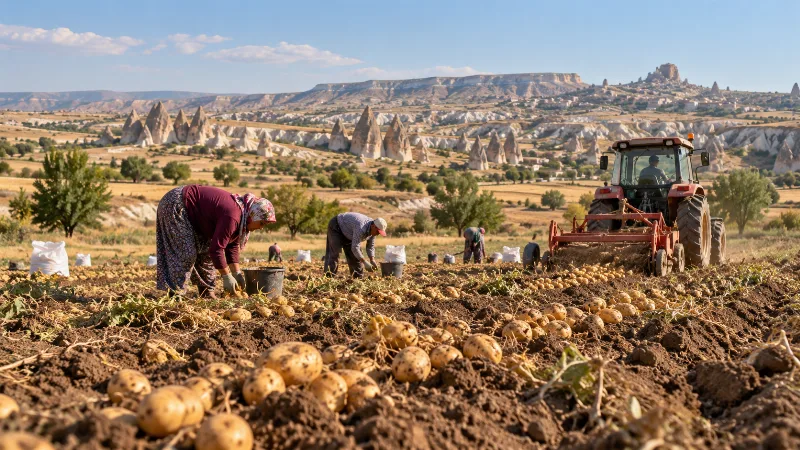
Nevşehir Potatoes
Nevşehir potatoes are grown on the volcanic plateau of Cappadocia in central Türkiye, where tuff-derived soils, cold winters and warm dry summers shape a crop that is harvested in late summer and kept in the region's cool rock-cut storage chambers.
Erzurum Potatoes
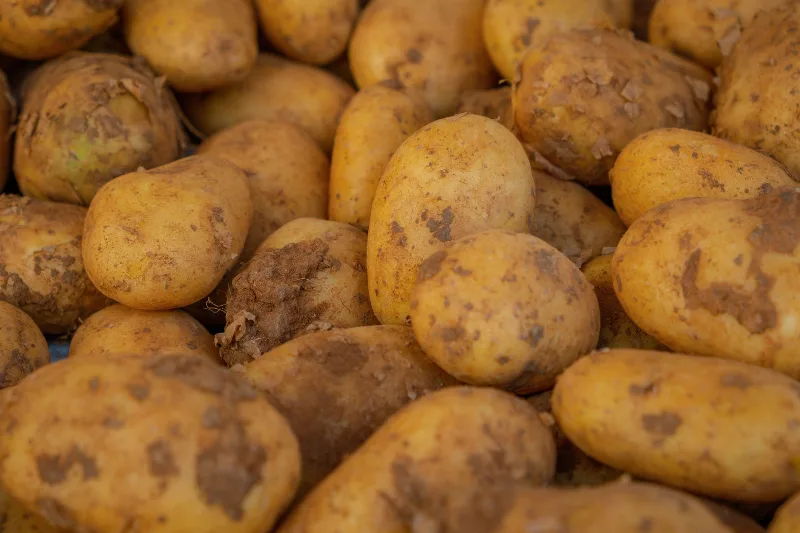
Erzurum potatoes are highland potatoes from Erzurum province in Eastern Anatolia, shaped by cool summers, volcanic soils and a short growing season. They are known for their starch-rich texture and full flavour.
Apple Harvest in Niğde
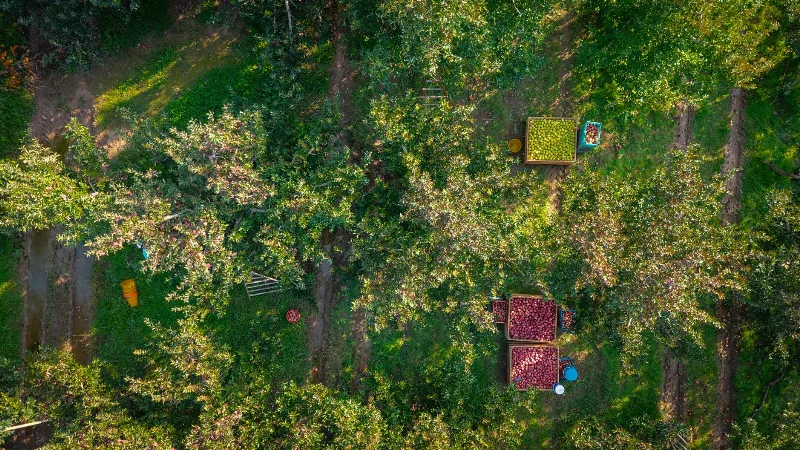
Niğde’s apple harvest generally falls between September and October, when orchards across the province reach picking time. The window shifts with weather each year, making the autumn orchard season a matter of broad timing rather than fixed dates.
Derinkuyu Underground City
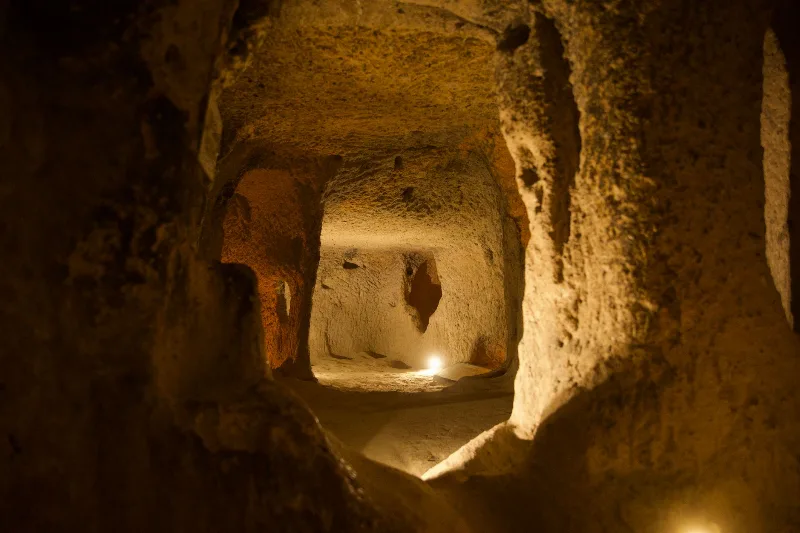
Derinkuyu Underground City is a multi-level rock-cut settlement beneath the town of Derinkuyu in Nevşehir Province, the deepest known underground city in Cappadocia and one of Anatolia's most complete examples of subterranean architecture.
Derinkuyu Underground City
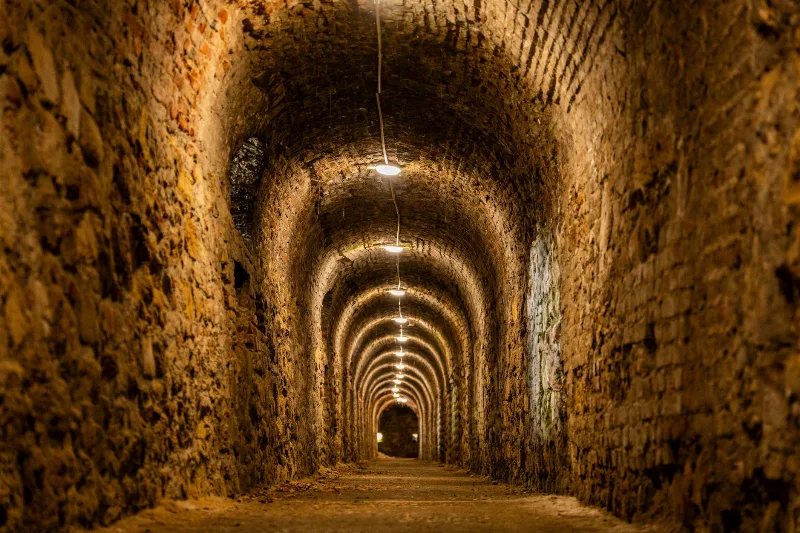
Derinkuyu is a multi-level city carved into the volcanic rock of Cappadocia, deep enough and large enough to have sheltered thousands of people and their animals underground. This guide explains its structure, history and what a visit actually involves.
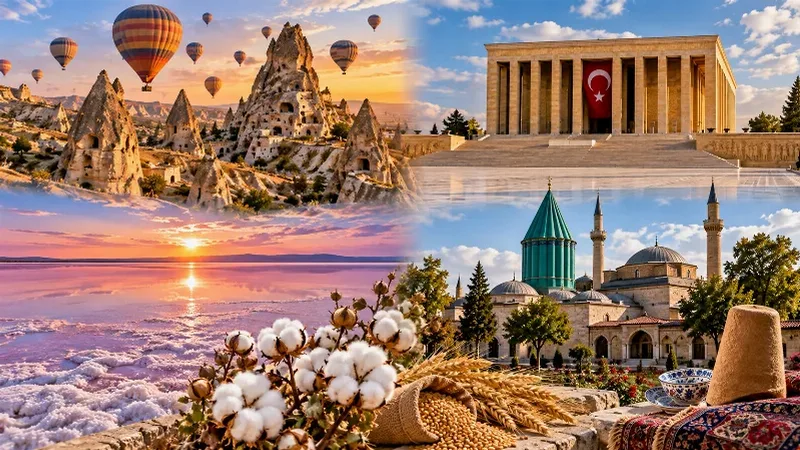
Central Anatolia Region
Central Anatolia is the historic heartland of Türkiye, known for its wide plains, extraordinary rock formations, ancient civilizations and traditional towns. From the fairy chimneys of Cappadocia to the cultural landmarks of Ankara and Konya, the region reveals the rich history and natural beauty of inner Anatolia.