
Ordu Hazelnuts
Ordu hazelnuts come from Türkiye's leading hazelnut province on the central Black Sea coast, where humid air, year-round rainfall and steep hillside orchards give the crop its distinctive character.
Ordu hazelnuts are the nuts of Corylus avellana, the common hazelnut, grown in Ordu province on the central stretch of Türkiye's Black Sea coast. Ordu is the country's leading hazelnut-producing province, and the crop dominates the province's rural landscape to a degree that is hard to overstate: orchards climb the hillsides behind the coastal towns, line the roads inland and surround most villages in the lower and middle elevations. The association between the nut and the province is not a marketing invention but a straightforward result of geography. The mild, humid climate of the Black Sea region, with moisture spread across the whole year rather than concentrated in a short wet season, matches the hazelnut's requirements closely, and the resulting nuts are valued for their quality and flavour.
Why the Black Sea Climate Suits the Hazelnut
The hazelnut is a crop of humid, temperate coasts, and Ordu sits squarely inside such a zone. Rainfall is high and, crucially, well distributed through spring and summer, so the trees are rarely exposed to the prolonged soil moisture deficit that limits hazelnut growing in drier parts of the country. The province also avoids the extremes that damage the crop elsewhere: summers are warm but not scorching, winters are cool without being severe, and the sea moderates temperatures along the coastal strip.
Hazelnut roots are relatively shallow and spread widely rather than driving deep, which makes the plant sensitive both to drought and to waterlogging. The steep, sloping ground that characterises much of Ordu provides natural drainage, while the humid air and frequent cloud cover reduce evaporation from the soil surface. Elevation adds a further layer of variation. Orchards run from close to sea level up to roughly six or seven hundred metres, with the higher inland districts cooler and slower to ripen than the coastal belt. This range means harvest in the province is not a single event but a rolling process that moves from the lower slopes upward.
Where the Orchards Lie
Hazelnut growing stretches along the whole coastal arc of the province, through districts such as Ünye, Fatsa, Perşembe and Gülyalı, and continues inland into the hill districts around Kumru, Korgan, Akkuş, Gölköy and Ulubey. The orchards are overwhelmingly small. Plots are measured in fractions of a hectare, boundaries follow ridges and streams, and most are worked by the families that own them. This pattern is a direct consequence of terrain: the land is too steep and too fragmented for large-scale field agriculture, and the hazelnut, which grows happily on slopes and produces for decades once established, fits the landscape far better than annual crops.
In the past, many orchards were intercropped, with maize or vegetables grown between the trees to make the most of scarce level ground. Traces of that practice survive in the older, more widely spaced plantings, though most modern orchards are managed as hazelnut stands alone. The crop also appears outside dedicated orchards, in hedgerows, garden corners and along field edges, so that hazelnut foliage is part of the general texture of the countryside rather than something confined to fenced plots.
The Plant and the Varieties Grown in Ordu
The hazelnut is a deciduous shrub or small multi-stemmed tree, typically pruned to a manageable height so that branches can be reached from the ground. Its leaves are broad and doubly serrated, turning yellow before they fall. Flowering is unusual among orchard crops: the male catkins elongate and release pollen in winter, long before the leaves appear, and pollination is entirely by wind. Hazelnuts are largely self-incompatible, so growers plant more than one variety together to ensure a reliable set of nuts.
Several varieties are cultivated across the province, among them Tombul, Çakıldak, Palaz and Sivri. They differ in shell thickness, nut shape and the proportion of kernel to shell, and they ripen at slightly different times, which spreads the harvest workload. The rounder, thin-shelled types are the most sought after for the confectionery trade, while harder-shelled varieties have advantages in storage and transport. Local growers commonly maintain a mix rather than a single variety, partly for pollination and partly to hedge against a poor season for any one type.
From Catkin to August Harvest
The growing cycle begins in the depths of winter with catkin expansion and pollination, continues through a spring in which the nuts begin to form inside their green husks, and runs through summer as the kernels fill and the oil content builds. By late summer the husks begin to split and the nuts start to loosen, which is the signal that harvest is approaching.
Harvest in Ordu usually falls in August and September, earlier on the warm coastal strip and later in the higher inland districts. It remains overwhelmingly manual work. Growers knock or shake the branches so that the nuts fall, then gather them from the ground by hand or with simple scoops. On steep ground this is slow, physical labour, and the harvest is a major seasonal employer in the province. The nuts are taken from the orchard in their husks and the husks removed, traditionally by hand and now often with small mechanical huskers shared or hired within villages.
Drying, Storage and Keeping Quality
Fresh hazelnuts spoil quickly, so drying follows the harvest closely. The shelled-in-husk nuts are spread in thin layers on wooden slats, mesh frames or prepared ground and turned regularly in the sun until moisture levels fall far enough for safe storage. Drying is the step that determines whether a good harvest keeps its quality: nuts dried too slowly or unevenly develop off-flavours and lose the clean, sweet character that the province's crop is known for. Once dry, the nuts are cleaned, sorted and stored in sacks in dry, ventilated conditions, and many households keep back a portion for their own use through the year.
What Distinguishes the Nuts
Ordu hazelnuts are typically round to oval with a relatively thin shell enclosing a plump kernel covered by a thin brown pellicle over cream-coloured flesh. The kernels are oil-rich and, when roasted, develop a pronounced sweet, nutty aroma. Texture matters as much as flavour: the thin-skinned varieties crack cleanly and roast evenly, which is why they are in demand for chocolate, praline, paste and confectionery work where the nut is on display rather than hidden in a filling. Hazelnut oil, pressed from the kernels, is a smaller but established local product with a distinctively fragrant character.
How the Crop Shapes the Province
Because the hazelnut covers so much of the hillside, it defines the look of Ordu through the year: fresh green orchards in spring, dense leafy cover in summer, yellowing leaves before the autumn harvest and bare, pruned branch structures in winter. It also shapes the economy. For thousands of smallholders the crop is the main cash income of the year, and the rhythm of pruning, fertilising, harvesting and drying structures the working calendar of entire districts. The steepness that makes the crop so suitable is also what keeps the sector small-scale, since machinery cannot easily work most plots and family labour remains central.
The hazelnut belt continues beyond the provincial boundary into neighbouring Giresun to the east and towards Samsun and Trabzon, forming one of the most concentrated nut-growing zones in the world. Ordu's particular position within that belt is as its largest producer, with an unusually broad spread of orchards from the coastal towns right up into the inland valleys, and a local agricultural culture in which the hazelnut is less a crop among others than the organising fact of rural life.
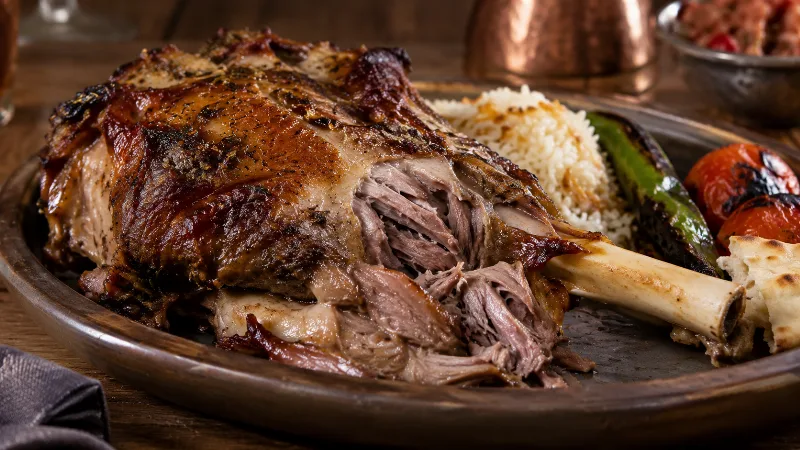
Kuzu Tandır
Kuzu tandır is slow-roasted lamb cooked in a sealed clay tandır oven, a method strongly associated with eastern Anatolia, especially Erzurum, that yields crisp, browned skin and very tender, juicy meat.
Explore →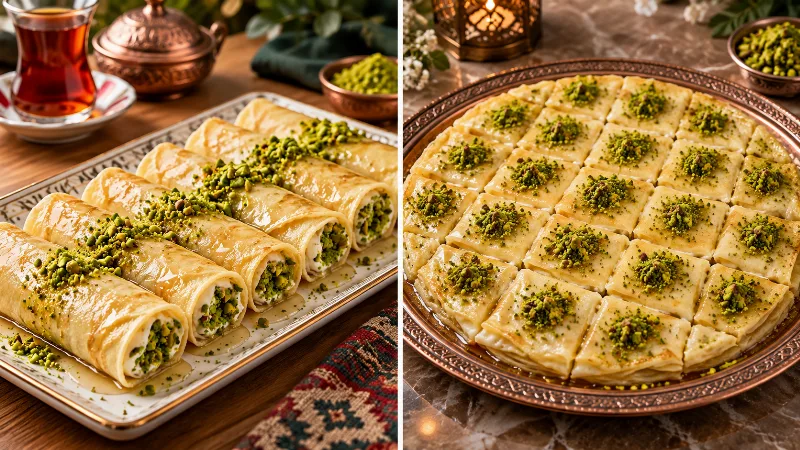
Şıllık Tatlısı
A traditional Şanlıurfa dessert made with thin pancakes, walnuts and sweet syrup.
Explore →
Tantuni
Tantuni is a traditional Turkish street food from Mersin, made with finely chopped beef sautéed with onions, tomatoes, and spices, then wrapped in lavash. It is known for its juicy, flavorful filling and is a staple of Mersin's culinary culture.
Explore →Related content

Ordu
Ordu is a Black Sea city in northern Türkiye and the centre of Ordu Province, built on a narrow coastal strip between the sea and the Pontic Mountains. It is best known for hazelnut production and for the panoramic views from Boztepe above the city.

Giresun
Giresun is a Black Sea coastal city in northeastern Türkiye, known across the country for its hazelnuts and for Giresun Island, the only inhabited island in the Black Sea.

Samsun
Samsun is a large Black Sea port city in northern Türkiye and the historic starting point of the Turkish War of Independence in 1919. It is a major metropolitan centre set between wide river deltas, coastal plains and the mountains of the Black Sea hinterland.
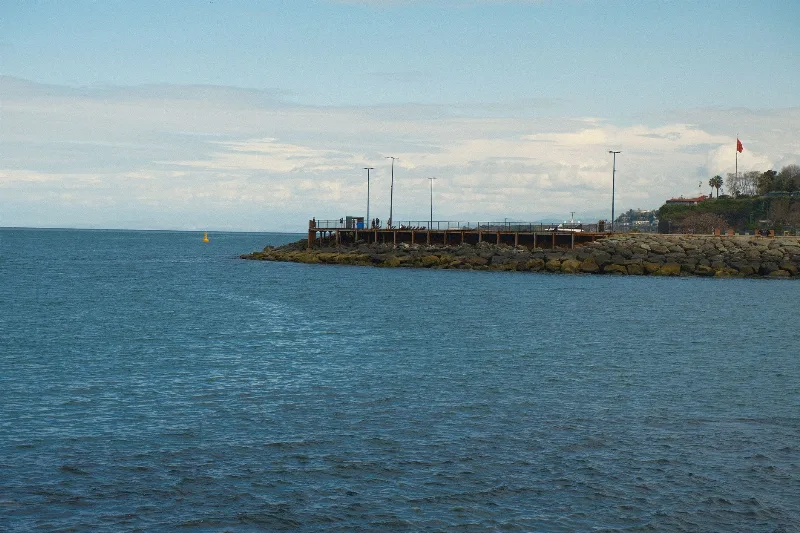
6-Day Central Black Sea Route
A six-day journey along Turkey's Central Black Sea coast from Samsun to Trabzon, visiting Ordu and Giresun with highland and beach stops.
Boztepe Paragliding and Hazelnut Orchards in Ordu
Boztepe is the green hill above Ordu on Turkey's Black Sea coast, where paragliders launch from a high viewpoint over a landscape of hazelnut orchards and open sea.
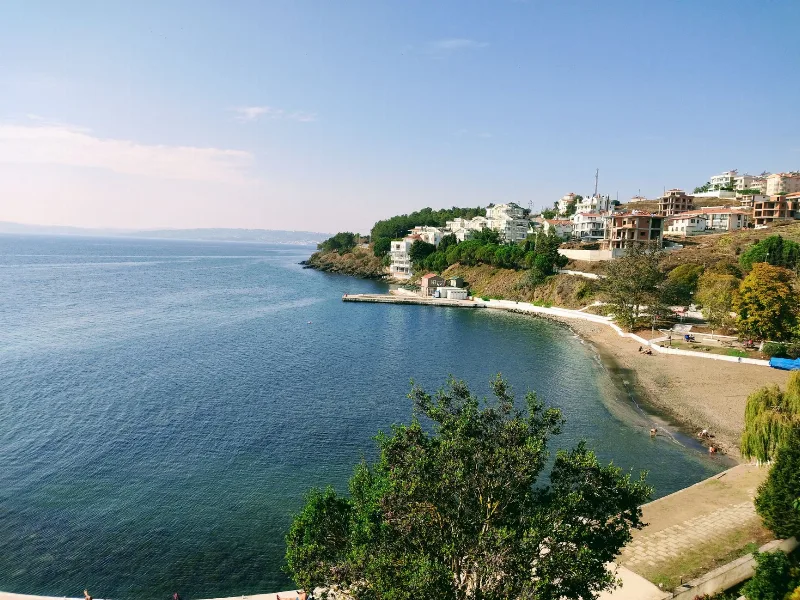
5-Day Black Sea Coast Route
A five-day linear journey along Türkiye's central and eastern Black Sea coast, from Sinop to Trabzon, with an inland detour to Amasya and stops in Ordu and Giresun along the way.