
Trabzon Tea
Trabzon tea is the black tea grown on the rain-soaked slopes of Trabzon province on Türkiye's eastern Black Sea coast, where acidic soils and constant humidity create one of the few climates in the country where Camellia sinensis thrives.
Trabzon tea is black tea produced from the tea gardens of Trabzon province, a narrow, mountainous strip of land on Türkiye's eastern Black Sea coast. It comes from the same plant as every other true tea in the world, Camellia sinensis, but the leaf takes on its character from the place: hillsides that face the sea, heavy and frequent rain, high humidity, acidic soils and mild winters. Trabzon is one of a small group of provinces in Türkiye where commercial tea cultivation is possible at all, and tea gardening has shaped the province's rural landscape, its working calendar and its daily habits for generations.
Where Tea Grows in Trabzon Province
Tea gardens in Trabzon are concentrated in the eastern districts, where the coastal strip is at its wettest and the valleys cut deepest into the mountains. The districts of Of, Hayrat, Dernekpazarı, Çaykara, Sürmene and Araklı hold a large share of the province's tea land, with gardens continuing westwards in smaller patches towards Trabzon city and the surrounding rural districts. Most plots sit on slopes from close to sea level up to a few hundred metres, wherever the land is not too steep, too shaded or too exposed to hard frost.
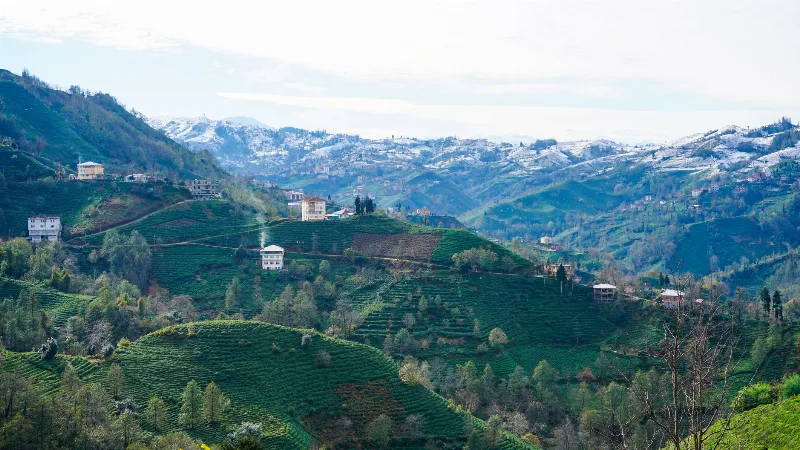
The gardens are rarely large or flat. They are small family holdings, often terraced or cut into hillsides, sometimes no wider than a few rows of bushes between a stream and a wooded ridge. This patchwork is one of the defining features of the Trabzon tea landscape: tea is not grown on open plains but stitched into a wet, forested mountain geography, interleaved with hazelnut trees, maize plots and settlements.
Why the Eastern Black Sea Climate Suits Camellia sinensis
Tea is demanding about water. It needs rain spread across the year rather than a single wet season, and it suffers where the ground dries out for long periods. The eastern Black Sea coast is the wettest part of Türkiye, with precipitation distributed through every month and eastern Trabzon districts among the dampest corners of the province. Cloud cover, mist in the valleys and humid air reduce evaporation, so the soil stays moist even on steep, freely draining slopes.
Temperature matters just as much. Trabzon's winters are mild by Anatolian standards, and the sea moderates the cold that would otherwise damage the bushes. Tea can tolerate cool weather, but hard, prolonged frosts burn the foliage and can kill young plants, so the relatively gentle coastal winter is a genuine limiting factor that keeps cultivation close to the coast and the lower slopes.
Soil completes the picture. Camellia sinensis is an acid-loving plant, and the leached, humus-rich soils of the wet Black Sea hillsides are naturally acidic and well drained — conditions that suit tea and frustrate many other crops. Where soils are too alkaline or too waterlogged, tea simply does not perform, which is one reason the crop is confined to a comparatively small belt of the country rather than spreading inland.
The Tea Bush in the Landscape
In the garden, tea is an evergreen shrub kept low and dense, pruned into a flattish "table" of foliage so that new shoots can be reached easily at harvest. Left unpruned it would grow into a small tree, but cultivated bushes are trimmed back regularly to encourage a continuous supply of tender young growth. The leaves are glossy, dark green and serrated, and the plant produces small white flowers with yellow centres in autumn, followed by small woody capsules. In Trabzon the bushes are grown as a continuous hedgerow crop rather than as individual trees, which is why tea land reads as a green, textured carpet across the hillsides.
Flushes, Plucking and the Harvest Calendar
Harvest begins in spring, once the bushes push out their first flush of new shoots, and continues in successive rounds through the warmer months as the plants regrow. Each round is timed to the speed of new growth, so the interval between pickings shortens in warm, wet weather. Only the youngest part of the shoot is taken — typically the bud and the two or three leaves below it — because older leaves are coarse and produce a flatter, harsher infusion.
Plucking was traditionally done by hand, and hand picking still matters on steep or awkward plots, but much of the work is now done with shears or small harvesting machines that cut across the trimmed surface of the hedge. After cutting, the bushes are rested and pruned in rotation so that the garden remains productive over the following seasons.
From Fresh Leaf to Black Tea
Tea does not keep well as a fresh leaf, so the crop is processed close to where it is grown. The freshly plucked shoots are spread out to wither, losing moisture and becoming pliable. They are then rolled or crushed to break the leaf cells and release the juices that drive oxidation — the same browning reaction that darkens a cut apple. During oxidation the leaf turns from green to copper, and the aroma compounds that define black tea develop. The process is stopped by drying with heat, which fixes the colour and flavour, and the finished tea is then graded by leaf size, from whole-leaf grades down to the finer particles used in everyday blends.
What Trabzon Tea Tastes Like
The infusion is deep, coppery red with a robust, malty body and a firm astringency; it holds up well to the strong, concentrated brewing style used across Türkiye, where tea is steeped in a small pot set over a larger pot of boiling water and served in small tulip-shaped glasses. Trabzon tea is often described as brisk and full-flavoured rather than delicate, which reflects both the plant and the wet, cool growing conditions.
In the kitchen it is mostly a drink, but the infusion also appears in baked goods and desserts in the region, and tea is offered constantly in homes, offices and village gatherings, sweetened with sugar and taken without milk.
How Tea Reshaped a Province
Tea cultivation on the eastern Black Sea coast is a twentieth-century development, introduced when state policy looked for a cash crop that could hold families on steep, rain-drenched land. Once it took hold, it changed the economics of the hillsides: smallholders who had relied on maize, hazelnuts and livestock found a crop with a reliable buyer and a yearly cycle of work. In Trabzon, tea gardens became a form of family inheritance, divided and passed down, and the harvest season reorganised the summer calendar around plucking rounds and deliveries to processing factories.
Nearby Growing Areas
Trabzon sits within a broader tea belt. Rize, immediately to the east, is the heartland of Turkish tea and holds the greatest concentration of gardens; Artvin continues the belt further east towards Georgia, while Giresun and Ordu to the west mark the gradual limits of commercial cultivation. Buyers and processors move between these provinces, and the same wet, acidic hill country runs through them all — but the Trabzon districts have their own identity within it, shaped by narrower valleys, smaller plots and the proximity of the sea.
Reading the Landscape Through Tea
Anyone travelling through eastern Trabzon in summer sees the crop before they taste it: bright green, closely clipped hedges on slopes too steep for much else, dotted with the shade trees and wooden drying structures that belong to the working garden. The tea is inseparable from the land that produces it — a plant that needs constant moisture, acid soil and mild winters, grown in the one corner of Türkiye that reliably offers all three.
İskender Kebabı
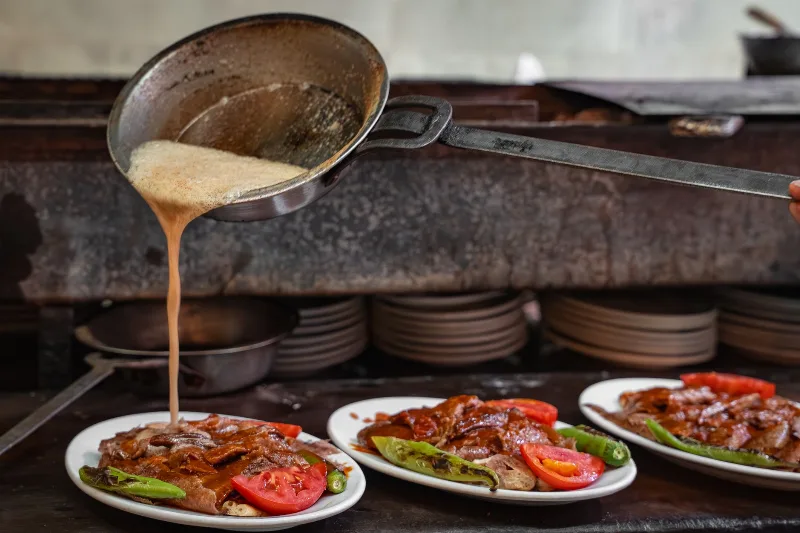
İskender Kebabı is a Bursa dish made of sliced döner kebab laid over pieces of pita bread, dressed with warm tomato sauce and melted butter, and served with yogurt on the side.
Explore →
Su Böreği
Su Böreği is a layered Turkish savory pastry made by briefly boiling thin yufka sheets, then baking them with cheese and parsley. Its soft interior and golden top distinguish it within the wider börek family.
Explore →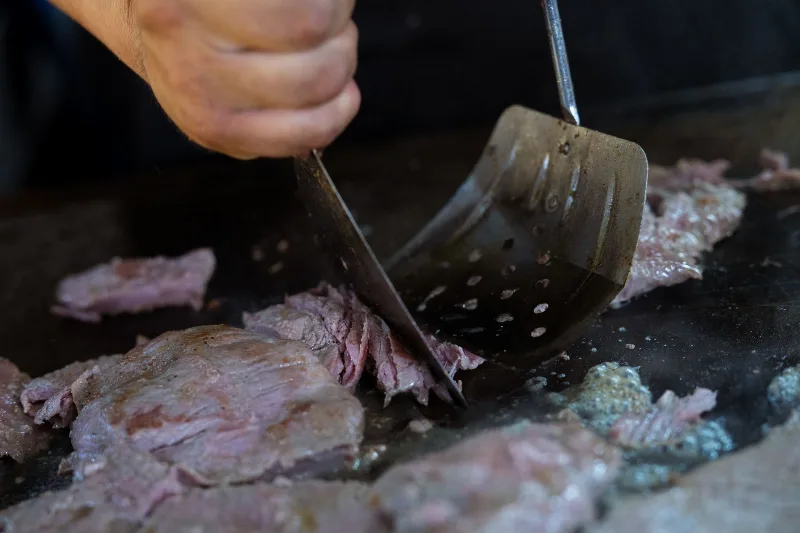
Tantuni
A Mersin street wrap built around finely chopped beef cooked with onion, tomato and pepper on a flat griddle, then rolled in thin lavash and finished with lemon and sumac onion.
Explore →Related content
Trabzon
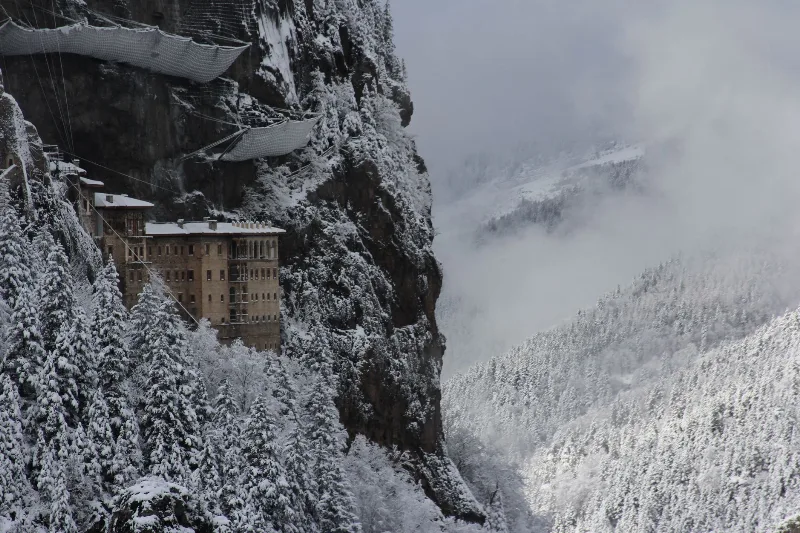
Trabzon is a rain-washed port city on Türkiye's eastern Black Sea coast, framed by the cliffside Sumela Monastery and slopes of tea. Byzantine and Ottoman layers sit close to highland valleys just inland.
Rize
Rize is the capital of Rize Province on Türkiye's northeastern Black Sea coast, a city shaped by tea plantations, steep forested slopes and the high plateaus of the Kaçkar Mountains further inland.
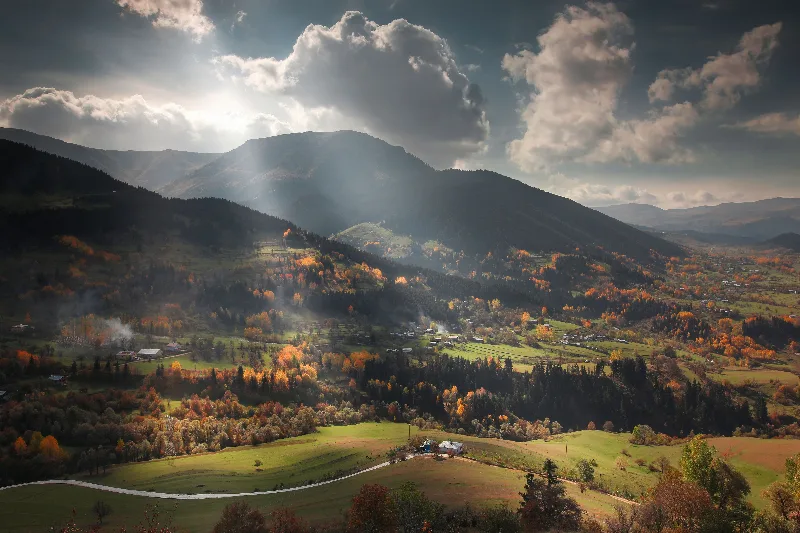
Artvin
Explore Artvin, the northeastern Black Sea region: history, standout sights, landscapes, local food and practical travel advice for an unforgettable journey in Türkiye.
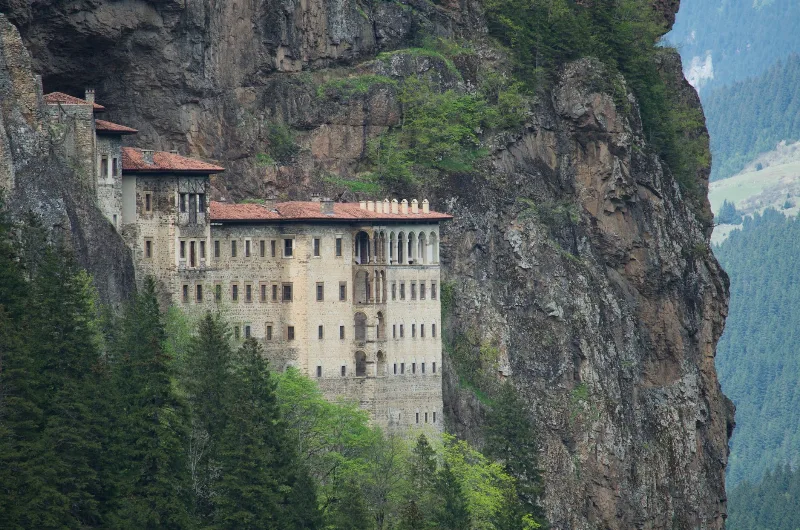
7-Day Eastern Black Sea Highlands Route: Trabzon to Artvin
A seven-day driving route through the Eastern Black Sea highlands, from Trabzon and Sumela to Uzungöl, Ayder, the Kaçkar Mountains and the forests of Şavşat, ending at Artvin.
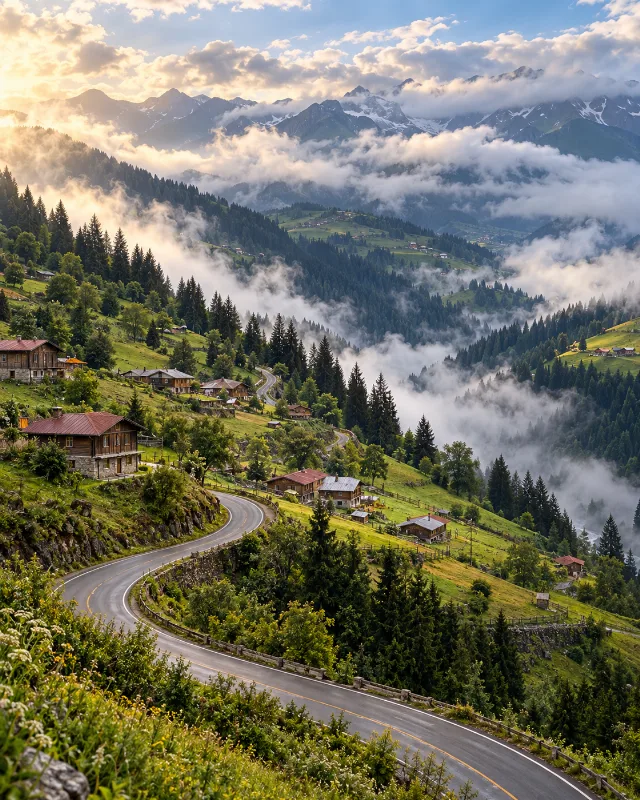
5-Day Eastern Black Sea Route
A five-day journey from Trabzon through Uzungöl, Rize, Çamlıhemşin, Ayder, Borçka and Şavşat, combining Black Sea culture with forests, lakes and highlands.
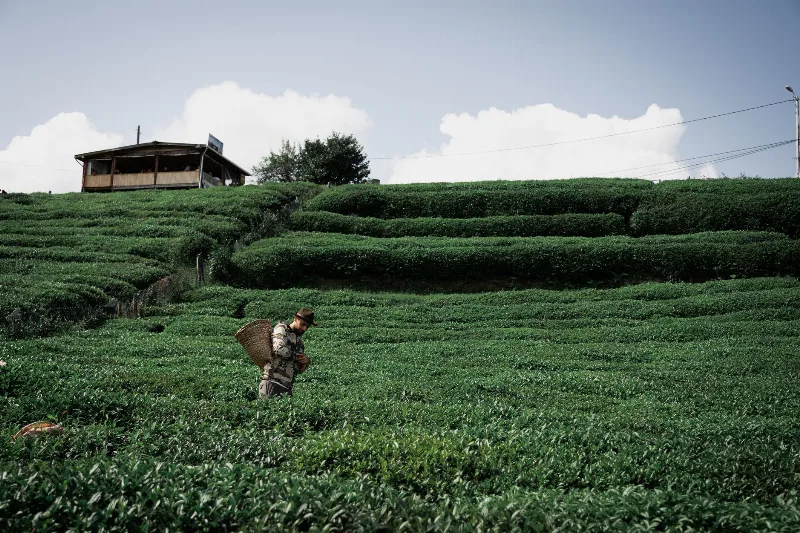
Rize Tea
Rize tea is the black tea grown in Türkiye's northeastern Black Sea province of Rize, where heavy rainfall, persistent humidity and acidic soils create one of the few places in the country where Camellia sinensis thrives.