
Rize Tea
Rize tea is the black tea grown in Türkiye's northeastern Black Sea province of Rize, where heavy rainfall, persistent humidity and acidic soils create one of the few places in the country where Camellia sinensis thrives.
Rize tea is the black tea grown in and around the province of Rize, on the eastern Black Sea coast of northeastern Türkiye. It is the foundation of Turkish tea production, and the province's identity is bound up with the crop: hillsides that might otherwise be forest or hazelnut ground are covered instead with low, clipped tea bushes. The reason is climatic. Rize occupies a narrow, rainy strip between the Black Sea and the Kaçkar Mountains, where moist air from the sea is pushed upward against the mountains and released as rain for much of the year. That mix of constant humidity, mild winters, generous rainfall and acidic soils is exactly what the tea plant needs, and it is largely absent from the rest of the country.
Where Rize Tea Grows
Tea gardens run almost continuously along the coastal belt of Rize and climb the lower slopes behind it, often on terraced or stepped plots cut into steep ground. The crop is spread across the province's districts rather than concentrated in a single valley. Çayeli, Pazar, Ardeşen, Fındıklı, Derepazarı, Güneysu, Hemşin and İkizdere are all associated with tea growing, and the green, evenly trimmed gardens shape the look of the landscape from the shoreline up towards the forest line.
The same agricultural system continues into neighbouring provinces where the climate is comparable. Trabzon districts such as Of and Sürmene, parts of Artvin around Hopa and Arhavi, and smaller areas in Giresun and Ordu also grow tea. Rize, however, remains the historic and agricultural centre of the crop, and most of the country's tea land lies within the province and its immediate surroundings.
Why the Eastern Black Sea Climate Suits Tea
Tea is a demanding crop. It wants steady moisture, humid air, mild temperatures without severe frost, and soils that are acidic rather than limy. The eastern Black Sea coast supplies all of these conditions in a way that few other parts of Türkiye do.
One consequence of this climate is unusual. Tea is often associated with high mountain plantations elsewhere in the world, but in Rize it is grown at low elevations, close to sea level, because the cloudy, humid summers mimic the cool conditions that tea finds at altitude in other producing countries.
The Tea Plant in the Rize Landscape
The crop comes from Camellia sinensis, an evergreen shrub that is kept as a low, flat-topped bush through regular pruning. Left alone it would grow into a small tree, but in the gardens it is maintained at roughly waist height so that the young shoots can be reached easily. The leaves are glossy and dark green, and small white flowers appear in autumn.
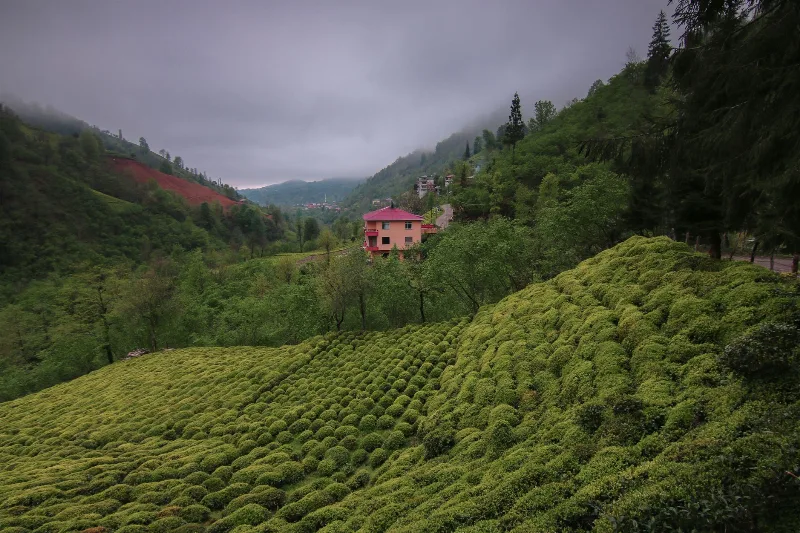
Tea gardens in Rize are typically small, family-worked plots rather than large estates. Because the terrain is steep, plots are often narrow, terraced or divided by retaining walls and drainage channels, and the bushes form an almost continuous green cover across the slope. Mechanisation is limited by the gradient in many places, and the gardens are managed largely by hand.
Tea did not always dominate this landscape. Cultivation was introduced in the early decades of the twentieth century as part of an effort to build a domestic tea industry, and it gradually replaced other crops on slopes where field agriculture was difficult. Over time it became the defining agricultural activity of the province.
Growth, Plucking and the Harvest Year
The tea bushes break dormancy in spring and produce new shoots as temperatures rise. Plucking usually begins in May and continues through the summer and into autumn, with several rounds of harvest as fresh shoots regrow after each picking. Through the winter the plants rest, and growth slows or stops.
Traditionally the harvest takes the young shoot, normally the top two leaves and an unopened bud, which contains the highest concentration of the compounds that give tea its flavour. Hand plucking is still practised, but on many slopes the flush is cut back with shears, a faster method suited to the terrain and the volume of leaf required. Newly planted gardens are allowed several years to establish before regular plucking begins.
From Fresh Leaf to Dry Black Tea
After picking, the leaf is processed close to the gardens, usually in factories within the region. The sequence follows the standard route for black tea: the leaves are withered to reduce moisture, rolled or cut to break the cell walls, allowed to oxidise until the leaf darkens and the characteristic aroma develops, then dried and sorted into grades.
Turkish tea is generally manufactured as a fine-grained black tea rather than a large-leaf one. In the cup it gives a deep reddish-brown liquor with a brisk, full-bodied character. It is normally sold loose and brewed strong in a çaydanlık, the stacked double teapot used across the country, then served diluted to taste in small tulip-shaped glasses. Sugar is often added, but milk is not customary.
What Makes Rize Tea Distinctive
Rize tea is defined less by a single named variety than by the place and the method. The combination of a maritime, high-rainfall climate at low altitude, leached acidic soils, small terraced gardens and fine-cut manufacture produces a tea that is strong and brisk in the cup. The short distance between garden and factory also matters, since leaf is processed soon after plucking.
The crop is central to daily life in the region and to Turkish tea culture more broadly. Tea is the most common hot drink in the country, and the gardens of Rize and the surrounding provinces supply the great majority of it. For many families in the province, tea is the main source of agricultural income, and the rhythm of the year — spring flush, summer plucking, autumn harvest, winter dormancy — structures work and settlement across the coastal belt.
Tea Beyond Rize
Although Rize is the heart of the industry, tea cultivation extends along the eastern Black Sea coast wherever rainfall, humidity and soils allow. Trabzon, Artvin, Giresun and Ordu all contain tea land, and the gardens there share the same climatic logic: wet, mild, lime-free ground on slopes facing the sea. Beyond this coastal strip, the conditions simply do not repeat, which is why Rize tea remains a genuinely regional product tied to one stretch of Türkiye's northeastern coast.

Yayla Çorbası
Yayla Çorbası is a Turkish soup built on yogurt and rice, thickened gently with egg and flour and finished with a sizzle of butter poured over dried mint. It is eaten warm or at room temperature and appears on tables from home kitchens to everyday restaurants across the country.
Explore →
Hamsili Pilav
Hamsili Pilav is a baked rice pilaf from Türkiye's Black Sea coast, in which fresh anchovies are layered with seasoned rice and cooked together in a pan. It is one of the region's most distinctive ways of using hamsi, the small anchovies that define Black Sea cooking.
Explore →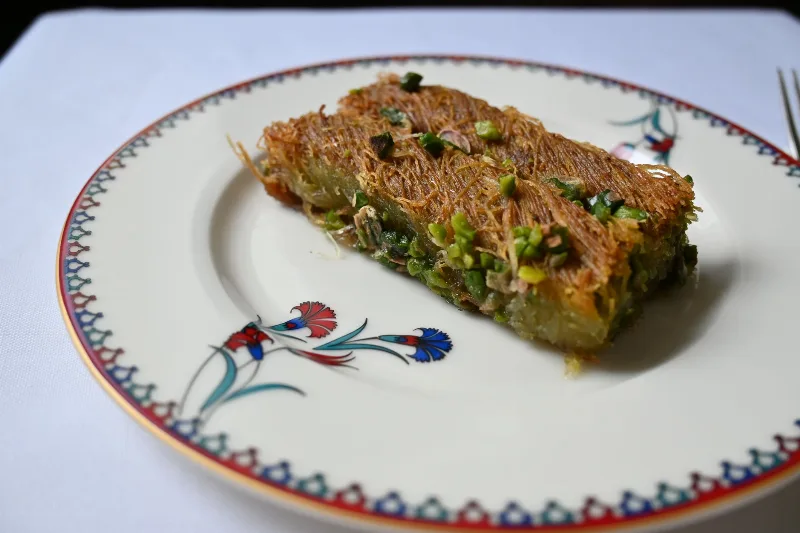
Künefe
Künefe is a hot, syrup-soaked dessert made from finely shredded kadayıf pastry wrapped around a mild, stretchy cheese, most closely associated with Hatay and the city of Antakya in southern Türkiye.
Explore →Related content
Rize
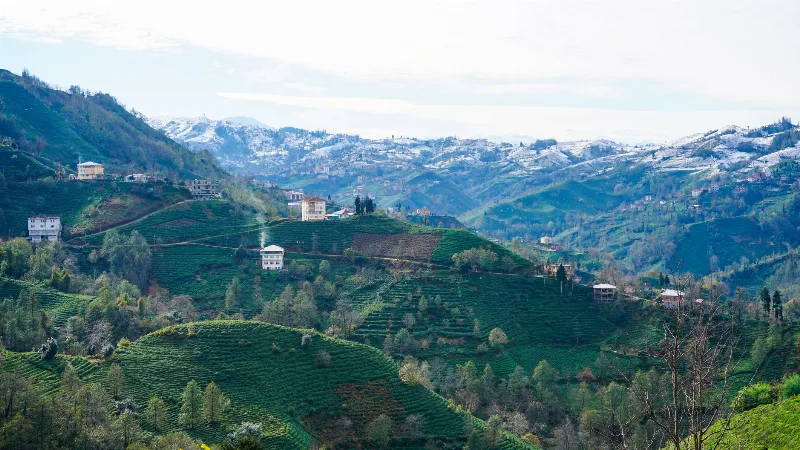
Rize is the capital of Rize Province on Türkiye's northeastern Black Sea coast, a city shaped by tea plantations, steep forested slopes and the high plateaus of the Kaçkar Mountains further inland.
Kaçkar Mountains
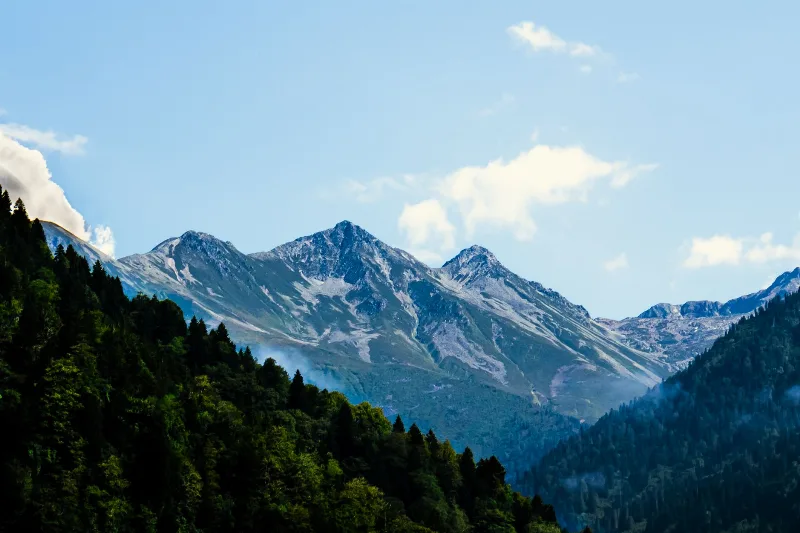
The Kaçkar Mountains form the highest section of Turkey's Black Sea ranges, a glacially sculpted landscape of sharp summits, cirque lakes and high summer pastures.
Trabzon
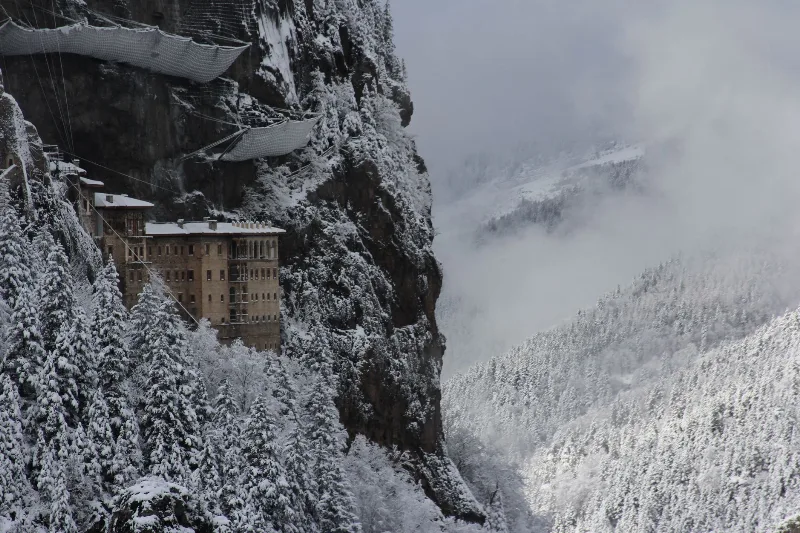
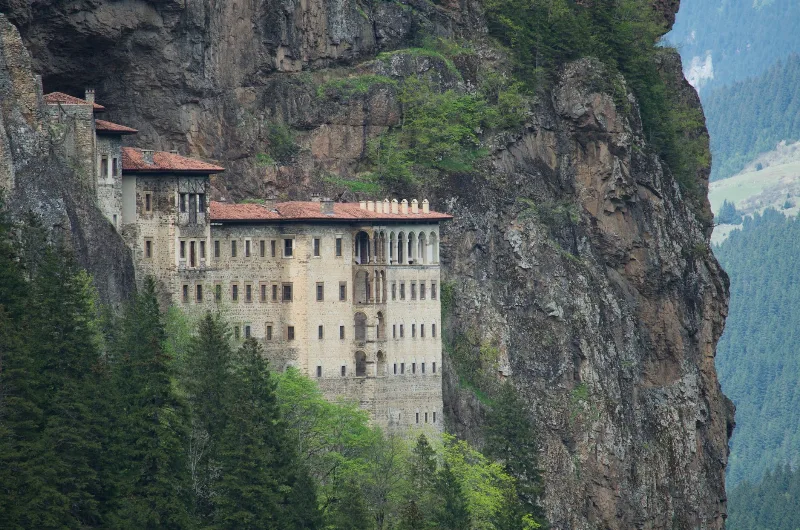
Trabzon is a rain-washed port city on Türkiye's eastern Black Sea coast, framed by the cliffside Sumela Monastery and slopes of tea. Byzantine and Ottoman layers sit close to highland valleys just inland.
7-Day Eastern Black Sea Highlands Route: Trabzon to Artvin
A seven-day driving route through the Eastern Black Sea highlands, from Trabzon and Sumela to Uzungöl, Ayder, the Kaçkar Mountains and the forests of Şavşat, ending at Artvin.
2-Day Rize and Ayder Route
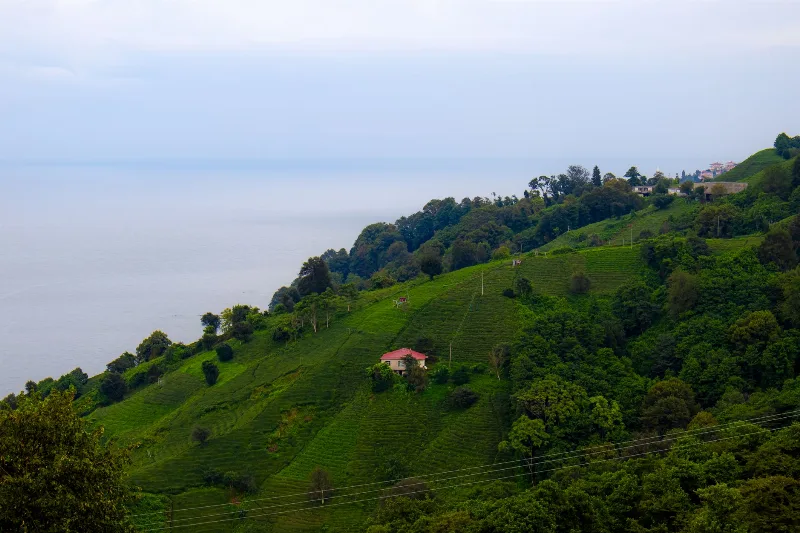
A two-day linear route from Rize city through the coastal tea gardens and the Fırtına Valley to the Ayder Plateau in the Kaçkar Mountains.
Rize and the Tea Plantations
Rize, on Türkiye's eastern Black Sea coast, is a green province of terraced tea gardens, misty hills and mountain valleys shaped by rain and local tradition.