
Şanlıurfa's Historical and Cultural Richness
Şanlıurfa in southeastern Türkiye blends Neolithic archaeology, sacred pools, ancient Harran and a lively food and music tradition into one remarkably layered destination.
Şanlıurfa lies on the edge of the Harran Plain in southeastern Türkiye, where the Fertile Crescent narrows and the layers of human settlement run unusually deep. Often described as the city of prophets, it gathers together Neolithic monuments, sacred ponds, old stone districts and a strong local cuisine. For international readers curious about Anatolia beyond the coast, Şanlıurfa offers a compact introduction to the region's history and daily culture.
A city built in layers
The modern city spreads across a warm, dry plateau, but its older core climbs around a rocky outcrop and two celebrated pools. Neighbourhoods such as the historic quarter below the citadel keep narrow lanes, stone walls and carved doorways that hint at Roman, Byzantine, Seljuk and Ottoman periods passing through the same streets. Because the surrounding plain has been farmed for millennia, the area is often linked with the earliest experiments in settled village life.
Göbekli Tepe and the deep past
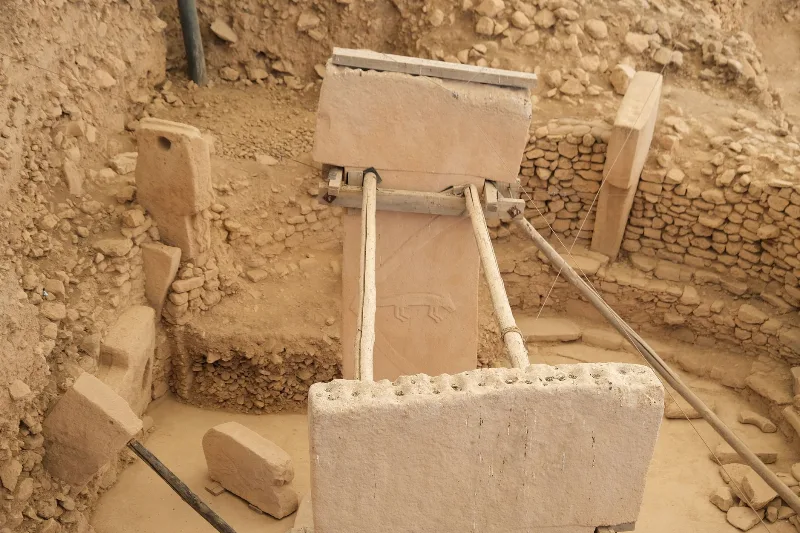
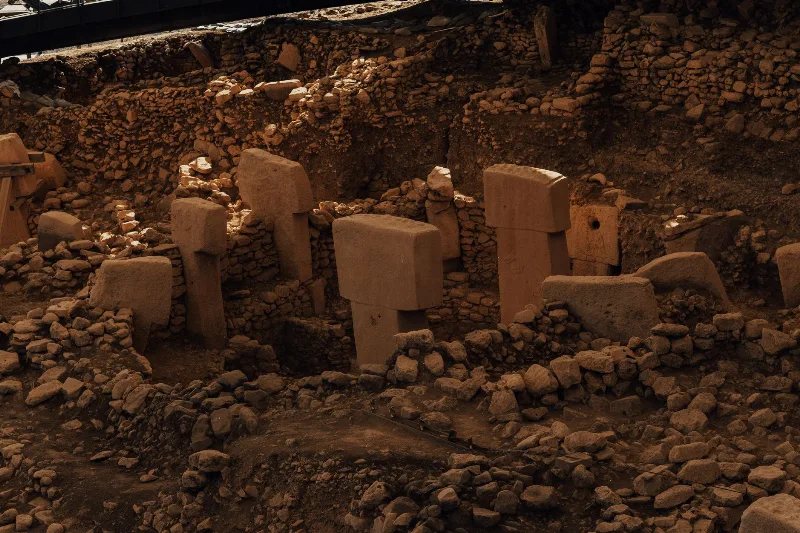
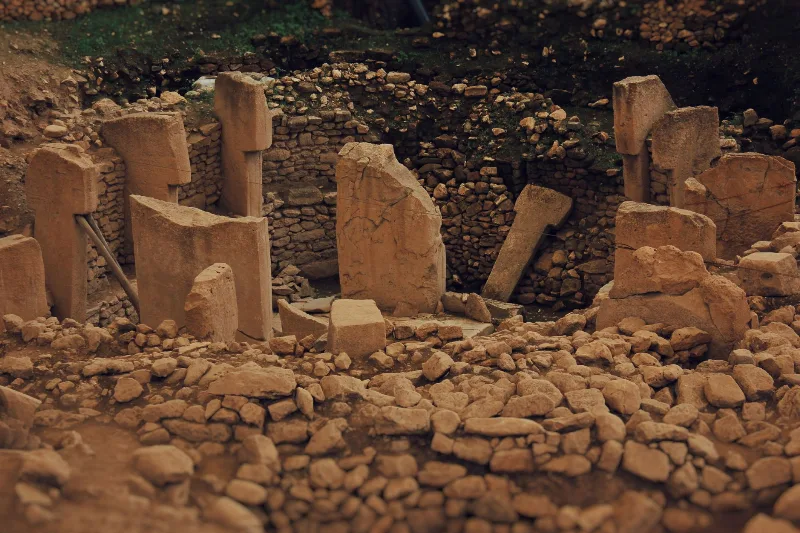
Just outside the city, Göbekli Tepe changed how archaeologists understand prehistory. The site consists of circular enclosures and massive T-shaped limestone pillars decorated with animal reliefs, raised by communities long before pottery, metal or writing appeared. Its scale and carving suggest that organised belief and shared labour existed earlier than once assumed. Visitors encounter a hilltop excavation area with a protective shelter, and the neighbouring museum collections help explain what the stones represent.
Balıklıgöl and the sacred pools
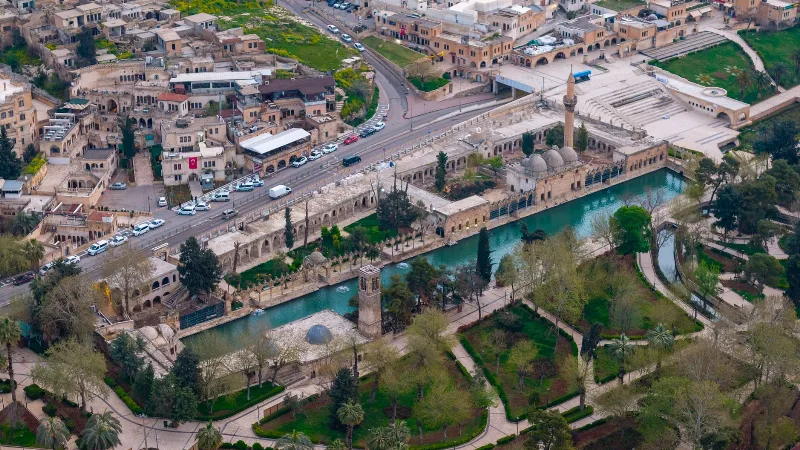
At the heart of Şanlıurfa, Balıklıgöl — also known as the Pool of Abraham — is a calm basin of water filled with carp and framed by arched stone architecture and rose gardens. Nearby stands the Halilürrahman complex, and the atmosphere blends pilgrimage, parkland and everyday strolling. The story attached to the pools links them to the prophet Abraham, and the site remains meaningful for local people as well as for travellers interested in the city's religious heritage.
The citadel, columns and old markets
Above the pools, Şanlıurfa Castle occupies an ancient fortified height with wide views over the plain. On the slope below, two tall Corinthian columns stand as reminders of a Roman-era sacred complex. The old commercial quarter preserves vaulted caravanserais and covered passages where copperwork, textile crafts and regional produce have long been traded. Wandering these lanes reveals how trade, faith and craft shaped the town over centuries.
Harran and its beehive houses
Roughly forty kilometres south, the ancient settlement of Harran is known for its distinctive conical mud-brick houses, designed to stay cool in intense summer heat. The site also holds ruins of a university, mosque and fortifications from the medieval period, when Harran was a notable centre of learning in astronomy, medicine and translation. Its flat-roofed architecture and dusty horizons give a vivid sense of the Mesopotamian edge of Türkiye.
Flavours of Şanlıurfa
Local cooking is famous across the country. Isot, a dark, smoky dried pepper, gives many dishes their deep colour and gentle heat. Çiğ köfte, prepared with fine bulgur and spices, has roots in the region, while Urfa kebab and eggplant-based kebabs reflect a long tradition of grilling. Pistachios, lentil dishes, stuffed vegetables and syrupy desserts round out a table that is generous, aromatic and closely tied to the surrounding farmland.
Music, crafts and everyday culture
Şanlıurfa has a strong musical identity, expressed in folk songs, long-necked lute playing and the sıra gecesi gatherings where friends sing in turn through the night. Handicrafts, from copper vessels to woven goods, continue in family workshops. Spring and autumn are the most comfortable seasons for walking between sites, while the plain turns green after winter rains.
Related content
Şanlıurfa
Şanlıurfa, commonly called Urfa, is a large city in southeastern Türkiye and the capital of its province. It is known both as a place tied to the tradition of the Prophet Abraham and as the gateway to Göbekli Tepe, one of the oldest monumental sites ever found.
Göbekli Tepe
Göbekli Tepe is the oldest known monumental stone complex, raised by hunter-gatherers near Şanlıurfa in southeastern Türkiye around 9600 BCE. Its carved T-shaped pillars and deliberate burial have reshaped ideas about the Neolithic.
Uncovering the Mysteries of Göbekli Tepe
Explore Göbekli Tepe, an ancient archaeological site that reshapes our understanding of human history and civilization.
Göbekli Tepe Archaeological Site
Discover Göbekli Tepe, an extraordinary archaeological site in Türkiye revealing ancient civilizations through its monumental structures.
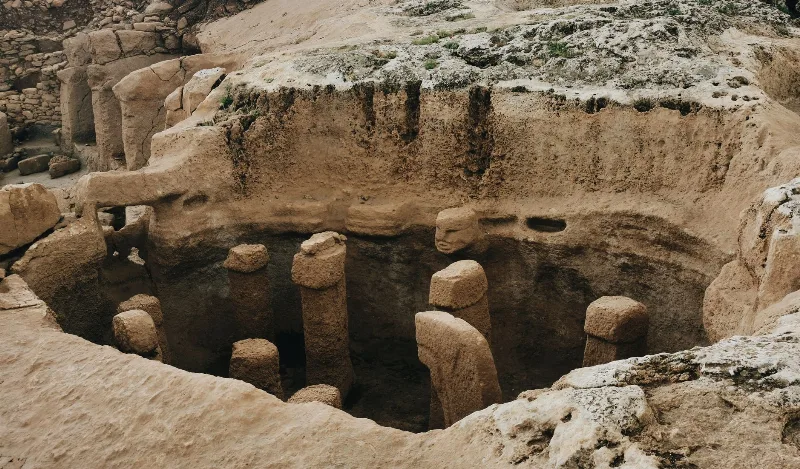
Karahan Tepe
Karahan Tepe is a Pre-Pottery Neolithic site in Şanlıurfa Province, Türkiye, known for T-shaped pillars and animal reliefs and dated to roughly 9500 BCE.
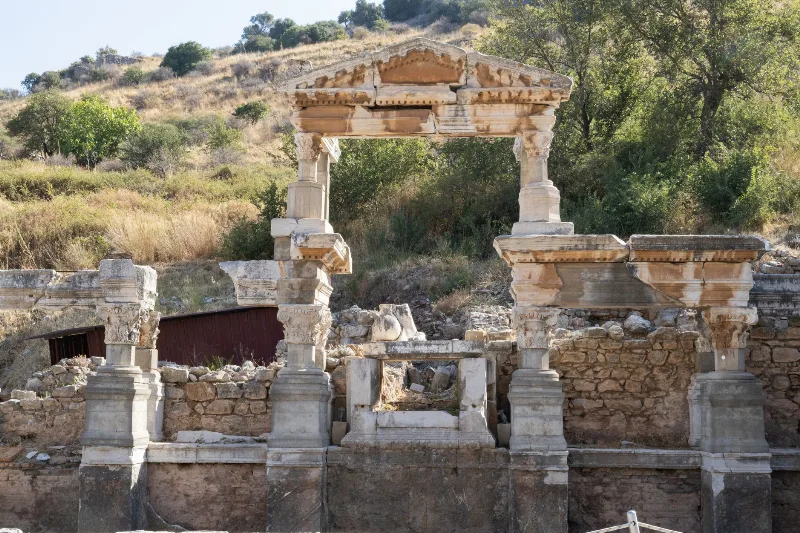
Cultural Heritage of Anatolia
Anatolia's cultural heritage spans millennia, blending ancient civilizations, architectural marvels, and living traditions across Türkiye.
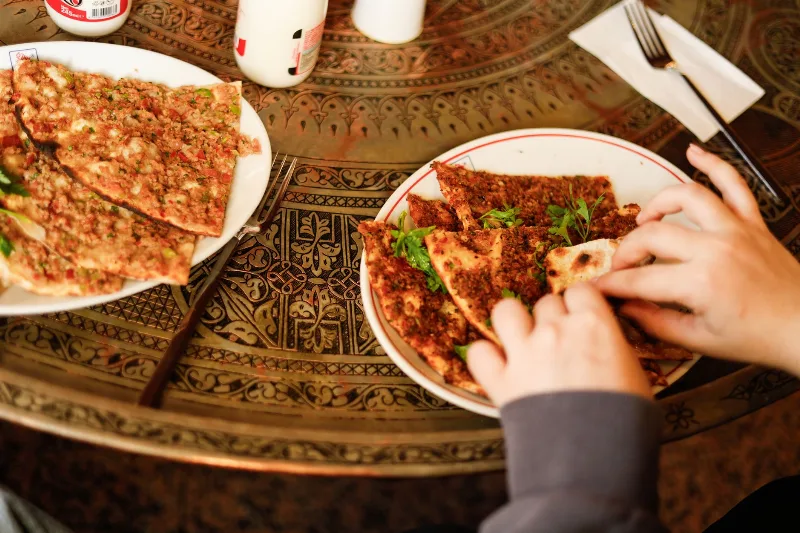
Lahmacun
Lahmacun is a thin, round flatbread spread with finely minced meat, tomato, pepper and spices, baked quickly at high heat and served with lemon and fresh parsley. It is one of Türkiye's most recognisable street and oven foods, with strong regional traditions across the southeast and beyond.
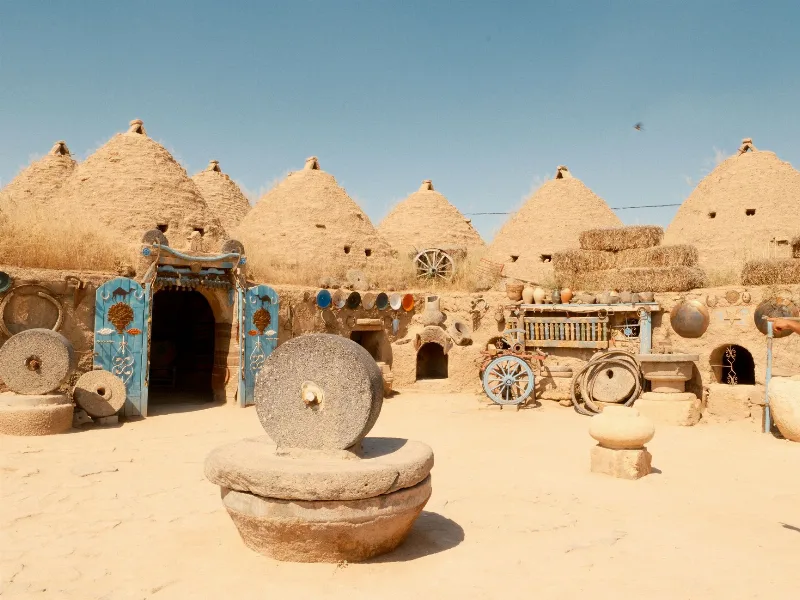
Harran's Beehive Houses
The beehive houses of Harran in Şanlıurfa Province are conical mud-brick dwellings that have shaped daily life on the northern Mesopotamian plain for generations. Their domed forms reflect a practical response to a hot, dry climate.