
Göbekli Tepe
Göbekli Tepe is the oldest known monumental stone complex, raised by hunter-gatherers near Şanlıurfa in southeastern Türkiye around 9600 BCE. Its carved T-shaped pillars and deliberate burial have reshaped ideas about the Neolithic.
Göbekli Tepe is a Neolithic archaeological site on a limestone plateau roughly 15 kilometres northeast of Şanlıurfa in southeastern Türkiye. It contains the oldest known monumental stone structures built by humans, created by communities that had not yet adopted farming or pottery. In 2018 it was added to the UNESCO World Heritage List.
Where the Site Stands
The remains occupy the summit of the Germuş range, a bare limestone ridge at about 760 metres above sea level, overlooking the plain that stretches toward Harran. The Turkish name means "potbelly hill", a reference to the rounded profile of the mound. That mound is not a natural hill; it is made of archaeological layers piled up over thousands of years. The hilltop is visible across a wide area, and the spot lies close to routes and water sources that once connected the Euphrates corridor with the plains around Şanlıurfa.
How the Site Was Discovered and Excavated
Limestone slabs and flint tools were first noted during a 1963 survey conducted by Istanbul University and the University of Chicago. At the time the finds were interpreted as the remains of a Byzantine cemetery and the hill was largely set aside. In 1994 the German archaeologist Klaus Schmidt re-read those records, revisited the hill and recognised the flint material as Neolithic rather than Byzantine. Excavation began in 1995 under the German Archaeological Institute and continued under Schmidt's direction until his death in 2014, with work still ongoing. No more than a small fraction of the mound has been excavated, so the site remains largely unopened.
The Enclosures and the T-Shaped Pillars
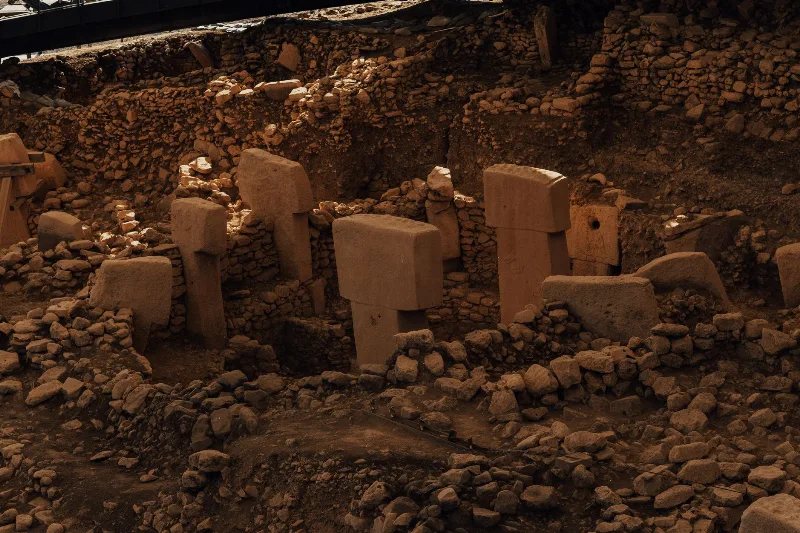
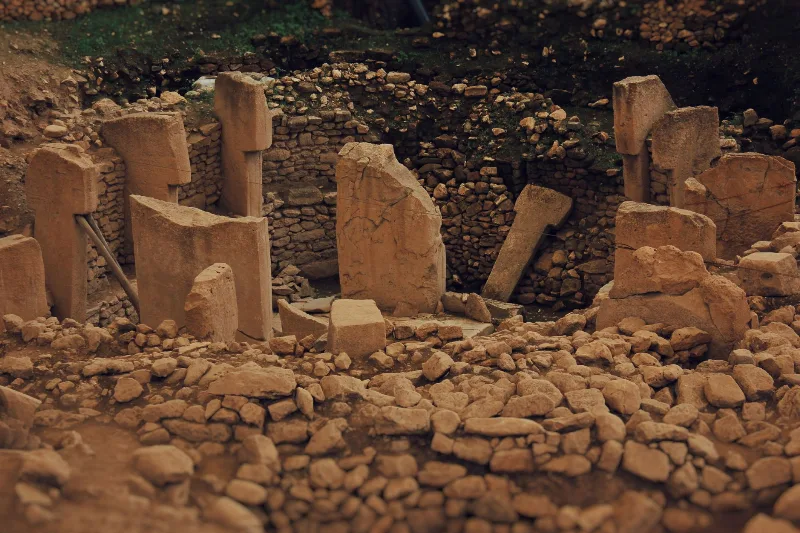
The core of the site consists of circular and oval enclosures formed by massive T-shaped limestone pillars. Individual pillars reach about 5.5 metres in height and weigh up to roughly ten tonnes. They were set into sockets cut directly into the bedrock floor and were joined in places by walls of rough stone. Excavators labelled the main structures with letters; Enclosure D is among the oldest, belonging to the Pre-Pottery Neolithic A period and dated to around 9600 BCE. Each enclosure contains a pair of taller central pillars, and several of these are carved to suggest a human form, with arms, hands and a belt represented on the stone. Younger layers at the site contain smaller pillars and rectangular rooms, indicating that building traditions changed over time.
What the Carvings Show
Many pillars carry relief carvings of animals. Foxes, boars, aurochs, gazelle, snakes, scorpions and birds including cranes and birds of prey appear on the stone. The best known is Pillar 43, often called the Vulture Stone, which combines several animal figures in a single composition. Some researchers have proposed that the carvings record a comet or a climatic event, but that reading is debated and not accepted by all specialists. Other pillars are entirely plain, and the meaning of the imagery remains uncertain.
Why Göbekli Tepe Matters
Before the site was understood, archaeologists generally assumed that monumental architecture appeared only after people settled down to farm. Göbekli Tepe overturned that sequence. The earliest enclosures were built by hunter-gatherers who had no pottery, no metal and no domestic animals. The site also appears to have been deliberately buried and backfilled after use, which helped preserve the pillars. Whether it functioned as a sanctuary, a gathering place, a settlement or a combination of these has been argued for decades. The earliest layers show little evidence of everyday domestic life, while animal bones found there suggest large communal meals. These open questions are part of why the site draws both researchers and visitors.
What Visitors Can See
The excavated enclosures are protected by shelters, and visitors follow raised walkways and viewing platforms that overlook the pillars without walking among them. Re-erected pillars stand in their original positions within the enclosures. A visitor centre near the entrance explains the chronology of the site, the excavation history and the wider Neolithic context of the region. The unexcavated parts of the mound remain covered by earth and can be seen as a low rise beside the excavated area.
Landscape and Terrain
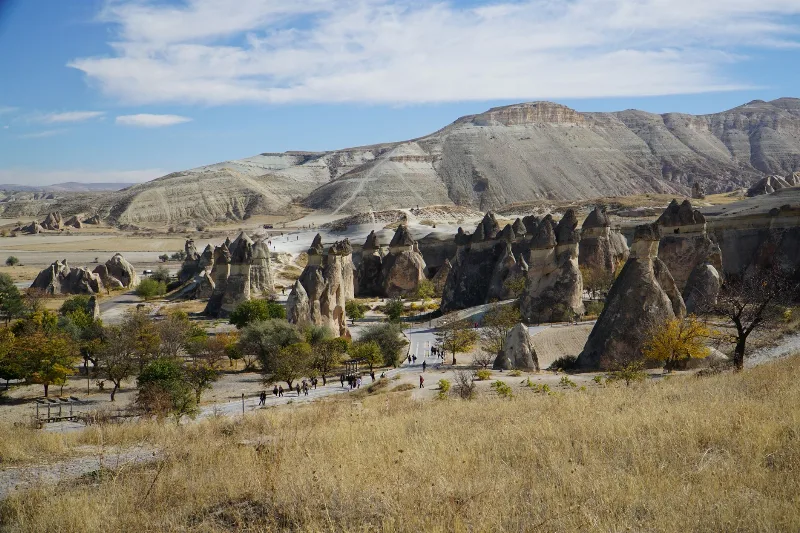
The surrounding landscape is a dry limestone plateau with thin soil and sparse vegetation. There are few trees, and in summer the ground reflects strong heat. On clear days the view takes in the plain below and the low hills toward Şanlıurfa. The terrain around the walkways is uneven, and the site sits on a hilltop, so some slopes must be negotiated between the parking area, the visitor centre and the enclosures.
Getting There and Visiting Conditions
Göbekli Tepe lies about a 20 to 30 minute drive from central Şanlıurfa and is signposted from the road heading out of the city. Travellers usually reach it by private car, taxi or local minibus, and the nearest major airport is Şanlıurfa GAP Airport. The site is close enough to the city to be visited comfortably in half a day. Visitors are expected to stay on the designated paths and not to touch or climb on the stones, since the carvings are fragile.
When to Go
Spring and autumn are the most comfortable seasons. Şanlıurfa has very hot, dry summers, with temperatures that often exceed 35°C and little shade at the site, so early morning visits are preferable in warm months. Winters are mild but can be wet, and rain occasionally affects the walkways. Daylight and shelter conditions change through the year, so checking current opening arrangements before travelling is advisable.
Nearby Places Worth Knowing
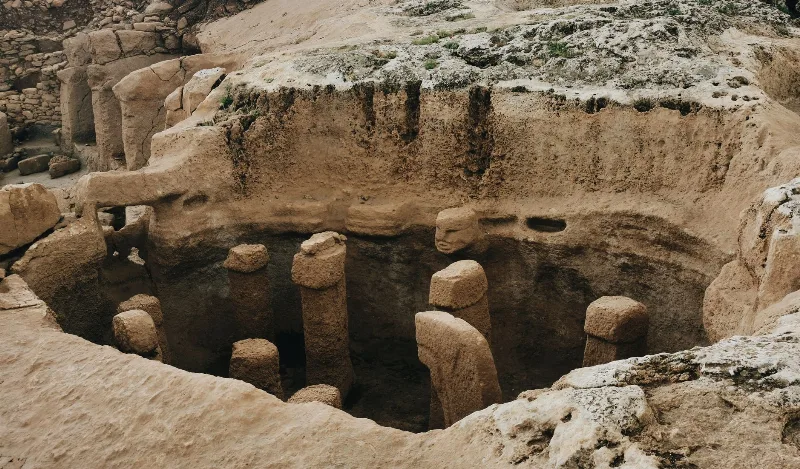
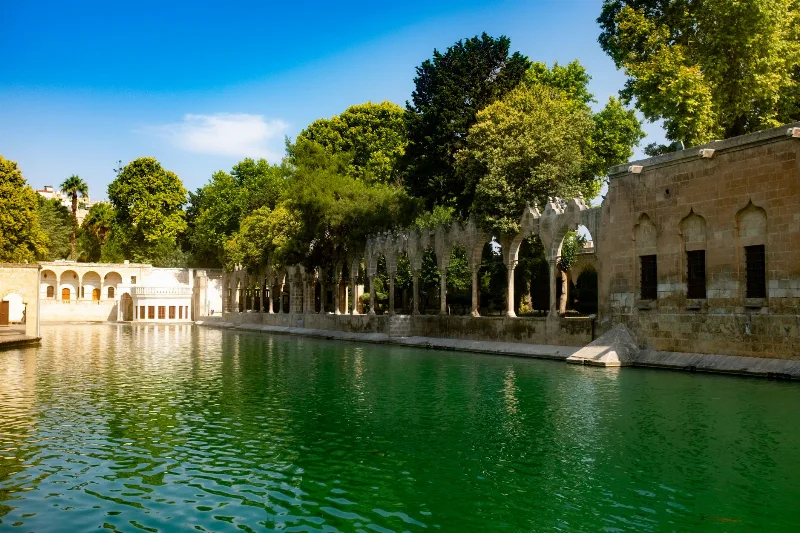
Göbekli Tepe is part of a wider cluster of Neolithic sites in the region, often grouped together under the name Taş Tepeler, or "Stone Hills". Karahantepe, another excavated site with T-shaped pillars, lies within the same area and is frequently visited alongside it. The city of Şanlıurfa itself contains Balıklıgöl, a pool complex with associated religious traditions, and the historic town of Harran with its distinctive beehive houses lies to the south. The former site of Nevalı Çori, an earlier Neolithic settlement, was submerged when the Atatürk Dam was built, but its finds are displayed in Şanlıurfa museums. These places together make the province one of the most important Neolithic landscapes in the world.


Related content
Şanlıurfa
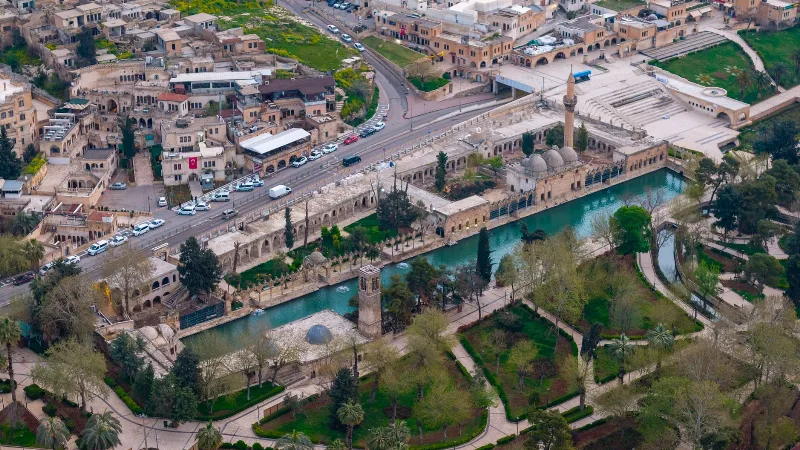
Şanlıurfa, commonly called Urfa, is a large city in southeastern Türkiye and the capital of its province. It is known both as a place tied to the tradition of the Prophet Abraham and as the gateway to Göbekli Tepe, one of the oldest monumental sites ever found.

Istanbul
Istanbul is Türkiye's largest city and the country's only metropolis that spans two continents, divided by the Bosphorus strait into a European and an Asian half. Its long run as an imperial capital left a historic core of palaces, mosques and bazaars that still shapes the city's identity.
Uncovering the Mysteries of Göbekli Tepe
Explore Göbekli Tepe, an ancient archaeological site that reshapes our understanding of human history and civilization.
Göbekli Tepe Archaeological Site
Discover Göbekli Tepe, an extraordinary archaeological site in Türkiye revealing ancient civilizations through its monumental structures.
Karahan Tepe
Karahan Tepe is a Pre-Pottery Neolithic site in Şanlıurfa Province, Türkiye, known for T-shaped pillars and animal reliefs and dated to roughly 9500 BCE.
Şanlıurfa's Historical and Cultural Richness
Şanlıurfa in southeastern Türkiye blends Neolithic archaeology, sacred pools, ancient Harran and a lively food and music tradition into one remarkably layered destination.