
Adatepe
Adatepe is a stone-built mountain village in the Ayvacık district of Çanakkale, set on the Aegean slopes of Kazdağı above Küçükkuyu, known for its preserved stone houses, olive groves and the Zeus Altar viewpoint overlooking the Gulf of Edremit.
Adatepe is a small mountain village in the Ayvacık district of Çanakkale Province, Türkiye, standing on the Aegean flank of Kazdağı — the Ida Mountains of classical literature — above the coastal town of Küçükkuyu. It is not a resort or a coastal settlement but an inland village of grey stone houses and steep lanes, and its character comes from the combination of preserved vernacular architecture, olive cultivation and a position on the mountain that opens long views over the Gulf of Edremit.
Where Adatepe Lies in the Ida Mountains
The village sits on the southwestern side of the Kazdağı massif, in the Biga Peninsula of Çanakkale Province, western Türkiye. Below it the land drops towards the Aegean coast and the Gulf of Edremit; above and behind it the slopes of Kazdağı continue to rise. Administratively Adatepe belongs to Ayvacık, a district whose territory stretches from these mountain villages down to the sea. The nearest coastal settlement is Küçükkuyu, which sits on the shore road and acts as the practical gateway to the village. The mountain here separates the Aegean coastline from the interior of the Biga Peninsula, and Adatepe's location halfway up that slope explains both its climate and its layout.
What Makes the Village Distinctive
Adatepe's identity rests on its built heritage. Rather than being a scattered farming hamlet of concrete and metal roofs, it retains a dense core of traditional stone houses, many of them restored rather than replaced. A long-running preservation effort that began in the late twentieth century encouraged owners to repair the old houses in their original materials, and this is the main reason the village looks different from most settlements of comparable size in the region. The result is a quiet mountain village where the architecture, not a beach or a monument, is the principal reason to visit.
Stone Houses, Lanes and Village Layout
The houses of Adatepe are built of local grey stone, often in two storeys, with timber details, small windows and pitched roofs covered in traditional terracotta tiles. Many have walled courtyards and distinctive chimneys. The lanes between them are narrow, cobbled and genuinely steep, following the contour of the hillside instead of a grid, so the village unfolds in steps and terraces. Walking through it means constantly changing level, passing between high garden walls, olive trees and the occasional open view down towards the coast. There is a small centre with a mosque and a village square where the lanes converge, but the settlement is essentially residential and spread across the slope, and the strongest impression is of a place shaped by its terrain.
The Zeus Altar Above the Village
On the hillside above Adatepe stands a stone altar structure known as the Zeus Altar, cut or built into a rocky outcrop with a wide view across the Gulf of Edremit. It is traditionally associated with the altar of Zeus described in the Iliad, though the precise history of the monument is debated. What is certain is the position: from this point the land falls away sharply and the gulf, the coastal plain and, on clear days, the island of Lesbos beyond the water are visible in a single panorama. The altar is one of the very few specific landmarks around the village and is usually reached on foot from the upper lanes.
Olives, Oil and the Landscape Around Adatepe
The economy and appearance of the surroundings are dominated by the olive. Groves cover the lower slopes between the village and the sea, and olive oil production has shaped the daily life of the area for generations. In the village itself there is a small museum devoted to olive oil, documenting the traditional methods of pressing and storing oil, which gives context to the landscape outside. Higher up, the vegetation changes with altitude: pines, chestnuts and open macchia cover the slopes of Kazdağı, and springs and small streams are common on the mountain. This transition from cultivated olive terraces to cool mountain forest within a short distance is one of the more noticeable features of the setting.
How to Reach Adatepe
Adatepe is reached by road, and the approach is part of the experience. From the coast at Küçükkuyu a climbing road winds up through the olive groves to the village, gaining height steadily. From the north, the route passes through the Ayvacık district towards Küçükkuyu; from the south and east, access is via the coastal road along the Gulf of Edremit. There is no railway and no airport in the immediate area; travellers typically arrive by car or coach, using the nearest airports at Çanakkale and in the Edremit area for longer journeys, then continuing by road. Public transport reaches Küçükkuyu far more easily than it reaches the village itself, so the final climb is usually made by private vehicle or taxi.
When to Visit
Spring and autumn are the most comfortable seasons. In April and May the slopes are green, the roads are open and the temperatures are mild. Autumn brings the olive harvest, when the groves below the village are busy and the character of the place is at its most visible. Summer at this altitude is hot and dry, with strong sun on the exposed lanes, though the mountain position keeps it noticeably less humid than the coast. Winter is cooler and wetter, with rain and occasional poor visibility on the higher slopes, and some facilities in a small village of this kind are seasonal. Morning and late afternoon light is the best time for walking around the village and for the view from the Zeus Altar.
Walking, Terrain and Practical Notes
The village is built on a slope and the lanes are cobbled, uneven and steep in places, so sturdy shoes are more useful than sandals. Distances within Adatepe are short, but the changes in level make the walking more demanding than the map suggests. Services are limited: this is a small settlement rather than a town, so visitors should not expect a wide range of shops or facilities, and it is sensible to bring water and to plan meals around the nearby coastal town. Some of the old houses are private residences and should be respected as such. The village is quiet for most of the year and busiest in the warm months and during the olive season.
Places Connected to Adatepe
Adatepe shares its corner of Çanakkale with several settlements and natural areas that are genuinely close by. Küçükkuyu, on the coast below, is the practical base for the area and the point where the mountain road begins. To the north along the coast lies Assos, also known as Behramkale, an ancient site and harbour village with its own long history. Other mountain villages in the same Ayvacık district, including Yeşilyurt, lie on the same slopes and share the stone architecture and olive economy. Above and around the village, the Kazdağı massif and its forested higher ground offer walking and cooler air, linking Adatepe to the wider mountain landscape of the Ida range.
From the land
Find All →
Antalya Tomatoes
Antalya tomatoes are the greenhouse and field-grown tomatoes of Türkiye's Mediterranean coast, produced in a province whose mild winters and long sunny summers allow harvesting in almost every month of the year.
Explore →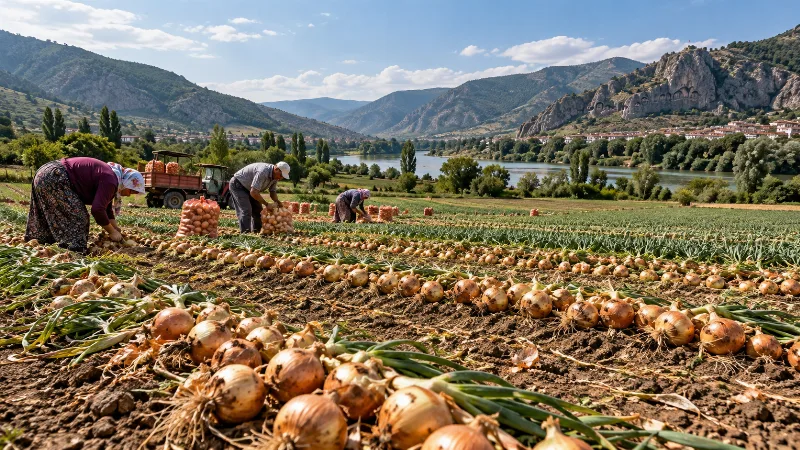
Amasya Onions
Amasya onions are a pungent, long-keeping onion variety tied to the plains and river valleys of Amasya province in northern Türkiye. The region's transitional climate and fertile alluvial soils give the crop its firm bulbs and storage quality.
Explore →
Bursa Quinces
Bursa quinces are the fruit of the quince tree grown around the city of Bursa in northwestern Türkiye, where the province's temperate Marmara climate and fertile soils give the fruit its dense flesh, tart flavour and strong fragrance. The orchards of Bursa are among the places most closely identified with quince growing in the country.
Explore →Related content
Çanakkale
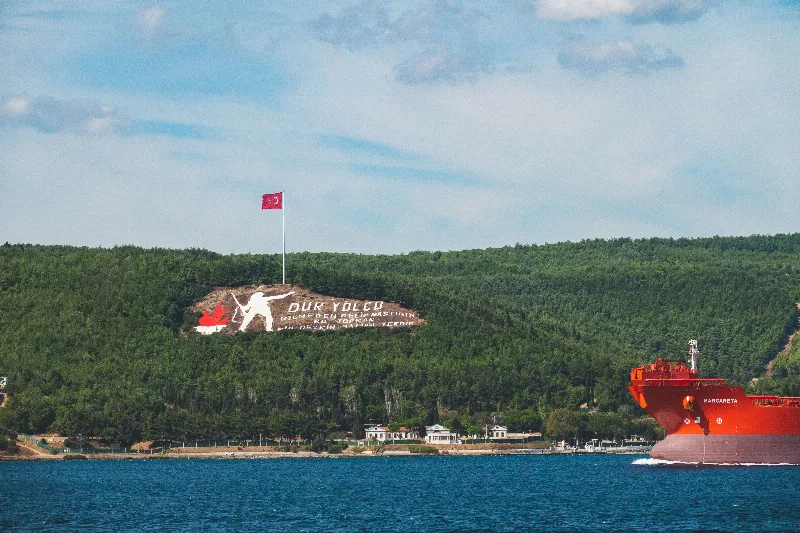
Çanakkale is a northwestern Turkish city on the Asian shore of the Dardanelles, the strait separating Europe from Asia. It is the administrative centre of a province that includes the Gallipoli battlefields and the archaeological site of Troy.
Küçükkuyu
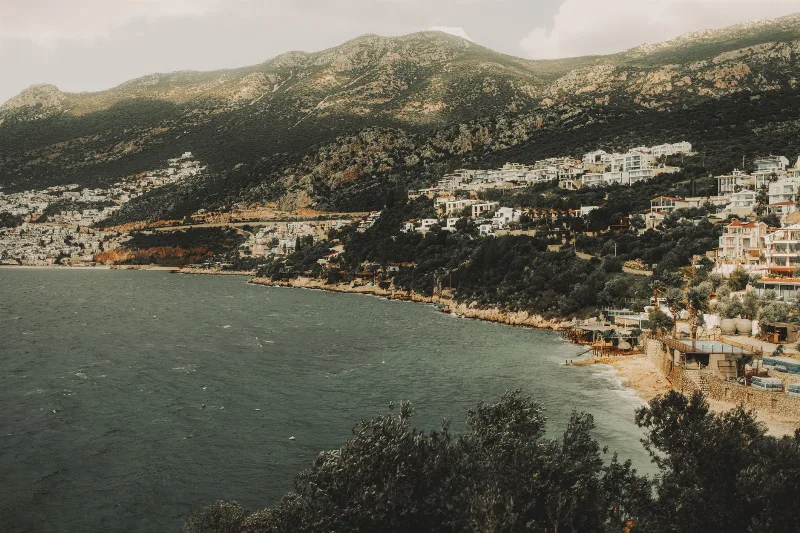
Küçükkuyu is a coastal town in Çanakkale Province, Turkey, at the foot of Kazdağı and surrounded by olive groves. Known for its seafood and proximity to ancient Assos, it offers a mix of Aegean coastline and mountain scenery.
Assos
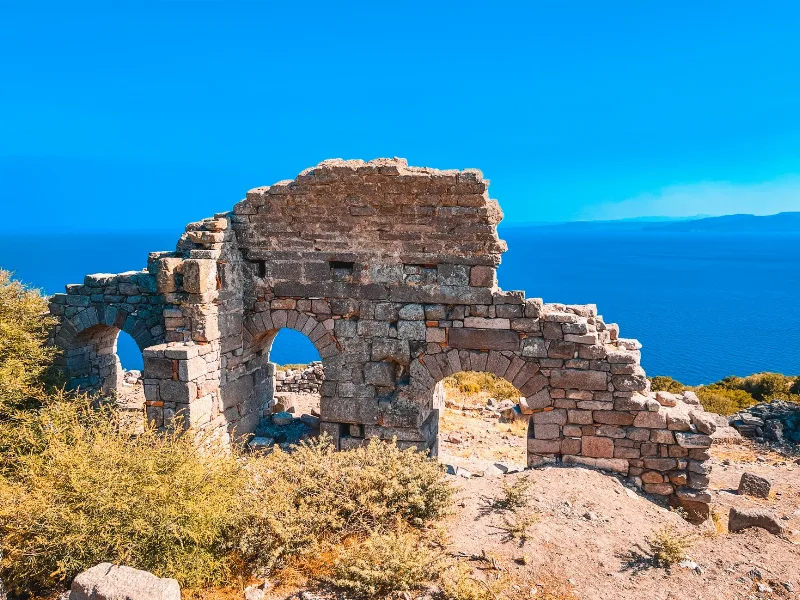
Assos is an ancient city and hilltop village in Çanakkale province, Türkiye, known for its Temple of Athena and for the years the philosopher Aristotle spent here. The modern settlement, Behramkale, sits above the ruins and an old harbour on the Aegean coast facing Lesbos.
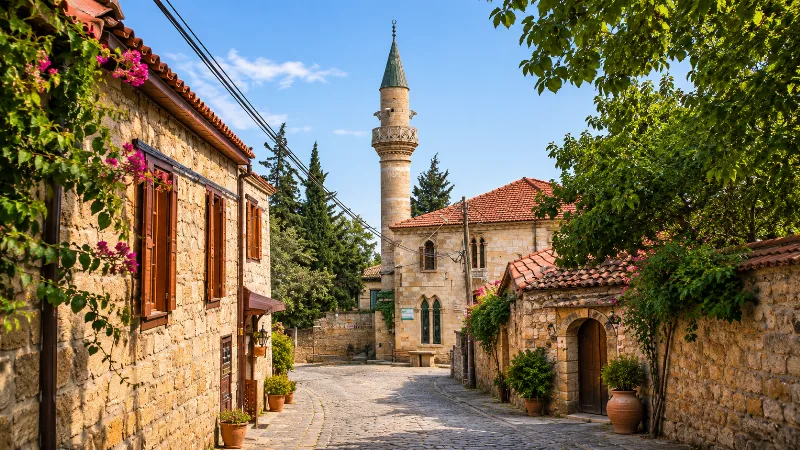
Yeşilyurt: A Stone Village on the Slopes of Kazdağı, Çanakkale
Yeşilyurt is a traditional mountain village in the Ayvacık district of Çanakkale, built on the slopes of Kazdağı and known for its stone houses and olive oil.
3-Day Assos and Troy Route
A three-day route through Turkey's Troad region, starting in Çanakkale and finishing at the clifftop village and ancient harbour of Assos, with Troy and the lesser-known classical ruins in between.
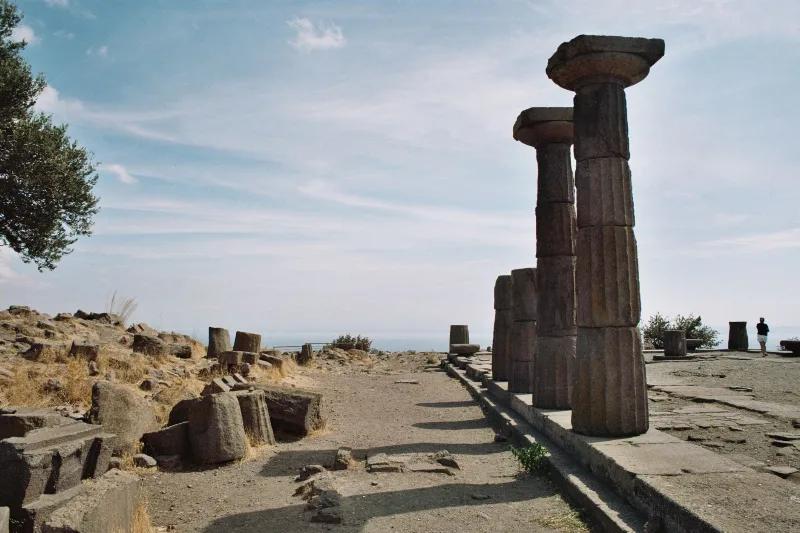
Assos
The ancient Greek city of Assos in Çanakkale, Türkiye, is defined by its sixth-century BC Temple of Athena, kilometres of surviving walls and a small Aegean harbour. Here is how the site is arranged and what a visit involves.