
Kale
A working agricultural town on Antalya's Lycian coast, Kale — now usually called Demre — contains the Roman city of Myra, its cliff-cut Lycian rock tombs, a Byzantine church linked to St. Nicholas and the ancient harbour of Andriake.
Kale is the older name of Demre, a district centre on the Mediterranean coast of Antalya Province in southern Türkiye. It stands on the Teke Peninsula — the limestone country the ancient Greeks and Romans called Lycia — between Finike to the east and Kaş to the west, on a small coastal plain below the western Taurus mountains. What distinguishes the settlement is the density of surviving monuments inside a small agricultural town: the Roman city of Myra with its hillside theatre and rock-cut Lycian tombs, a Byzantine church associated with St. Nicholas, and the silted harbour of Andriake a few kilometres away on the coast.
Where Kale Lies on the Lycian Coast
Antalya lies roughly 150 km east along the D400 coastal road, Kaş about 45 km to the west and Finike about 25 km to the east. The town sits on the flat floor of the Demre plain, where the Demre Çayı — the Myros of antiquity — reaches the sea. Inland, the ground rises quickly into the mountains; the coastline is not one continuous beach but a sequence of small bays, a river mouth and rocky stretches, with the Kekova region beginning immediately to the west.
The plain is what made the place habitable in antiquity and what sustains it now. It is fertile, well watered and warm, and it carries the greenhouses, citrus groves and market gardens that give the town its working character.
Kale, Demre and a Settlement with Two Names
Kale means "castle" in Turkish, and for a long time this was the official name of the town and the district. The modern name Demre is generally derived from Myra, the ancient city that stood here. In practice the two names refer to the same place: older maps, signs and local speech may still use Kale, while official use has shifted to Demre. Understanding this matters, because a search for Kale in Antalya can otherwise be confused with other Turkish places that carry the same common name.
The Theatre and Rock Tombs of Myra
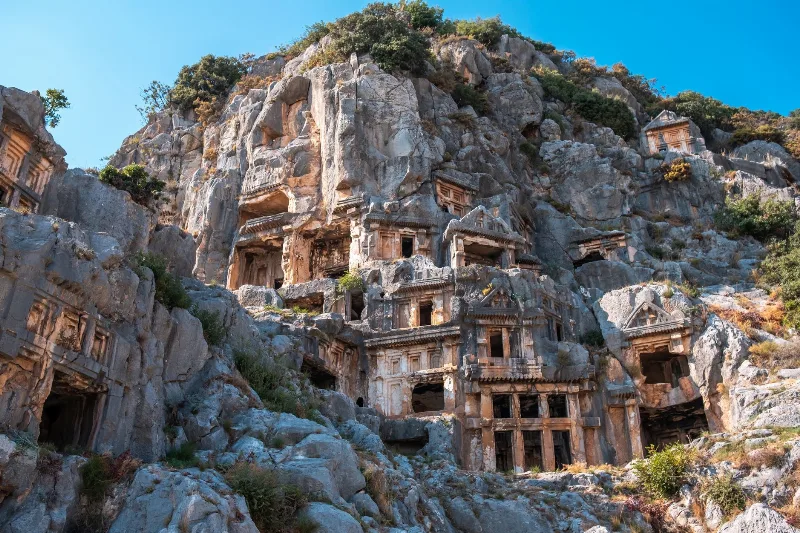
Myra was one of the leading cities of the Lycian League, and its remains are the main reason people stop here. A Roman theatre is cut into the lower slope of the hill, with rows of seating and parts of the stage building still standing. Above it, the cliff face is worked into a necropolis of Lycian rock tombs, carved as house fronts and temple facades with imitated doorways, beams and gables. Some carry reliefs and inscriptions in Lycian script.
The arrangement is what makes Myra recognisable: the theatre below, the tombs in the vertical rock above, both reading as a single composition. Pathways and steps allow visitors to move between the two levels, and the ground is uneven in places.
The Church of St. Nicholas
St. Nicholas was bishop of Myra in the fourth century, and the church associated with him stands in the town itself, built over the place where he was buried. The present structure is essentially Byzantine, with a domed plan and traces of mosaic paving; it has been repaired, excavated and altered many times. His relics were taken to Bari in the late eleventh century, but the building remained a focus of veneration and is still visited by pilgrims, particularly from the Orthodox world.
A modern statue of St. Nicholas stands in the town centre, a reminder that the historical bishop and the later figure of Santa Claus are connected with this particular place.
Andriake and the River Mouth
Myra's harbour, Andriake, lies a short distance south at Çayağzı, where the Demre Çayı meets the sea. Silt from the river gradually cut the harbour off from open water, and today it is a marshy, quiet site rather than a working port. Its most substantial survival is a large Roman granary, built in the second century and associated with Hadrian, along with stretches of harbour walls and the remains of later settlement. The restored granary building is used to display archaeological finds from the region.
What the Town Itself Is Like
Away from the monuments, Kale/Demre is an ordinary district town: low-rise buildings, a market, tea houses, schoolyards, and streets that fill with agricultural traffic during the growing season. It is not a resort, and the coast here has not been built up in the way that parts of the Antalya shoreline have. The atmosphere is agricultural and slightly inland in feeling, even though the sea is close.
Beyond the built edge, the plain is covered by long white greenhouses — Demre is known for vegetables, especially tomatoes, grown under glass and plastic — along with citrus groves and pomegranate trees. The Demre Çayı crosses this landscape, and herons and other water birds can be seen along its lower reaches.
Getting to Kale
The settlement lies on the D400, the main coastal road that runs between Antalya and the west, so it is served by intercity coaches travelling the Antalya–Fethiye and Antalya–Kaş routes. There is no railway. The nearest airport is Antalya, around 150 km away by road; Dalaman is further but also an option for travellers coming from the west. Within the region, the road continues west towards Kaş and east towards Finike, both of which are easy onward stops.
When to Visit
Spring and autumn are the most comfortable periods. From April to June and from September to November, temperatures are moderate and the light is good for looking at carved stone. High summer is hot and humid on this coast, and the coastal road carries heavy traffic in July and August. Winters are mild and wet, with rain concentrated in the cooler months; the monuments remain visitable, but walking can be muddy.
Walking, Terrain and Practical Notes
The main monuments are close to one another within the town, so a visit can be made largely on foot. Expect uneven ground, gravel paths, steps and exposed rock at the Myra site, and shade that is limited in the middle of the day. Sturdy shoes, water and sun protection are worth carrying. The archaeological areas and the church are separate sites, and they are the kind of place where a little background reading on Lycia and on St. Nicholas makes what you are looking at far easier to follow.
Places Nearby
To the west, the Kekova area belongs to the neighbouring Kaş district: the sunken ruins along the island's shore, the village of Üçağız, and Kaleköy with its small castle and rock tombs are reached by road and by boat from this side. Finike, east of Demre, is an orange-growing town, and Kaş is a larger coastal town with its own antiquities. West of the town centre, Beymelek has a coastal lagoon separated from the sea by a narrow strip of land. All of these lie along the same stretch of the Lycian coast and combine naturally with a visit to Kale.
From the land
Find All →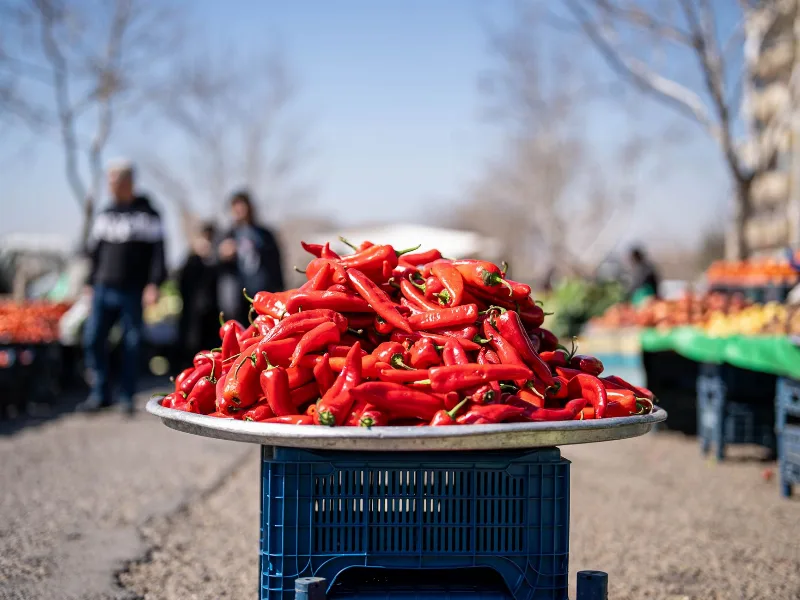
Kahramanmaraş Peppers
Kahramanmaraş peppers are the red peppers grown on the inland plains of southern Türkiye, where hot, dry summers and fertile soils give the crop its deep colour, moderate heat and smoky aroma.
Explore →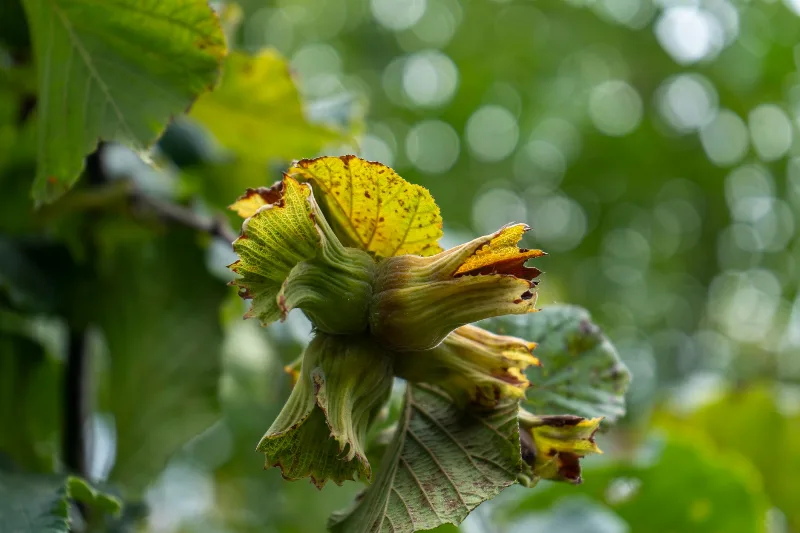
Ordu Hazelnuts
Ordu hazelnuts come from Türkiye's leading hazelnut province on the central Black Sea coast, where humid air, year-round rainfall and steep hillside orchards give the crop its distinctive character.
Explore →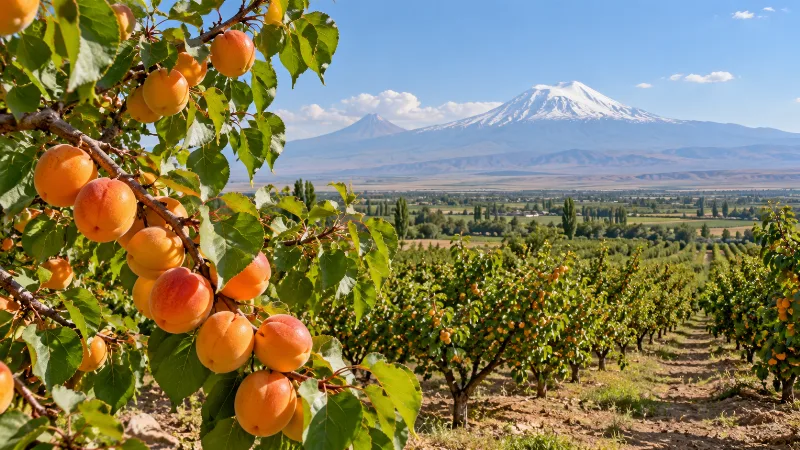
Iğdır Apricots
Iğdır apricots are the sweet, aromatic apricots grown on the warm Aras River plain in eastern Türkiye, where hot dry summers and cold winters shape fruit that is eaten fresh and dried in large quantities.
Explore →Related content
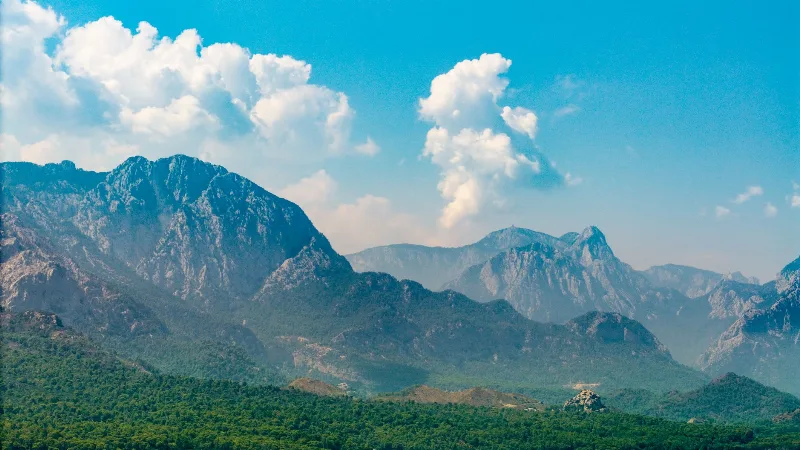
Antalya
Antalya offers a unique blend of vibrant history and stunning natural beauty, making it a must-visit destination in Türkiye.
Myra
Myra is an ancient Lycian city in the Demre district of Antalya, whose cliff-carved rock tombs and large Roman theatre stand within the modern town itself.
Fethiye
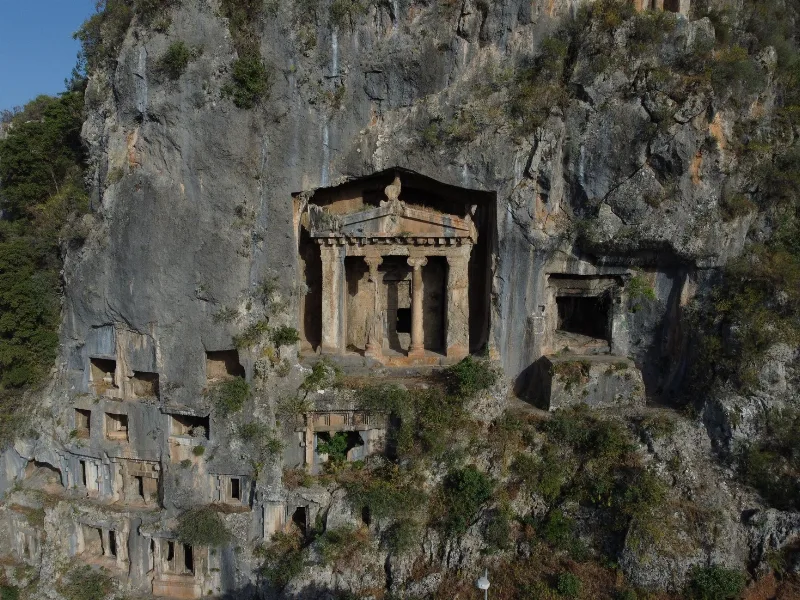
Fethiye is a captivating coastal town known for its stunning blue lagoon, thrilling paragliding experiences, and ancient rock tombs.
4-Day Lycian Coast Route
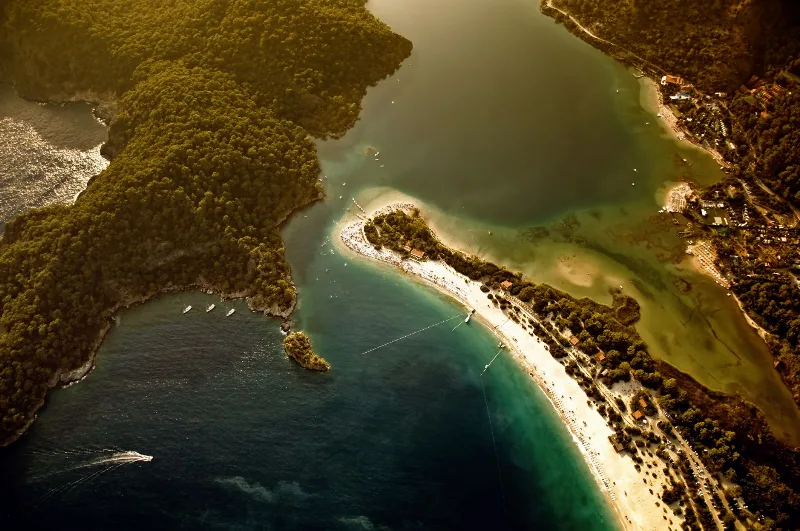
A four-day route along Turkey's Lycian coast, driving from Fethiye and Ölüdeniz through Kalkan, Kaş, Kekova, Demre and Olympos to finish in Antalya.
6-Day Mediterranean Coast Route: Antalya to Marmaris
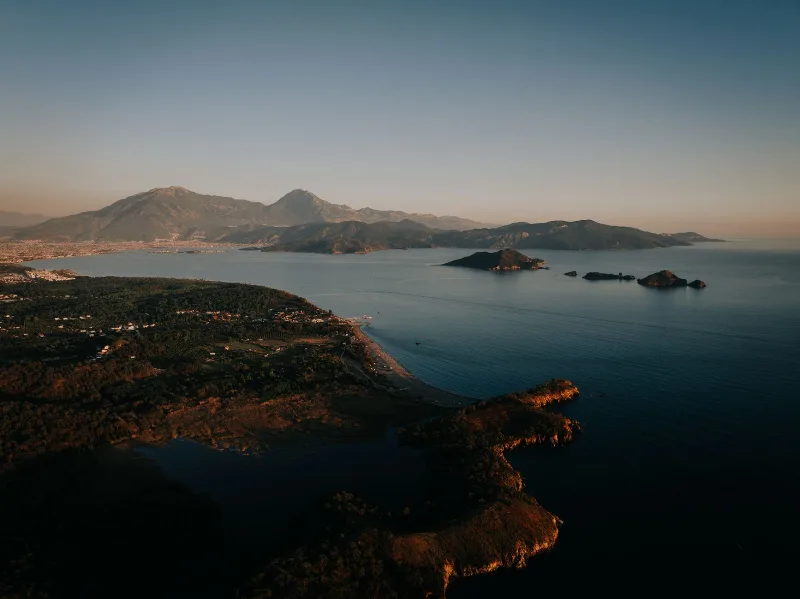
A six-day linear route along Türkiye's Mediterranean coast, linking Antalya, Olympos, Demre, Kekova, Kaş, Kalkan, Patara, Fethiye and Dalyan before finishing in Marmaris. It mixes ancient cities, long beaches and small harbour towns on a continuous westward drive.
5-Day Antalya to Fethiye Coastal Route
A five-day driving itinerary along Turkey's Mediterranean shore, linking Antalya, Phaselis, Olympos, Demre, Kekova, Kaş, Kalkan, Patara and Fethiye. The route is linear, coastal for most of its length, with short inland detours to Lycian ruins.