
Antalya's Ancient Ruins
Antalya's ancient ruins trace Lycian, Pamphylian, Roman and Byzantine life across the Mediterranean coast and the Taurus foothills. Scattered theatres, colonnaded streets and rock-cut tombs reveal how successive peoples shaped this landscape.
Antalya occupies a stretch of the Mediterranean coast where the Taurus Mountains drop sharply towards the sea, and that dramatic geography has shaped thousands of years of human settlement. Within the province's borders, Lycian rock tombs, Pamphylian colonnaded streets, Roman theatres and Byzantine basilicas stand among pine forests, on cliff edges and beside long beaches. For anyone drawn to archaeology, the region reads like an open-air archive of Anatolia's many civilisations.
A coastline of layered settlement
The plain around Antalya, known in antiquity as Pamphylia, was fertile and well watered, while the mountainous west belonged to Lycia. Greek colonists, Persians, the empire of Alexander, Romans, Byzantines, Seljuks and Ottomans all passed through or settled here. Because the region was never fully abandoned, its ruins sit close to modern roads and villages rather than in remote isolation, which makes the archaeology unusually accessible to independent travellers.
Perge and Aspendos in the Pamphylian plain
East of the city, Perge spreads across the Aksu plain with a broad colonnaded avenue running through its centre, flanked by a nymphaeum, baths and a monumental Hellenistic gate. Its stadium is among the more complete of its kind in Anatolia. Many of the finest statues unearthed at Perge are now displayed in the Antalya Museum, which helps visitors connect the objects with the streets they came from.
Further east near Serik, Aspendos is dominated by a Roman theatre built in the second century AD and traditionally attributed to the architect Zenon. The structure's stage building survives largely intact, and the aqueduct that once supplied the city still strides across the valley nearby.
Termessos in the Taurus highlands
High on the slopes of Güllük Dağı, at roughly a thousand metres, Termessos is a Pisidian city that resisted Alexander's forces. Its walls, gymnasium, theatre and necropolis are set among cedar and pine, with views down towards the coast. Because the site was never rebuilt or reoccupied, its layout remains close to its original form, and the climb through the national park is part of the experience.
Side, Phaselis and the Lycian shore
On a small peninsula near Manavgat, Side preserves a theatre, an agora and the foundations of a Temple of Athena close to the water. South of Kemer, Phaselis occupies a wooded isthmus with the remains of three harbours, its streets shaded by pines and overlooked by Mount Tahtalı. Further west, Olympos lies in a steep valley, and the nearby flames of Yanartaş, known since antiquity as the Chimaera, burn from vents in the rock. Inland from Finike, Arykanda terraces a hillside in a series of levels that show how a small Lycian town was organised.
City walls, gates and prehistoric traces
In the heart of modern Antalya, Hadrian's Gate — locally called Üçkapılar — was raised in honour of the emperor's visit in 130 AD and still marks the entrance to the old quarter of Kaleiçi. North of the city, Karain Cave preserves evidence of occupation stretching far back into prehistory, adding a much earlier chapter to the region's story.
Seeing the ruins through the seasons
Coastal sites such as Perge, Aspendos and Phaselis are low and exposed, so spring and autumn bring gentler temperatures and clearer light. Mountain sites like Termessos and Arykanda offer shade and altitude, while winter rain occasionally closes unpaved tracks. Wherever the ruins are found, they sit within working landscapes of citrus groves, pine forest and pasture, and treating walls, mosaics and tombs with care keeps these places readable for the travellers who follow.
Related content
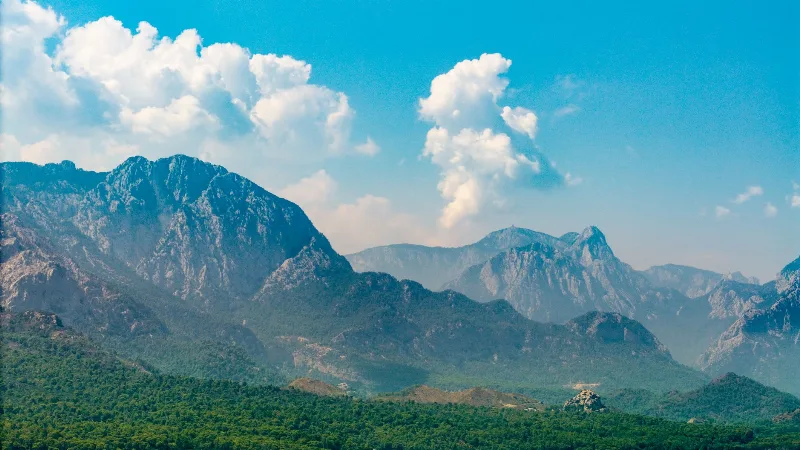
Antalya
Antalya offers a unique blend of vibrant history and stunning natural beauty, making it a must-visit destination in Türkiye.
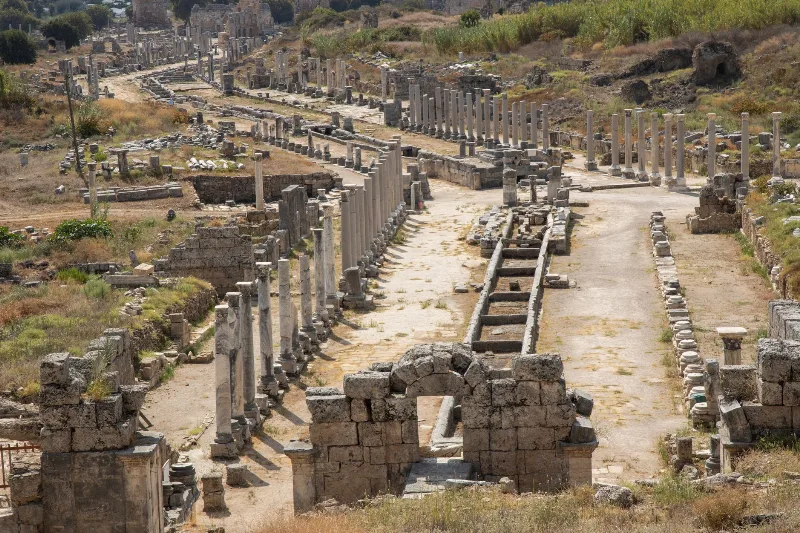
Perge
Perge is a Graeco-Roman city in the Pamphylian plain east of Antalya, Türkiye, whose surviving urban plan includes two colonnaded streets with central water channels, a hillside Roman theatre and one of Anatolia's best-preserved stadiums.
Perge
Perge is an ancient Pamphylian city east of Antalya, whose Hellenistic gates, colonnaded streets, theatre and exceptionally well-preserved stadium make it one of the most legible Roman-era sites in southern Turkey.
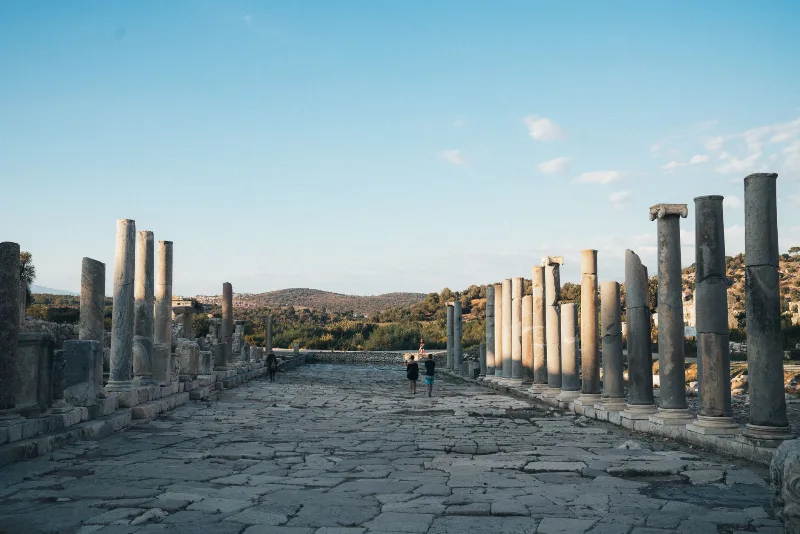
The Ancient City of Perge Near Antalya
Perge, an ancient Pamphylian city on the plain east of Antalya, preserves colonnaded streets, a theatre, a stadium and baths that show how a Roman-era city was laid out and lived in.
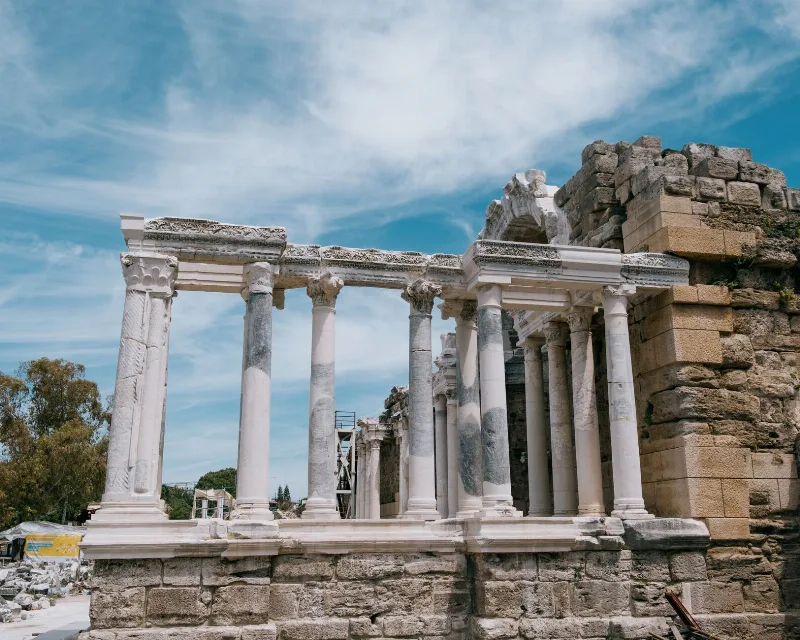
3-Day Antalya to Side Ancient Coast Route
A three-day coastal journey from Antalya to Side that links the archaeological sites of Perge and Aspendos with the Manavgat Waterfall and the ruins of Side, with a clear day-by-day sequence of stops.
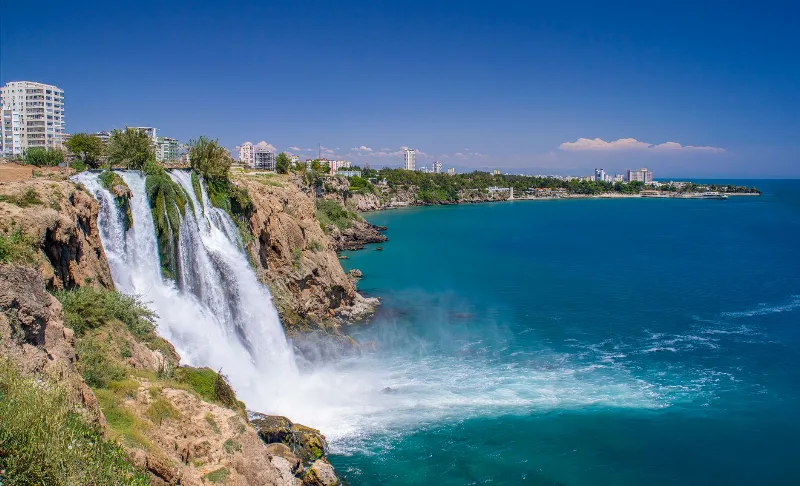
2-Day Antalya Waterfalls and Ancient Cities Route
A circular two-day route based in Antalya that pairs the Düden and Kurşunlu waterfalls with the ancient cities of Perge, Aspendos and Termessos, following the eastern coastal plain on the first day and the Taurus foothills on the second.
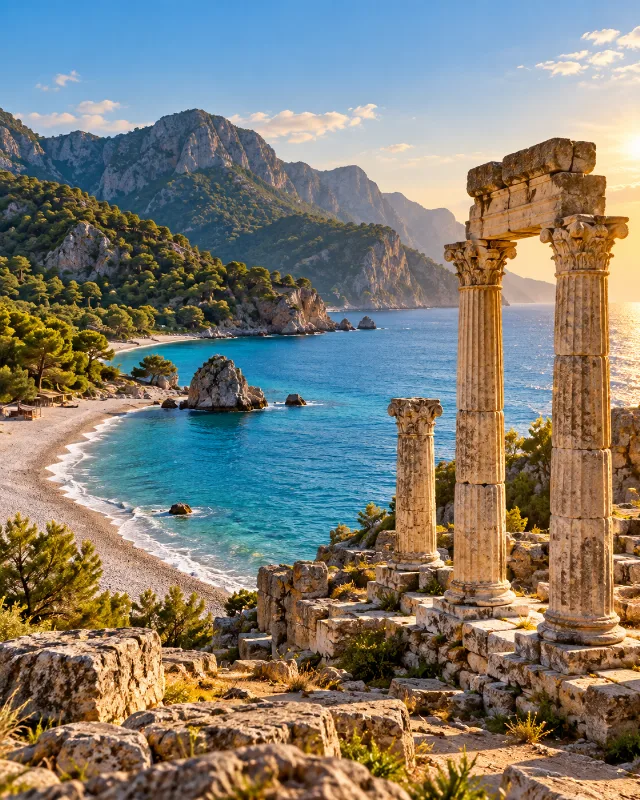
3-Day Antalya Ancient Coast Route
A three-day route combining Antalya’s old city with Perge, Aspendos, Side, Olympos and the Mediterranean landscapes around Çıralı.
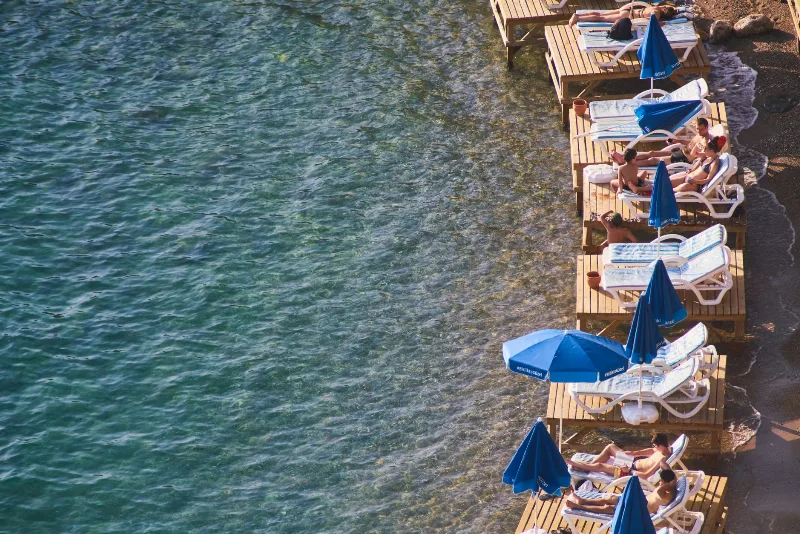
Antalya's Mediterranean Coast
Antalya's Mediterranean coast, located in Türkiye, offers stunning beaches and rich historical sites, making it a captivating destination.