
Ölüdeniz Blue Lagoon
A sheltered lagoon near Fethiye surrounded by forested hills, calm water and the Mediterranean coast.
Ölüdeniz Blue Lagoon
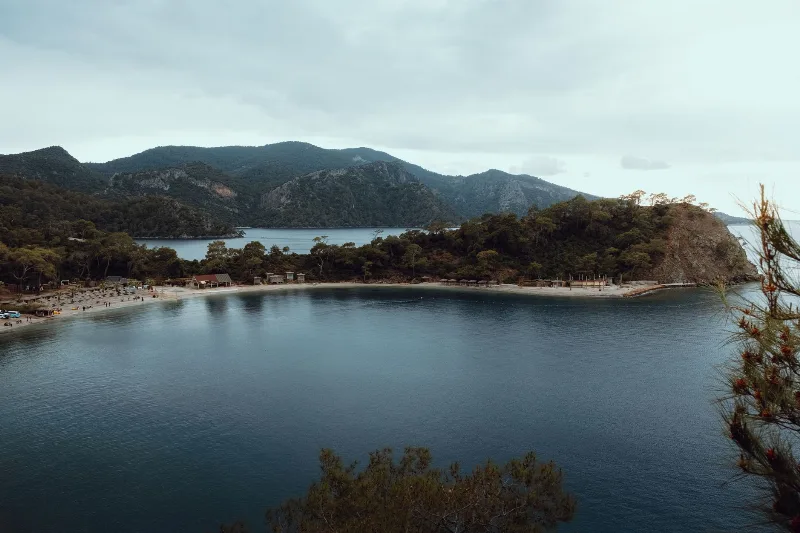
Ölüdeniz Blue Lagoon is located in the Fethiye district of Muğla Province, on Turkey’s southwestern Mediterranean coast. The lagoon lies beside the main beach of Ölüdeniz and is separated from the open sea by a narrow curved strip of land.
Its sheltered geography gives the water a noticeably calm appearance compared with the open Mediterranean nearby.
The lagoon is surrounded by forested hills, with pine-covered slopes rising behind the shoreline. The combination of green vegetation, pale beaches and blue-green water gives the area its characteristic visual identity.
Water colour varies across the lagoon. Shallow sections can appear pale turquoise, while deeper areas shift toward green and blue.
The sheltered water makes swimming one of the most common activities in the lagoon. Kayaking and other quiet water activities are also associated with the area.
Outside the lagoon, the wider Ölüdeniz coastline opens toward the Mediterranean and Belcekız Beach. The contrast between the protected lagoon and the open sea allows two different coastal environments to be seen within a small area.
The surrounding mountains are another important part of the landscape. Babadağ rises behind Ölüdeniz and forms a dramatic backdrop to the coast.
Paragliding from Babadağ is one of the best-known activities associated with Ölüdeniz. From the air, the curved shape of the lagoon, beaches and surrounding forest can be seen clearly.
Walking around the shoreline reveals different views of the water and nearby hills. The area is especially colourful when sunlight highlights the shallow sections of the lagoon.
Ölüdeniz is one of the clearest examples of a coastal landscape shaped by both sheltered and open water. Its lagoon, pine-covered slopes, beaches and mountain setting combine within a relatively compact part of the Fethiye coastline.
Remarkable places
All places →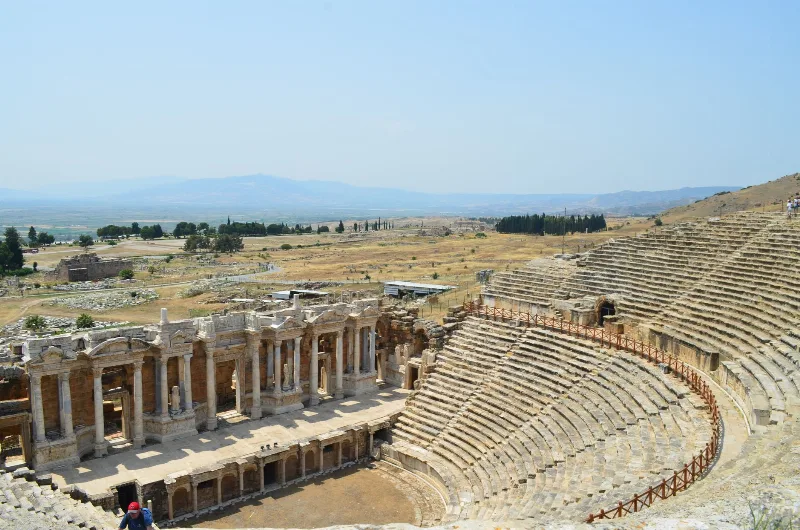
Letoon
Letoon is a Lycian sanctuary near Xanthos in Muğla Province, dedicated to Leto, Artemis and Apollo. Its three temples, theatre and trilingual inscription make it one of southwestern Turkey’s most significant archaeological sites.
Explore →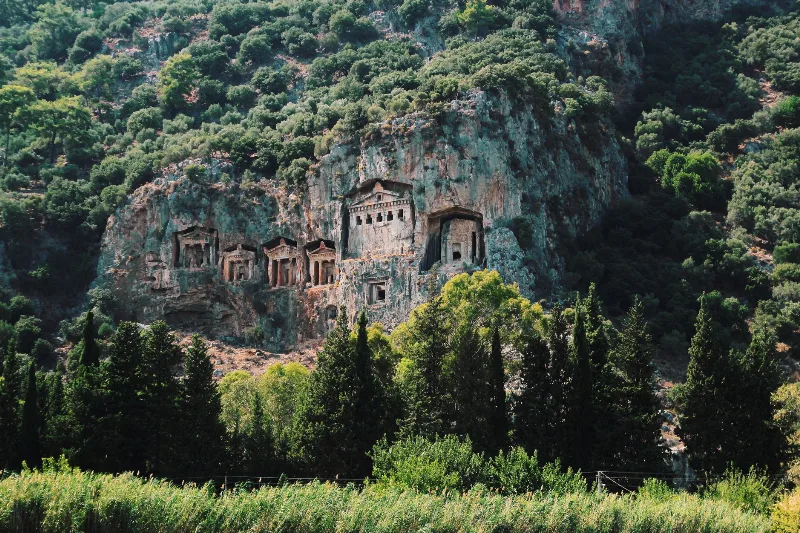
Kaunos
Kaunos is an ancient Carian city on the Dalyan River in Muğla Province, known for its temple-style rock-cut tombs and the extensive ruins of a harbour that silted up centuries ago.
Explore →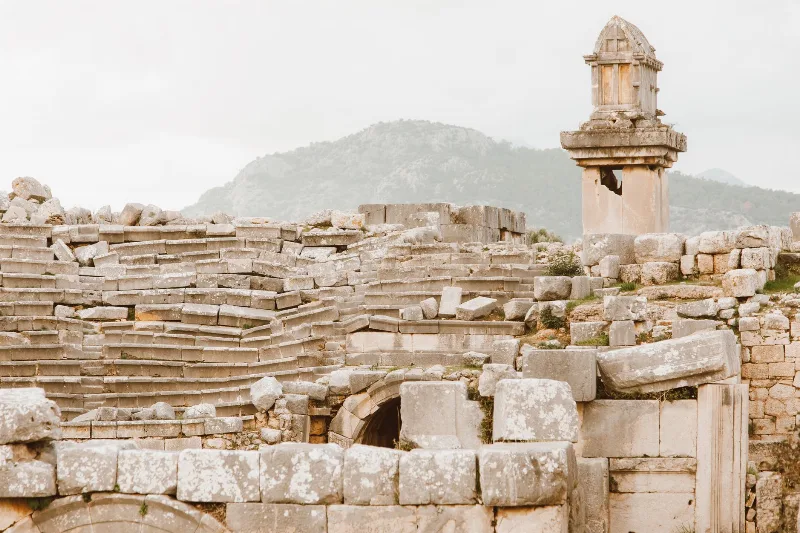
Xanthos
Xanthos is an ancient Lycian city in Antalya Province and a UNESCO World Heritage Site, known for its Lycian tombs, Roman theatre and role as a leading city of Lycia.
Explore →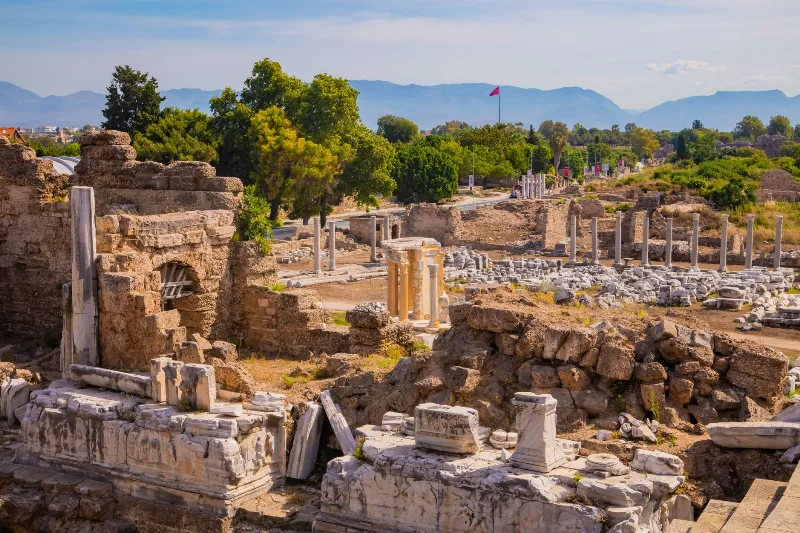
Phaselis
Phaselis is a Rhodian-founded port city on the eastern Lycian coast, where paved streets, agoras, baths and a small theatre stand among pines between three sheltered bays.
Explore →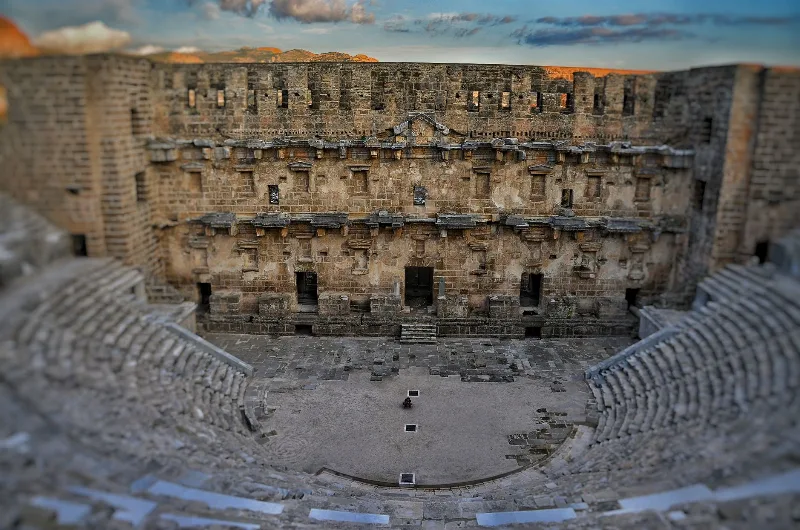
Aspendos
Aspendos is a Pamphylian ancient city near Serik in Antalya Province, dominated by a second-century Roman theatre that survives almost intact. Its aqueduct, acropolis and lower-city ruins sit in the flat farmland of the Köprüçay plain.
Explore →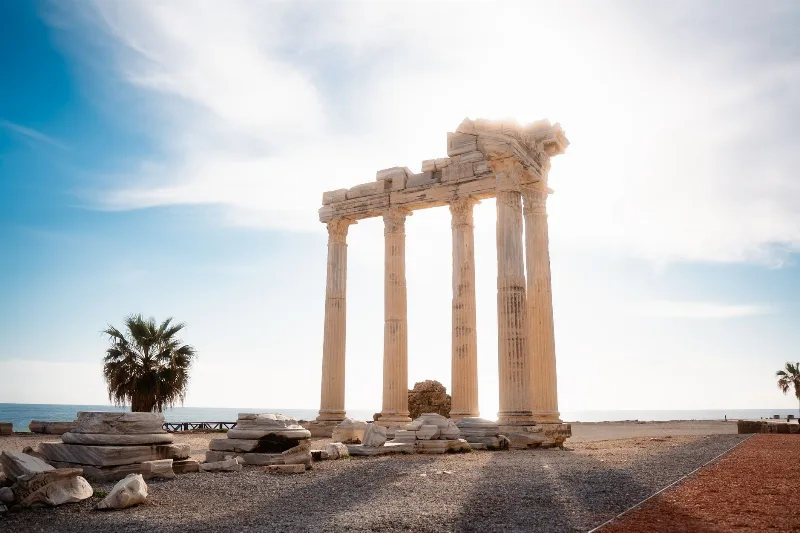
Side
Side is an ancient Greek harbour city on Türkiye's Mediterranean coast, known for the Temple of Apollo, a large Roman theatre and streets of ruins that visitors can still walk through. Its remains sit inside a modern town in the Manavgat district of Antalya Province.
Explore →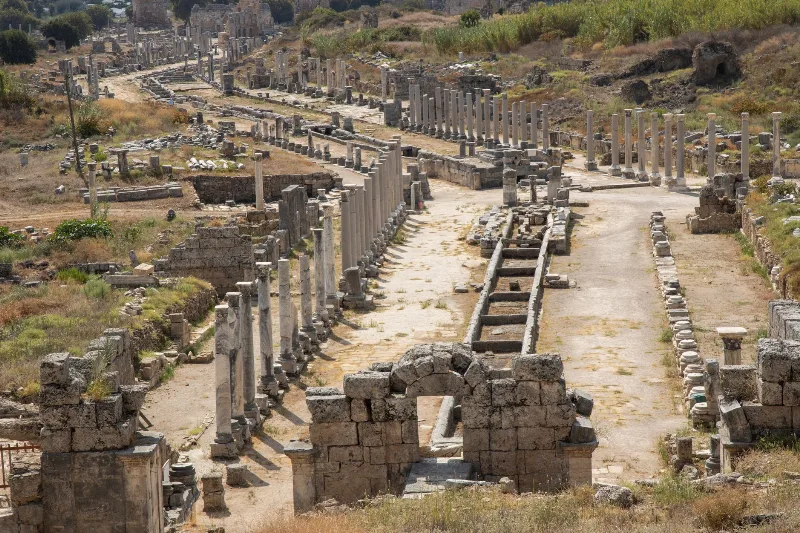
Perge
Perge is an ancient Pamphylian city east of Antalya, whose Hellenistic gates, colonnaded streets, theatre and exceptionally well-preserved stadium make it one of the most legible Roman-era sites in southern Turkey.
Explore →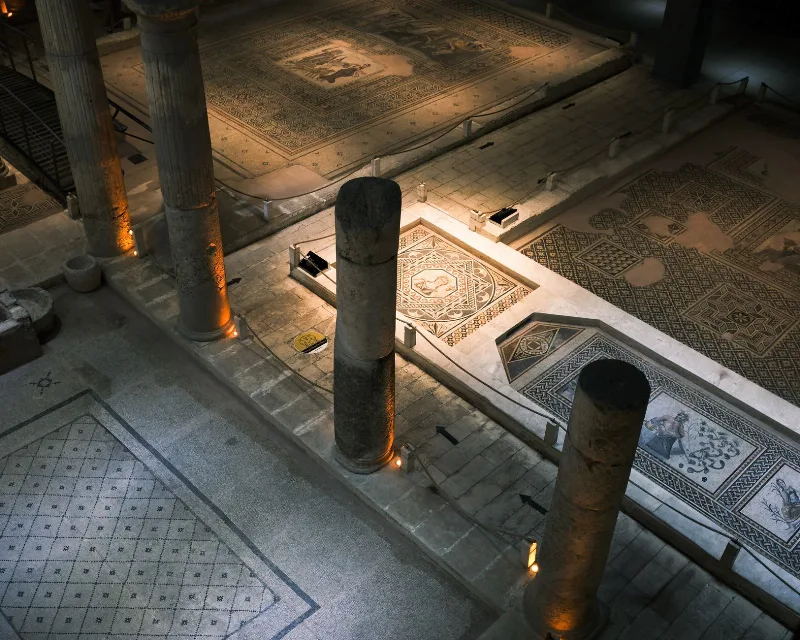
Zeugma
Zeugma was a twin Roman city on the Euphrates in Gaziantep Province, famous for the mosaics recovered from its riverside villas. Here is what the site is, what survives, and what to know before visiting.
Explore →Related content
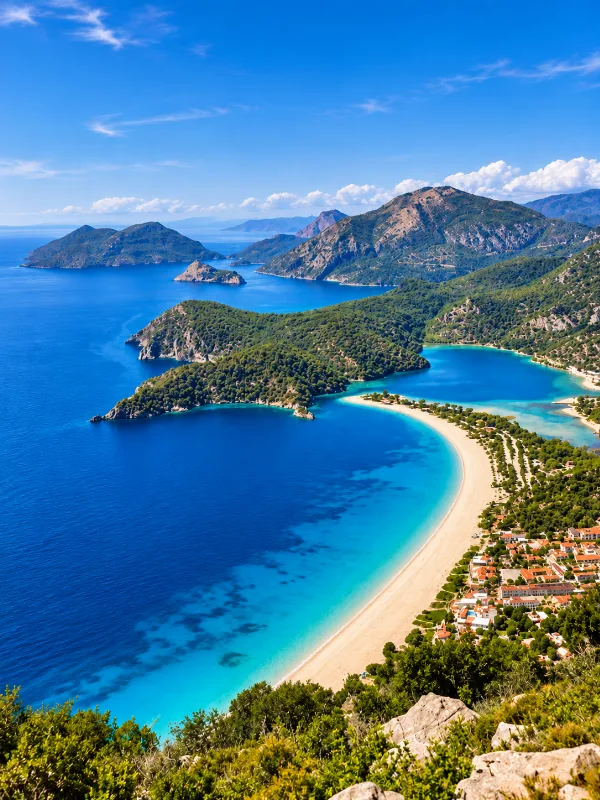
Ölüdeniz
A coastal area near Fethiye in southwestern Türkiye, known for its sheltered lagoon, turquoise water, surrounding mountains, beaches and Mediterranean landscape.
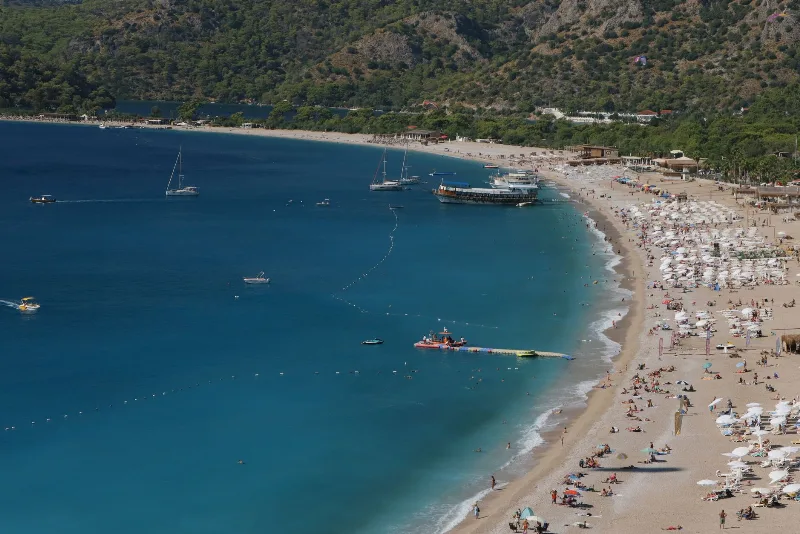
Ölüdeniz
Ölüdeniz, Türkiye'nin Fethiye ilçesine yakın bir konumda bulunan, sakin turkuaz suları ve yamaç paraşütü imkanları ile ünlü bir lagün ve plajdır.
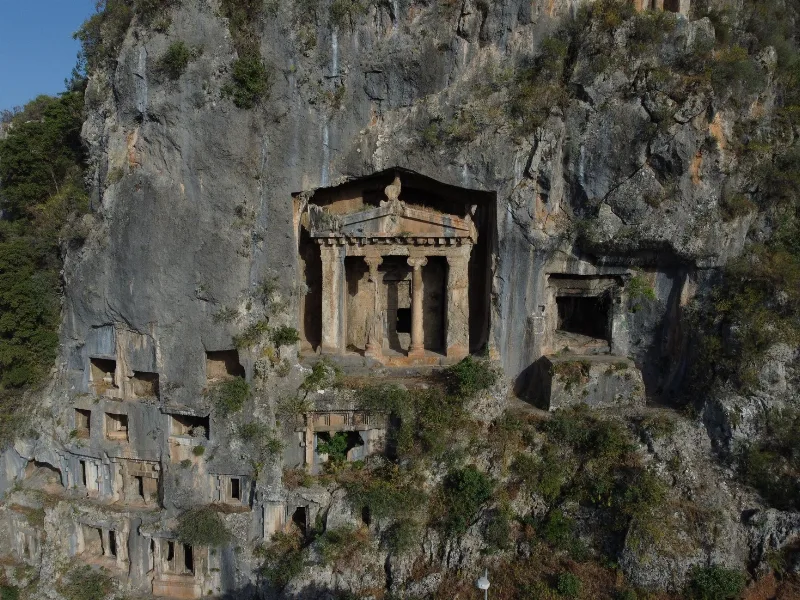
Fethiye
Fethiye is a captivating coastal town known for its stunning blue lagoon, thrilling paragliding experiences, and ancient rock tombs.
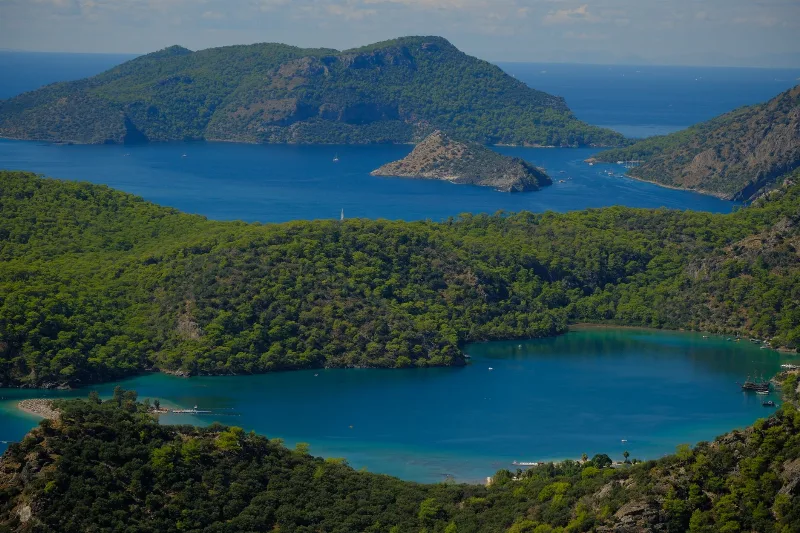
3-Day Fethiye and Ölüdeniz Route
A three-day loop based in Fethiye that combines the Lycian rock tombs and old harbour quarter with the Blue Lagoon at Ölüdeniz, the abandoned village of Kayaköy and the inland gorge at Saklıkent.
Fethiye's Scenic Beauty
Fethiye blends turquoise Mediterranean bays with pine-covered mountains and Lycian history. Its lagoons, coves and gorges make the southwestern coast of Türkiye a rewarding place to explore.
5-Day Fethiye to Kaş Lycian Coast Route
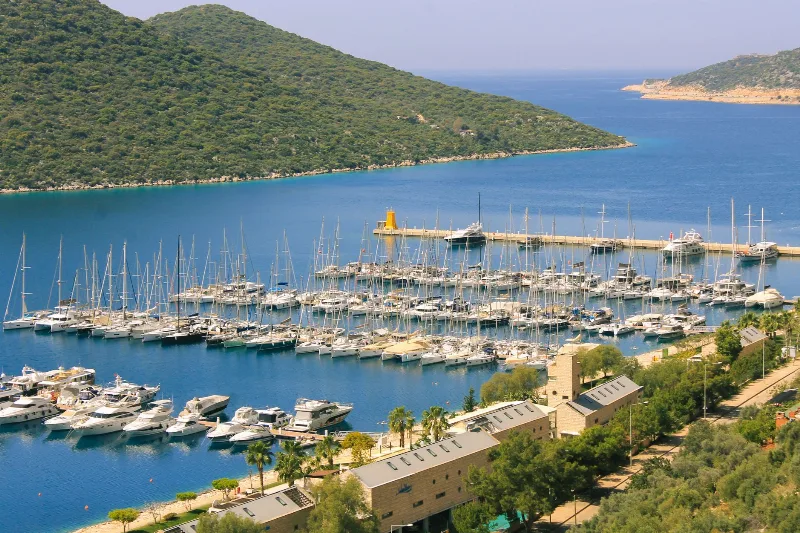
A five-day linear route along the Lycian coast from Fethiye to Kaş, linking Ölüdeniz, Kabak, the Xanthos valley, Patara and Kalkan by road and on foot.