
Buldan Weaving Tradition in Denizli
Buldan, a district town in Denizli Province, has built its identity around cotton cloth woven on handlooms. Its weavers still produce the soft, absorbent fabric known as Buldan bezi, much of it destined for bath towels and household linen.
Buldan is a small district town in the inland Aegean province of Denizli, set in a sheltered valley where the surrounding land rises gently towards higher ground. It is known above all for a textile tradition that has shaped its identity for centuries: the weaving of cotton cloth on handlooms, carried out in homes and small workshops and passed down from one generation to the next. For travellers with an interest in Turkish handicrafts, Buldan offers an unusually direct view of a working craft that has stayed close to its roots.
A Town Shaped by Cotton
The district's fortunes have long rested on two things: the cotton grown in the fields around the town and the water that runs through the valley. Local cotton, picked in late summer, provided the raw material for weavers, while nearby streams supplied the water needed for washing, bleaching and finishing the cloth. This combination of a reliable crop and a practical craft gave Buldan an economic base that outlasted the decline of many other small Anatolian weaving centres. Agriculture and textiles still sit side by side in the local economy, and cotton remains a familiar sight in the surrounding countryside.
The Character of Buldan Cloth
Buldan bezi, or Buldan cloth, is a loosely woven cotton fabric that is light, breathable and highly absorbent. Traditionally it was made in natural cream and off-white tones, sometimes finished with simple stripes or checks running along the edge of the cloth. Its most familiar form is the peştemal, the flat woven towel used in Turkish baths, though the same fabric has also been used for bathrobes, sheets, table linen and light clothing. The cloth is valued for its durability and for the way it softens with repeated washing — qualities that have kept demand steady even as factory-made textiles have spread.
Handlooms in Homes and Workshops
Weaving in Buldan has traditionally been a family affair, with skills learned informally at home rather than in formal schools. Women have often woven in household workshops, while men handled sales and the running of small businesses in the town centre. The wooden handloom, with its foot pedals, shuttle and comb, remains the symbolic heart of the craft. Working a loom is slow, repetitive and highly skilled: setting up the warp alone can take days, and the rhythm of the shuttle sets the pace of the whole process. Machine production now accounts for much of the town's output, yet a number of weavers continue to work on handlooms, producing shorter runs of cloth with the slightly irregular texture that machine weaving struggles to imitate.
Traditional Houses and the Old Bazaar
The town's older neighbourhoods still contain many traditional Buldan houses, typically built of stone at ground level with timber-framed upper floors that project over the street. Wooden shutters, carved details and narrow shaded lanes give these quarters a distinct character, and several houses have been restored. In the centre, the bazaar is the natural place to see the results of the looms: shops stacked with towels, robes, tablecloths and lengths of cloth in plain weaves and soft stripes. The weekly market adds fruit, vegetables and dairy produce from the surrounding villages, giving a fuller picture of daily life in the district.
Weaving in Everyday Life
Cloth is woven into the social fabric of Buldan as well as its economy. Handwoven towels and peştemals have long formed part of a bride's dowry, and they are still given as gifts at weddings, births and housewarmings. In Turkish bath culture the peştemal is a practical essential, wrapped around the body and used to dry off, and the version made in Buldan is widely recognised for its absorbency and lightness. The craft also ties the town to the wider region: raw cotton, dyes and design ideas have always moved between Buldan and the neighbouring settlements of the Denizli basin, where textiles remain a major source of employment. For anyone travelling through the inland Aegean, the town provides a quietly convincing example of how a local material, a household skill and a long-standing market can together sustain a place and its identity.
Related content
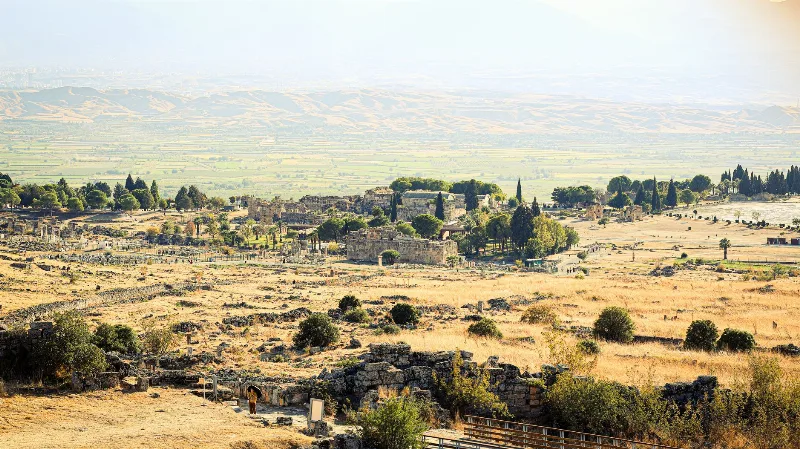
Denizli
Denizli is the inland capital of Denizli Province in Türkiye's Aegean region, known internationally for the Pamukkale travertine terraces and ancient Hierapolis, and at home as a major textile city with its own long-crowing rooster breed.
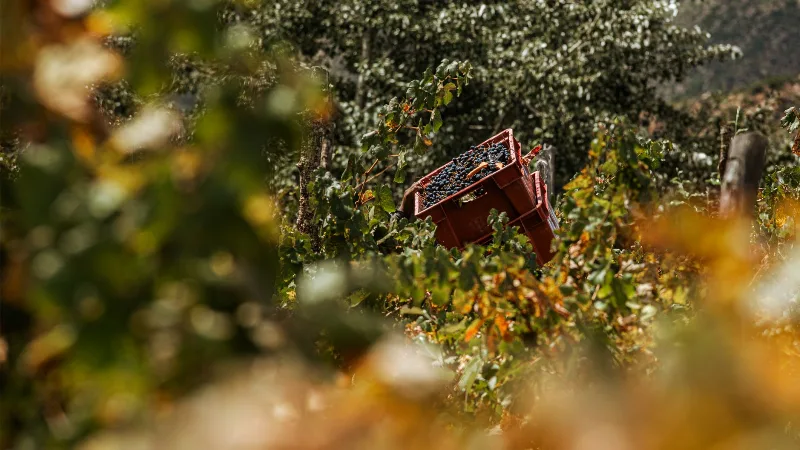
Grape Harvest in Çal, Denizli
Each year the vineyards around Çal in Denizli province ripen and are picked, usually between late August and October, with September as the busiest month. The harvest is tied to the local Çalkarası grape and to the district's long-standing wine-making tradition.
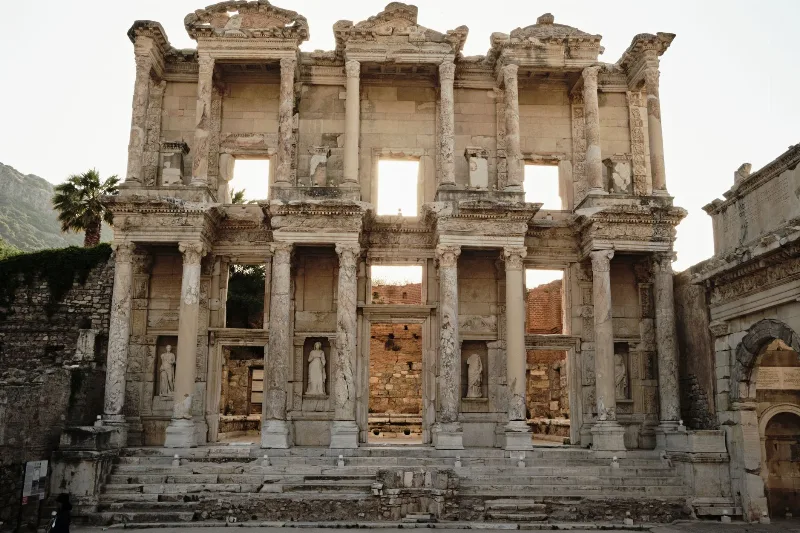
4-Day Ephesus and Pamukkale Route
A four-day west-to-east Aegean route that links the ancient city of Ephesus and the House of Virgin Mary in Selçuk with the white travertine terraces and Hierapolis ruins at Pamukkale, near Denizli.
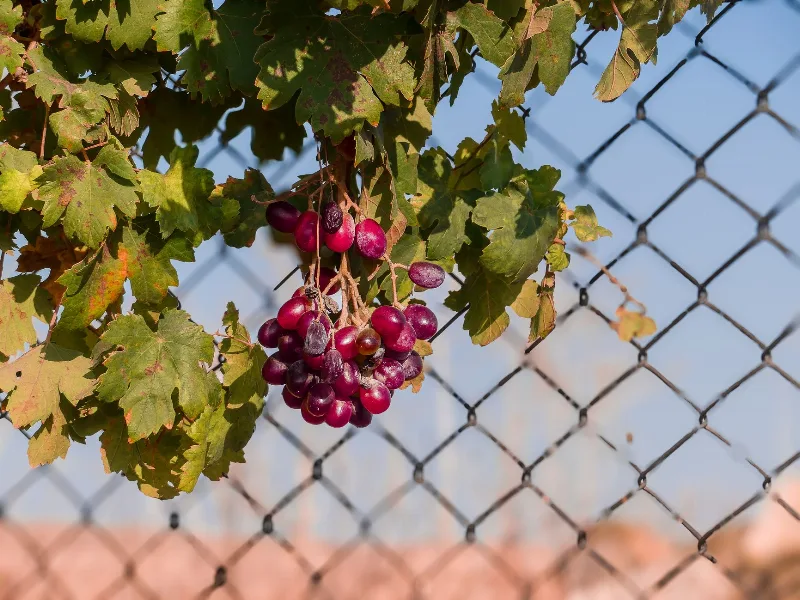
Çal Grapes
Çal grapes come from an elevated plateau in Denizli Province, where stony soils, wide day–night temperature swings and a long vineyard tradition shape both table fruit and wine grapes.
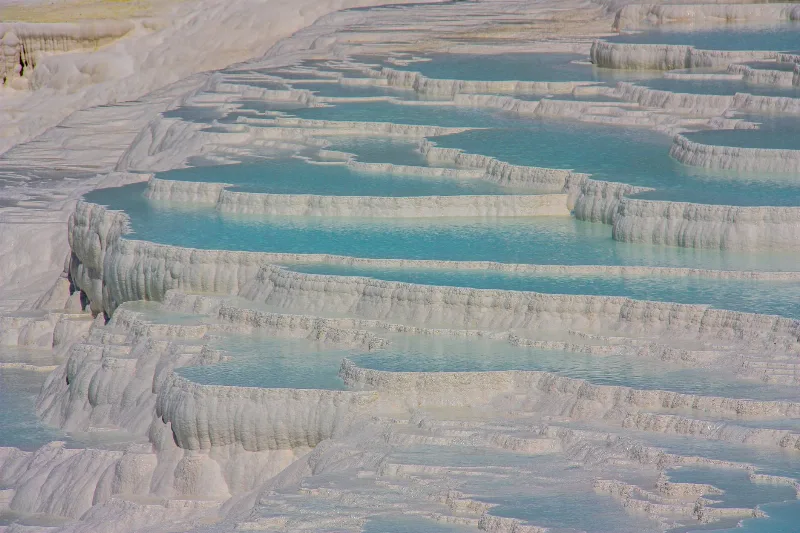
Pamukkale
Pamukkale is a white travertine formation in Denizli Province, built up over millennia by calcium-rich thermal springs that flow down the edge of a plateau beside the ancient city of Hierapolis.
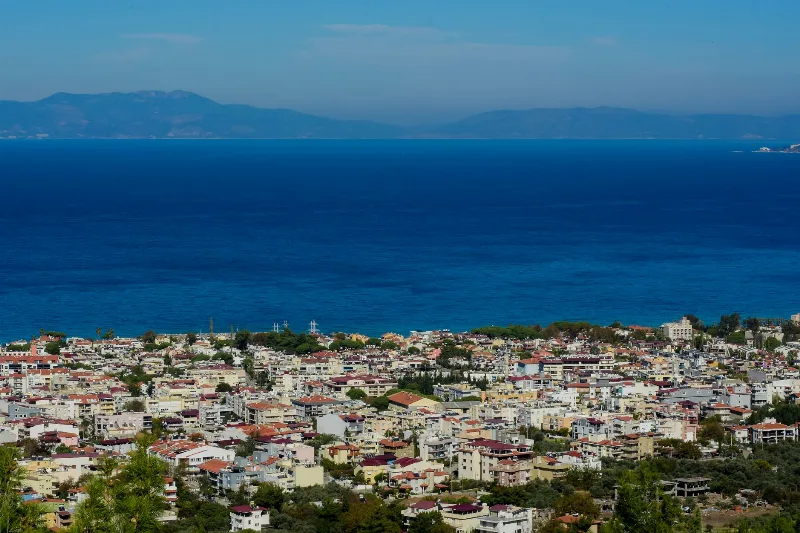
Nazilli
Nazilli is an inland district of Aydın Province in Türkiye's Aegean region, set in the Büyük Menderes valley and known for figs, cotton and its long-standing market town character.
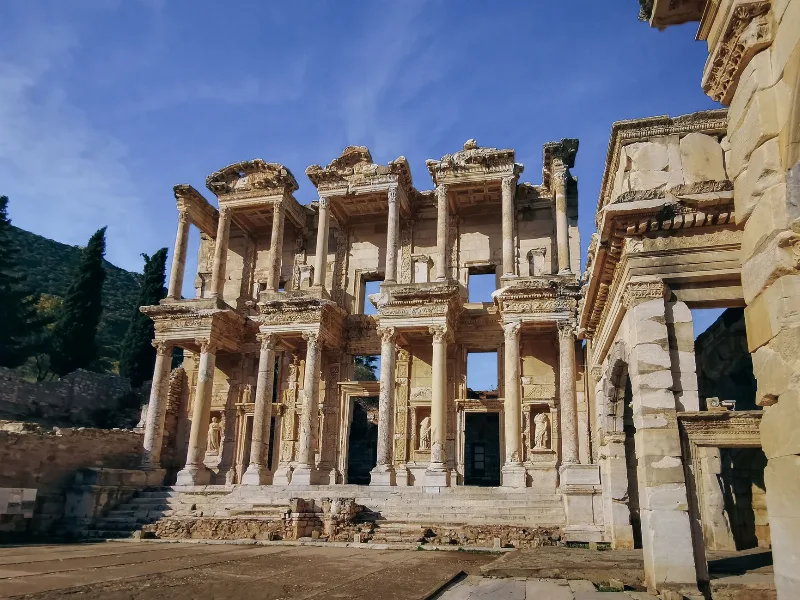
6-Day Aegean Ancient Cities Route
A six-day linear journey from Izmir to Denizli through the great ancient cities of the Aegean, linking Ephesus, Priene, Miletus, Didyma, Lake Bafa, Pamukkale, Laodicea and Aphrodisias in one coherent corridor.
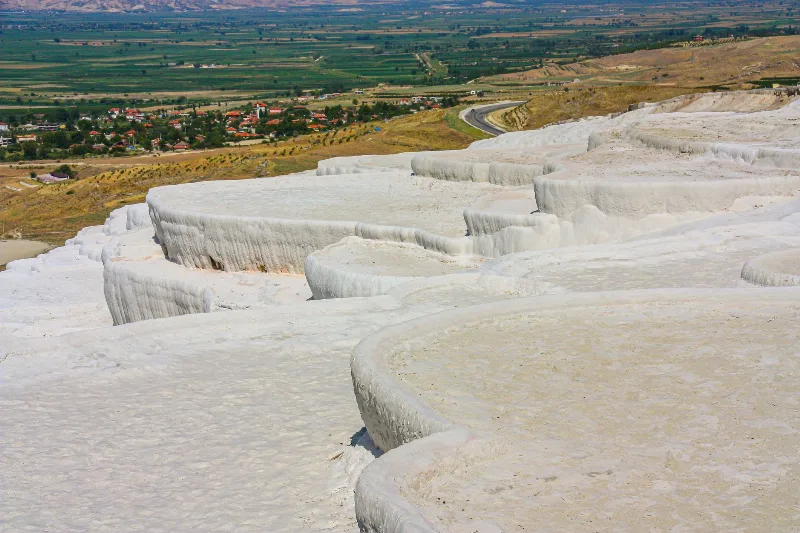
The Natural Wonders of Pamukkale
Pamukkale in Denizli, Türkiye, is a hillside of white travertine terraces and warm mineral springs that has been shaped by geology for millennia.