
Bodrum Castle
Raised by the Knights Hospitaller above ancient Halicarnassus, Bodrum Castle is both a medieval fortress and the home of one of the world's leading museums of underwater archaeology.
Bodrum Castle, also called the Castle of St. Peter, is a medieval fortress standing on a rocky headland at the entrance to Bodrum harbour in Muğla Province, on Türkiye's south-western Aegean coast. It was built by the Knights Hospitaller, the military-religious Order of St. John, from the early fifteenth century, and it rises directly above the site of ancient Halicarnassus. Three things give it historical weight: it is among the best-preserved Hospitaller fortresses in the eastern Mediterranean, its masonry was quarried in part from the ruins of the Mausoleum of Halicarnassus, and since the 1960s it has housed the Bodrum Museum of Underwater Archaeology, whose collections helped shape the modern discipline of nautical archaeology.
A Headland Above Ancient Halicarnassus
The castle occupies a rocky promontory that divides Bodrum's bays and commands the narrow approach to the harbour, with the island of Karaada visible offshore. In antiquity this was Halicarnassus, a Carian city that became prominent in the fourth century BC under the satrap Mausolus, whose tomb — the Mausoleum — was counted among the Seven Wonders of the Ancient World. The medieval fortress was built immediately beside and in places over the ruins of that monument, and the settlement that grew around it took its name from the castle: the Hospitallers called it Petronium, and "Bodrum" is a Turkish rendering of that name. The wider peninsula preserves other traces of Halicarnassus, including the Myndos Gate and the ancient theatre, both within walking distance of the castle.
The Knights Hospitaller and the Building of the Castle
The Hospitallers reached the Aegean after losing their positions in the Levant. In the upheaval that followed the Battle of Ankara in 1402 they gained a foothold on this coast and began fortifying the promontory under Grand Master Philibert de Naillac. Construction started in the first years of the fifteenth century and continued in stages over several decades, with substantial additions later in the century, particularly under Grand Master Pierre d'Aubusson, who reinforced the order's strongholds after the Ottoman siege of Rhodes in 1480. The castle was not a single act of building but an accumulation of works financed by the different "langues" — the national branches of the order, including those of England, France, Germany, Italy, Spain and Provence — each of which paid for and left its mark on a section of the defences.
Towers, Walls and Stone Taken from the Mausoleum
The fortress is enclosed by two lines of wall with a moat on the landward side, and the approach leads up a ramp through a succession of gates into the inner courts. The circuit is dominated by towers named after the branches that built them: the English Tower, the French Tower, the Italian Tower, the German Tower and the Spanish Tower, also known as the Snake Tower, which is the tallest of them. Heraldic reliefs bearing the arms of grand masters and of the order survive on the towers, along with the lion relief on the English Tower. Inside the walls, the garrison's quarters, storerooms, cisterns and a chapel survive in varying states of preservation.
A great deal of the building stone came from the ruined Mausoleum. The Knights quarried the monument and the tombs around it, and architectural blocks, column drums and fragments of sculpted frieze were incorporated into the walls, where some can still be identified. This reuse is one reason the Mausoleum survives today largely as scattered fragments rather than as a standing structure, and it makes the castle walls an accidental archive of one of the ancient world's most celebrated buildings.
From Hospitaller Fortress to Ottoman Garrison
Hospitaller rule ended in the early 1520s. After Rhodes fell to Suleiman the Magnificent in 1522, the order withdrew from the Aegean and the castle passed into Ottoman hands. Under Ottoman administration it served first as a garrison fortress. In the nineteenth and early twentieth centuries it was used as a prison, and parts of the complex fell into disrepair. Its military role faded as the strategic geography of the Aegean changed, leaving the walls to be maintained, altered and in places quarried in turn by the town that had grown around them.
The Bodrum Museum of Underwater Archaeology
In the early 1960s the castle was given over to museum use, and by the middle of that decade it was operating as the Bodrum Museum of Underwater Archaeology — one of the first institutions anywhere dedicated specifically to the archaeology of the sea. Its displays are installed inside the castle's halls and towers rather than in a purpose-built gallery, so the medieval interiors form part of the visit. The collections include one of the most comprehensive groups of eastern Mediterranean amphorae in existence, together with glass, metalwork, coins and anchors recovered from wrecks along the Turkish coast. The museum received a special commendation in the European Museum of the Year Award in 1995.
The Shipwreck Galleries
The museum's reputation rests above all on its shipwreck material. The Cape Gelidonya wreck, a Late Bronze Age vessel excavated from 1960, was the subject of one of the first underwater excavations carried out to modern scientific standards and helped establish nautical archaeology as a field. The Uluburun wreck, dated to the late fourteenth century BC and excavated between 1984 and 1994, carried a cargo of copper and tin ingots, Cypriot pottery, glass, ivory and other goods that documents the scale of Late Bronze Age trade between the Aegean, the Levant, Egypt and Cyprus. The Serçe Limanı wreck, a vessel of the eleventh century AD, was found with a cargo of Islamic glass, including raw glass and vessels that rarely survive on land. Finds from these wrecks are displayed in the castle, and models and reconstructions are used to explain how the ships were built, loaded and sailed.
What Visitors See Today
Visitors walk the ramparts the Knights walked, cross the moat and the successive gates, and move between open courtyards shaded by trees. Several towers can be climbed, and from the upper levels the view takes in the harbour, the marina, the two bays of Bodrum and the peninsula beyond. The maritime museum halls are entered from the courtyards, and the castle also holds finds from the surrounding area that tie the fortress to the older city beneath it. The combination of medieval military architecture, ancient spolia and underwater archaeology within one enclosure is unusual, and it is why the site is visited both as a monument and as a museum.
Nearby Remains of Halicarnassus
Because the castle stands on the site of Halicarnassus, several related monuments lie close by. The surviving platform and fragments of the Mausoleum are displayed at a separate site in the town, where excavated pieces from the monument are shown. The Myndos Gate, part of the Hellenistic defences of the city, survives on the western edge of Bodrum, and the ancient theatre, cut into the hillside above the town, is a further reminder of the city's Greek and Roman phases. Further afield along the coast, the classical cities of Miletus, Priene and Didyma near Söke, and Knidos on the Datça peninsula, belong to the same archaeological landscape of Caria and Ionia.
Getting There and Visiting Context
Bodrum Castle stands in the centre of Bodrum, a short walk from the harbour and the marina, so it can be reached on foot from much of the town. The nearest airport serves the Bodrum peninsula, and the town is connected by road to Milas, Muğla and the wider Aegean coast. The visit involves uneven ground, stairs and steep ramps between levels, and much of the route is outdoors, so firm shoes are useful. Aegean summers are hot and the courtyards offer limited shade, which makes spring and autumn the most comfortable periods; early morning avoids both the heat and the busiest hours. As the castle is an active museum, individual halls or towers may occasionally be closed for conservation, and practical details change over time, so current information is best confirmed locally.
Routes
All routes →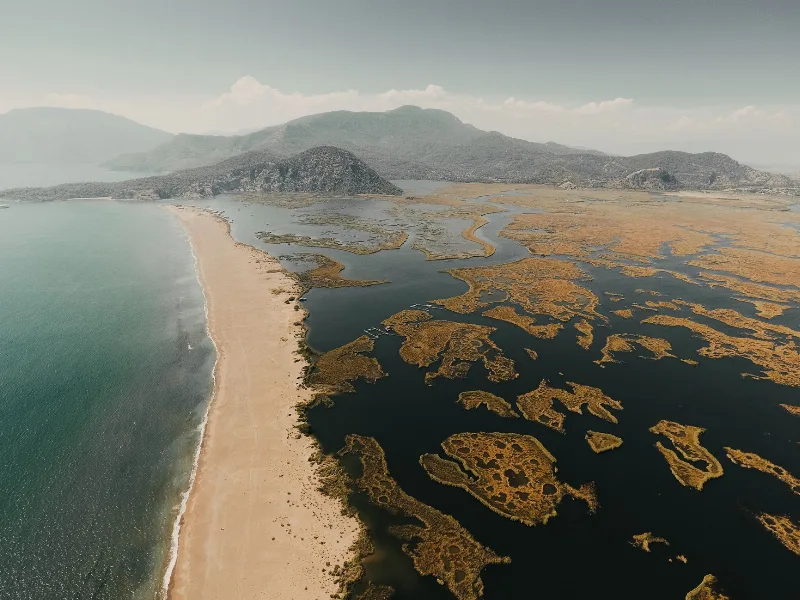
4-Day Marmaris and Dalyan Route
A four-day linear route that starts in Marmaris, crosses the Gulf of Gökova and Lake Köyceğiz, and ends around the river, rock tombs and turtle beach of Dalyan.
Explore →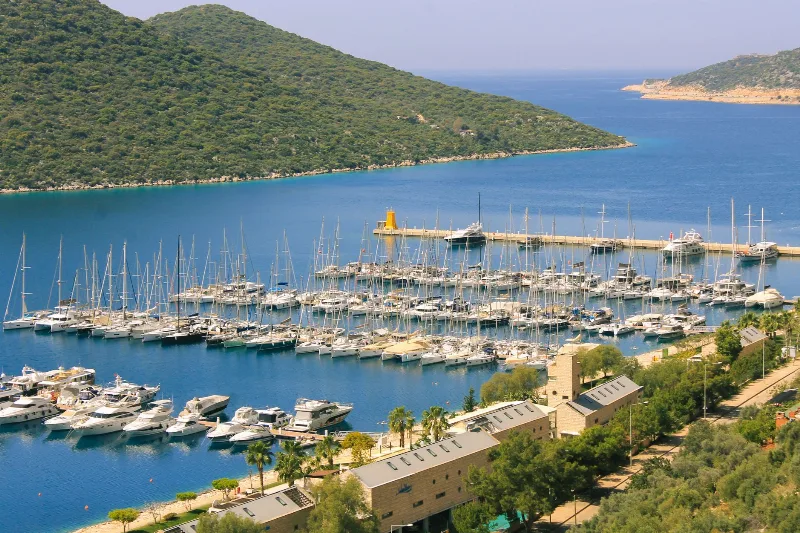
5-Day Fethiye to Kaş Lycian Coast Route
A five-day linear route along the Lycian coast from Fethiye to Kaş, linking Ölüdeniz, Kabak, the Xanthos valley, Patara and Kalkan by road and on foot.
Explore →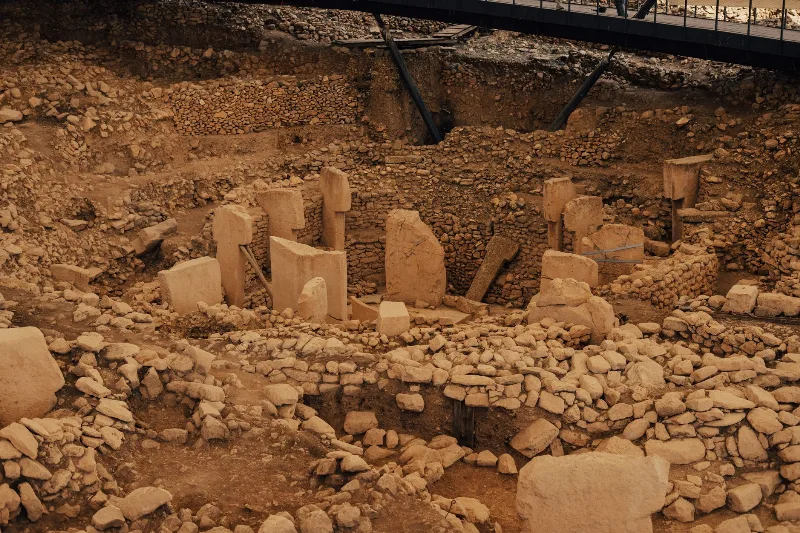
4-Day Southeastern Anatolia Route: Gaziantep to Mardin via Şanlıurfa
A four-day linear route across Southeastern Anatolia, linking the historic cities of Gaziantep, Şanlıurfa and Mardin by road, with the Neolithic site of Göbeklitepe and the ancient settlement of Harran fitted into the middle of the journey.
Explore →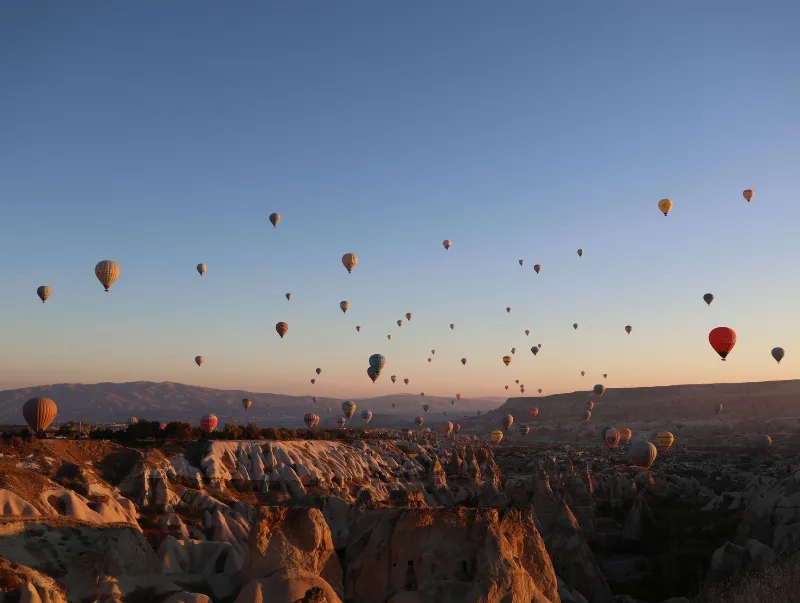
3-Day Cappadocia Route
A practical three-day Cappadocia route that starts in Göreme, heads south to the underground cities and the Ihlara Valley, then continues north through Zelve and Avanos before finishing in Ürgüp.
Explore →Related content
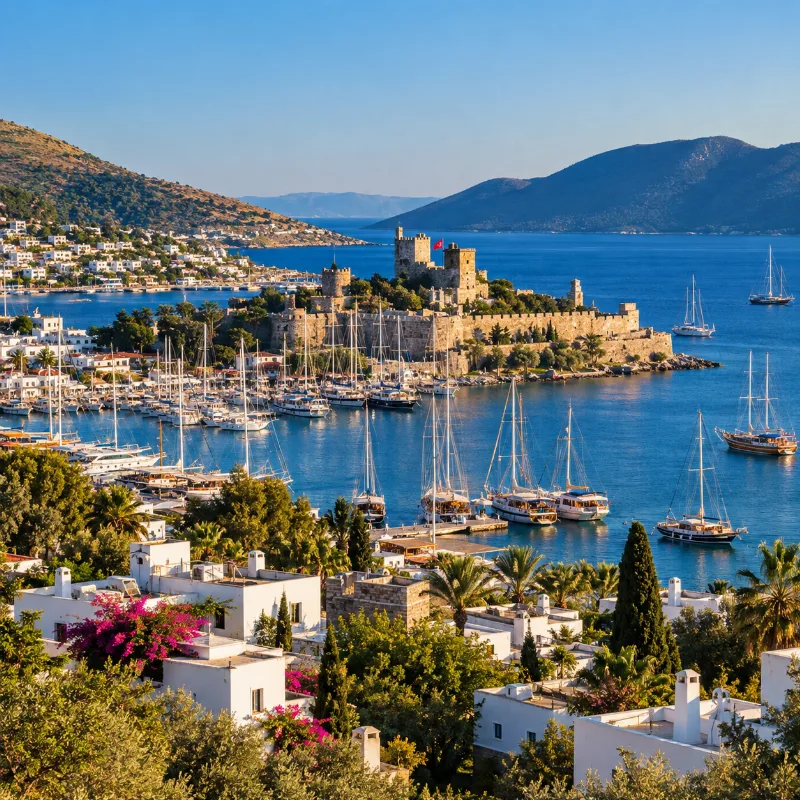
Bodrum
Bodrum is a coastal district of Muğla Province known for its whitewashed architecture, castle, Aegean coastline, bays and ancient Halicarnassus heritage.
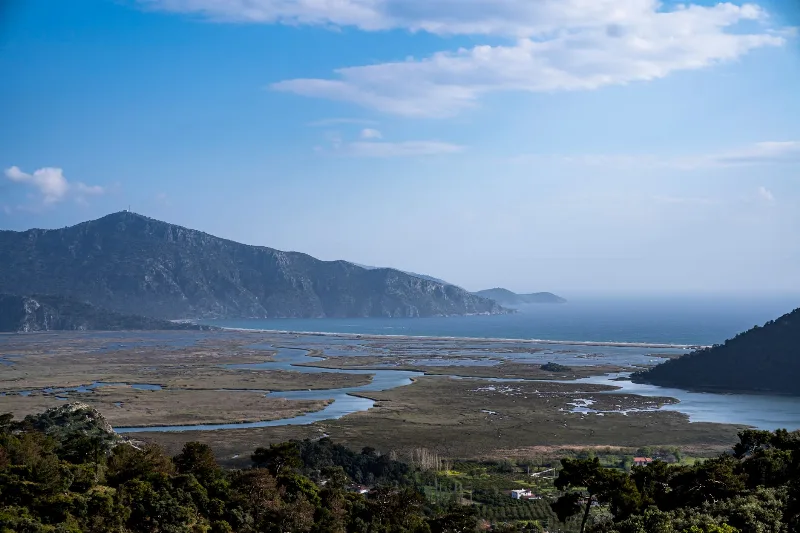
Muğla
Muğla is a captivating province in southwestern Türkiye, renowned for its stunning Aegean coastline and rich cultural heritage.
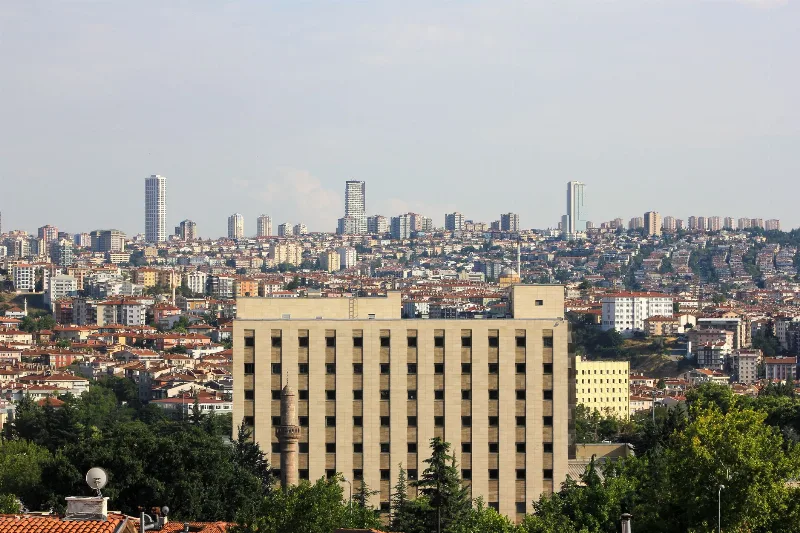
Ankara
Ankara is the capital of Türkiye and the country's second-largest city, set on the high plateau of Central Anatolia and defined by its republican institutions, its long pre-Ottoman history and the mausoleum of Mustafa Kemal Atatürk.
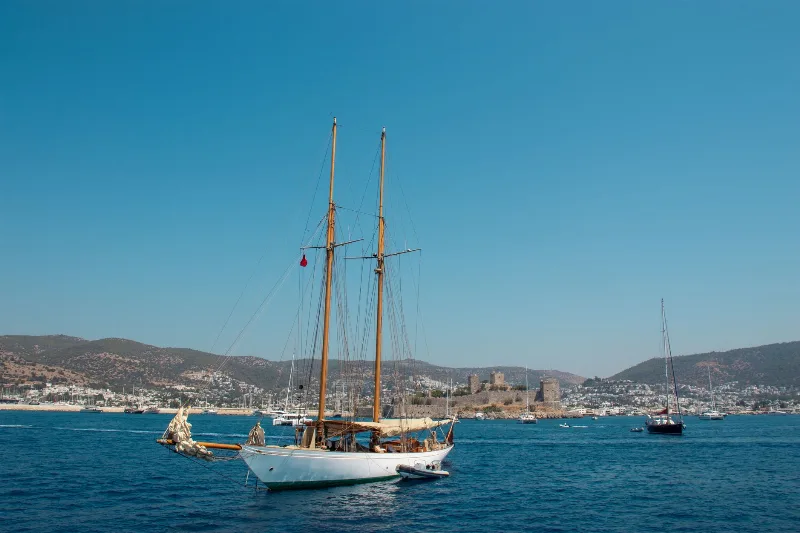
Bodrum Castle
Bodrum Castle, also called the Castle of St. Peter, is a 15th-century fortress built by the Knights of St. John in Bodrum, Muğla. It now houses the Museum of Underwater Archaeology, with its towers, dungeons and shipwreck collections open to visitors.
Gümüşlük
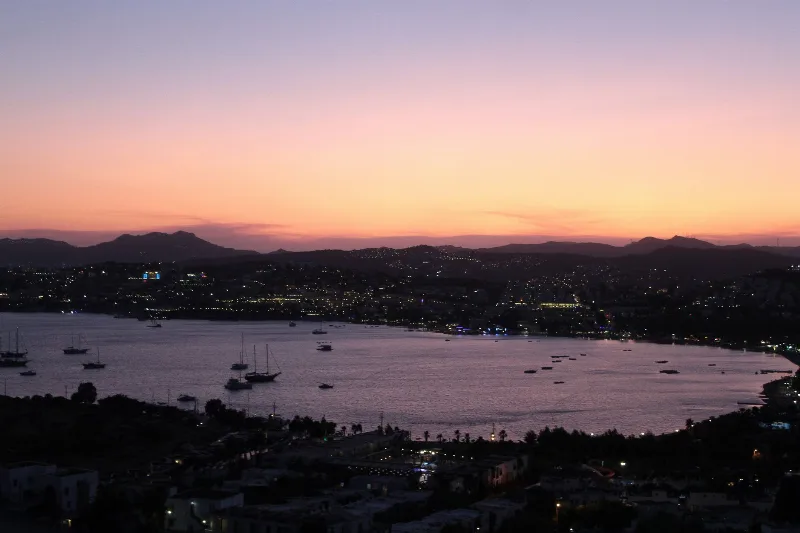
Gümüşlük is a former fishing village on the western tip of the Bodrum peninsula in Muğla, Türkiye, built over the ancient city of Myndos and known for its sunset views across the bay and its seafood culture.
Yalıkavak
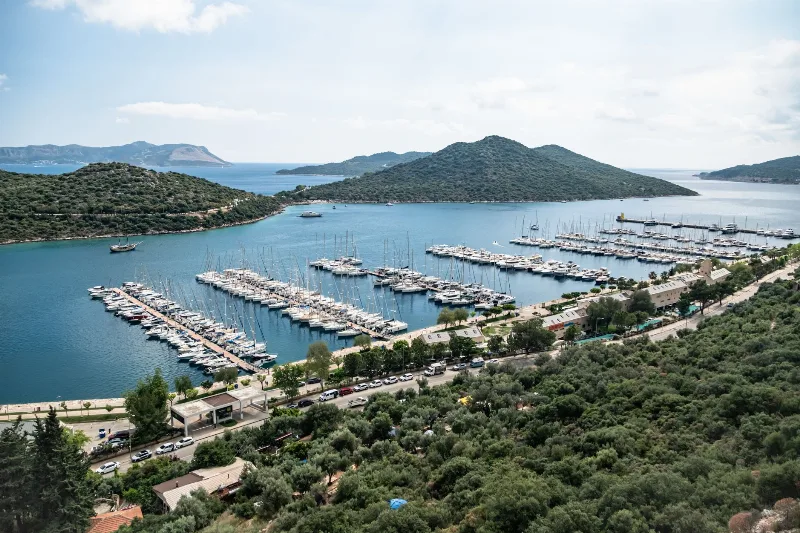
Yalıkavak is a coastal neighbourhood of Bodrum district in Muğla Province, on the northern shore of the Bodrum Peninsula. It is known for its large marina, a group of old stone windmills on the ridge above the bay, and a town centre that still carries traces of its fishing-village past.