
Side
Side is an ancient Pamphylian port city on a peninsula in Antalya Province, Türkiye, known for its well-preserved Roman theatre, the temples of Apollo and Athena, and a museum housed in Roman baths. It flourished under Hellenistic and Roman rule and was abandoned by the 10th century, leaving extensive ruins that visitors can explore today.
Side is an ancient city located on a peninsula along the Mediterranean coast of southern Türkiye, within the Antalya Province near the modern town of Manavgat. Founded by Greek colonists, it developed into one of the most significant ports of the Pamphylian region, flourishing through Hellenistic, Roman, and Byzantine periods. Its extensive ruins—including a well-preserved Roman theatre, the prominent temples of Apollo and Athena, and a museum housed in ancient baths—offer a comprehensive view of a classical city that was later abandoned and partially buried until modern excavations.
Where Is Side Located and How to Reach It
Side sits on a small peninsula that juts into the Mediterranean, approximately 75 kilometres east of Antalya’s city centre. The site is now partly occupied by the modern resort town of Side, which wraps around the ancient ruins. The peninsula has two sandy beaches, one on the east and one on the west, and the ancient harbour area lies at its southern tip.
Reaching Side is straightforward by road. The D400 highway connects Antalya and Manavgat, and from Manavgat a local road leads south to Side, about 5 kilometres away. Regular buses and minibuses (dolmuş) run from Antalya’s bus terminal and from Manavgat. Visitors travelling by car will find parking areas near the main entrances to the archaeological zone. The nearest airport is Antalya Airport, about 70 kilometres away.
The Historical Development of Side
According to ancient tradition, Side was founded in the 7th century BC by Greek settlers from Cyme in Aeolis. The name Side is derived from the Anatolian word for pomegranate, a fruit that appears on the city’s coins. During the 6th and 5th centuries BC, Side fell under Lydian and then Persian control. Alexander the Great took the city in 333 BC, and after his death it passed to the Seleucid Kingdom and later to the Kingdom of Pergamon. In 133 BC, the Pergamene king Attalus III bequeathed his realm to Rome, and Side came under Roman control.
Side reached its peak during the Roman Imperial period, particularly in the 2nd and 3rd centuries AD. It was a thriving port and a centre of trade, shipbuilding, and culture. Many of the monumental structures visible today—the theatre, the agora, the baths, and the temples—date from this era. The city also served as a naval base and a bishopric in the Byzantine period. However, a combination of earthquakes, Arab raids, and the silting of its harbour led to a gradual decline. By the 10th century AD, Side was largely abandoned. A small Seljuk-era settlement later occupied part of the site, but the ancient city was not extensively rebuilt.
The Theatre of Side
The theatre of Side is among the best-preserved Roman theatres in Anatolia. It was built in the 2nd century AD on the foundations of an earlier Hellenistic theatre. With a capacity of approximately 15,000 spectators, it originally featured a two-storey stage building (scaenae frons) decorated with columns, statues, and reliefs. The cavea, or seating area, is cut into the hillside and is divided by a diazoma walkway. In late antiquity, the theatre was adapted for other uses, including as a venue for gladiatorial games and, according to some evidence, as an open-air church. The structure survived largely intact because it was covered by earth and debris after the city’s abandonment. Modern restoration has re-erected some columns and consolidated the seating tiers. Visitors can climb to the top of the cavea for a panoramic view over the ruins and the sea.
Temples of Apollo and Athena
At the southern tip of the peninsula, near the ancient harbour, stand the remains of two temples dedicated to Apollo and Athena, the city’s patron deities. The Temple of Apollo is the more prominent, with several columns re-erected in the 1980s. It was a peripteral temple in the Corinthian order, likely built in the 2nd century AD, though some scholars suggest a Hellenistic predecessor. The temple originally had 6 columns on the short sides and 11 on the long sides. Adjacent to it was the smaller Temple of Athena. A Byzantine basilica was later built over the temples, and their stones were reused in other structures. Today, the Temple of Apollo is particularly notable at sunset, with its columns framed against the Mediterranean. The area around the temples is a public promenade, and the ruins are illuminated at night.
The Agora, Baths, and Other Monuments
Behind the harbour, the ancient city spreads out with a grid of streets. The most prominent civic structure is the large agora, or marketplace, a square surrounded by colonnades. In its centre are the remains of a circular temple dedicated to Tyche, the goddess of fortune, built in the 2nd century AD. Nearby, a monumental nymphaeum, or fountain, once supplied water to the city. Two large bath complexes have been excavated: the Harbour Baths, which now house the Side Museum, and the Great Bath, located further north. These baths featured typical Roman amenities such as hot and cold rooms (caldarium and frigidarium), and some areas were decorated with marble. Other surviving structures include the city walls, the necropolis with rock-cut tombs, and the remains of a colonnaded street that connected the harbour to the theatre.
The Side Museum
The Side Museum is housed in a restored Roman bath building from the 5th century AD. Its collection includes artefacts discovered in Side and the surrounding region, spanning from the Hellenistic to the Byzantine period. Highlights include statues of gods and emperors, sarcophagi, inscriptions, reliefs, and coins. A special section is dedicated to the history of the ancient city and its excavations. The museum provides context for the ruins outside and is a useful starting point for understanding the site’s chronology.
Later History and Abandonment
Side continued as a Byzantine bishopric until the 10th century. Earthquakes, including a major one in the 6th century, and repeated Arab raids in the 7th and 8th centuries weakened the city. The harbour, which had already begun to silt up, became unusable, cutting off the city’s economic lifeline. By the 10th century, Side was abandoned. A small Seljuk village existed on the site during the 12th and 13th centuries, and later a few Ottoman-era structures were built. In 1947, Turkish archaeologists began systematic excavations, which have continued intermittently. Today, the site is a major tourist attraction and an open-air museum.
What to See and Do at Side
Visitors can explore the ancient city on foot. The main archaeological zone includes the theatre, the agora, the baths and museum, the temples, and the necropolis. A walk along the colonnaded street gives a sense of the city’s original layout. The peninsula’s two beaches offer opportunities for swimming and relaxation. The Temple of Apollo is particularly striking at sunset, and the theatre sometimes hosts performances in summer.
Practical Information for Visitors
The best times to visit Side are spring, from April to May, and autumn, from September to October, when temperatures are moderate and the site is less crowded. Summer can be very hot, with temperatures often exceeding 35°C, so early morning or late afternoon visits are advisable. Comfortable walking shoes are essential, as the terrain is uneven with ancient stones, steps, and slopes. There is an entrance fee for the main archaeological site and a separate fee for the museum. The site is generally open daily, but hours can vary by season. Visitors should bring sun protection, water, and a hat. Some areas, such as the theatre, involve climbing; accessibility for wheelchairs is limited due to the ancient paving and stairs.
Nearby Historic and Natural Sites
Side is close to several other places of interest. The town of Manavgat, about 5 kilometres north, is known for its waterfalls and river. The ancient city of Aspendos, famous for its Roman theatre, lies about 30 kilometres west. Further west, Perge and the Antalya Museum offer additional insights into Pamphylian and Roman history. Inland, the ancient city of Selge is located in the Taurus Mountains. These sites, together with Side, form a rich archaeological circuit along the Turkish Mediterranean coast.
Routes
All routes →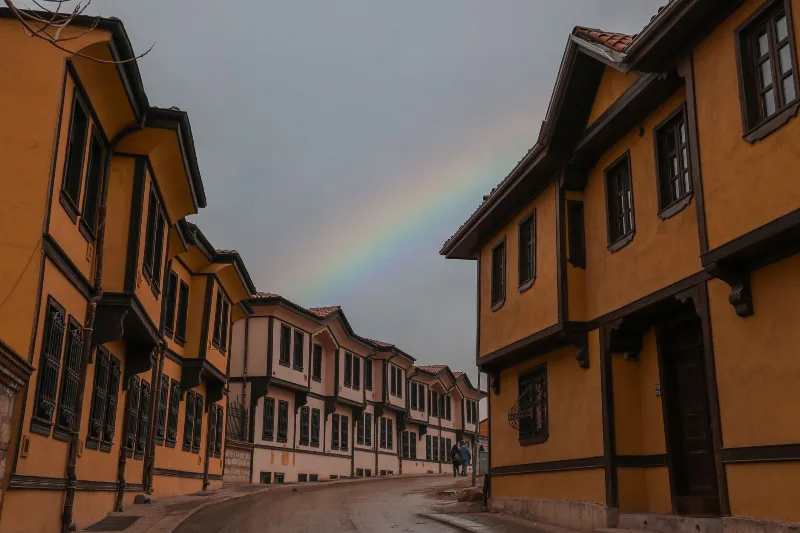
1-Day Eskişehir Route
A compact one-day walking route through Eskişehir, moving from the timber houses of Odunpazarı down to the Porsuk River promenade and finishing among the cafés and trams of the modern centre.
Explore →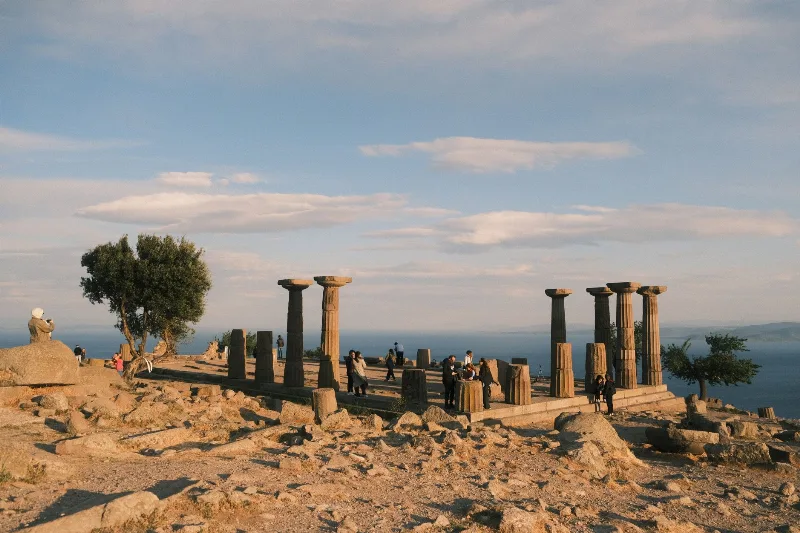
4-Day North Aegean Coast Route
A four-day linear route along the North Aegean coast from Assos to İzmir, with stops at Ayvalık, Cunda, Dikili, Çandarlı, Bergama and Foça. The itinerary is designed for a realistic coastal and inland road trip by car.
Explore →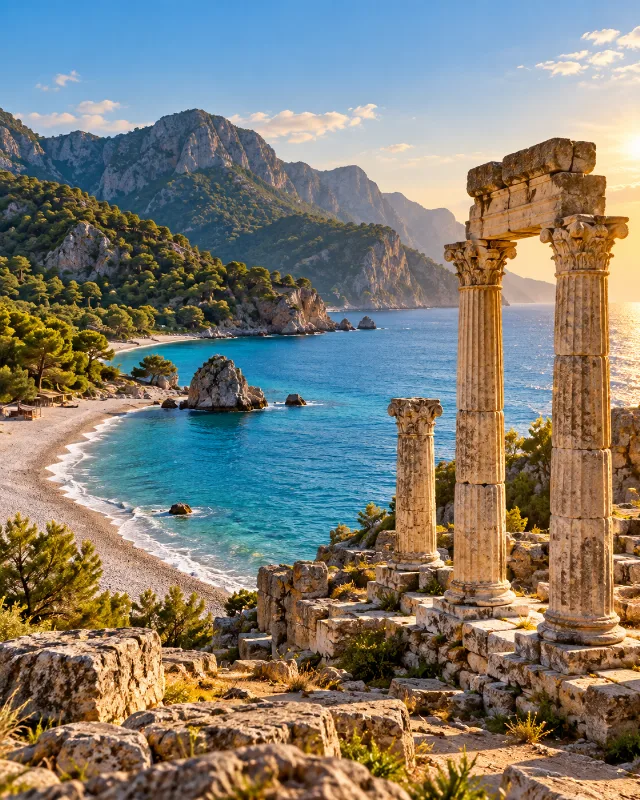
3-Day Antalya Ancient Coast Route
A three-day route combining Antalya’s old city with Perge, Aspendos, Side, Olympos and the Mediterranean landscapes around Çıralı.
Explore →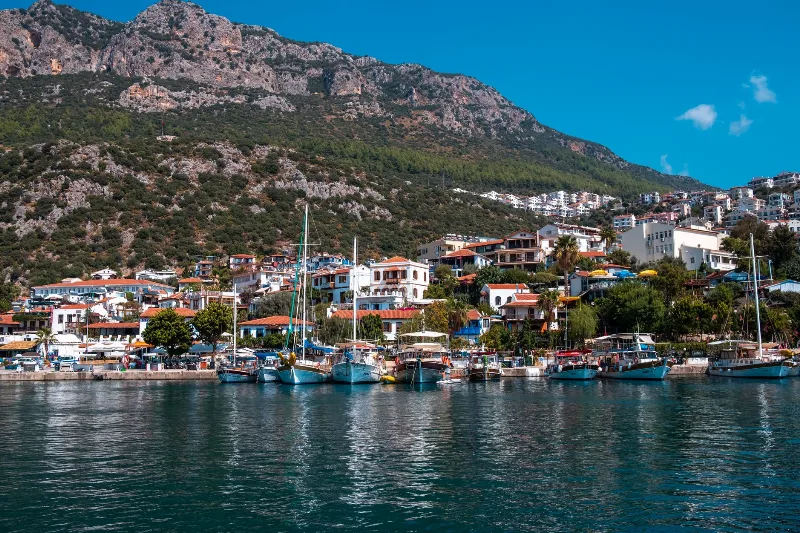
5-Day Antalya to Fethiye Coastal Route
A five-day driving itinerary along Turkey's Mediterranean shore, linking Antalya, Phaselis, Olympos, Demre, Kekova, Kaş, Kalkan, Patara and Fethiye. The route is linear, coastal for most of its length, with short inland detours to Lycian ruins.
Explore →Related content
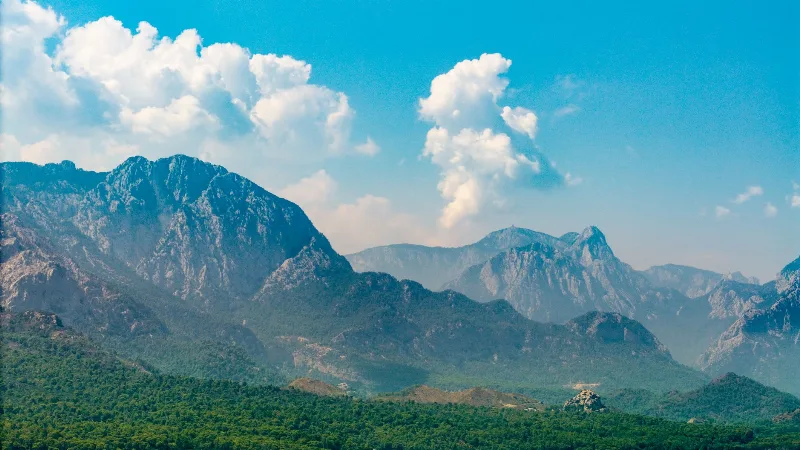
Antalya
Antalya offers a unique blend of vibrant history and stunning natural beauty, making it a must-visit destination in Türkiye.
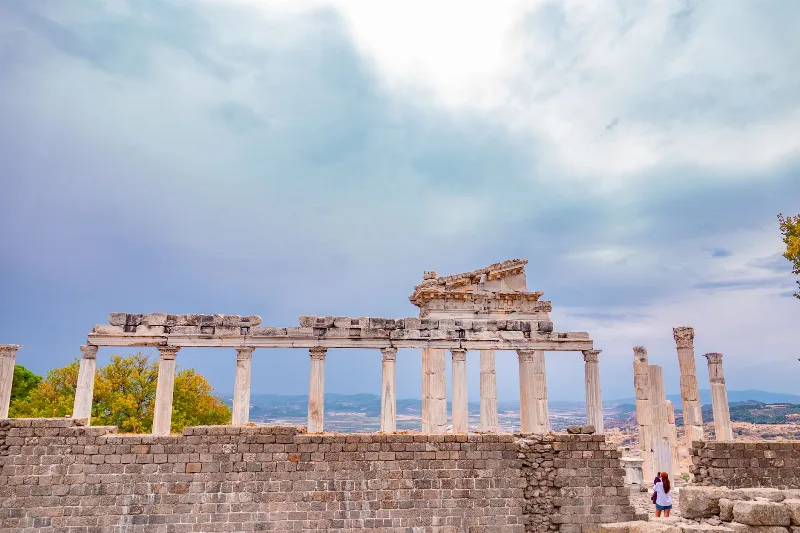
Pergamon
Pergamon was the Hellenistic capital of the Attalid dynasty in western Türkiye, built around a steep acropolis above the modern town of Bergama. Its Great Altar, theatre and Sanctuary of Asclepius make it one of the most important archaeological sites in Anatolia and a UNESCO World Heritage Site.
Pergamon
Pergamon is an ancient Greek city in Aeolis, today the modern town of Bergama in İzmir Province, Türkiye. Its acropolis, library and Great Altar of Zeus, together with the Asclepion healing sanctuary, form one of the most important archaeological settings in the eastern Mediterranean.
Bergama and the Acropolis of Pergamon
Bergama in İzmir Province is the modern town beneath ancient Pergamon, where a hilltop acropolis, a healing sanctuary and a Roman basilica reveal centuries of Anatolian history.
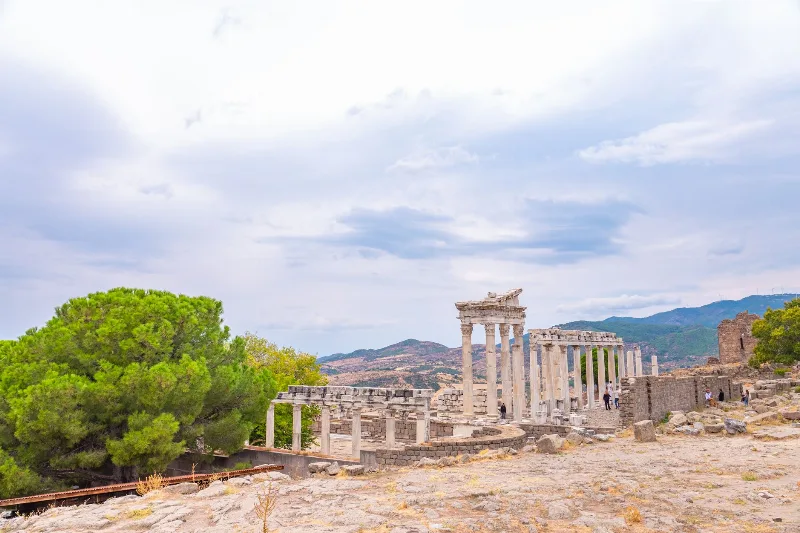
The Ancient City of Pergamon and Its Acropolis
Pergamon, now Bergama in Türkiye, is a UNESCO World Heritage Site with a dramatic acropolis, a Hellenistic theater, and a library that once rivaled Alexandria. Its ruins offer a deep dive into ancient history and culture.
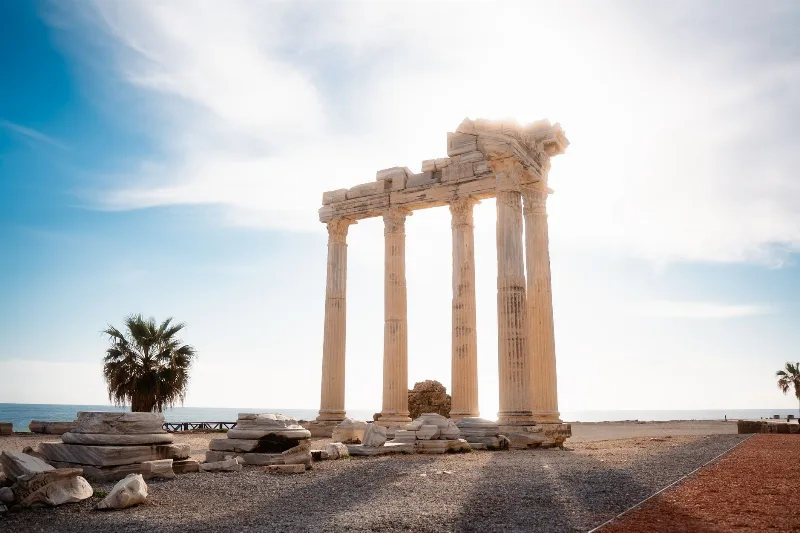
Side
Side is an ancient Greek harbour city on Türkiye's Mediterranean coast, known for the Temple of Apollo, a large Roman theatre and streets of ruins that visitors can still walk through. Its remains sit inside a modern town in the Manavgat district of Antalya Province.