
Lake Tuz
Lake Tuz (Tuz Gölü) is a hypersaline salt lake spread across Ankara, Konya and Aksaray in Central Anatolia, and one of the largest salt lakes in the world. Its shallow water, seasonal salt crust and flamingo colonies give it a character unlike any other lake in Türkiye.
Lake Tuz, known in Turkish as Tuz Gölü, is a hypersaline lake in the Central Anatolia region of Türkiye. It lies across the provinces of Ankara, Konya and Aksaray, roughly between the towns of Şereflikoçhisar to the east and Cihanbeyli to the west. It is one of the largest salt lakes in the world and the second-largest lake in Türkiye by surface area. Its defining characteristic is salinity rather than depth: the water carries salt concentrations many times higher than seawater, and much of the lake is only a metre or two deep.
A Closed Basin With No Outlet
Lake Tuz occupies a wide, shallow basin in the middle of the Central Anatolian plateau. Water reaches it from small seasonal streams, from snowmelt and from groundwater, but no river drains the lake. In a region with hot, dry summers and limited rainfall, the water that collects is lost mainly through evaporation. Because the salts dissolved in that water have nowhere to go, they stay behind and concentrate over time. This is what has turned the basin into a hypersaline lake.
Surface area shifts considerably through the year, expanding in the wetter months and shrinking in summer. Average depth is small, generally around one to two metres across much of the lake, and even the deeper parts remain shallow. The lake floor is flat and covered in salt-rich sediments and mud, which is why the shoreline changes position so easily with rainfall and evaporation.
Where the Lake Lies and How the Area Is Reached
The lake sits in a basin that is divided between three provinces. The eastern shore falls within Ankara Province near Şereflikoçhisar, the western shore within Konya Province near Cihanbeyli, and the southern edge reaches into Aksaray Province. The main highway linking Ankara with Aksaray runs close to the eastern side of the lake, which makes the northern and eastern shores the most straightforward parts of the lake to approach by road. Distances between settlements in this part of Central Anatolia are long, and the shoreline is largely open, flat and undeveloped, with few points of reference.
Salt Flats and Seasonal Change
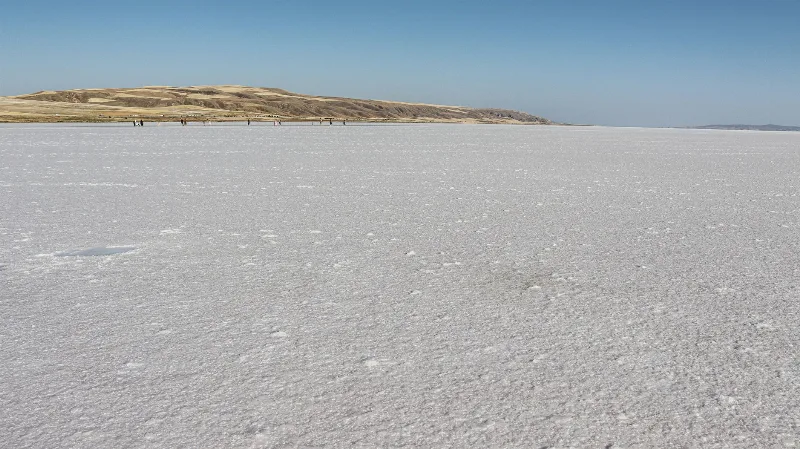
The lake looks noticeably different from one season to the next. In winter and early spring, meltwater and rain spread a wide, shallow sheet of water across the basin, and the surface takes on a pale, reflective appearance. As spring progresses, the water begins to withdraw. By late summer, the combination of heat and evaporation can expose broad expanses of white salt crust, and parts of the lake appear as a flat salt plain rather than open water. This crust forms as dissolved salt crystallises on drying ground.
Autumn is transitional: the crust and shallow pools coexist before the winter rains return. Because the lake is shallow and the basin is open, wind moves across the surface easily, and the position of the water's edge can change within a single season depending on how dry the year has been.
Flamingos and Other Wildlife
Lake Tuz is important for birdlife, and its best-known inhabitant is the greater flamingo. The lake supports one of the largest flamingo breeding colonies in Türkiye, with birds gathering in spring and nesting while water levels are suitable. Flamingos and other waterbirds are drawn to the lake by its dense populations of brine shrimp and other tiny salt-tolerant organisms, which thrive where fish cannot survive because of the salinity.
The wider bird community using the basin includes a range of waterbirds that stop at the shallow water and mudflats during migration and the breeding period. Because conditions change year to year, the number of birds and the timing of nesting vary, and in dry years the breeding activity can be reduced.
The Surrounding Steppe Landscape
The lake is set within the dry steppe of the Central Anatolian plateau. There is no forest around the basin; instead the land is open and largely treeless, covered with low grasses and shrubs adapted to arid conditions. Cereal fields appear near the settled areas, while the most exposed ground close to the lake is bare and salt-affected. Low hills and gentle plateaus enclose the basin and separate it from neighbouring parts of the plateau. The overall impression is of a flat, bright, windswept environment whose character is dominated by salt and by the scarcity of water.
Protection Status and Salt Production
Lake Tuz has been designated a Special Environmental Protection Area, a status that recognises its ecological value alongside its economic role. Salt has been collected from the lake for a long time, and evaporation ponds and salt-working areas operate in parts of the basin, supplying a significant share of Türkiye's salt. This dual identity, as both a protected natural area and a working salt landscape, shapes how the lake is managed. Falling water levels and reduced inflows have been a recognised concern, since they affect both salinity patterns and the flamingo colonies that depend on the lake.
Practical Conditions Before Visiting
Visitors should expect a continental climate with hot, dry summers and cold winters. There is very little shade, and the reflective salt and pale ground create strong glare in bright light, so sun protection is sensible. The salt crust can look firm but may be soft or muddy beneath, particularly near the water's edge. Much of the shoreline is remote and lacks services, and the nearest towns are some distance away, so planning fuel, water and time is worthwhile. The lake is best understood as a natural and working landscape rather than a conventional recreation area, and access should be treated with care because of the protected status and the fragile ground.
Related Natural Features in the Region
Lake Tuz lies in a part of Central Anatolia where several other distinct landscapes can be found within a reasonable distance. South of the lake near Aksaray, the Ihlara Valley cuts through volcanic rock, and the dormant volcano Mount Hasan (Hasandağı) rises above the surrounding plain. Further east, the Cappadocia region around Nevşehir is known for its eroded volcanic terrain, while the Konya plain to the west contains sinkhole depressions known as obruks. Together these features show how varied the volcanic and karst landscapes of the Central Anatolian plateau can be, even though the salt lake itself is dominated entirely by water, salt and open steppe.
Beaches & bays
See the coast →
Related content
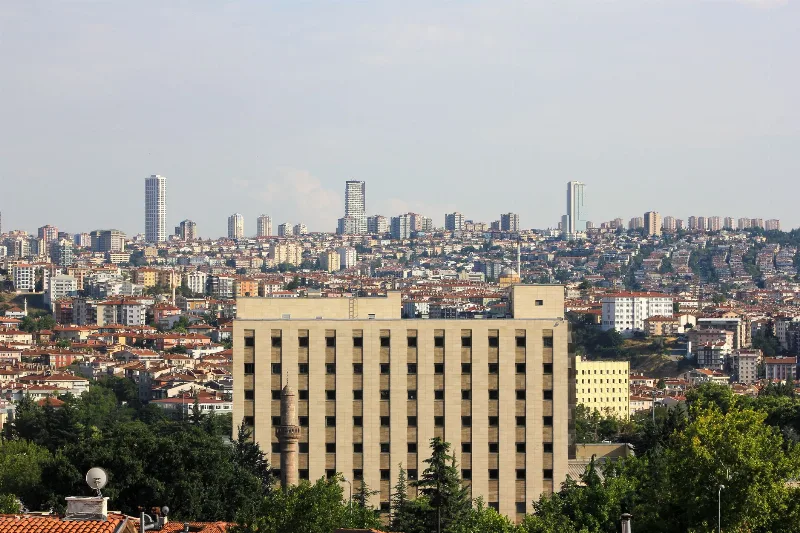
Ankara
Ankara is the capital of Türkiye and the country's second-largest city, set on the high plateau of Central Anatolia and defined by its republican institutions, its long pre-Ottoman history and the mausoleum of Mustafa Kemal Atatürk.
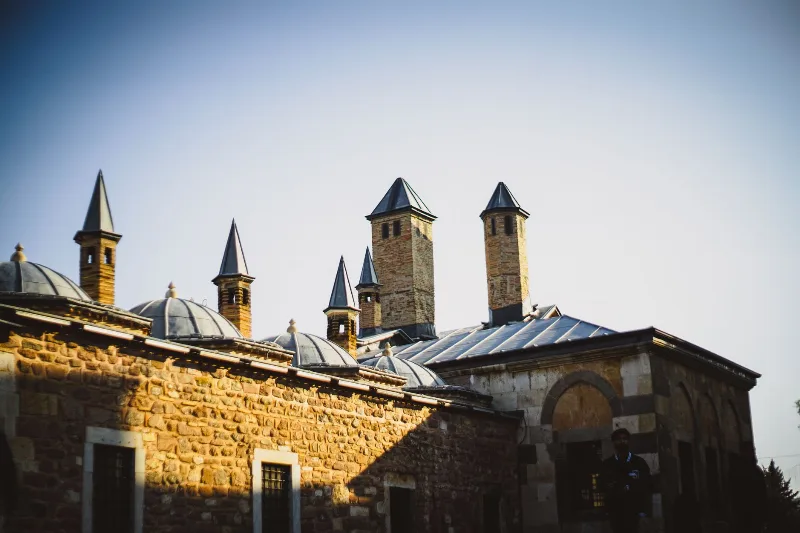
Konya
Konya is a city known for its spiritual essence and cultural heritage, home to the Mevlana Museum and the whirling dervishes.
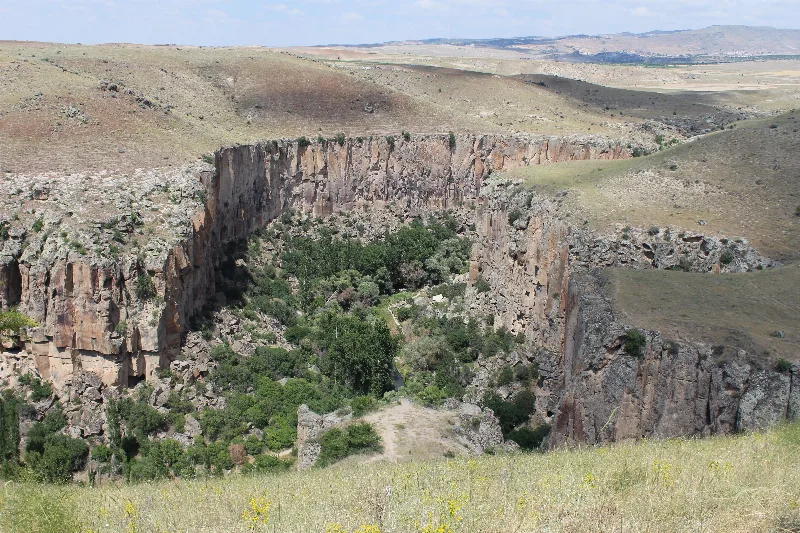
Aksaray
Explore Aksaray, Central Anatolia: history, standout sights, landscapes, local food and practical travel advice for an unforgettable journey in Türkiye.
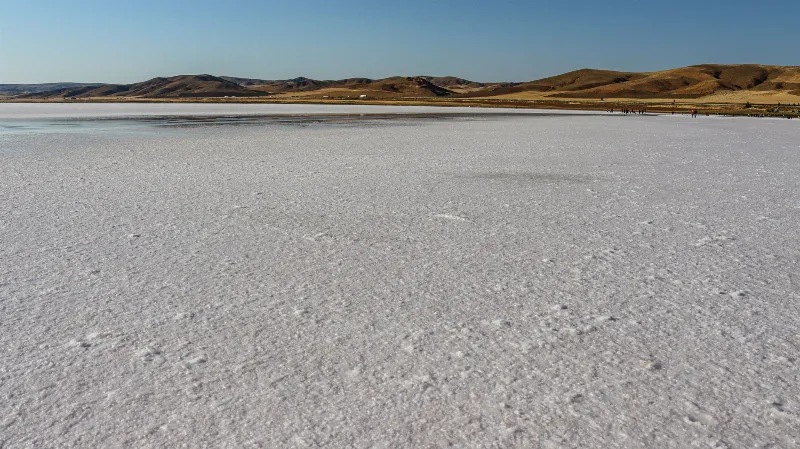
Lake Tuz
Lake Tuz is a hypersaline lake in Central Anatolia and the second-largest lake in Turkey, known for its salt crust, its salt industry and its flamingo colonies.
Flamingo Migration in Lake Tuz, Aksaray
Every spring, Lake Tuz in Aksaray becomes one of the Mediterranean's most important flamingo breeding sites, with thousands of birds nesting on its shallow, hypersaline flats through summer.

Central Anatolia Region
Central Anatolia is the historic heartland of Türkiye, known for its wide plains, extraordinary rock formations, ancient civilizations and traditional towns. From the fairy chimneys of Cappadocia to the cultural landmarks of Ankara and Konya, the region reveals the rich history and natural beauty of inner Anatolia.