
Adapazarı Onions
Adapazarı onions are a locally distinctive onion type grown on the fertile plain around Adapazarı in Sakarya province, where deep alluvial soils and a mild, transitional climate produce bulbs noted for their mild sweetness and their ability to keep well after harvest.
Adapazarı onions are the onion crop associated with the Adapazarı district of Sakarya province in Türkiye's Marmara region. They are a vegetable grown for their bulbs, and the name refers not to a single named variety but to the onions produced on the flat agricultural land that surrounds the town of Adapazarı. The connection between the product and the place rests on soil and climate: the plain is built up from deep alluvial material carried and deposited by the Sakarya River, and the district's temperate, moisture-rich conditions allow the crop to grow steadily through the season. The result is an onion that is comparatively mild and sweet on the palate, with firm bulbs that store well after curing.
Where Adapazarı Onions Are Grown
The growing area centres on the Adapazarı plain, a broad, low-lying expanse of farmland in Sakarya province that stretches around the district centre and towards the Sakarya River valley. This is one of the more productive agricultural landscapes in the Marmara region, and onions take their place there alongside a wide range of field crops and vegetables. The plain is not an isolated pocket of cultivation; it forms part of a continuous farming belt in which the river, its tributaries and the surrounding low hills define where irrigation water and workable land are available.
Because the fields sit at low elevation, they warm early in spring and hold moisture in the soil profile, two conditions that matter greatly for a shallow-rooted bulb crop. Away from the flat plain, as the land rises towards the surrounding hills, the character of the farming changes and onions become a less dominant element of the landscape.
Why the Sakarya Plain Suits the Onion Crop
Onions perform best on deep, loose, well-drained soils that allow the bulb to expand evenly without waterlogging. The alluvial soils of the Adapazarı plain meet this requirement well: they are typically deep and relatively stone-free, with good structure for root development. Where drainage is poor, onions are vulnerable, and the plain's gently sloping, river-formed terrain helps avoid the standing water that damages bulbs.
Climate is the second pillar of the region's suitability. Sakarya sits in a transitional zone between the humid Black Sea coast and the milder conditions of the Marmara basin, so the district experiences warm summers with meaningful atmospheric moisture and winters that are cool but rarely severe. For onions this means a long, even growing period rather than a short, stressed one. Steady moisture during bulb swelling supports the formation of large, uniform bulbs, and a relatively gentle close to the season allows the tops to fall over and the necks to dry naturally before lifting.
From Seedbed to Harvest
Onions in the district are cultivated in the usual onion cycle. Seed may be sown directly in the field or started in seedbeds and transplanted as seedlings once the soil has warmed; in either case, the young plants establish during the cooler, wetter part of spring while competition from weeds is still manageable. Through early summer the plants build leaves, which are the engine of bulb formation.
Bulbing begins as day length increases and temperatures rise. During this phase water demand is at its highest, and irrigation on the plain is critical to the size and quality of the crop. Towards the end of summer the necks soften and the tops bend over, signalling that the bulbs have matured. Harvesting follows: the onions are lifted, the roots and dried tops trimmed, and the bulbs left to cure. Timing matters, since bulbs lifted too early do not store well and bulbs left too long in wet ground can spoil.
What Distinguishes the Onions of Adapazarı
The most frequently noted characteristic of the onions from this plain is their relatively mild, sweet flavour, which makes them palatable raw as well as cooked. Sweetness in onions is linked to the balance between sugars and the sulphur compounds responsible for sharpness, and the growing conditions of the district — steady moisture and moderate heat rather than drought stress — favour a gentler profile. The bulbs are generally described as firm and well-shaped, with dry outer scales that protect the interior during storage.
That storage quality is not a small point. An onion that keeps for months allows growers to sell beyond the harvest window, and it is one of the practical reasons the crop maintains a place in the district's rotation. The combination of a mild flavour and a long shelf life gives Adapazarı onions value both to households and to the trade that moves produce out of the province.
Curing, Storage and Use After Harvest
After lifting, the crop is cured — traditionally in the field or in open, airy shelters — until the neck tissue is fully dry and the outer skin has tightened. Well-cured onions are then stored in cool, dry, ventilated conditions, often in slatted crates or loose piles that allow air to move around the bulbs. Poor ventilation and damp are the main enemies of stored onions, since both encourage rot.
In the kitchen, Adapazarı onions are used much as onions are used across Türkiye: sliced raw into salads, sautéed as the base of vegetable dishes, and added to stews, stuffed vegetable preparations and pilafs. Their mildness means they can carry a larger presence in raw preparations than sharper onions, and they are also suited to being cooked slowly until sweet.
Onions in the Local Agricultural Landscape
Sakarya's agriculture is diverse, and onions form part of that diversity rather than the whole of it. Vegetable and field crop production on the plain supports a local economy of growers, traders and transport, and the proximity of Adapazarı to major urban markets in the Marmara region is part of why vegetable cultivation of this kind has remained viable. Onions are well suited to this setting: they are a manageable crop for medium-sized holdings, they store and travel reasonably well, and they fit into rotation sequences with other crops that help interrupt soil-borne problems.
The crop also has a visible seasonal rhythm in the district. Fields are green with onion tops in late spring, the harvest brings activity to the roads around the plain in late summer, and curing and storage work continue after the fields are cleared.
Other Places Where the Crop Is Grown
Onions are grown widely across Türkiye, and the Adapazarı plain is one of several areas where the crop has a local identity. Other parts of Sakarya province and neighbouring districts of the Marmara region also produce onions, and the wider region's vegetable-growing areas supply substantial volumes to national markets. The Adapazarı name remains the strongest local association because of the concentration of cultivation around the district and the reputation the onions have built within Türkiye for their mildness and keeping quality.
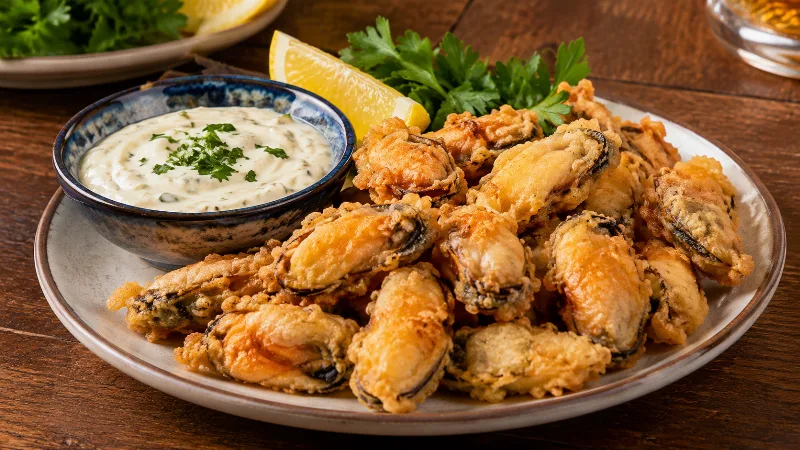
Midye Tava
Midye tava is a Turkish street food of battered, deep-fried mussels on skewers, eaten hot with tarator sauce and lemon. It is closely tied to Istanbul and the mussel-rich Marmara and Aegean coasts.
Explore →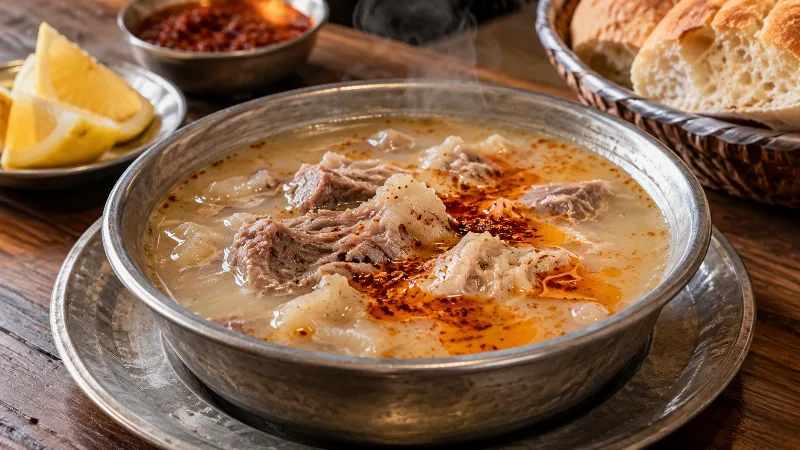
Kelle Paça Çorbası
Kelle Paça Çorbası is a traditional Turkish soup made from sheep's head and feet, known for its thick, gelatinous texture and restorative qualities. It is especially popular in Eastern and Southeastern Anatolia and is commonly eaten for breakfast or as a late-night meal.
Explore →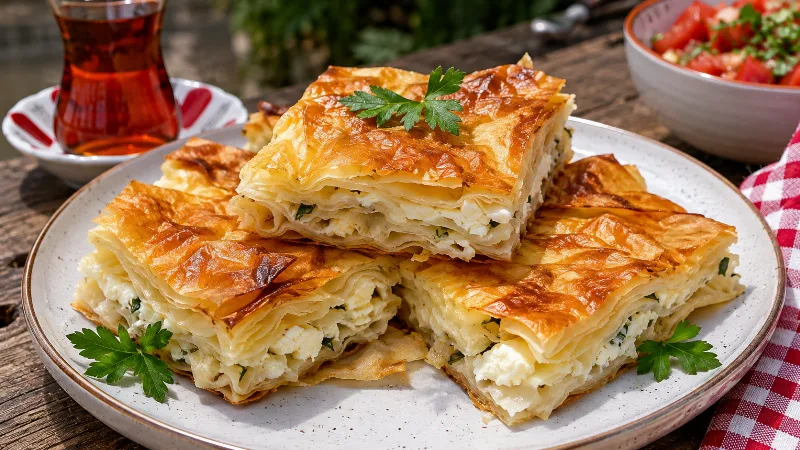
Su Böreği
Su Böreği is a layered Turkish savory pastry made by briefly boiling thin yufka sheets, then baking them with cheese and parsley. Its soft interior and golden top distinguish it within the wider börek family.
Explore →Related content
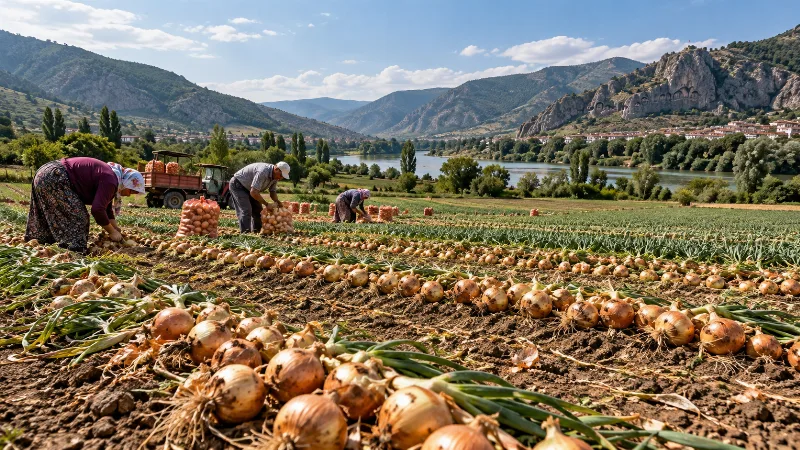
Amasya Onions
Amasya onions are a pungent, long-keeping onion variety tied to the plains and river valleys of Amasya province in northern Türkiye. The region's transitional climate and fertile alluvial soils give the crop its firm bulbs and storage quality.
Cağ Kebabı
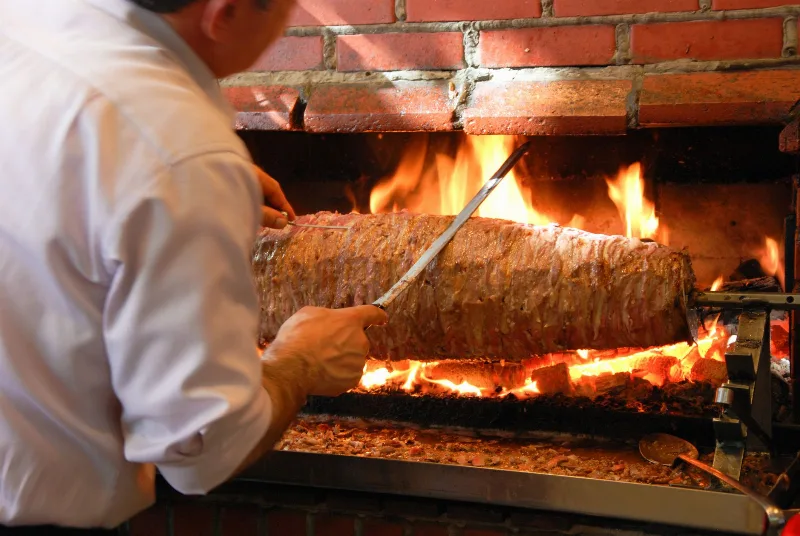
A regional lamb kebab from Erzurum, Cağ Kebabı is cooked on a horizontal rotisserie and served on skewers. Its tender, juicy meat and simple accompaniments make it a celebrated dish in eastern Turkey.

Tantuni
Tantuni is a traditional Turkish street food from Mersin, made with finely chopped beef sautéed with onions, tomatoes, and spices, then wrapped in lavash. It is known for its juicy, flavorful filling and is a staple of Mersin's culinary culture.

Lake Sapanca
Lake Sapanca is a long, narrow freshwater lake in the Sakarya–Kocaeli border zone of north-western Türkiye, formed in a tectonic basin close to the North Anatolian Fault and bordered by forested hills, orchards and reed-lined stream mouths.
Adana Kebabı
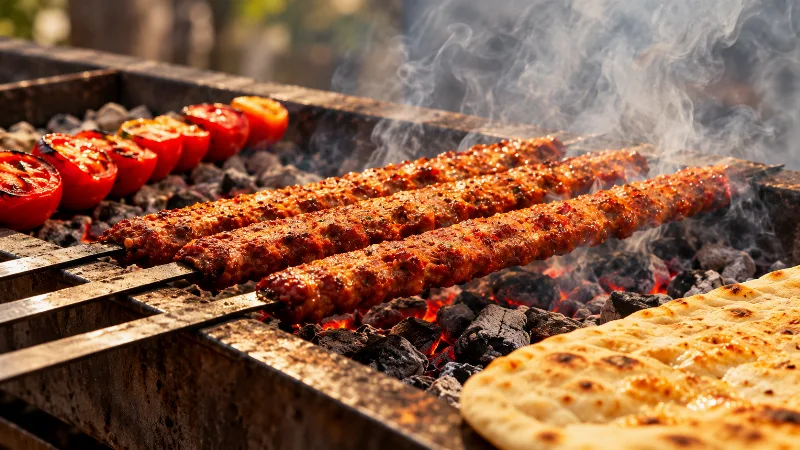
Adana kebabı is a spicy minced-lamb kebab from the southern Turkish city of Adana, moulded onto wide flat skewers and grilled over charcoal. Its heat, its hand-chopped meat and its distinctive flat skewer set it apart from other Turkish kebabs.
Testi Kebabı
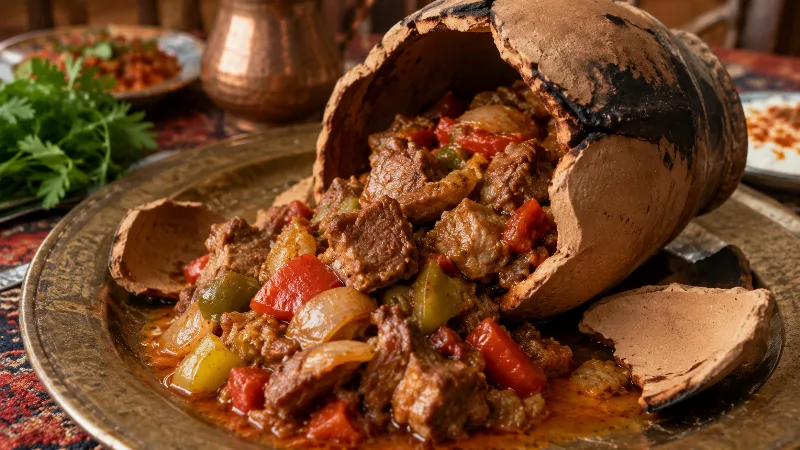
Testi Kebabı is a traditional Turkish dish from Cappadocia where meat and vegetables are slow-cooked in a sealed clay pot that is broken open at the table. The result is tender meat and rich, aromatic vegetables.