
Yozgat Lentils
Yozgat lentils are the green lentils grown on the high interior plateau of Yozgat province in Central Anatolia, where cold winters, dry summers and thin, well-drained soils suit a drought-tolerant legume better than most crops.
Yozgat lentils are green lentils cultivated on the high plateau of Yozgat province in the interior of Central Anatolia, Türkiye. In Turkish kitchens the large-seeded green lentil is known simply as yeşil mercimek, and Yozgat is one of the provinces most closely identified with its production. The association is rooted in geography rather than marketing: Yozgat is a cold, dry, elevated plateau, and the lentil is a cool-season legume that tolerates drought, poor soils and short growing seasons — the very conditions that limit what else the province can grow.
Where Yozgat Lentils Are Grown
Yozgat province lies in the Bozok region of Central Anatolia, roughly between Ankara to the west and Sivas to the east. The provincial capital sits at around 1,300 metres above sea level, and much of the surrounding farmland is a broad, gently rolling plateau punctuated by low hills and dry valleys. Lentils are grown as a dryland field crop across these plains, particularly in the flatter agricultural districts where rainfall is too low and unreliable for thirsty crops such as maize or sugar beet.
Yozgat is not a single-farm landscape. Cereals — mainly wheat and barley — dominate, and lentils are typically grown in rotation with them, alongside chickpeas and other pulses. This rotation is not incidental. It is the practical logic of dryland farming on the plateau.
Why the Central Anatolian Plateau Suits Lentils
The lentil plant (Lens culinaris) is an annual legume that germinates in cool, moist conditions, flowers as temperatures rise and ripens as the soil dries out. Yozgat's continental climate delivers exactly that sequence. Winters are long and severe, with heavy snow and hard frosts; springs arrive late and carry most of the year's modest rainfall; summers are hot, bright and almost rainless.
Annual precipitation in the province is low — broadly in the range typical of the Central Anatolian interior — and much of it falls in spring, which is precisely when a lentil crop needs moisture for germination and early growth. Once established, the plant's deep root system allows it to finish its cycle on stored soil moisture alone, so lentils can be grown without irrigation. That makes them a realistic choice where water is scarce and where irrigation infrastructure is limited.
Soils reinforce the fit. Central Anatolian soils are often calcareous, shallow to medium-deep, low in organic matter and quick-draining. Lentils cope with these conditions and, as a legume, they fix atmospheric nitrogen through root nodules. Sowing lentils after a cereal therefore leaves the soil richer in nitrogen for the following wheat crop, lowering the need for purchased fertiliser. A crop that tolerates poor land and improves it for the next crop is a natural fit for a plateau like Yozgat.
The Lentil Crop and Its Growing Cycle
Lentils are low, bushy annual plants, usually growing no taller than knee height. They carry small compound leaves and produce tiny pale blue, lilac or white flowers, which develop into short, flat pods containing one or two lens-shaped seeds. The seeds are what the crop is grown for, and the seed coat gives green lentils their characteristic colour — ranging from grey-green and olive to brownish-green, depending on variety and growing conditions.
Because Yozgat's winters are too cold for autumn-sown lentils, the crop is normally sown in spring, once the soil has warmed and can be worked. The plants flower in late spring and early summer and are ready to harvest in mid to late summer, when the lower pods have turned from green to a dry, papery tan and the plants begin to wither. The entire cycle depends on spring rainfall: a dry spring reduces pod set, while a wet harvest season can damage the crop in the field.
Harvesting, Drying and Storage
Traditionally, lentils were pulled or cut by hand because the low-hanging pods are easily lost if the plants are handled roughly. The cut plants were left in the field to dry in the sun, then threshed and winnowed to separate the seed from the chaff. Mechanised harvesting has largely replaced this work in Yozgat, but the principle is unchanged: the crop must be fully dry before it is combined, and the seed is cleaned and graded afterwards.
After cleaning, the lentils are sorted, sometimes by size, and stored whole. Dried lentils keep for many months in a cool, dark and dry place, which is a large part of their value in a region with a short growing season — they provide a dependable source of protein through the winter without refrigeration.
How Yozgat Lentils Are Used
Green lentils hold their shape when cooked, unlike the red lentils that break down into a smooth purée. This makes them the lentil of Anatolian stews, where they are cooked slowly with onion, potato, carrot and tomato, and of cold dishes and salads dressed with oil and vinegar. Lentils also appear alongside bulgur in traditional home cooking and are one of the everyday protein sources of Turkish cuisine, particularly in the interior, where they have long been cheaper and more available than meat. The whole dried seed, not a prepared dish, is the product that leaves Yozgat.
Lentils in Yozgat's Agricultural Landscape
Yozgat's identity as a farming province rests on cereals and pulses rather than on irrigated cash crops. Lentils occupy a modest but meaningful share of that pattern: they suit the rainfall, they suit the soils, they improve the ground for wheat, and they can be sold as a storable, transportable dry good. For growers on the plateau, that combination matters more than headline yields.
Similar conditions exist in neighbouring provinces of Central Anatolia and the transition zone towards the Black Sea, including Çorum, Kırşehir and Amasya, where green lentils are also cultivated on comparable dryland. What distinguishes Yozgat is the consistency of the plateau environment — the cold, dry, high ground — which shapes the crop's slow, moisture-limited growing cycle and its firm, well-filled seed.

Kayseri Mantısı
Small Turkish dumplings traditionally associated with Kayseri, served with garlic yogurt and seasoned butter.
Explore →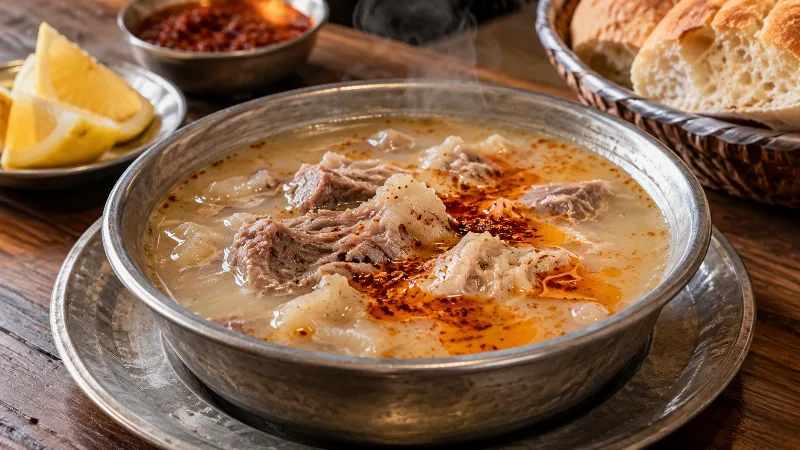
Kelle Paça Çorbası
Kelle Paça Çorbası is a traditional Turkish soup made from sheep's head and feet, known for its thick, gelatinous texture and restorative qualities. It is especially popular in Eastern and Southeastern Anatolia and is commonly eaten for breakfast or as a late-night meal.
Explore →
Boyoz
A flaky baked pastry closely associated with İzmir and commonly eaten as part of breakfast.
Explore →Related content
Ankara
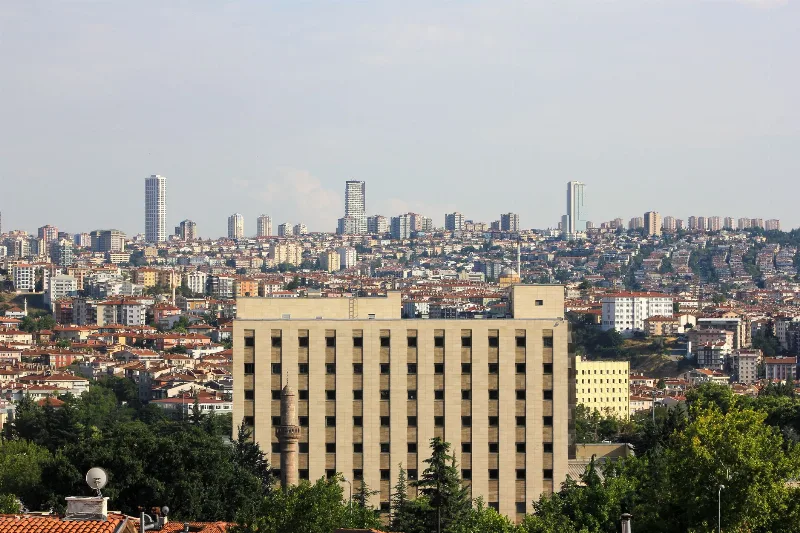
Ankara is the capital of Türkiye and the country's second-largest city, set on the high plateau of Central Anatolia and defined by its republican institutions, its long pre-Ottoman history and the mausoleum of Mustafa Kemal Atatürk.
Amasya
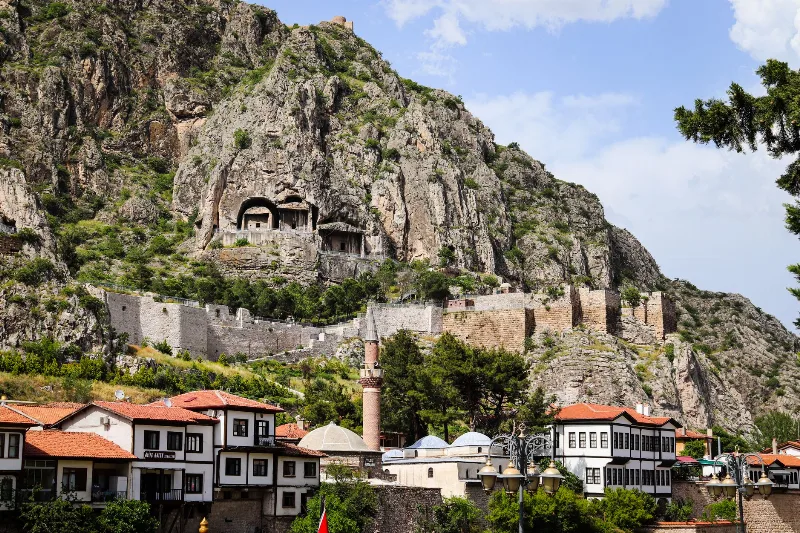
Amasya is a river city in the interior of Türkiye's Black Sea region, where Pontic rock tombs, Ottoman riverside mansions and apple orchards sit along the narrow valley of the Yeşilırmak.
Central Anatolia Region
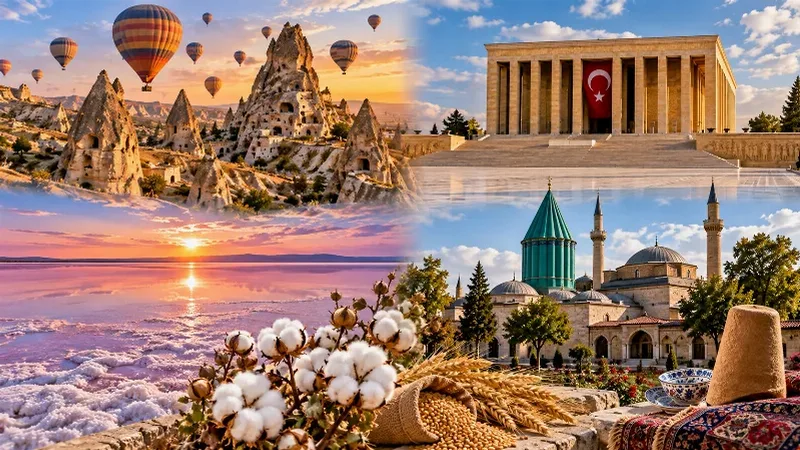
Central Anatolia is the historic heartland of Türkiye, known for its wide plains, extraordinary rock formations, ancient civilizations and traditional towns. From the fairy chimneys of Cappadocia to the cultural landmarks of Ankara and Konya, the region reveals the rich history and natural beauty of inner Anatolia.
Çamlık National Park Old Pine Forest in Yozgat
Çamlık National Park protects one of the last stands of old pine woodland on the Anatolian plateau, a short distance from the city of Yozgat. Its shaded paths, mature trees and open steppe surroundings make it a distinctive corner of central Türkiye.

Ezogelin Çorbası
A thick Turkish lentil soup of red lentils, bulgur and rice, flavoured with dried mint and tomato paste and named after the folk figure Ezo Gelin.
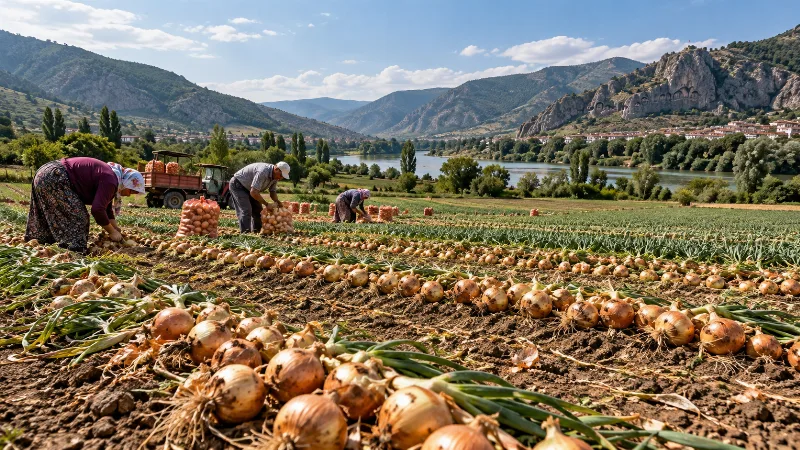
Amasya Onions
Amasya onions are a pungent, long-keeping onion variety tied to the plains and river valleys of Amasya province in northern Türkiye. The region's transitional climate and fertile alluvial soils give the crop its firm bulbs and storage quality.