
St. Nicholas Church
St. Nicholas Church in Demre, Antalya Province, is a Byzantine basilica built over the tomb of St. Nicholas of Myra, the bishop whose legends inspired Santa Claus. Visitors come for its frescoes, mosaic floor and the saint's empty sarcophagus.
St. Nicholas Church is a Byzantine church in the town of Demre, in Antalya Province on Turkey's southern coast. It stands over the burial place of St. Nicholas of Myra, the fourth-century bishop whose legends of secret gift-giving evolved over centuries into the modern figure of Santa Claus. Located in the ancient region of Lycia, the church sits below the level of the modern town center and is one of the most visited Christian monuments in Turkey, drawing Orthodox pilgrims, historians and general travelers alike. It is administered as a museum, and its surviving structure is the result of repeated rebuilding, flooding and restoration.
Where the Church Stands
Demre lies on the Teke Peninsula in southwestern Turkey, on the alluvial plain of the Demre Çayı, the river known in antiquity as the Myros. The town sits between Kaş to the west and Finike to the east, roughly 140 kilometers from Antalya. The church occupies a low-lying spot within Demre itself, only a short distance from the ancient city of Myra and its famous Lycian rock-cut tombs and Roman theater. Because the Myros repeatedly flooded and deposited silt across the plain, the church gradually sank relative to the surrounding ground. Today visitors descend a set of steps to enter it, an unusual approach that makes the building feel partly excavated rather than simply old.
The Saint Behind the Name
St. Nicholas was born in the Lycian town of Patara around the middle of the third century and became bishop of Myra, the city whose ruins stand near modern Demre. He is traditionally associated with secret almsgiving, including the story of providing dowries for three poor sisters, which is the remote origin of the Christmas gift-bringing tradition. After his death in the fourth century, he was buried in Myra, and a church was raised in connection with his tomb. His cult spread from Lycia across the Byzantine world and eventually to western Europe, where his name passed through Dutch and other traditions into the character of Santa Claus. That long chain of transmission is the main reason the church attracts visitors with no particular religious connection to the site.
Building History and Architecture
The oldest church on the site dates to the sixth century, when a basilica was constructed over the tomb during the reign of the emperor Justinian. That building was later damaged and substantially rebuilt, and the church visible today is largely the product of an eleventh-century reconstruction, with a cross-domed plan centered on a domed nave. Traces of the earlier structure, including elements of the original basilica, remain embedded in the later fabric. Over the following centuries the church was battered by earthquakes, raids and, above all, by the steady advance of river silt, which eventually buried much of the building. Large-scale clearance and restoration in the nineteenth century, supported by Russian interest in the site, brought the church back into view and left visible signs of that intervention.
What You Can See Inside
Although the building is partly ruined and its roof is gone in places, a considerable amount of decoration survives. Wall paintings, or frescoes, cover sections of the vaults and walls, depicting scenes from the life of Christ and of St. Nicholas himself. One well-known composition shows Christ and the Virgin presenting a Gospel book and a bishop's vestment, a reference to the tradition that Nicholas defended orthodox doctrine at the First Council of Nicaea. The floor preserves sections of decorative paving, including patterned marble work and mosaic elements, which indicate how richly the church was once finished. Carved stone architectural fragments, capitals and column bases are scattered through the interior, and the overall effect is of a layered archaeological site as much as an active monument.
The Tomb and the Relics
The church's central claim to fame is the tomb of St. Nicholas. A sarcophagus stands within the building, long identified by tradition as the saint's burial place, though it is now empty. In 1087, sailors from Bari removed the relics and carried them to Italy, where they are still venerated in the Basilica di San Nicola. A further group of relics was taken to Venice in the centuries that followed. The removal of the remains did not end the site's importance: the empty tomb itself became, and remains, a focus of pilgrimage. Some accounts have suggested that a portion of the original burial was overlooked during the removal of the relics, but the historical record is not definitive, and visitors should treat such claims with caution.
Practical Visiting Information
The church is located in central Demre and is easy to reach on foot from the town center. It operates as a museum with a ticketed entrance, and the interior is a protected monument, so the usual rules apply: no touching the painted surfaces, no flash photography, and care on uneven and sometimes slippery floors. The site is largely open to the sky in its upper parts, which means it is exposed to rain and, in summer, to strong sun. Some sections are reached by steps and narrow passages, and the lower level of the building is cooler and dimmer than the street outside. Because the church is an active place of pilgrimage, especially for Orthodox visitors, respectful behavior is expected, particularly around the tomb area and during religious observances.
Best Time to Visit
Demre has a Mediterranean climate with hot, dry summers and mild, wetter winters. Spring and autumn are the most comfortable periods to visit, with moderate temperatures and quieter conditions. Midsummer can be intensely hot, and the church's open roof and stone surfaces offer limited shade, so early morning or late afternoon visits are more comfortable. Winter brings occasional rain and cooler temperatures but far fewer visitors. December 6, the feast day of St. Nicholas, is the busiest time of year, when the town and church host commemorative events and services that draw pilgrims from several countries.
Nearby Places Worth Combining with a Visit
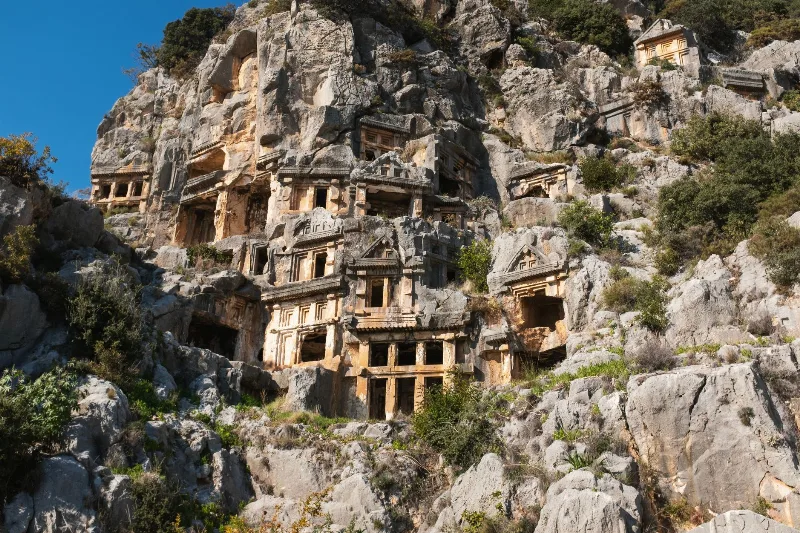
The ancient city of Myra lies just outside central Demre and is the natural companion to the church. Its rock-cut Lycian tombs, carved high into the cliffs, and its large Roman theater are among the most striking archaeological remains on Turkey's southern coast. Further along the same road, the ancient harbor of Andriake, Myra's former port, includes the remains of a granary built under the emperor Hadrian and a site now used as a museum. The coastal towns of Kaş and Finike, and the Lycian Way long-distance walking route, are within reach for travelers exploring the Teke Peninsula. Together these sites make Demre a substantial destination rather than a single-stop visit, connecting early Christian history with the older Lycian and Roman layers of the region.
Related content
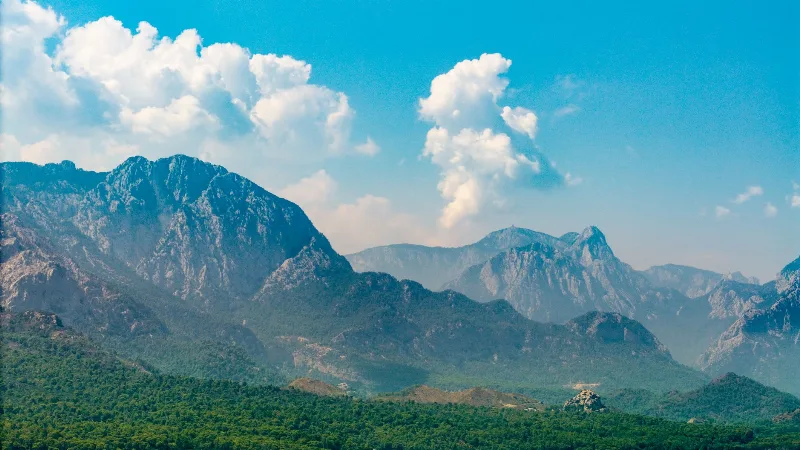
Antalya
Antalya offers a unique blend of vibrant history and stunning natural beauty, making it a must-visit destination in Türkiye.
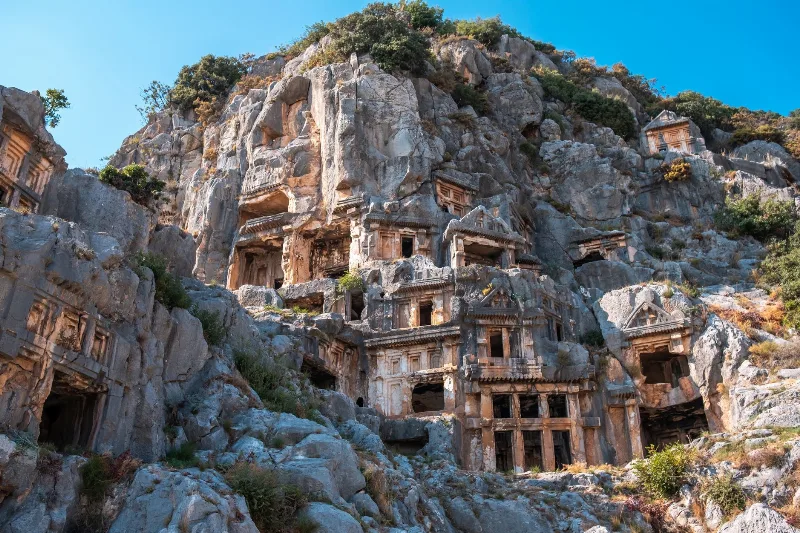
Myra
Myra is an ancient Lycian city in the Demre district of Antalya, whose cliff-carved rock tombs and large Roman theatre stand within the modern town itself.
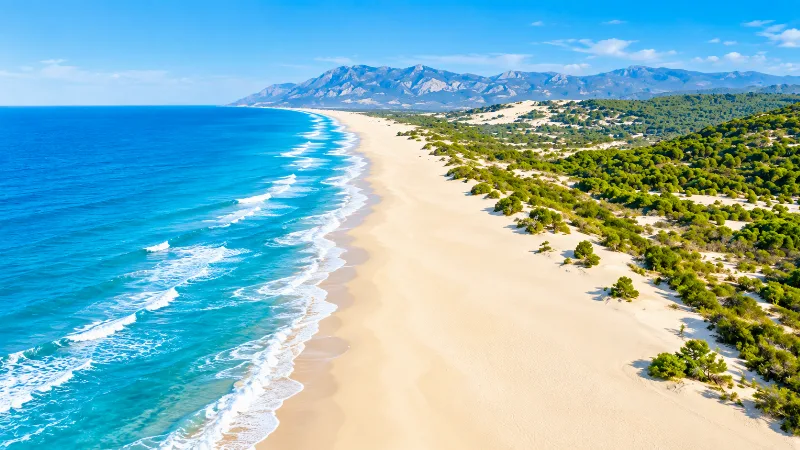
Patara
Patara is a long, wide sandy beach on Türkiye's Lycian coast, backed by dunes and a shallow wetland, where the open Mediterranean meets a protected coastal landscape.
Kale
A working agricultural town on Antalya's Lycian coast, Kale — now usually called Demre — contains the Roman city of Myra, its cliff-cut Lycian rock tombs, a Byzantine church linked to St. Nicholas and the ancient harbour of Andriake.
5-Day Antalya to Fethiye Coastal Route
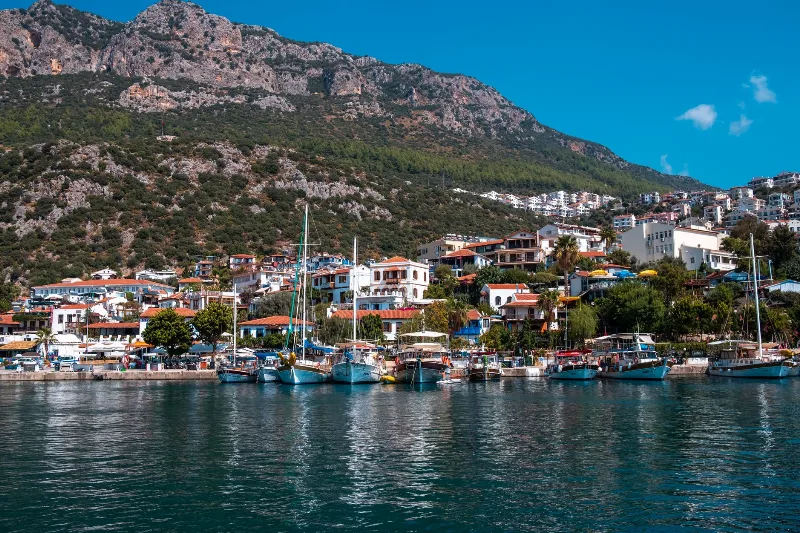
A five-day driving itinerary along Turkey's Mediterranean shore, linking Antalya, Phaselis, Olympos, Demre, Kekova, Kaş, Kalkan, Patara and Fethiye. The route is linear, coastal for most of its length, with short inland detours to Lycian ruins.
4-Day Lycian Coast Route
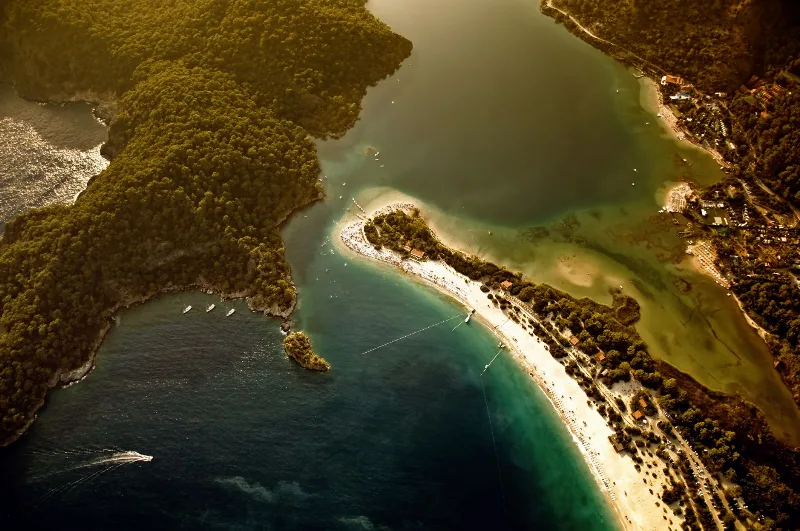
A four-day route along Turkey's Lycian coast, driving from Fethiye and Ölüdeniz through Kalkan, Kaş, Kekova, Demre and Olympos to finish in Antalya.