
Termessos Ancient City: Mountain Ruins Above Antalya
Termessos is a Pisidian city built on a high ledge of the Taurus Mountains north-west of Antalya, where a theatre, council house and rock-cut tombs stand among pine forest.
Termessos sits on a natural terrace of rock and pine roughly thirty kilometres north-west of Antalya, high on the western flanks of the Taurus Mountains. The ancient city was built at an altitude of about a thousand metres on the slopes of Güllük Dağı, the mountain the Greeks called Solymos, and its position is as striking as anything within its walls. Cliffs fall away beneath the ruins, the coastal plain lies far below, and the silence is broken mainly by wind in the pines and the calls of birds of prey. The whole setting forms part of Güllük Dağı Termessos National Park, which protects both the archaeology and the surrounding forest.
A Pisidian City Above the Coastal Plain
The people of Termessos were Pisidians, a mountain population of inland Anatolia who spoke their own language and guarded their independence closely. Their city controlled a route through the mountains and looked down on the fertile lowlands around the modern city of Antalya, yet it kept its distance from the Greek cities of the coast. Termessos minted its own coins and honoured its own deities, above all Zeus Solymeus, whose name derives from the mountain itself. The wild landscape and the defensive advantages of the site shaped almost everything about the settlement, from the thickness of its walls to the scattered way its buildings follow the contours of the rock.
A Stronghold That Alexander Could Not Take
In 333 BC, Alexander the Great approached Termessos during his campaign through Anatolia and found the city impossible to reduce. The defenders held the high ground, and the Macedonian army withdrew without capturing the site, an outcome that places Termessos among the few places in the region that resisted him successfully. Centuries later, as Roman power spread across Asia Minor, the city negotiated rather than fought. A treaty with Rome gave Termessos a privileged standing, and inscriptions record the city as a friend and ally of the Roman people. Its independence was preserved, and it continued to govern its own affairs within the wider imperial order.
Monuments Set Among the Pines
The ruins are extensive and largely unexcavated, with masonry lying where it fell and trees growing through the remains. The theatre occupies one of the finest positions in the city, its seating cut into the slope so that the audience faced a wide mountain view rather than a stage building of any great height. Nearby stand the council house, or bouleuterion, and the remains of the agora, a colonnaded square that once served as the commercial and civic heart of Termessos. Further along the ridge are the gymnasium, several temples, and a network of rock-cut cisterns that stored rainwater for a city with no reliable spring of its own.
The necropolis spreads across the hillside beyond the walls, filled with sarcophagi and chamber tombs carved directly into the limestone. Many carry inscriptions naming the deceased and warning of fines for anyone who disturbed the grave, a practice common in the region but especially well documented here. One of the most notable structures is the heroon associated with Alcetas, a Macedonian commander who sought refuge in the city and was honoured by its young men after his death.
Wildlife and Mountain Vegetation
The national park around the ruins protects a dense cover of black pine and Turkish pine, with juniper, cedar and flowering shrubs on the drier slopes. Wild goats move across the crags, foxes and hares are common, and the thermals above the valley attract eagles and other raptors. In spring the rocky ground between the stones fills with herbs and wildflowers, giving the site an atmosphere quite different from the bare coastal ruins further south.
Reaching the Ruins
A road climbs from the Antalya plain to a car park below the city, and from there a rough path leads upwards between the walls and the tombs. The final stretch is steep and uneven, and the site itself is spread across broken ground with little shade in the middle of the day. Sturdy footwear, water and a slow pace make the visit far more rewarding, and the small museum and information point near the entrance help to place the scattered buildings in context. Early morning and late afternoon bring the best light across the stone, when the theatre and the agora stand out clearly against the forested ridges behind them.
Related content
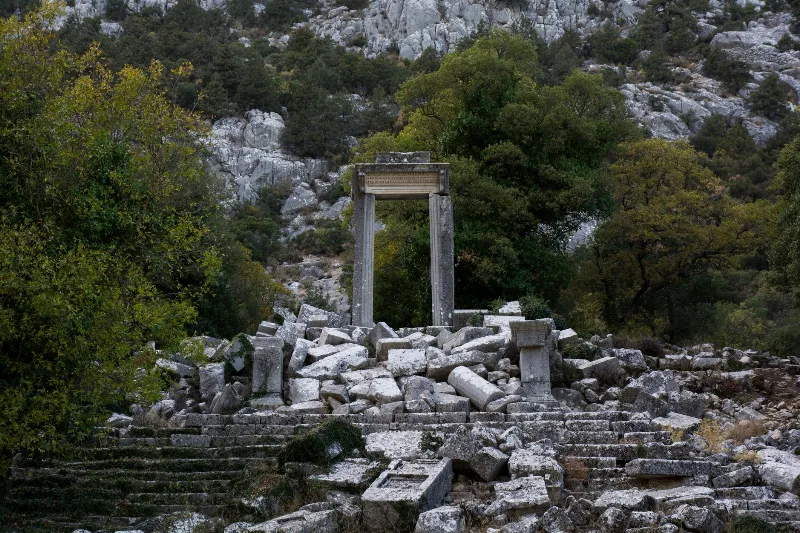
Termessos
Termessos is an abandoned Pisidian city on a mountain plateau inside Güllük Mountain National Park, northwest of Antalya, known for its theatre, temples and rock-cut tombs. Reaching the ruins requires a steep walk.
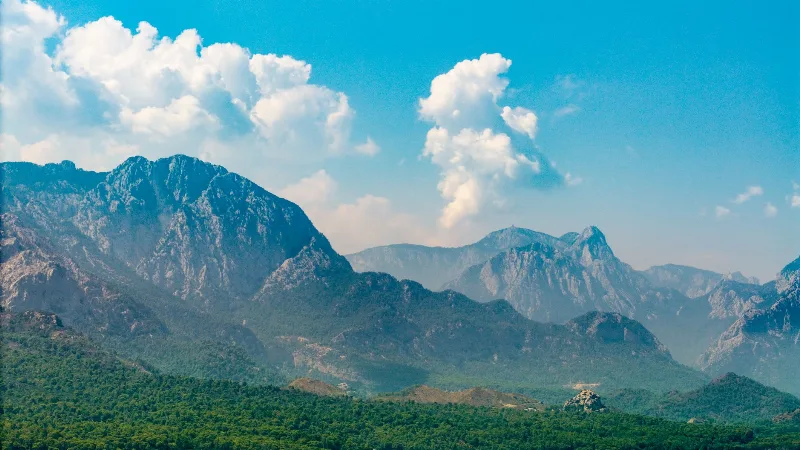
Antalya
Antalya offers a unique blend of vibrant history and stunning natural beauty, making it a must-visit destination in Türkiye.
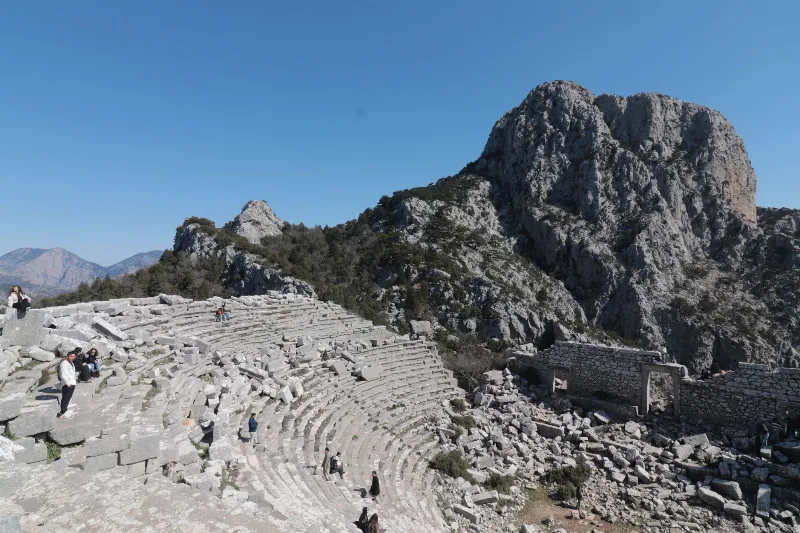
Termessos: The Pisidian Mountain City of Antalya
Termessos is an ancient Pisidian city set high in the Taurus Mountains of Antalya Province, Türkiye. Its abandoned ruins, including a theatre, gymnasium, cisterns and a sprawling necropolis, form one of the most complete archaeological landscapes of the Pisidian region.
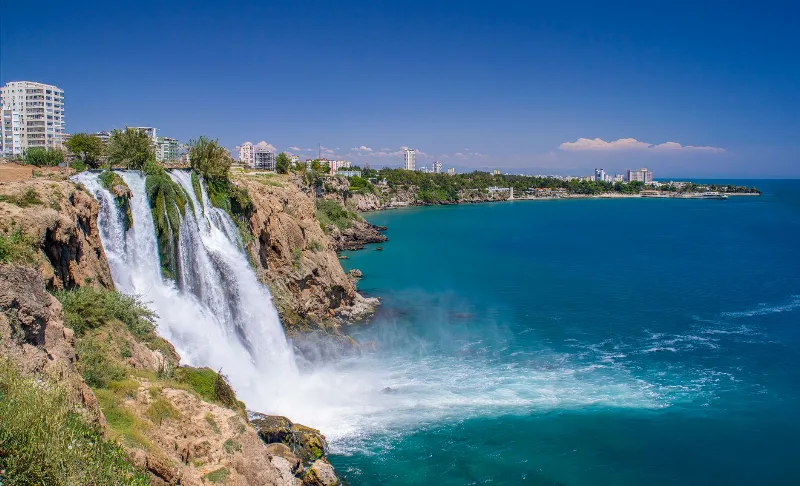
2-Day Antalya Waterfalls and Ancient Cities Route
A circular two-day route based in Antalya that pairs the Düden and Kurşunlu waterfalls with the ancient cities of Perge, Aspendos and Termessos, following the eastern coastal plain on the first day and the Taurus foothills on the second.
Antalya's Ancient Ruins
Antalya's ancient ruins trace Lycian, Pamphylian, Roman and Byzantine life across the Mediterranean coast and the Taurus foothills. Scattered theatres, colonnaded streets and rock-cut tombs reveal how successive peoples shaped this landscape.
Perge
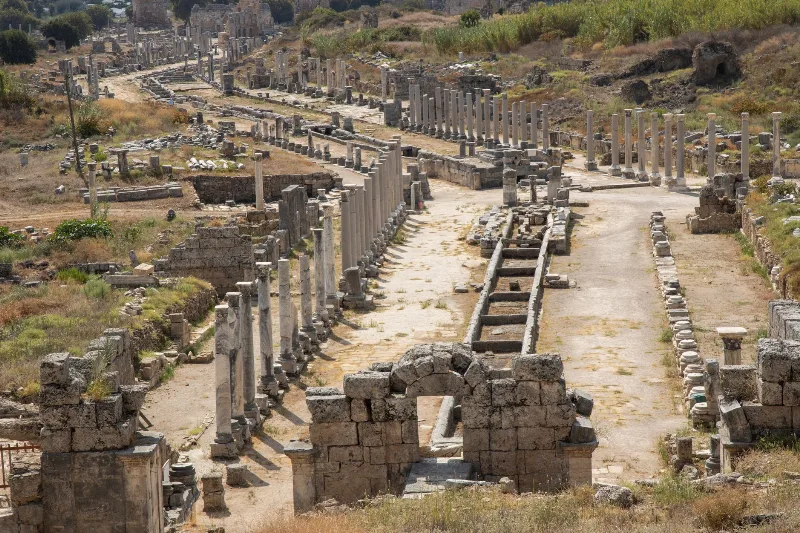
Perge is an ancient Pamphylian city east of Antalya, whose Hellenistic gates, colonnaded streets, theatre and exceptionally well-preserved stadium make it one of the most legible Roman-era sites in southern Turkey.
Exploring the Rugged Beauty of the Taurus Mountains
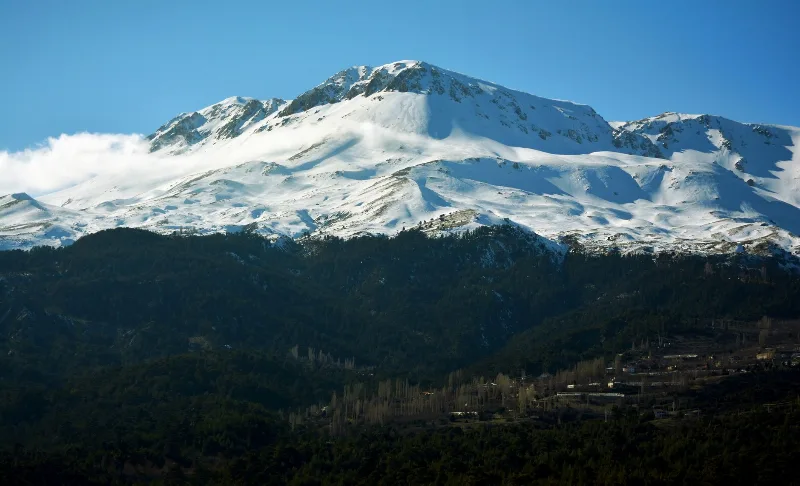
The Taurus Mountains in southern Türkiye offer rugged landscapes, diverse hiking trails, and rich cultural heritage. From ancient ruins to alpine meadows, this range invites exploration across all seasons.
Perge
Perge is a Graeco-Roman city in the Pamphylian plain east of Antalya, Türkiye, whose surviving urban plan includes two colonnaded streets with central water channels, a hillside Roman theatre and one of Anatolia's best-preserved stadiums.