
Ancient Archaeological Sites of Troy
The archaeological site of Troy near Çanakkale reveals nine settlement layers, Bronze Age defences and a story that links Anatolia's real past with Homeric legend.
On the eastern shore of the Dardanelles in northwestern Türkiye, a low hill called Hisarlık rises above the plain of the Karamenderes River. This is Troy, known in Turkish as Troya, a place whose name has travelled through three thousand years of poetry and more than a century of excavation. For anyone drawn to archaeology and ancient history, the site beside the village of Tevfikiye in Çanakkale Province offers a rare opportunity to see how many cities were built, destroyed and rebuilt on a single mound.
A Hill Above the Dardanelles
Troy sits at the edge of the Troad, the historic region of northwestern Anatolia that faces the Aegean and the narrow strait separating Asia from Europe. The setting is not dramatic in height: the mound rises only modestly above a broad alluvial plain, with the Karamenderes — the ancient Scamander — winding past it toward the sea. Behind the plain, the forested slopes of Kaz Dağı, the ancient Mount Ida, mark the horizon, while the island of Bozcaada, once called Tenedos, lies offshore to the west. This geography explains much of Troy's importance, because the site overlooked a position where land routes, river valleys and sea approaches met.
Nine Cities in One Mound
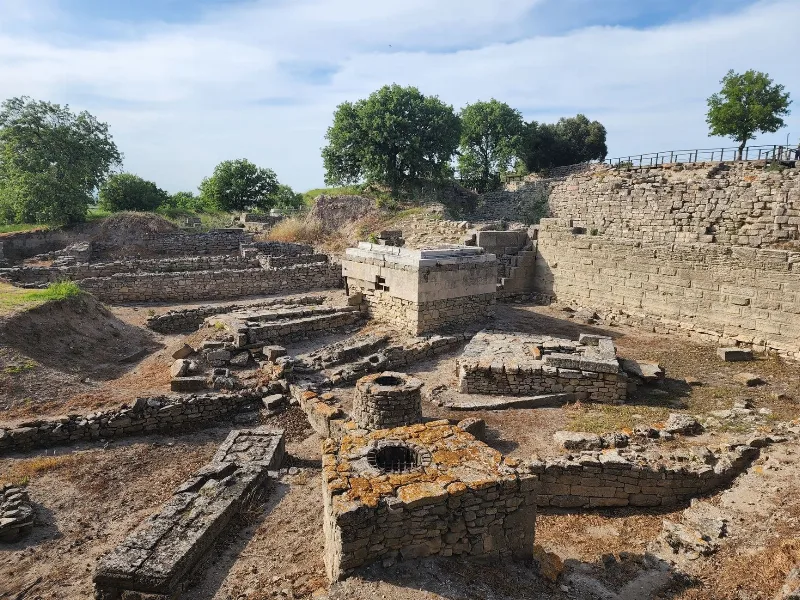
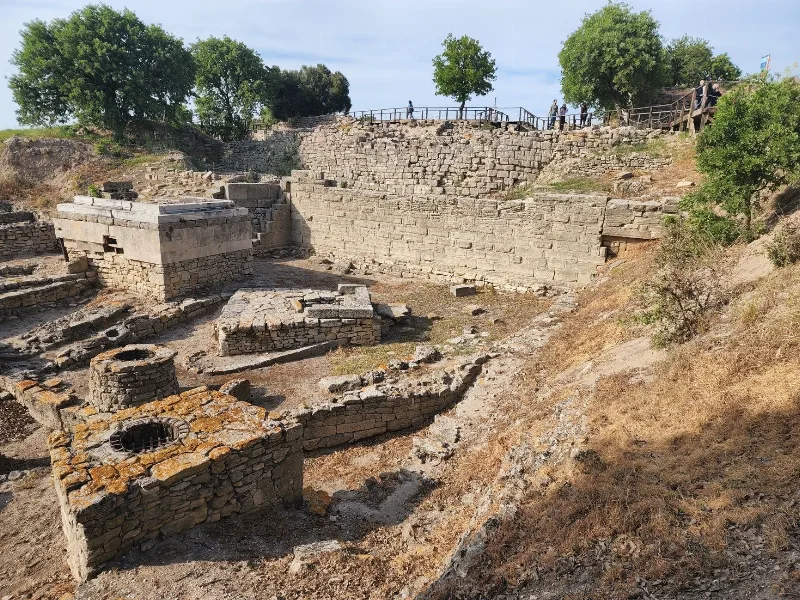
Excavations have revealed that the hill was occupied for thousands of years, and archaeologists conventionally divide that long sequence into nine main settlement levels, from Troy I to Troy IX. The earliest layers belong to the Early Bronze Age and include small fortified settlements. Later phases show increasingly substantial defensive walls, gateways and houses, and the levels known as Troy VI and Troy VII are the ones most often connected with the wealthy city remembered in the Homeric epics. After the Bronze Age, the site continued as a Greek sanctuary town called Ilion and later as a Roman city, Ilium. Work by nineteenth- and twentieth-century excavators such as Heinrich Schliemann, Wilhelm Dörpfeld, Carl Blegen and Manfred Korfmann shaped the picture visitors encounter today, and research continues on the mound and across the surrounding plain.
What Visitors See on the Site
Walking through the ruins, it is the masonry that stays in the memory. Sections of the circuit wall survive, including a sloping rampart with a carefully built stone face. Foundations of houses and a megaron-style hall can be traced, along with later Greek and Roman structures such as a small theatre and a council building. A modern wooden horse, echoing the most famous story associated with the city, stands near the entrance area, while excavation trenches cut deep into the mound reveal the stacked layers beneath. Marked paths help visitors follow the chronology without losing their way.
Why the Site Matters
Troy was inscribed on the UNESCO World Heritage List in 1998, recognised as a place of outstanding cultural value where Anatolian, Aegean and Mediterranean worlds interacted. Its historical significance rests on two intertwined strands: the real settlement, with its defences, trade connections and long occupation, and the literary Troy of the Iliad and the Odyssey, which has shaped how the wider world imagines the Bronze Age. The site also illustrates how archaeology itself developed, from early large-scale digging to modern, more careful methods that study soil, environment and everyday objects alongside monuments.
A Landscape of Plain, Coast and Islands
The surroundings reward slower exploration. The Karamenderes delta and the nearby coast along the strait are part of the same archaeological landscape that supported the ancient city. Çanakkale, on the Asian side of the Dardanelles, provides a wider regional context, and Bozcaada can be reached by ferry from the mainland. Spring and autumn bring mild temperatures and green fields, while summer is warmer and drier. Visitors who combine the ruins with the plain, the coast and the hills around Kaz Dağı gain a fuller sense of why this corner of Türkiye has held such a lasting place in history and imagination.
Related content
Troy
Troy is the excavated mound of Hisarlık in Çanakkale Province, Türkiye, inhabited from the Early Bronze Age to the Roman era and linked with the Ilion of Homer's Iliad. Its nine settlement layers and surviving Bronze Age fortifications make it one of the most important stratified sites in the eastern Mediterranean.
Troy
Troy is an ancient city on the Hisarlık mound in Çanakkale province, northwestern Turkey, known from Homer's Iliad and excavated into nine settlement layers. It is a UNESCO World Heritage Site with a large modern wooden horse near its entrance.
Çanakkale
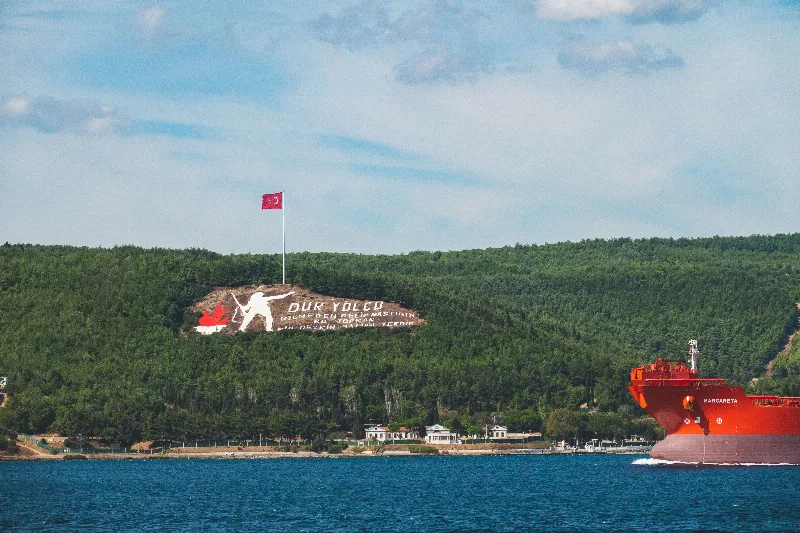
Çanakkale is a northwestern Turkish city on the Asian shore of the Dardanelles, the strait separating Europe from Asia. It is the administrative centre of a province that includes the Gallipoli battlefields and the archaeological site of Troy.
3-Day Assos and Troy Route
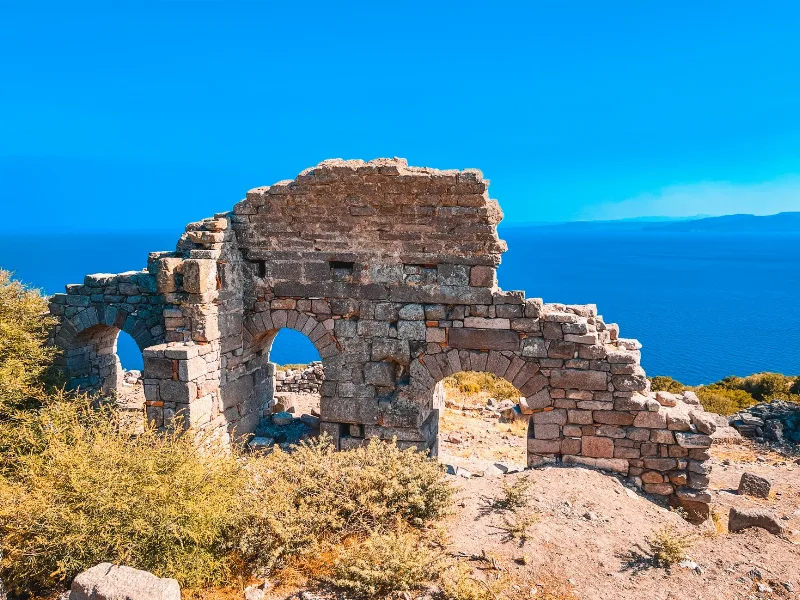
A three-day route through Turkey's Troad region, starting in Çanakkale and finishing at the clifftop village and ancient harbour of Assos, with Troy and the lesser-known classical ruins in between.
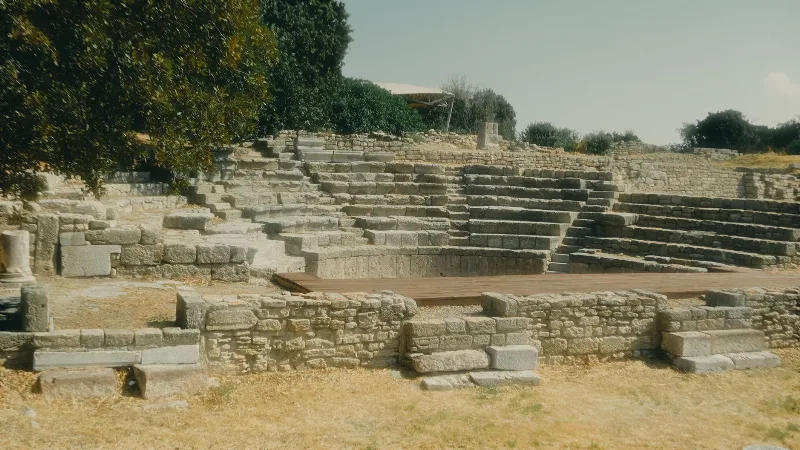
The Historical Significance of the Troy Ruins
Troy, located in Çanakkale Province, Türkiye, is a UNESCO World Heritage Site with nine archaeological layers spanning thousands of years. Its legendary status, rooted in Homer's Iliad, continues to fascinate visitors and scholars.
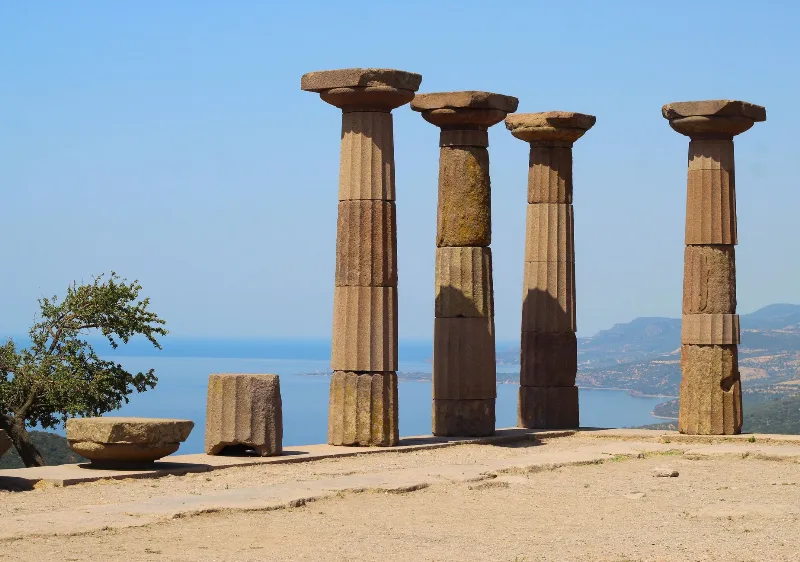
3-Day Çanakkale and Gallipoli Route
A three-day route based in Çanakkale that pairs the memorial landscapes of the Gallipoli Peninsula with the archaeological site of Troy and the southern Troad coast around Assos, using the Dardanelles ferry crossings as the link between two shores.
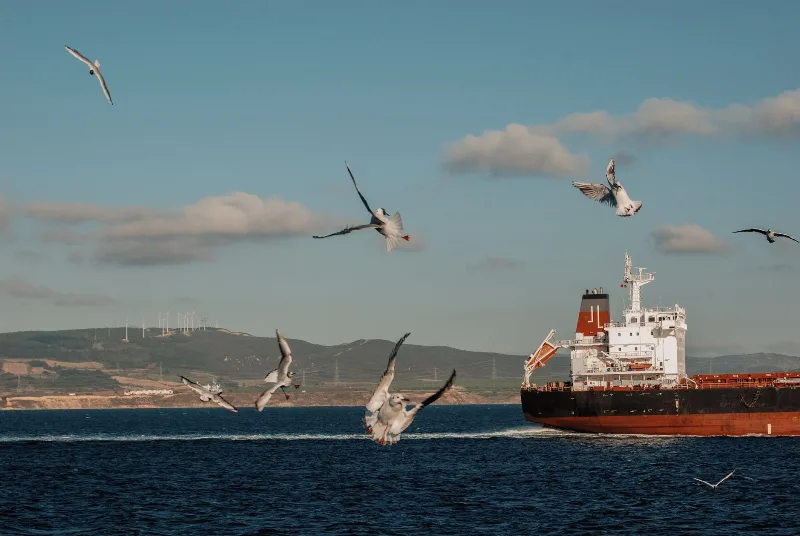
Çanakkale and the Dardanelles Strait
A short guide to Çanakkale and the Dardanelles Strait, covering the geography, ancient sites, island villages and local food of northwestern Türkiye.
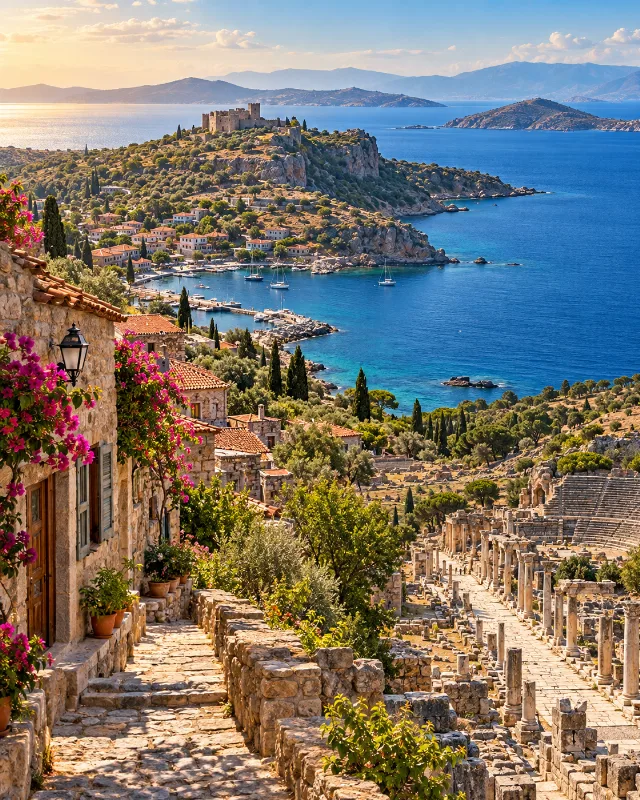
7-Day North Aegean to Ephesus Route
A seven-day southbound route through Troy, Assos, Bozcaada, Ayvalık, Bergama, İzmir and Ephesus, combining archaeology, coastal towns and Aegean culture.