
Alacahöyük
In Çorum Province, Alacahöyük preserves a long settlement sequence, elite Early Bronze Age burials and a monumental Hittite gate with carved reliefs.
Alacahöyük is a multi-period archaeological mound in the Alaca district of Çorum Province, in Turkey’s northern Central Anatolia region. It is best known for two distinct bodies of evidence: a group of wealthy Early Bronze Age tombs and a Hittite monumental gate decorated with sphinxes and relief-carved orthostats. The site lies near the village of Alacahüyük, on a low rise above agricultural land, and it preserves occupation layers that span several millennia. Its importance lies in the combination of elite Early Bronze Age burials, Hittite architecture and a long stratigraphic sequence that helps explain the development of central Anatolian communities before and during the Hittite period.
Location and setting in Çorum Province
Alacahöyük is located in the Alaca district of Çorum Province, inland from the Black Sea coast and within the broad transitional zone between Central Anatolia and the northern Anatolian mountains. The archaeological site is not a standing ancient city in the manner of a classical ruin; it is a tell, or höyük, formed by repeated building and rebuilding over centuries. The mound rises gently from the surrounding farmland and is approached from the village that shares its name. The landscape around it is rural, with fields, low hills and small settlements. Alaca is the nearest administrative centre, while Çorum is the provincial capital. The site’s position within this agricultural plain was clearly important in antiquity, although the ancient settlement was not on the scale of the Hittite capital at Hattusa.
From prehistoric settlement to Hittite centre
Excavations at Alacahöyük have revealed a long sequence of occupation. The earliest levels belong to the Chalcolithic period, and the site continued to be settled into the Early Bronze Age. During the third millennium BC, Alacahöyük was a substantial settlement with evidence of craft production, metallurgy and organised burial. It was not an isolated village; its material culture shows connections with other parts of Anatolia and with regions beyond, including northern Syria and Mesopotamia. These connections are visible in the metals, imported materials and artistic styles found in the tombs.
In the second millennium BC, the site became part of the Hittite world. The Hittite remains include monumental architecture, fortifications and a gate that formed part of the city’s defensive and ceremonial system. The Hittite name of the settlement is not securely identified. Some scholars have suggested a link with the sacred city of Arinna, an important cult centre of the Sun Goddess, but this identification is debated and should not be treated as certain. What is clear is that Alacahöyük was a significant Hittite-period centre in the region, even if its exact political and religious role remains a subject of research.
The Early Bronze Age royal tombs
The most famous discoveries from Alacahöyük are the Early Bronze Age tombs, often described as royal or princely burials. They date to the later third millennium BC and were found in the lower levels of the mound. The tombs were stone-lined chambers or pits containing the remains of individuals accompanied by exceptionally rich grave goods. These objects include gold and silver jewellery, bronze weapons, ceremonial standards, sun discs, animal figurines, statuettes and decorated vessels. The metalwork is technically sophisticated and demonstrates that local workshops had access to both precious metals and specialised skills.
The tombs are important for more than their wealth. They provide evidence for social hierarchy, funerary ritual and long-distance exchange in Early Bronze Age Anatolia. The presence of such elaborate burials at Alacahöyük indicates that the settlement was home to an elite group able to control resources and organise complex ceremonies. The finds also show stylistic links with other Early Bronze Age sites in Anatolia, including the nearby region of the Pontic and central Anatolian zones. Many of the most significant objects from these tombs are now held in major museum collections, while the site itself remains the primary context for understanding the burials.
The Sphinx Gate and Hittite relief sculpture
The best-known surviving Hittite monument at Alacahöyük is the Sphinx Gate. It is a monumental entrance flanked by large sphinx sculptures and lined with orthostat blocks carved in relief. The gate formed part of the Hittite city’s fortification and also served a ceremonial purpose. The reliefs depict a series of ritual and courtly scenes. They include a Hittite king and queen, attendants, priests, musicians, acrobats, sacrificial animals and figures taking part in a religious festival. The style and subject matter place the gate within the artistic traditions of the Hittite Empire period, roughly the fourteenth and thirteenth centuries BC.
The Sphinx Gate is significant for the study of Hittite art because it preserves a coherent programme of relief sculpture in an architectural setting. The scenes are not merely decorative; they express royal authority, divine favour and the proper performance of ritual. The gate also shows how Hittite builders combined sculpture with defensive architecture. Visitors to the site can see the gate area and the surviving stonework, while some of the original reliefs and related finds are displayed in museums. The gate remains the defining image of Alacahöyük and one of the most recognisable Hittite monuments in Turkey.
Later periods and the history of excavation
After the Hittite period, Alacahöyük was not abandoned immediately. The mound shows later occupation, including Phrygian and subsequent periods, although the settlement never again reached the importance it had held in the Early Bronze Age and Hittite periods. These later layers are thinner and less monumental, but they are still part of the site’s long history. The stratigraphy of the mound is therefore one of its most valuable features: it allows archaeologists to compare changes in architecture, pottery and daily life across different periods.
Modern excavation at Alacahöyük began in 1935 under the Turkish Historical Society. The early work was directed by Hamit Zübeyr Koşay and Remzi Oğuz Arık, and it was one of the major archaeological projects of the early Turkish Republic. These excavations brought the royal tombs and the Hittite gate to international attention. Later campaigns by Turkish archaeologists continued to refine the chronology and interpretation of the site. Alacahöyük is therefore not only an ancient settlement but also an important place in the history of Anatolian archaeology.
What survives today and what to see
Today Alacahöyük is an open archaeological site centred on the excavated mound. The main features visible to visitors are the Hittite gate with its sphinxes, sections of fortification walls and the foundations of Hittite buildings. The mound itself shows the layered deposits that accumulated over millennia. Interpretive panels and a site museum help explain the sequence of occupation and the significance of the finds. The museum displays objects from the excavations, while the most famous pieces are represented in larger museum collections in Turkey.
The site does not offer a reconstructed ancient city. Its appeal lies in the archaeological evidence: the mass of the mound, the surviving stone architecture, the gate reliefs and the traces of different building phases. A visit requires some imagination, but the material remains are substantial enough to convey the site’s importance. The royal tombs are not preserved as monumental chambers for visitors to enter; they are known from the excavation record and from the objects found within them. The Hittite gate, by contrast, is an architectural monument that can be understood in situ.
Visiting context and nearby historic places
Alacahöyük is reached from the town of Alaca in Çorum Province. Alaca is connected by road to Çorum and to other towns in the region. The site is in a rural area, so visitors should expect a short drive from Alaca rather than an urban setting. The ground around the mound is uneven and includes gravel paths, steps and excavated areas; sturdy shoes are useful. The climate of northern Central Anatolia brings hot summers and cold winters, so spring and autumn are generally the most comfortable seasons for walking around an open archaeological site. Summer visits are possible but can be hot, while winter conditions may be cold and occasionally snowy.
For readers interested in Hittite history, Alacahöyük is best understood alongside other sites in Çorum Province. Hattusa, the Hittite capital near Boğazkale, and the nearby rock sanctuary of Yazılıkaya are the most important Hittite monuments in the region. The Çorum Museum holds finds from several periods and provides context for the archaeology of the province. Alaca itself is a small district centre with local services. A visit to Alacahöyük can therefore be combined with a wider exploration of Hittite and prehistoric Anatolia, although the sites are not all within walking distance of one another. The site is most rewarding for travellers who are interested in archaeology, early metallurgy, Hittite art and the development of complex societies in Anatolia.
Routes
All routes →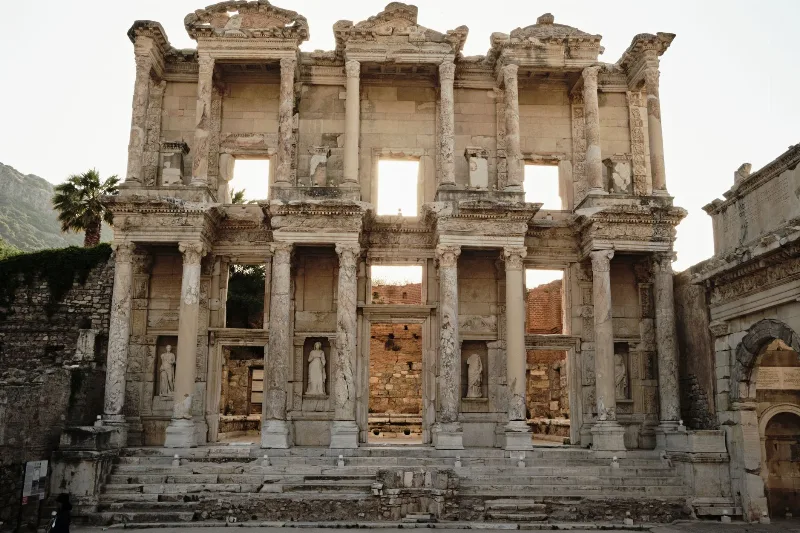
4-Day Ephesus and Pamukkale Route
A four-day west-to-east Aegean route that links the ancient city of Ephesus and the House of Virgin Mary in Selçuk with the white travertine terraces and Hierapolis ruins at Pamukkale, near Denizli.
Explore →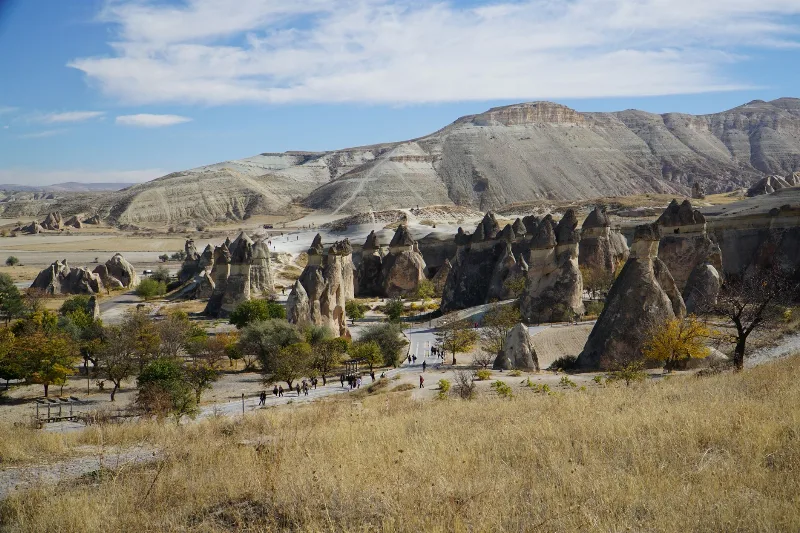
4-Day Cappadocia to Konya Route
A four-day southbound route from Cappadocia's rock-cut valleys to Konya, linking the underground cities of Derinkuyu and Kaymaklı, the Ihlara canyon, Selime Monastery and the Mevlana Museum. It is a linear, self-drive journey across the volcanic plateau of Central Anatolia into the Konya plain.
Explore →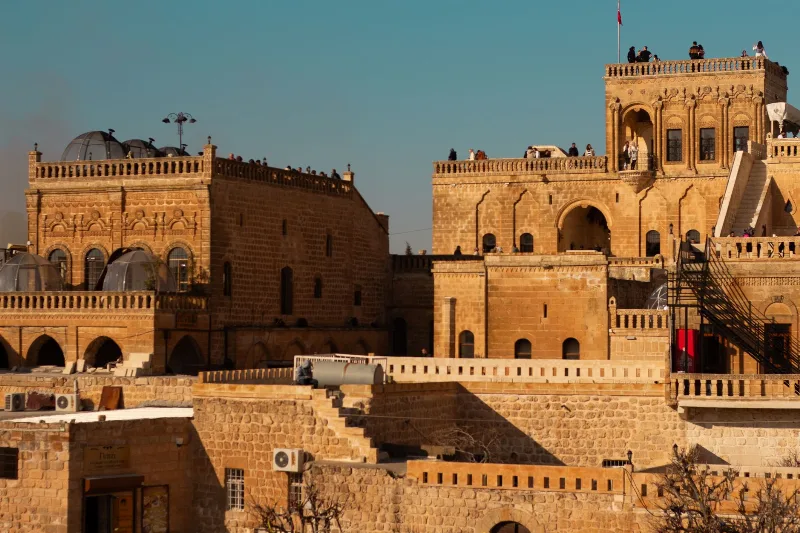
3-Day Mardin and Midyat Route
Explore the stone architecture of Mardin's old city and the historic monasteries of Midyat on this 3-day route through southeast Türkiye. The itinerary starts in Mardin, travels east to Midyat, and visits Deyrulzafaran and Mor Gabriel monasteries.
Explore →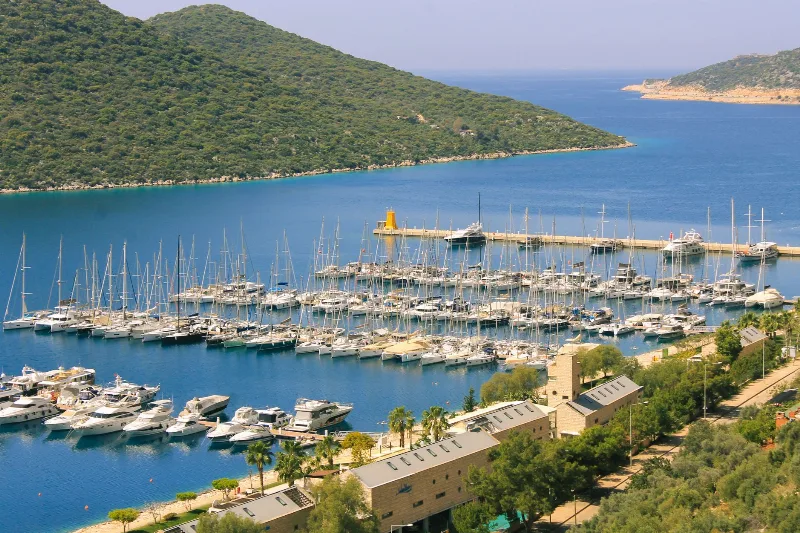
5-Day Fethiye to Kaş Lycian Coast Route
A five-day linear route along the Lycian coast from Fethiye to Kaş, linking Ölüdeniz, Kabak, the Xanthos valley, Patara and Kalkan by road and on foot.
Explore →Related content
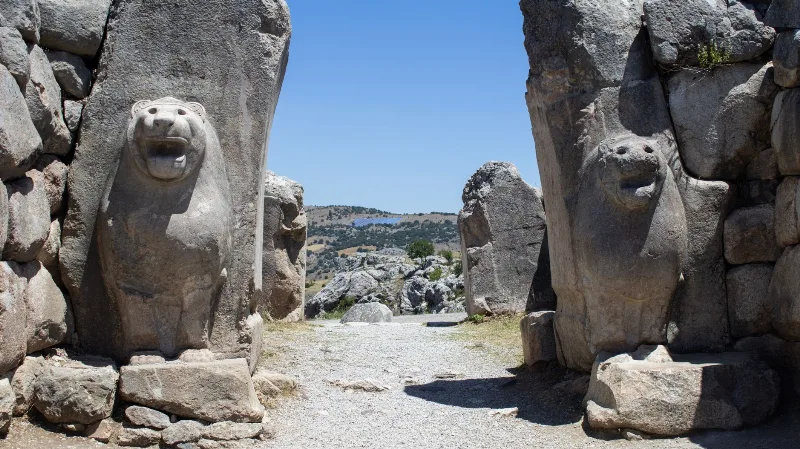
Hattusa
Hattusa was the capital of the Hittite Empire, located near Boğazkale in Çorum Province. Its surviving walls, gates, temples and cuneiform archives make it one of the most important Bronze Age archaeological sites in Anatolia.
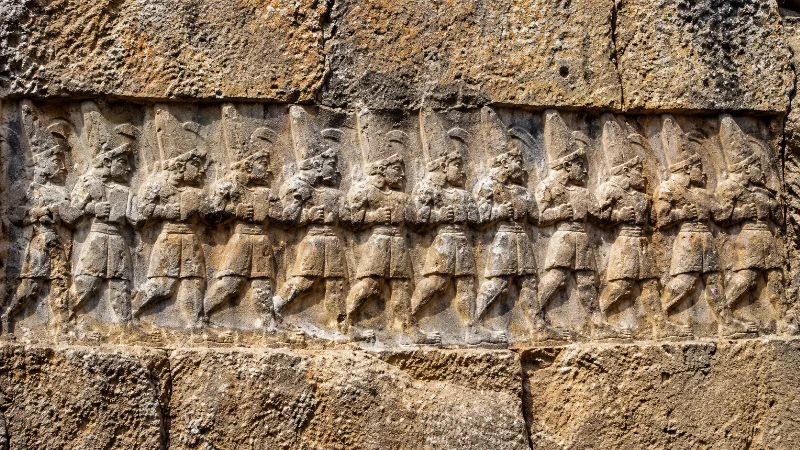
Yazılıkaya
Yazılıkaya is an open-air Hittite rock sanctuary cut into limestone near the ancient capital of Hattusa, decorated with reliefs of gods and kings and now part of a UNESCO World Heritage Site.
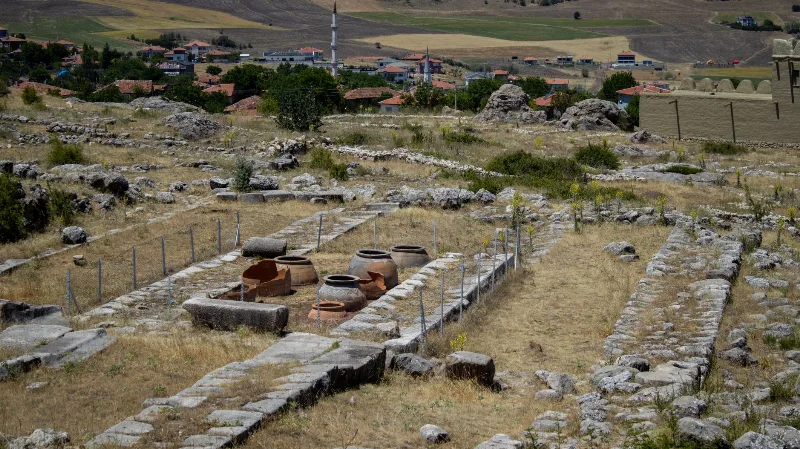
The Ancient Hittite Capital of Hattusa
Hattusa, the Hittite capital in Çorum, preserves monumental gates, temples and royal buildings from one of the ancient Near East's great powers.
Hattusa: The Hittite Capital at Boğazkale, Çorum
Hattusa was the seat of the Hittite Empire in the Late Bronze Age and is now a UNESCO World Heritage Site in Çorum Province, Türkiye. Its walls, temples, gates and the nearby rock sanctuary of Yazılıkaya make it one of the most important archaeological landscapes in the ancient Near East.
Alacahöyük: A Hittite City and Early Bronze Age Royal Tombs in Çorum
Alacahöyük is an excavated mound in Çorum Province that holds both Early Bronze Age royal tombs and a monumental Hittite gate flanked by carved sphinxes. It is one of the key sites for reading the pre-Hittite and Hittite past of central Anatolia.
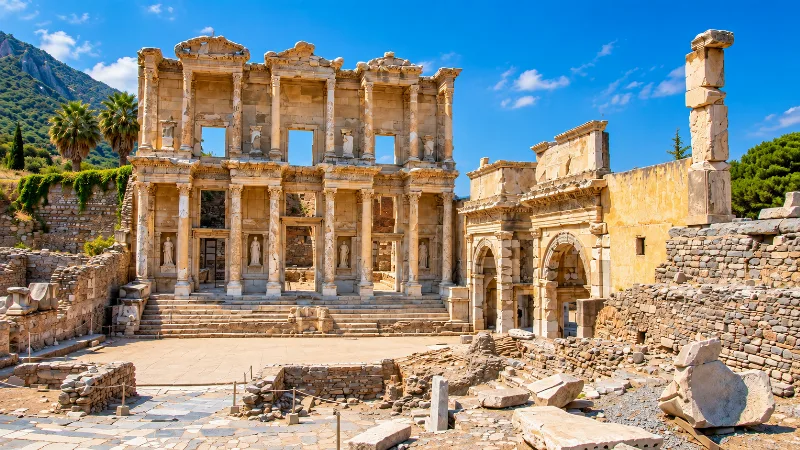
Historic Places
Ancient cities, monuments, castles and archaeological sites across Türkiye.