
Konya and the Legacy of Rumi
Konya, a high-plateau city in central Türkiye, is closely tied to the life and writings of Rumi, the thirteenth-century poet and mystic. Its Seljuk architecture, Mevlevi traditions and local cuisine give the city a distinct cultural character.
Konya is one of the oldest continuously inhabited cities in Anatolia, spread across the high plateau of central Türkiye. For many international readers, its name is inseparable from a single figure: Mevlânâ Celâleddîn Rûmî, the thirteenth-century poet and mystic known in English simply as Rumi. He spent most of his adult life in Konya, and the city's identity today is shaped by that legacy as much as by its Seljuk monuments, its wide horizons and its unhurried pace.
A City on the Anatolian Plateau
Konya lies at around 1,000 metres above sea level in the middle of the Anatolian steppe. The surrounding plains stretch far in every direction, turning green in spring and pale gold in late summer. The climate is continental, with warm dry summers and cold, snowy winters, and this open landscape has long shaped local life. Agriculture remains central to the region, and travellers often notice how wide the sky feels here compared with the crowded coastlines of western Türkiye.
Rumi and the Mevlevi Tradition
Rumi came to Anatolia as a child with his family and later settled in Konya, where he taught, wrote and gathered a circle of followers. His principal work, the Mesnevi, runs to six volumes of poetry, parables and reflection, and it continues to be read in many languages. A turning point in his life was his meeting with Şems-i Tebrizî, whose presence and later disappearance are echoed throughout his verse. After Rumi's death in 1273, his followers organised themselves into the Mevlevi order, a Sufi tradition known internationally for the sema, the whirling ceremony performed by dervishes in white robes. Each December, the city marks Şeb-i Arus, the wedding night commemorating his passing, with days of music, poetry and sema performances.
The Mevlâna Museum and Seljuk Konya
The Mevlâna Museum stands at the heart of the city, recognisable by its turquoise conical dome and surrounded by a rose garden. The complex began as the tomb of Rumi and grew into a lodge, a library and a place of pilgrimage. Inside, visitors see carved wooden doors, illuminated manuscripts, calligraphy and the instruments of Mevlevi music.
Konya was also a capital of the Seljuk Sultanate of Rum, and the architecture of that period survives across the city. The İnce Minareli Medrese is admired for its deeply carved stone portal, while the Karatay Medrese is known for its tilework and domed hall. Alaeddin Hill, an artificial mound in the centre, holds the Alaeddin Mosque and the remains of a Seljuk palace, offering a quiet view over the rooftops.
Local Flavours and Living Traditions
Konya's kitchen reflects the plateau: hearty, slow-cooked and generous. Etli ekmek is a long, thin flatbread topped with finely chopped meat and baked in a stone oven, often shared at the table. Fırın kebabı is lamb cooked slowly with vegetables, and bamya çorbası is a light okra soup that appears on many local menus. For something sweet, höşmerim is a simple dessert made with cheese and semolina. Handicrafts continue as well, including felt-making and traditional tile production.
Beyond the City
Just outside Konya, Çatalhöyük is a Neolithic settlement that dates back roughly nine thousand years and is recognised as a remarkable early town. Nearby, the old village of Sille preserves rock-cut churches and stone houses, while the Meram district offers gardens and streams that contrast with the dry steppe around them.
For visitors interested in poetry, faith and architecture, Konya offers a cultural landscape that connects a medieval mystic to a living modern city. Its legacy of Rumi continues to draw readers and travellers from around the world, not as a monument frozen in time, but as an active tradition of music, reflection and hospitality.
Related content
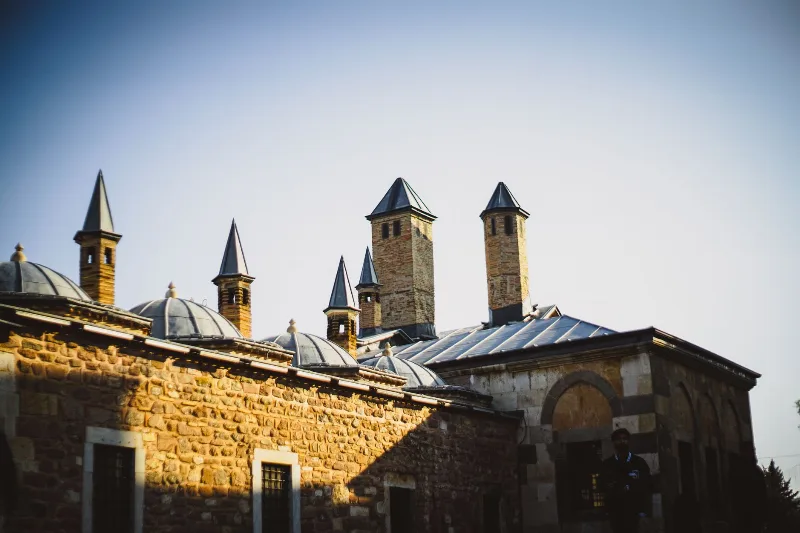
Konya
Konya is a city known for its spiritual essence and cultural heritage, home to the Mevlana Museum and the whirling dervishes.
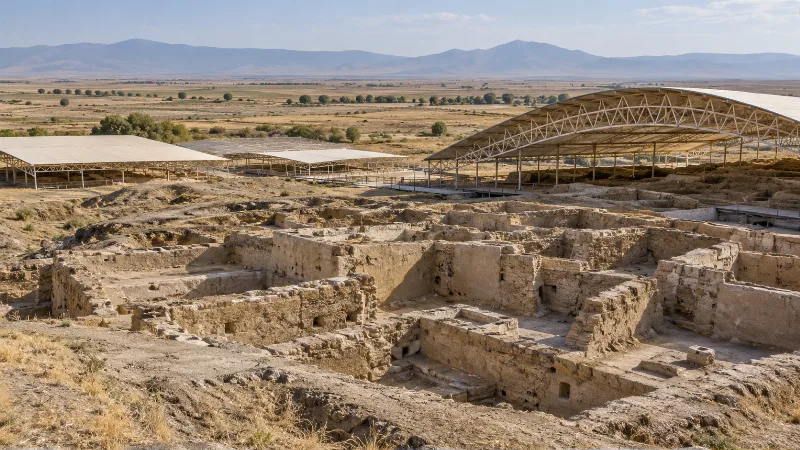
Çatalhöyük
Çatalhöyük is a Neolithic and Chalcolithic settlement mound in the Konya Plain whose tightly packed mudbrick houses, painted walls and floor burials changed how archaeologists understand early farming communities. This article explains what survives at the site, how it was excavated and what a visitor can realistically expect to see.
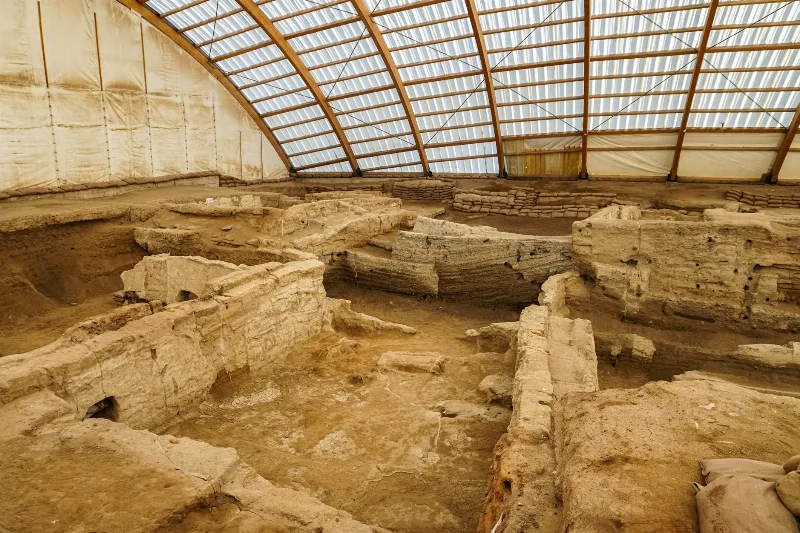
Çatalhöyük: A Neolithic Town on the Konya Plain
Çatalhöyük is a Neolithic and Chalcolithic mound settlement in Konya Province, Türkiye, occupied from around 7500 BCE. Its roof-access houses, painted walls and burials make it one of the most important early farming settlements ever excavated.
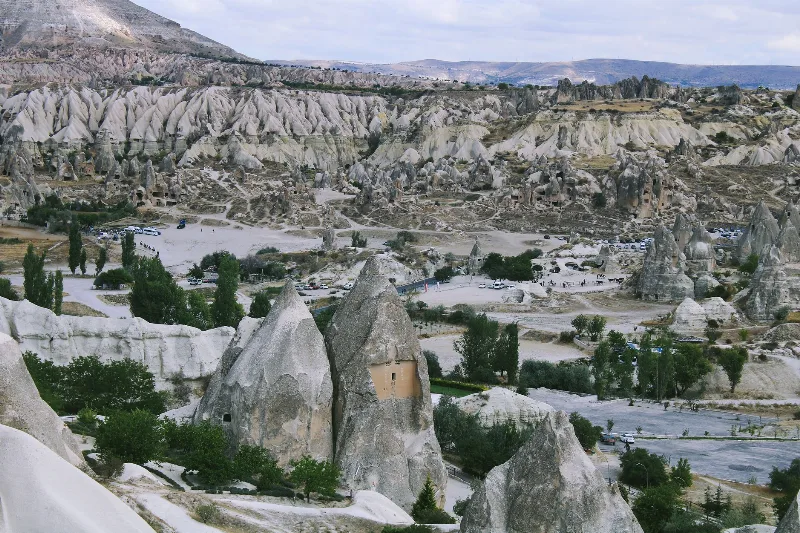
4-Day Cappadocia and Konya Route
A four-day linear journey from the rock valleys of Cappadocia to the Seljuk city of Konya, linking cave churches, underground cities and the Ihlara Valley with the Mevlana Museum on the central Anatolian plateau.
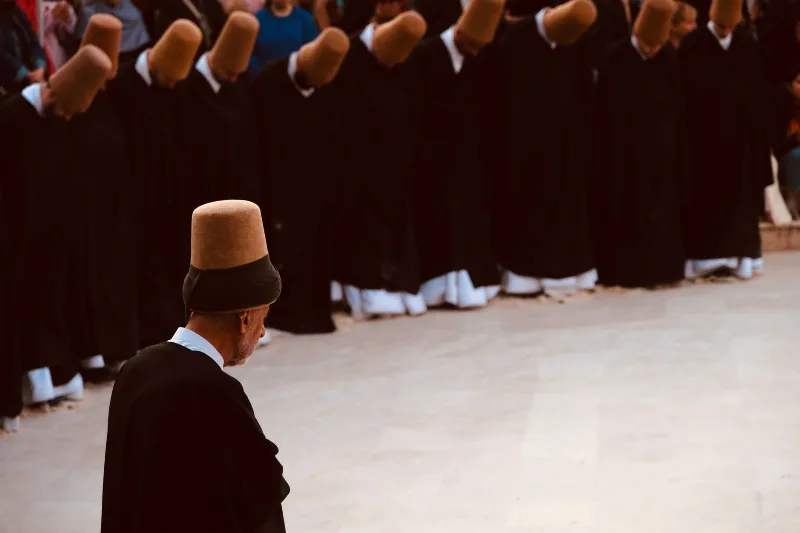
The Cultural Riches of Konya and the Whirling Dervishes
Discover the cultural heritage of Konya, home to the Whirling Dervishes, a city rich in history and spirituality.
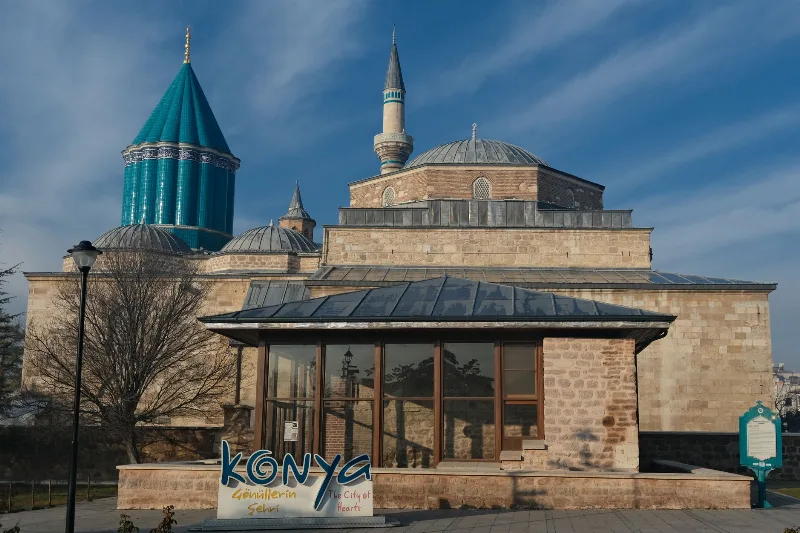
Whirling Dervishes Tradition
The Whirling Dervishes tradition of Türkiye blends music, movement and contemplation. Discover the Mevlevi heritage, the Sema ceremony's symbolism and the places where it endures.
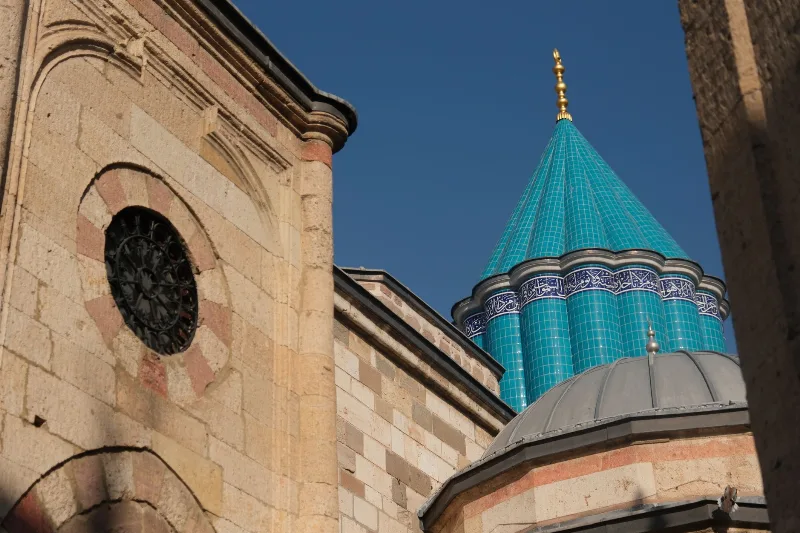
Traditions of Whirling Dervishes
The Whirling Dervishes of the Mevlevi order turn in a meditative ritual known as the sema, a living cultural tradition centred on Konya and recognised by UNESCO.
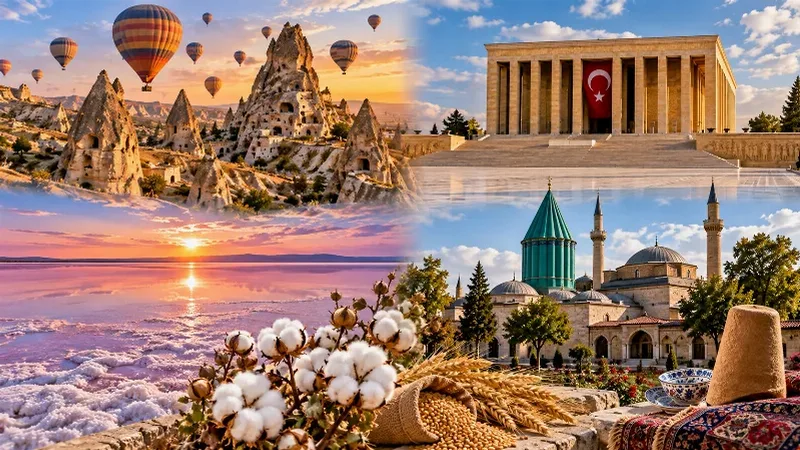
Central Anatolia Region
Central Anatolia is the historic heartland of Türkiye, known for its wide plains, extraordinary rock formations, ancient civilizations and traditional towns. From the fairy chimneys of Cappadocia to the cultural landmarks of Ankara and Konya, the region reveals the rich history and natural beauty of inner Anatolia.