
Bademli, Çanakkale: An Olive-Farming Village on the Slopes of Mount Ida
Bademli is a hillside village in the Ayvacık district of Çanakkale Province, set on the slopes of Kazdağı (Mount Ida) and known for its traditional stone houses and long tradition of olive oil production.
Bademli is a village in the Ayvacık district of Çanakkale Province, in northwestern Türkiye, set on the slopes of Kazdağı — Mount Ida — on the Biga Peninsula. It is an inland, elevated settlement rather than a coastal one, and it is recognised for two things that shape its appearance and its daily life: a compact core of traditional stone-and-timber houses, and a deep-rooted olive and olive oil tradition. For travellers who already know the seaside towns of the northern Aegean coast, Bademli offers a different kind of place — a working farming village on higher ground, wrapped in olive groves and mountain forest.
Where Bademli sits in the landscape
The village belongs to the wider region historically called the Troad, the western part of the Biga Peninsula that faces the Aegean and the island of Lesbos across the water. Bademli lies inland from the coast, on the lower and middle slopes of Kazdağı, the mountain mass also known in mythology as Mount Ida. This puts it in a zone where the land rises quickly from the coastal plain into wooded hillsides, which is exactly why the settlement is surrounded by olive terraces rather than by beaches.
Because it is a hillside village, orientation matters. Streets tend to follow the contour of the slope, and many houses have an open outlook downhill over olive groves or up towards the wooded flanks of the mountain. This is a landscape of small agricultural plots, dry-stone retaining walls, and trees rather than of wide open squares.
Village character and daily rhythm
Bademli is a genuine working village, not a resort. Its life is tied to the seasons of the olive tree and to the broader farming calendar of the Ayvacık countryside. In late autumn and winter the olive harvest dominates the rhythm of the settlement, when families and workers move through the groves and the pressing of olives becomes the main topic of conversation. In spring and summer the village is quieter and greener, and the surrounding slopes fill with wildflowers and leaf cover.
That agricultural identity is important for visitors to understand. Bademli is not a place organised around tourism, so facilities are modest and the atmosphere is domestic rather than commercial. What it offers is authenticity of setting: a village where people still live from the land.
Traditional architecture and streets
The architectural character of Bademli is the element that most clearly distinguishes it. The older houses are built in the local vernacular of the region, using stone for the main walls, often with timber framing and wooden balconies or overhanging upper floors. These materials come directly from the surroundings — stone from the hillsides and timber from the mountain slopes — which gives the village a look that blends into the landscape rather than standing apart from it.
Walking through the older parts of the village, you notice narrow lanes, high garden walls, and doorways set into thick stone. Many courtyards contain olive presses or storage areas connected to the harvest. Roofs are typically low-pitched, suited to a climate with cold, wet winters and hot, dry summers. Because the village climbs a slope, the streets are rarely flat; some are stepped paths between houses, and the sense of enclosure alternates with sudden views out over the groves below.
Olive cultivation and olive oil
Olive oil is the economic and cultural centre of Bademli. The surrounding groves produce olives that are pressed into oil using methods that range from small local mills to more modern equipment, and the oil is a source of local pride and a marker of the village's identity. The olive tree is well adapted to the Mediterranean climate of this part of Çanakkale, with its mild, wet winters and long, dry summers, and the terraced hillsides around the village show how thoroughly the land has been shaped around this single crop.
For anyone interested in how olive oil moves from tree to bottle, the village and its surroundings offer a realistic, non-commercial sense of the process — the groves, the harvest, and the pressing that follows. It is a living agricultural tradition rather than a staged attraction.
Historical and cultural background
Bademli's setting places it within one of the most historically layered corners of Türkiye. The Troad, the peninsula on which it stands, was densely settled in antiquity, and the coast nearby is associated with the region of ancient Troy and Assos. Kazdağı itself, as Mount Ida, appears repeatedly in classical myth and literature, and the mountain has long been a landmark for the communities on its slopes. Bademli is part of that broader cultural landscape — a village whose history is inseparable from the olive terraces, the mountain, and the ancient settlements of the coast below.
What you can realistically see on foot
- The old residential core, with its stone-and-timber houses and wooden balconies.
- Narrow lanes and stepped paths climbing the slope between courtyards and gardens.
- Olive groves and dry-stone terracing immediately around the village edge.
- Open views down towards the coastal plain and, on clear days, the direction of the Aegean.
- The wooded lower slopes of Kazdağı above the village, reached by continuing uphill.
Everything here is seen by simply walking. There are no formal attractions to tick off; the interest lies in the fabric of the village and its agricultural setting.
How to reach Bademli
Bademli is reached by road from within the Ayvacık district of Çanakkale Province. The usual approach is from the district centre of Ayvacık, which is served by intercity buses and connects onward to the coast. From Ayvacık the route climbs inland towards the slopes of Kazdağı, and Bademli sits along this upland corridor rather than directly on the shoreline. Because the village is inland and elevated, the final stretch of road is winding and climbs steadily, so travelling by private car or local transport is the practical option. Visitors already on the northern Aegean coast, around the Assos (Behramkale) area, approach Bademli by heading inland and uphill from the coastal road.
Best time to visit
The climate follows the Mediterranean pattern of the northern Aegean: hot, dry summers and cooler, wetter winters. Spring is pleasant, with green slopes and mild temperatures, and autumn brings the olive harvest, when the village is at its most active. Summer can be very warm and dry on the exposed hillside, though the mountain setting moderates conditions at higher points. Winter is quiet and can be wet, with the mountain often cloud-covered. If the aim is to see village life in full activity, late autumn is the most meaningful period; if the aim is comfortable walking, spring and early autumn are the easiest.
Practical notes before you go
Because Bademli is a small agricultural village and not a tourist centre, expectations should be set accordingly. Facilities are limited, so it is sensible to treat the village as a place to walk, observe and understand rather than a base for services. The terrain is sloped, with uneven stone lanes and stepped paths in the older core, so comfortable footwear helps. Distances within the village are short, but the gradient makes the walking more demanding than a flat settlement of the same size. It is also worth remembering that this is a lived-in community, and that privacy around homes and courtyards should be respected.
Places geographically connected to Bademli
Bademli sits within a cluster of places that share its landscape and history. The district centre of Ayvacık is the main service point and road junction for the area. Downhill towards the coast lies the historic settlement of Assos, known as Behramkale, with its ancient ruins and harbour. The wider coastline of the northern Aegean, with its villages and beaches, forms the lowland counterpart to Bademli's upland setting. Above the village, the higher slopes and forest of Kazdağı — Mount Ida — are the dominant natural feature, connecting Bademli to the mountain communities scattered across the massif. Together these places form a coherent area where mountain, olive terraces, ancient ruins and coast sit within a short distance of one another.
From the land
Find All →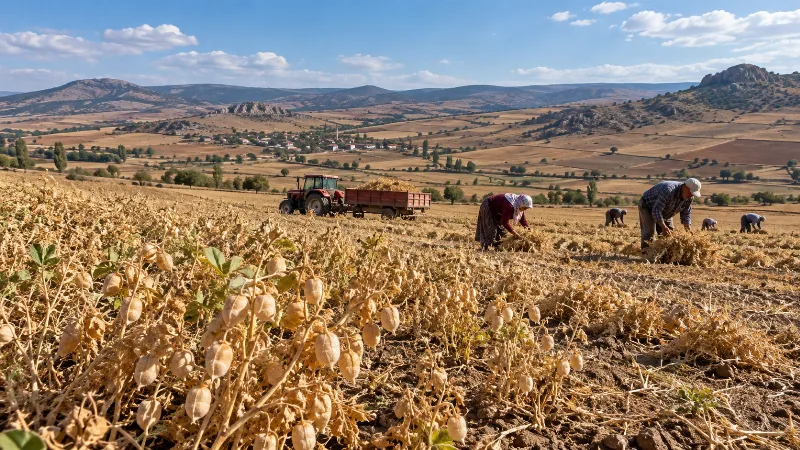
Çorum Chickpeas
Çorum chickpeas are the chickpeas grown across the dry inland plateaus of Çorum province in northern Türkiye, where a transitional continental climate suits the crop and where the same local harvest feeds the region's well-known leblebi tradition.
Explore →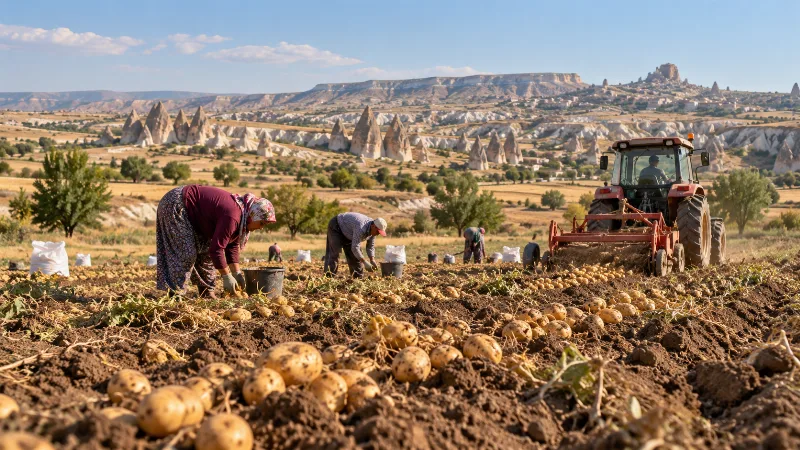
Nevşehir Potatoes
Nevşehir potatoes are grown on the volcanic plateau of Cappadocia in central Türkiye, where tuff-derived soils, cold winters and warm dry summers shape a crop that is harvested in late summer and kept in the region's cool rock-cut storage chambers.
Explore →
Erzurum Potatoes
Erzurum potatoes are highland potatoes from Erzurum province in Eastern Anatolia, shaped by cool summers, volcanic soils and a short growing season. They are known for their starch-rich texture and full flavour.
Explore →Related content
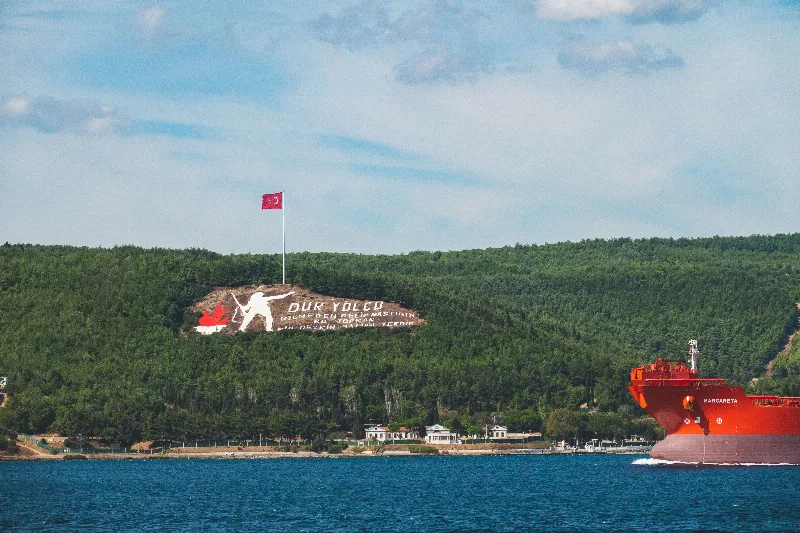
Çanakkale
Çanakkale is a northwestern Turkish city on the Asian shore of the Dardanelles, the strait separating Europe from Asia. It is the administrative centre of a province that includes the Gallipoli battlefields and the archaeological site of Troy.
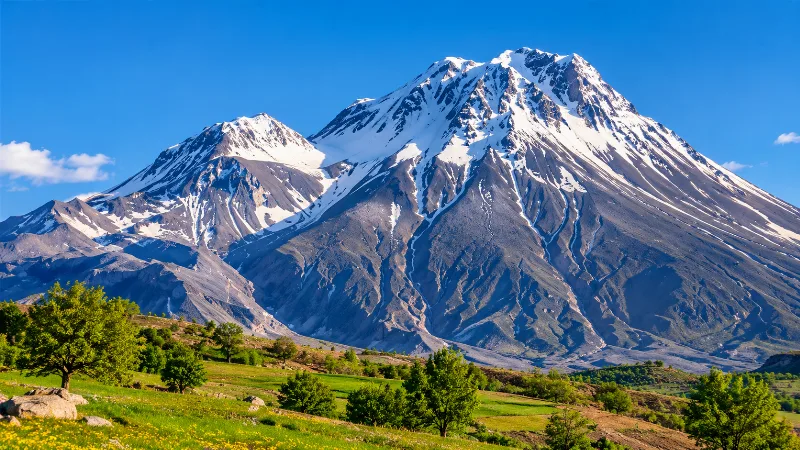
Mount Ida
Mount Ida, called Kaz Dağı in Turkish, is a forested massif in Balıkesir Province on the Biga Peninsula, rising from the Gulf of Edremit coast to a summit of about 1,774 metres and known for its endemic fir forest.
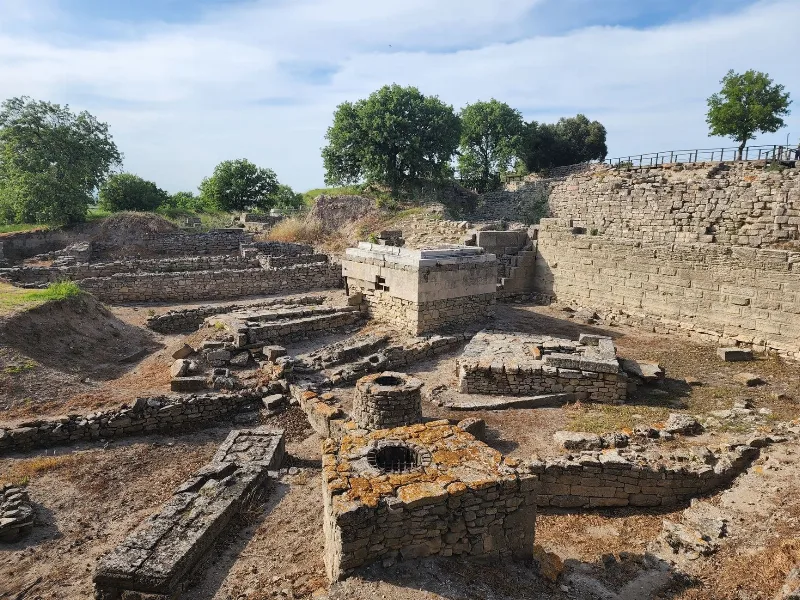
Troy
Troy is the excavated mound of Hisarlık in Çanakkale Province, Türkiye, inhabited from the Early Bronze Age to the Roman era and linked with the Ilion of Homer's Iliad. Its nine settlement layers and surviving Bronze Age fortifications make it one of the most important stratified sites in the eastern Mediterranean.
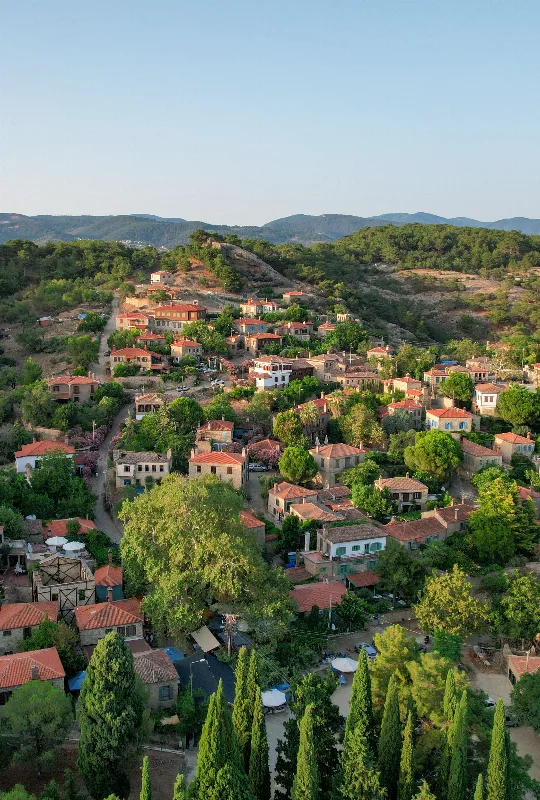
Adatepe
Adatepe is a stone-built mountain village in the Ayvacık district of Çanakkale, set on the Aegean slopes of Kazdağı above Küçükkuyu, known for its preserved stone houses, olive groves and the Zeus Altar viewpoint overlooking the Gulf of Edremit.
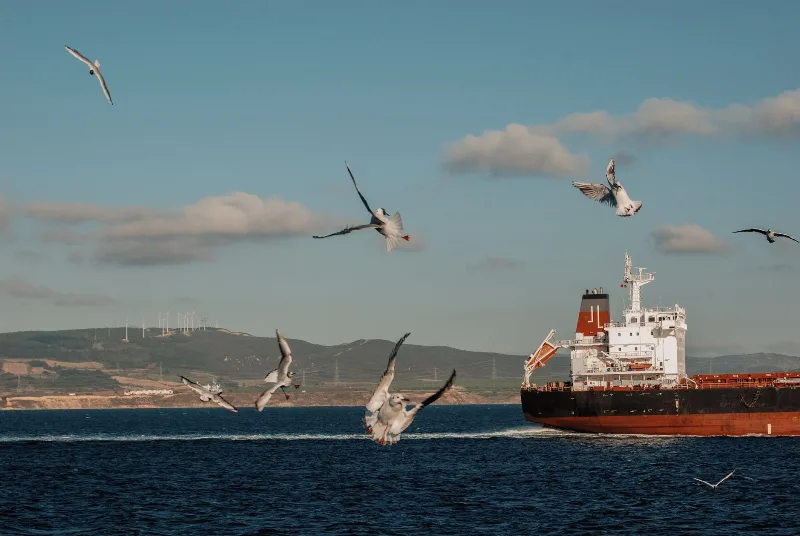
Çanakkale and the Dardanelles Strait
A short guide to Çanakkale and the Dardanelles Strait, covering the geography, ancient sites, island villages and local food of northwestern Türkiye.
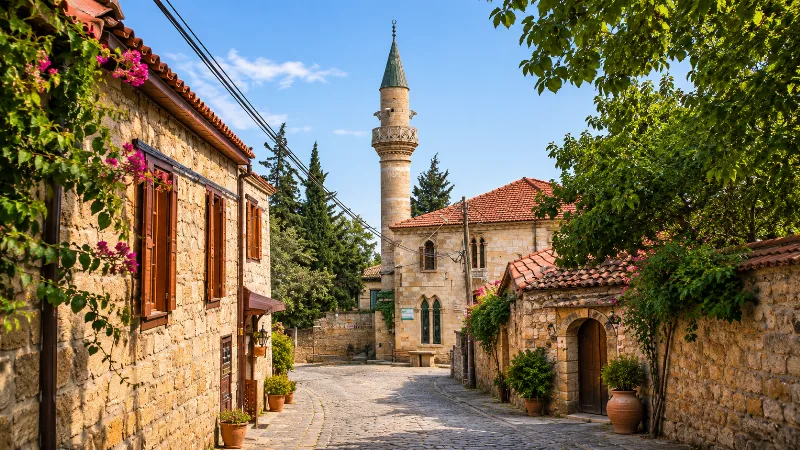
Yeşilyurt: A Stone Village on the Slopes of Kazdağı, Çanakkale
Yeşilyurt is a traditional mountain village in the Ayvacık district of Çanakkale, built on the slopes of Kazdağı and known for its stone houses and olive oil.