
Exploring Turkey Beyond the Best-Known Destinations
STORIES FROM TÜRKİYE
Exploring Turkey Beyond the Best-Known Destinations
Istanbul, Cappadocia, Antalya and Ephesus are among the places most closely associated with international travel in Turkey. They represent important parts of the country, but they are only a small part of a much larger geographical and cultural landscape.
Across Turkey, smaller cities, districts, villages and rural regions offer very different surroundings and local traditions.
The Black Sea region provides some of the clearest examples. Beyond major cities such as Trabzon, mountain roads lead toward forested valleys, lakes and highland settlements.
Places around Şavşat, Çamlıhemşin and the Kaçkar Mountains combine green slopes, traditional villages and rivers within a landscape very different from Turkey’s southern coast.
Western Turkey contains another range of smaller destinations.
Historic towns such as Safranbolu preserve traditional streets and houses, while coastal settlements around the Aegean combine stone architecture with olive-growing landscapes and small harbours.
Amasra, Assos, Cunda and Datça each have different settings despite all being associated with western Turkey.
Inland Anatolia also contains destinations that receive less international attention.
Small districts and towns may be connected with a particular local food, agricultural product, archaeological site or natural landscape.
The countryside around Isparta, for example, changes with seasonal rose and lavender cultivation. Kastamonu Province contains forests, canyons, historic villages and regional food traditions.
Eastern Turkey presents another side of the country.
Kars combines open plateau landscapes with the medieval remains of Ani, while the area around Lake Van brings together a large inland lake, mountains and historic sites.
Further south, Mardin and Midyat are characterised by stone architecture, narrow streets and the cultural heritage of southeastern Anatolia.
Villages can also reveal aspects of Turkey that are less visible in larger cities.
Traditional houses, agricultural landscapes, local food production and seasonal activities often remain closely connected with village life.
Places such as Şirince, Cumalıkızık and some Black Sea highland settlements have become known partly because their built environment and surrounding landscapes retain a strong local character.
Natural areas provide another reason to move beyond major tourism centres.
Turkey contains mountain lakes, forests, waterfalls, canyons, wetlands and national parks across almost every region.
Yedigöller in Bolu, Munzur Valley in Tunceli, Borçka Karagöl in Artvin and Lake Salda in Burdur illustrate how different these landscapes can be.
Exploring beyond the best-known destinations does not mean ignoring Turkey’s major landmarks. Instead, it reveals how much more exists between them.
The country’s character is also found in provincial towns, coastal roads, highland villages, local markets, agricultural fields and landscapes that rarely appear on a standard first itinerary.
Historic places
Explore history →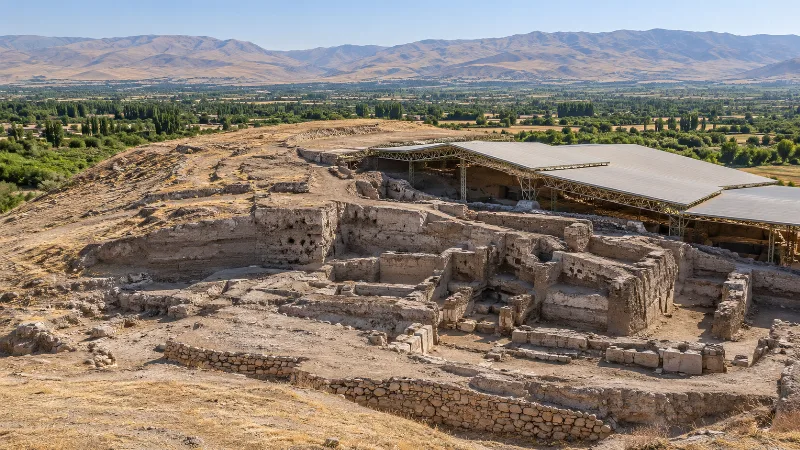
Arslantepe
Arslantepe is a deep archaeological mound on the Malatya plain in eastern Türkiye, where a Late Chalcolithic palace documents the rise of a centralised state and later Neo-Hittite rulers carved lions for its gates. It became a UNESCO World Heritage Site in 2021.
Explore →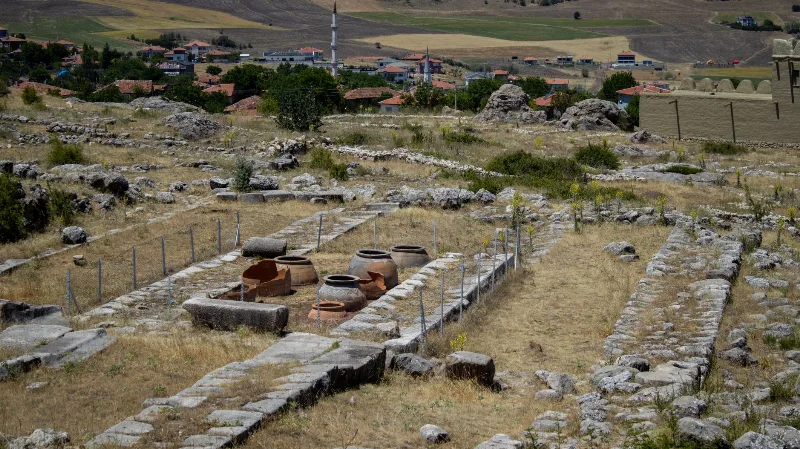
Alacahöyük
In Çorum Province, Alacahöyük preserves a long settlement sequence, elite Early Bronze Age burials and a monumental Hittite gate with carved reliefs.
Explore →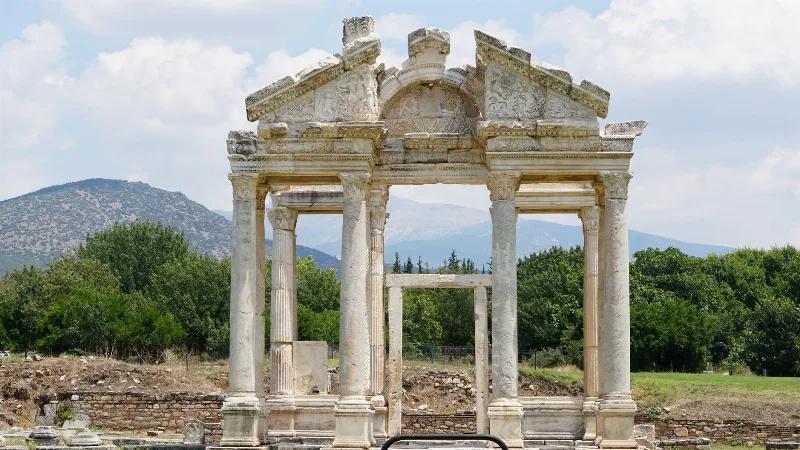
Aphrodisias
Aphrodisias is an ancient city in Aydın Province, Türkiye, built around a sanctuary of Aphrodite and celebrated for its marble sculpture and remarkably intact public buildings. It has been a UNESCO World Heritage Site since 2017.
Explore →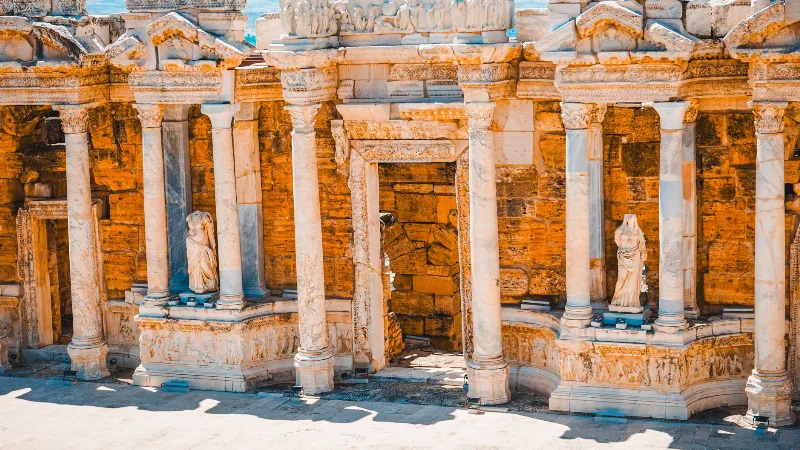
Hierapolis
Hierapolis is an ancient city in Denizli Province, Türkiye, built beside the hot springs and travertine terraces of Pamukkale. Its Roman theatre, vast necropolis, baths and the sanctuary of Apollo make it one of the most extensively preserved Greco-Roman cities in Anatolia and a UNESCO World Heritage Site.
Explore →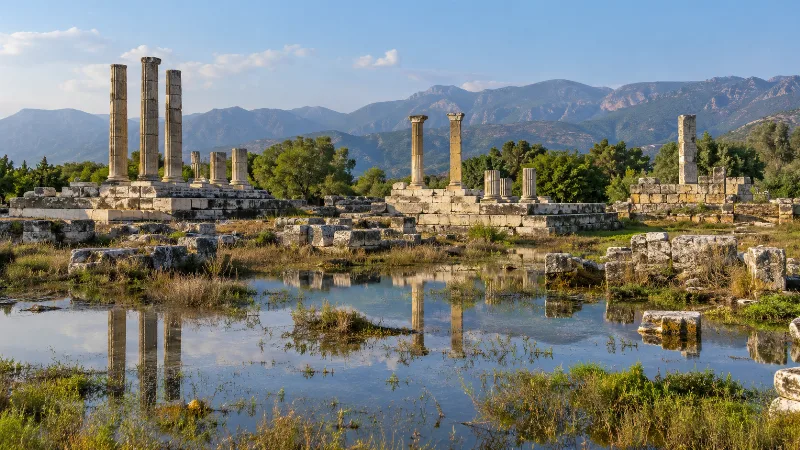
Letoon
Letoon is the ancient Lycian sanctuary of Leto near Xanthos in Muğla Province, home to three temples and the trilingual inscription that helped decipher the Lycian language.
Explore →Related content
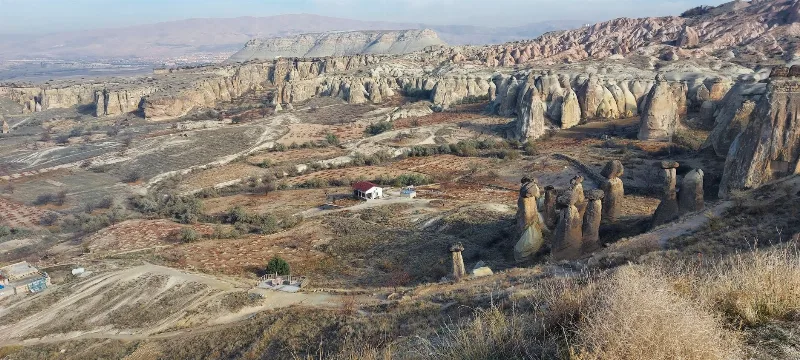
Cappadocia
Cappadocia is a region of Central Anatolia in Turkey defined by eroded volcanic tuff, rock-cut Byzantine churches and multi-level underground cities. This guide explains how the landscape formed, what the main valleys and sites actually contain, and what to know before visiting.
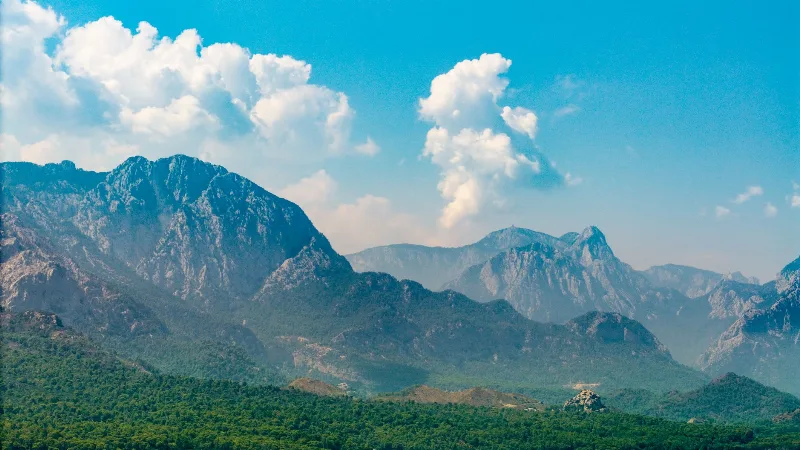
Antalya
Antalya offers a unique blend of vibrant history and stunning natural beauty, making it a must-visit destination in Türkiye.
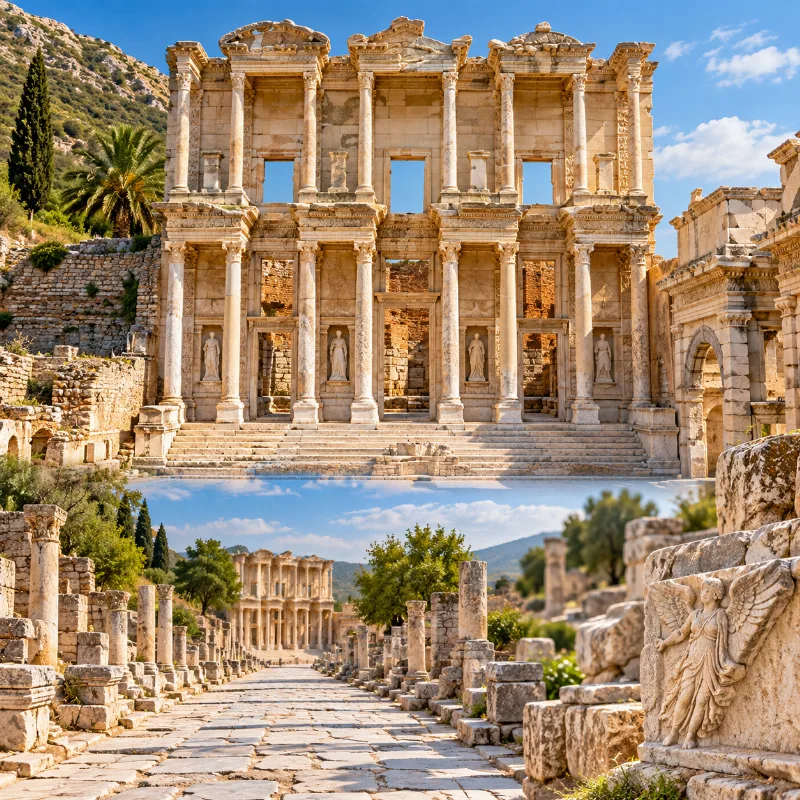
Ephesus
One of the best-preserved ancient cities in the Aegean, known for its monumental streets, library, theatre and Roman-era remains.
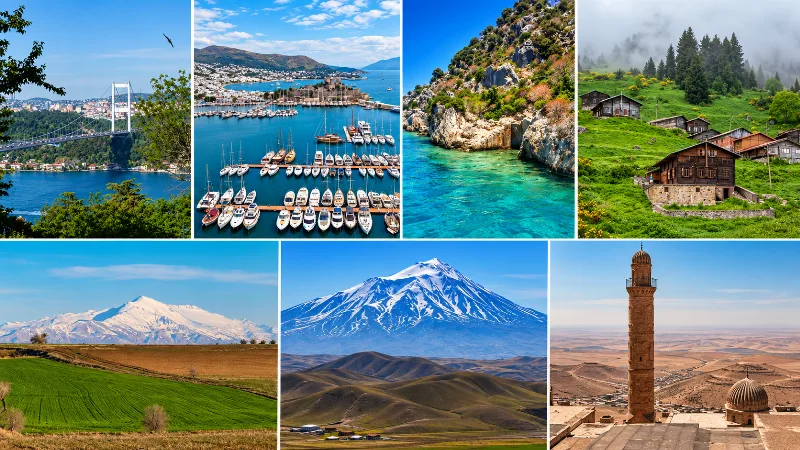
The Seven Geographical Regions of Turkey
An introduction to Turkey’s seven geographical regions and the landscapes, climates and cultural characteristics that distinguish them.
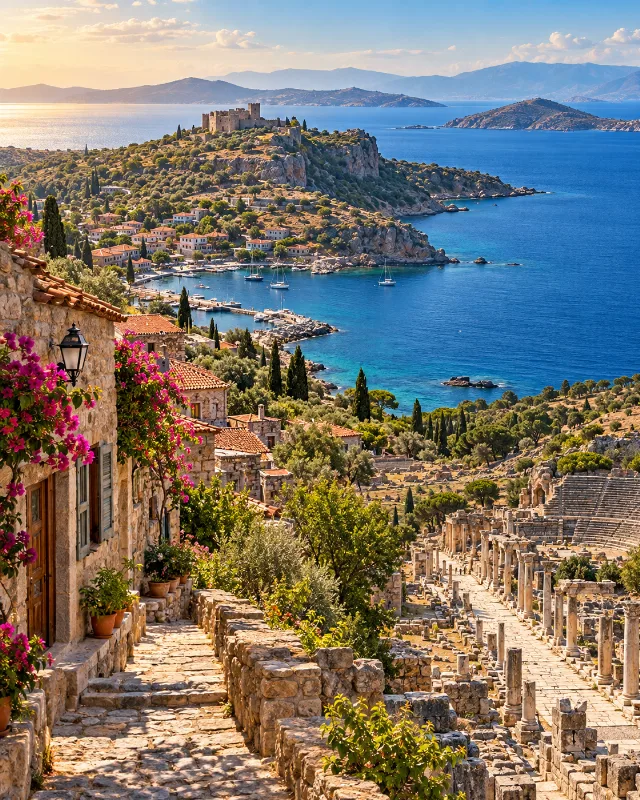
7-Day North Aegean to Ephesus Route
A seven-day southbound route through Troy, Assos, Bozcaada, Ayvalık, Bergama, İzmir and Ephesus, combining archaeology, coastal towns and Aegean culture.
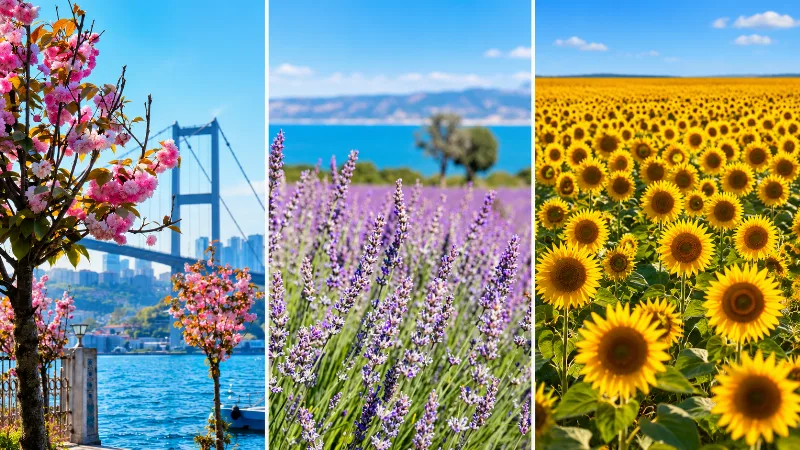
Spring in Turkey
From flowering valleys and green highlands to mild coastal towns, spring changes the landscape across different regions of Turkey.