
The Ancient City of Phaselis on the Lycian Coast
STORIES FROM TÜRKİYE
Where the pine-covered slopes of the Teke Peninsula meet the Mediterranean, the ruins of Phaselis spread across three small bays on Türkiye's southern shore. Located near Kemer in the province of Antalya, the site stands out among the region's archaeology for the way its buildings lie almost at the water's edge, half shaded by trees and washed by shallow sea. A walk here is less a museum visit and more a slow exploration of a port that once turned maritime trade into centuries of prosperity.
Three Harbours and a Rhodian Founding
The layout of Phaselis was shaped by water. The city grew around three natural harbours, each with a different character and purpose. The northern harbour was the smallest and most sheltered, the central one served as the main commercial anchorage, and the southern harbour opened toward the wider gulf.
Because the settlement sat on a narrow strip of land between the bays, ships could be drawn up on more than one side, and goods could move quickly from quay to market. Ancient writers noted the city's convenient position for vessels sailing between the eastern Mediterranean and the Aegean, and that advantage explains much of its long history.
Ancient sources link the founding of Phaselis to colonists from Rhodes, and the city is usually dated to the seventh century BC. Standing at the meeting point of Lycia and Pamphylia, it absorbed influences from both regions while developing its own identity.
Inscriptions, coins and dedications found at the site show a community that moved easily between Greek, Lycian and later Roman traditions. The city issued its own coinage and took part in regional alliances, and its citizens left their mark in the form of statue bases and honorary decrees set up along the main street.
Streets, Baths and a Theatre
The spine of Phaselis is a broad paved avenue that runs between two of the harbours, once flanked by colonnades and shops. Walking it today, you pass the remains of the agora, the civic heart where business and public life took place, and the foundations of several bathing complexes built in the Roman manner, with heated rooms and mosaic floors.
Set into the gentle slope above the harbours is the theatre, small by the standards of neighbouring cities but well placed to catch the sea breeze. Nearby, an arched gateway commemorates the visit of the emperor Hadrian in the second century AD, when the city was at the height of its wealth. An aqueduct carried fresh water to the city from springs in the hills, and stretches of its stone arches still stand among the trees.
The Wealth of Roses and Trade
Phaselis was known in antiquity for the production of perfume, particularly oils scented with roses, which were exported across the Mediterranean in small decorated vessels. The surrounding hills supplied the flowers, while the harbours provided the ships.
Grain, timber and other goods from the interior passed through the city as well, and its merchants benefited from the steady flow of vessels along the Lycian Coast. The combination of agriculture, craft production and shipping made Phaselis a prosperous place for many centuries, and the ruins still reflect that comfort in their wide streets and public buildings.
Decline and Rediscovery
Phaselis remained inhabited into the Byzantine period, when it became the seat of a bishop, but its fortunes slowly faded. Earthquakes damaged the buildings, silt and sand gradually narrowed the harbours, and repeated raids from the sea made coastal life less secure.
By the later Middle Ages the city had been abandoned, and the site sank into the pine woods and oleander scrub. Travellers passing the coast in the nineteenth century described the ruins half buried in vegetation, and it was not until modern archaeological work began that the plan of the city became clear again.
Pines, Beaches and the Lycian Way
What makes Phaselis memorable is the setting as much as the history. Fragments of walls and columns stand directly beside sandy coves, and the shallow water is clear enough to see the stones below. Pine trees grow through the ruins, and in spring the slopes around the site are bright with wildflowers.
The long-distance Lycian Way passes close to the city, linking it with the coastline toward Olympos and the mountains above. Visitors often combine a walk through the ruins with a slow afternoon on the quiet beaches that frame the ancient harbours. For anyone interested in the archaeology of southern Türkiye, Phaselis offers a rare chance to see an ancient port city still shaped by the sea that made it.
Historic places
Explore history →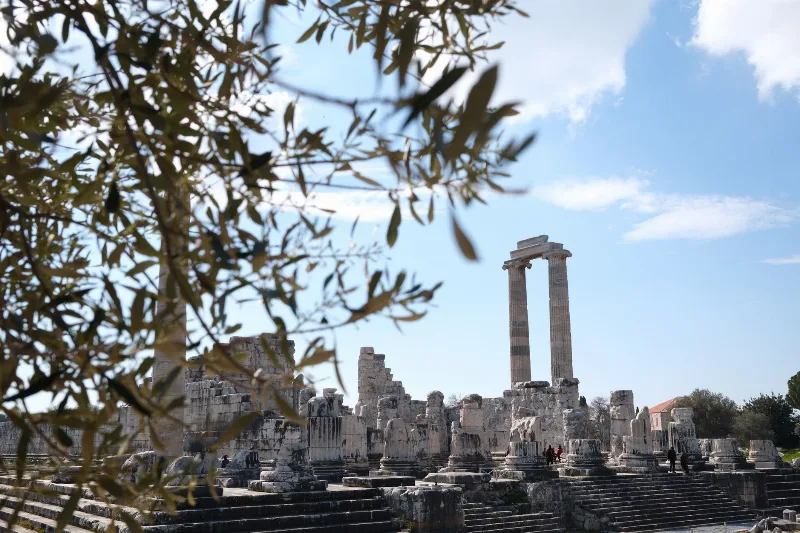
Priene
Priene is a planned ancient Greek city on the slopes of Mount Mycale in Aydın Province, Türkiye, whose grid streets, theatre and Temple of Athena Polias still trace a Hellenistic urban layout.
Explore →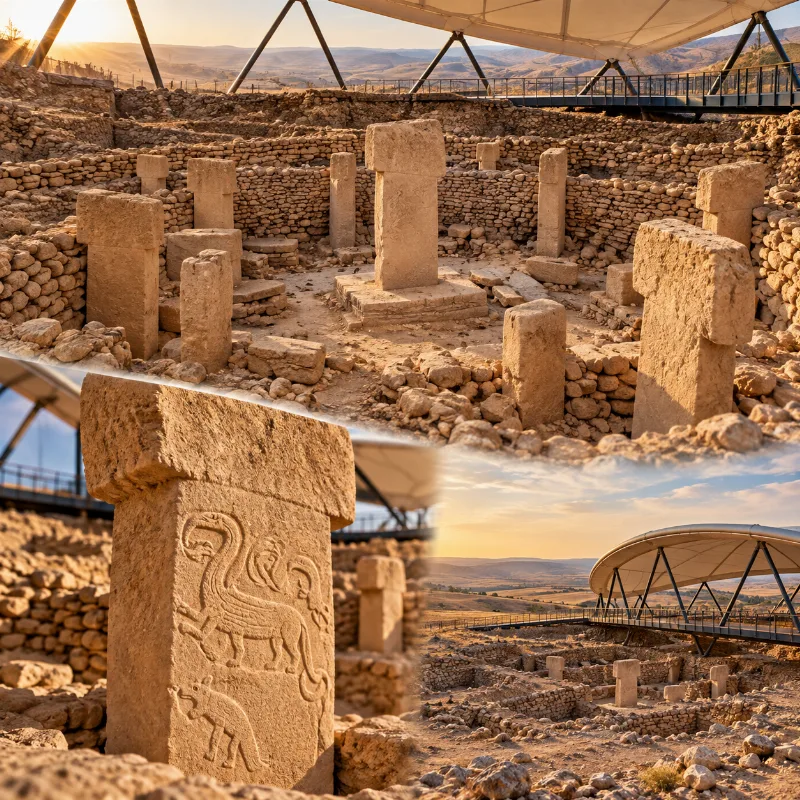
Göbeklitepe
A major Neolithic archaeological site near Şanlıurfa, known for its monumental stone enclosures and carved T-shaped pillars.
Explore →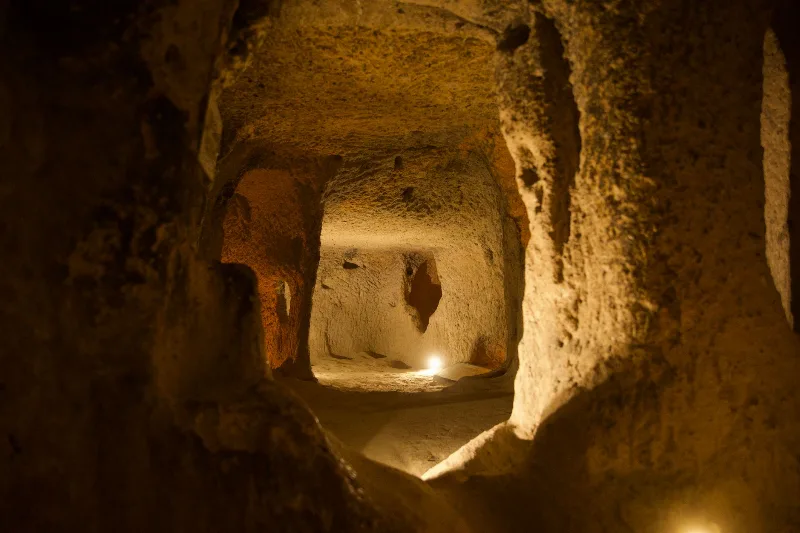
Derinkuyu Underground City
Derinkuyu Underground City is a multi-level rock-cut settlement beneath the town of Derinkuyu in Nevşehir Province, the deepest known underground city in Cappadocia and one of Anatolia's most complete examples of subterranean architecture.
Explore →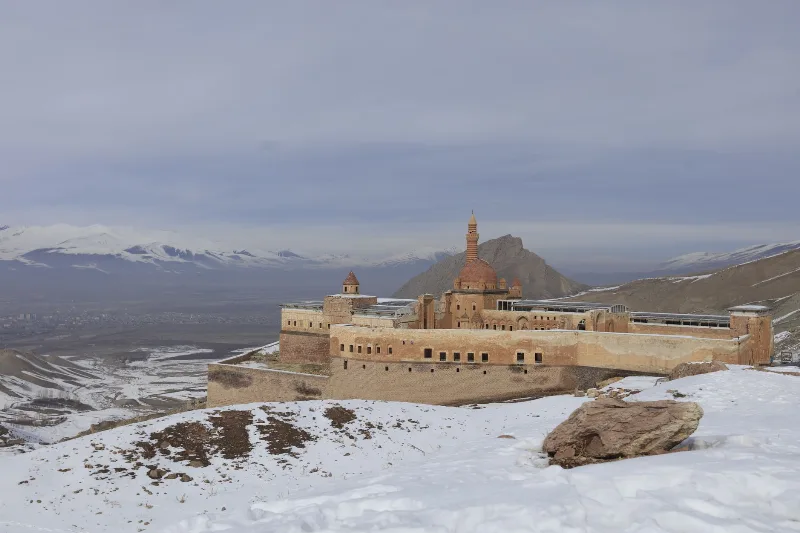
Ishak Pasha Palace
Ishak Pasha Palace is a late Ottoman palace complex in Doğubayazıt, Ağrı Province, eastern Turkey. Built between the late 17th and late 18th centuries, it is known for its stone architecture, which combines Ottoman, Seljuk, and Persian elements.
Explore →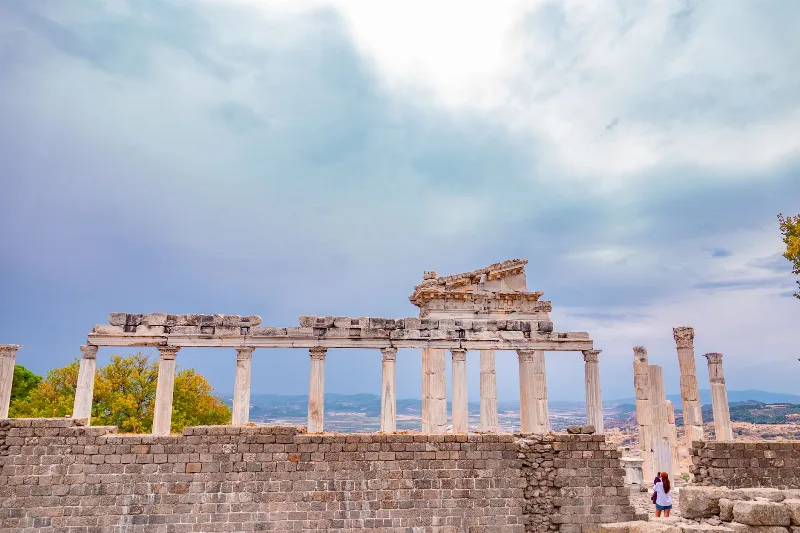
Pergamon
Pergamon was the Hellenistic capital of the Attalid dynasty in western Türkiye, built around a steep acropolis above the modern town of Bergama. Its Great Altar, theatre and Sanctuary of Asclepius make it one of the most important archaeological sites in Anatolia and a UNESCO World Heritage Site.
Explore →Related content
Phaselis
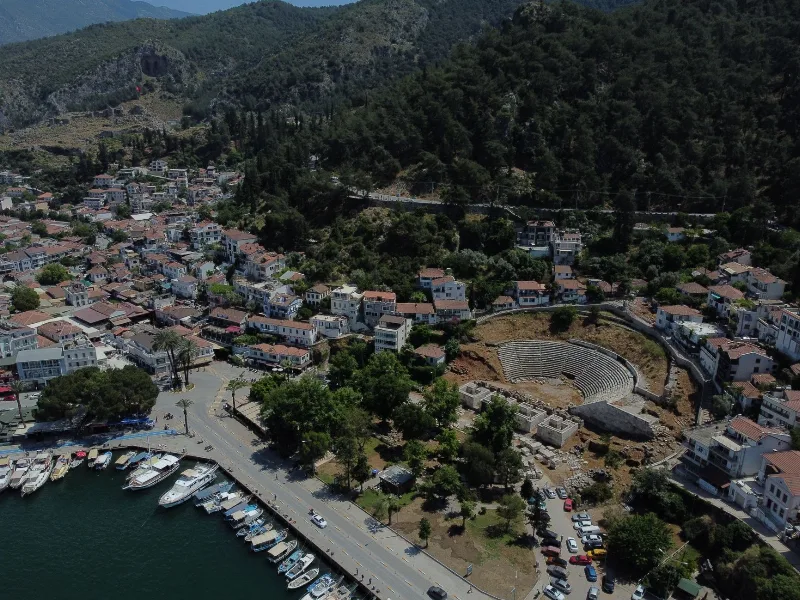
Phaselis is an ancient Greek and Roman harbour city on a low peninsula near Kemer in Antalya Province, known for its three harbours, a long paved main street and a triple-arched gate built in honour of the emperor Hadrian.
Phaselis
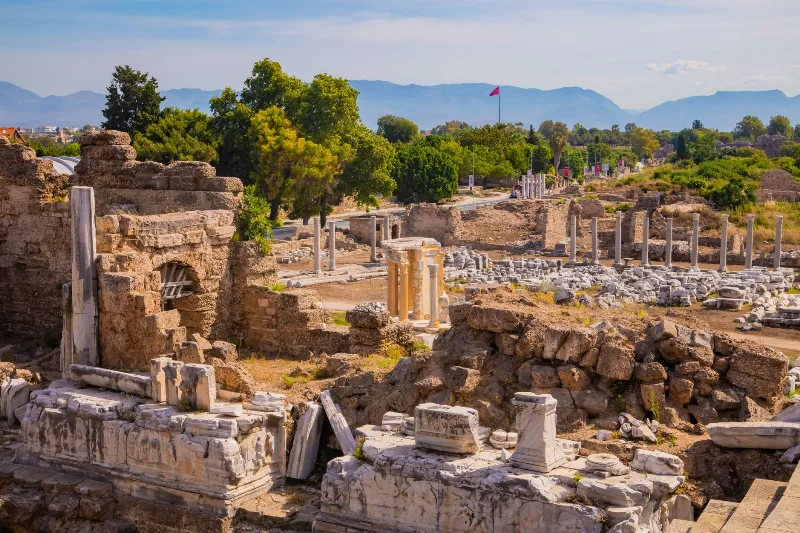
Phaselis is a Rhodian-founded port city on the eastern Lycian coast, where paved streets, agoras, baths and a small theatre stand among pines between three sheltered bays.

Kemer
Kemer is a coastal district of Antalya Province on Türkiye's Mediterranean shore, known for its yacht marina, pebbly beaches and its position between the Beydağları mountains and ancient Lycian sites such as Phaselis.
5-Day Antalya to Fethiye Coastal Route
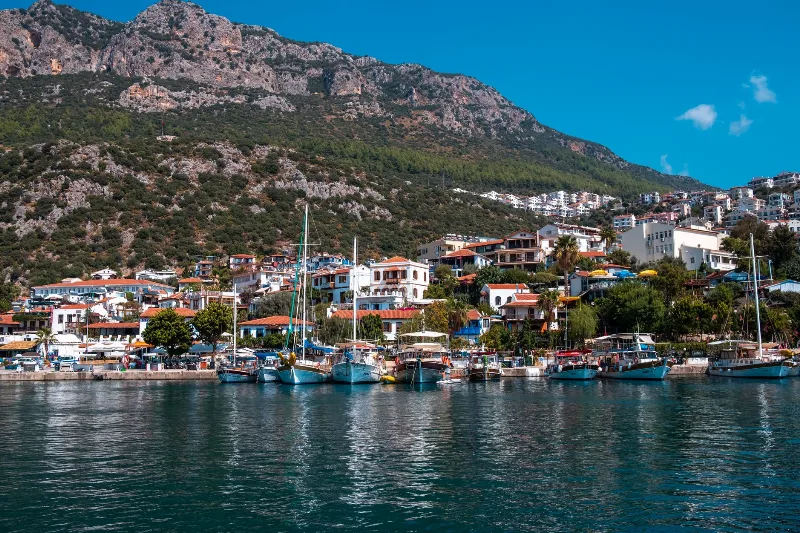
A five-day driving itinerary along Turkey's Mediterranean shore, linking Antalya, Phaselis, Olympos, Demre, Kekova, Kaş, Kalkan, Patara and Fethiye. The route is linear, coastal for most of its length, with short inland detours to Lycian ruins.
Antalya's Ancient Ruins
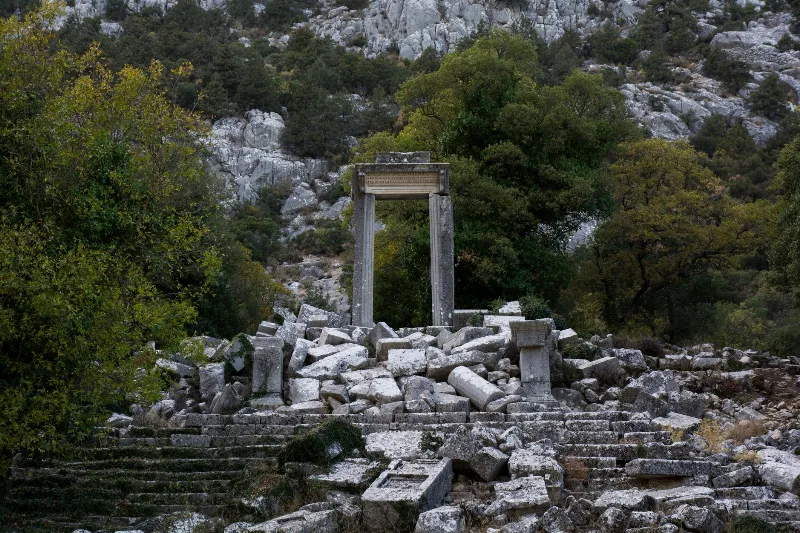
Antalya's ancient ruins trace Lycian, Pamphylian, Roman and Byzantine life across the Mediterranean coast and the Taurus foothills. Scattered theatres, colonnaded streets and rock-cut tombs reveal how successive peoples shaped this landscape.
Adrasan
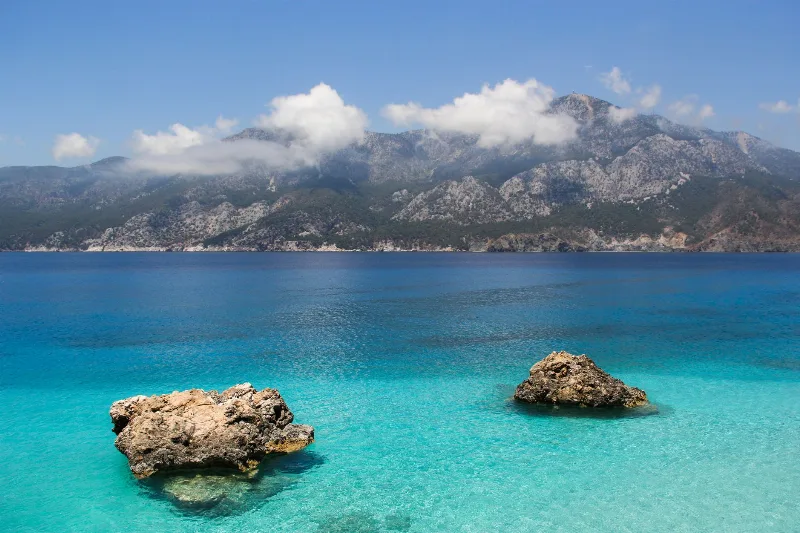
Adrasan is a small coastal village in Antalya's Kumluca district, built around a sheltered bay where pine-covered hills meet a long beach. It is a stop on the Lycian Way and a starting point for boat trips along the surrounding coves.