
The Ancient City of Sardis in Lydia
STORIES FROM TÜRKİYE
Sardis, known in Turkish as Sart, lies in the gentle countryside of Manisa province in western Türkiye, where the plains of the Gediz river meet the slopes of Mount Tmolos. Long before Rome or Byzantium, this was the seat of the kingdom of Lydia, a place whose name became a byword for wealth. Its ruins, spread across a quiet valley, tell the story of a city that served as a royal residence, a Persian provincial centre, a Greek polis and a Roman metropolis.
A Capital of the Lydian Kingdom
Lydia rose to prominence in the first millennium BCE, and Sardis sat at its heart. The city is best remembered for the Lydian kings, above all Croesus, whose riches were legendary in the ancient world. Lydia is also credited with some of the earliest coinage, struck in electrum, a natural alloy of gold and silver obtained in the region.
Under Lydian rule Sardis controlled trade routes linking the Aegean coast to the interior of Anatolia. After the kingdom fell to the Persians in the sixth century BCE, the city continued as an important administrative stop on the Royal Road. Greek, Roman and Byzantine periods added further layers, so the site today reads like a palimpsest of many civilisations.
The Synagogue and Its Marble Hall
One of the most striking structures at Sardis is its synagogue, a vast hall that formed part of a larger civic complex. It ranks among the largest ancient synagogues known, with a main room that could hold a substantial congregation. The building dates from the Roman period and was later renovated, and its walls and floors were once covered with colourful marble and mosaic work.
Excavations have revealed geometric mosaics, marble panels and inscriptions. Together they show that a Jewish community lived and worshipped here for centuries. The synagogue's position beside a gymnasium and bathhouse reflects the mixed, cosmopolitan character of Roman Sardis.
The Gymnasium and Bath Complex
The gymnasium is a monumental group of buildings arranged around a large open court. Colonnades, marble halls and rows of rooms for bathing, exercise and socialising survive in various states of preservation. Several columns have been re-erected, giving a clear sense of the original scale.
The complex reflects the Roman taste for combining physical training, bathing and public life in one grand setting. A severe earthquake in 17 CE damaged Sardis, and the city was rebuilt with imperial support. Much of what stands today belongs to that later, prosperous era.
The Temple of Artemis and the Acropolis
On a lower terrace stand the remains of the Temple of Artemis, begun in the Hellenistic period and never fully completed. Its Ionic columns, some of them re-erected, hint at a very large sanctuary. The temple was later used in different ways, including as a church in the Byzantine period.
Above the ruins rises the acropolis, a steep hill reached by a winding path. From the top, the valley of the Hermus, the modern Gediz, opens out below, and the layout of the ancient city becomes easier to follow. Walls, terraces and scattered building traces cover the slopes.
The Pactolus River and the Legend of Gold
The Pactolus, now the Sart Çayı, runs through the site and gave Sardis its ancient reputation for gold. According to myth, King Midas washed away his golden touch in its waters, leaving the river sands rich in precious metal. In reality the stream carried alluvial deposits, and the electrum of Lydia is thought to have come largely from such gravels.
The legend endured long after the metal ran out. Travellers in antiquity associated the city with overflowing treasuries, and the phrase "rich as Croesus" entered many languages. The stream still flows quietly past the ruins, small but central to the story of the place.
Visiting Sardis Today
Sardis is an open archaeological site, and the different monuments are separated by short walks. Comfortable shoes, sun protection and water are useful, as shade is limited in summer. The mix of Lydian, Persian, Greek, Roman and Byzantine remains makes it a rewarding stop for anyone interested in Anatolian history.
The site also appears among the seven churches of Asia mentioned in the Book of Revelation, which has drawn visitors for centuries. Nearby, the small settlement of Sart and the surrounding countryside offer a calm setting of orchards, fields and rolling hills. It is a place where layers of history rest quietly in an agricultural landscape.
Historic places
Explore history →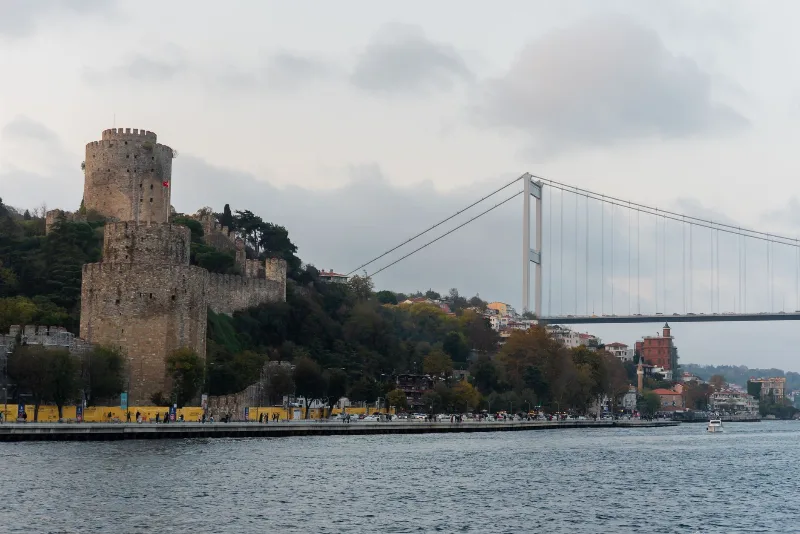
Rumeli Hisarı
Rumeli Hisarı is a 15th-century Ottoman fortress on the European shore of the Bosphorus in Istanbul, built by Sultan Mehmed II in 1452 to control the strait before the conquest of Constantinople. It survives today as a monumental open-air museum.
Explore →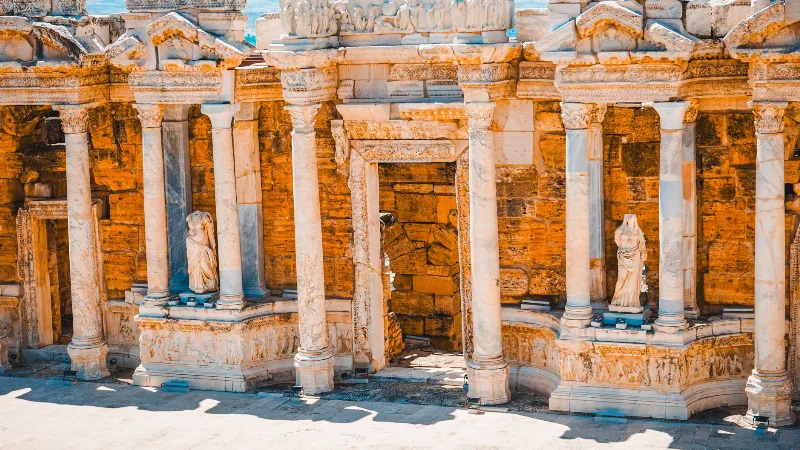
Hierapolis
Hierapolis is an ancient city in Denizli Province, Türkiye, built beside the hot springs and travertine terraces of Pamukkale. Its Roman theatre, vast necropolis, baths and the sanctuary of Apollo make it one of the most extensively preserved Greco-Roman cities in Anatolia and a UNESCO World Heritage Site.
Explore →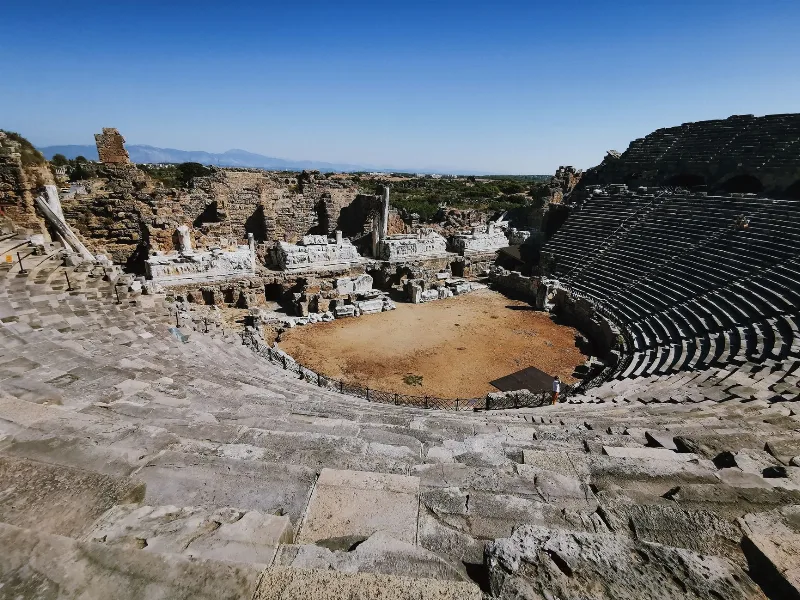
Side
Side is an ancient Pamphylian port city on a peninsula in Antalya Province, Türkiye, known for its well-preserved Roman theatre, the temples of Apollo and Athena, and a museum housed in Roman baths. It flourished under Hellenistic and Roman rule and was abandoned by the 10th century, leaving extensive ruins that visitors can explore today.
Explore →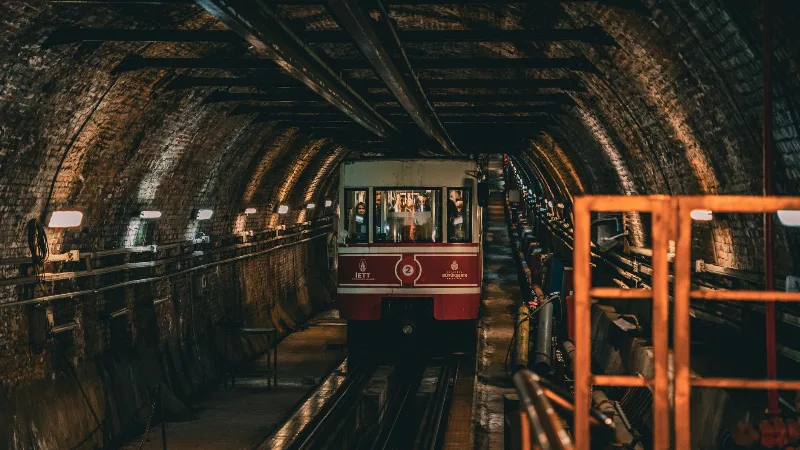
Kaymaklı Underground City
Kaymaklı Underground City is a multi-level subterranean complex in Nevşehir Province, Cappadocia, used as a refuge by early Christian communities. It features tunnels, stone doors, storage rooms, and churches carved into volcanic tuff.
Explore →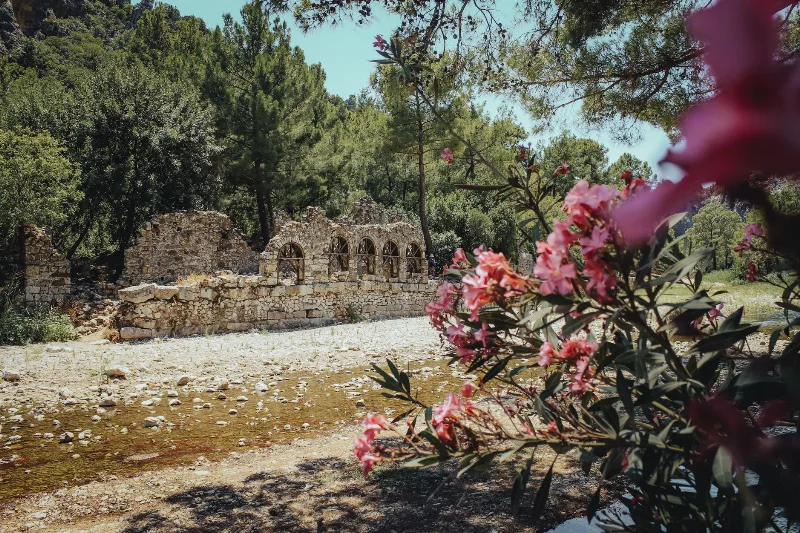
Olympos
Olympos is an ancient Lycian city in Antalya Province, Türkiye, whose ruins stand on both banks of a wooded river valley. Once a member of the Lycian League and later a Roman harbour town, it is best known for its theatre, baths and Lycian sarcophagi, and for the naturally burning Chimaera flames on the mountain above.
Explore →Related content
Sardis
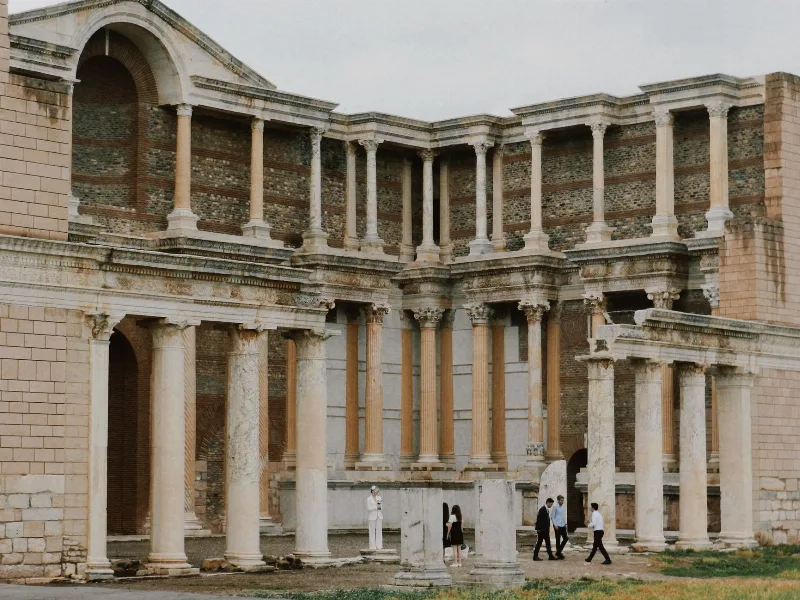
Sardis was the Iron Age capital of the Lydian Kingdom in western Anatolia and later a major Roman and Byzantine city. Its surviving monuments include the Temple of Artemis, a vast bath-gymnasium complex and one of the largest ancient synagogues ever found.
Sardis: The Lydian Capital of Croesus and the First Coins
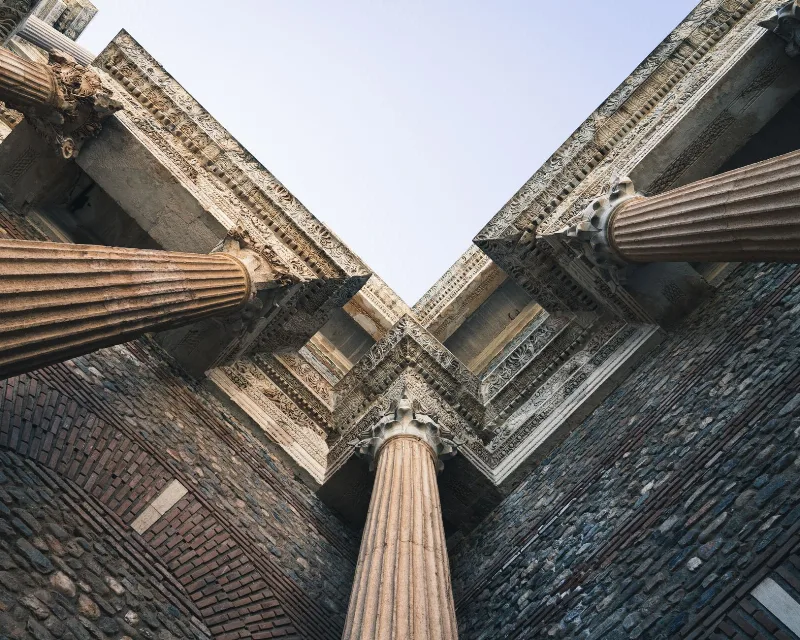
Sardis was the capital of the Lydian kingdom and the place where coined money first appeared in the Western world. Its ruins in Manisa Province include a colossal Temple of Artemis, an ancient synagogue and the royal burial mounds of Bin Tepe.
Traditional Turkish Baths
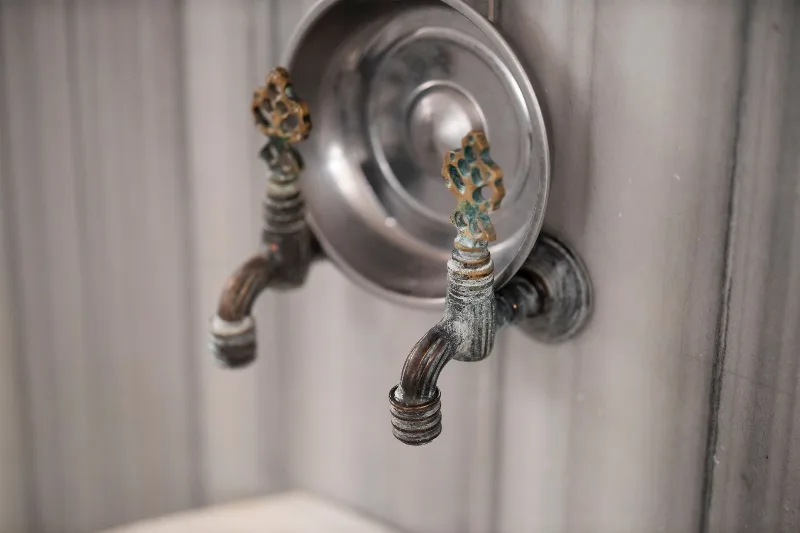
A traditional Turkish bath, or hamam, blends marble architecture, warm water and centuries of social ritual. Discover how hammam culture shapes daily life across Türkiye.
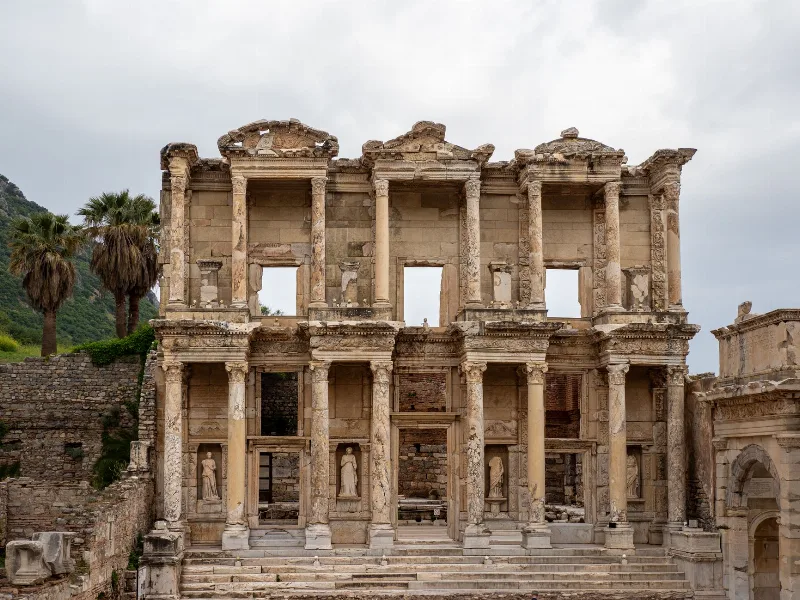
Ephesus
Ephesus is an ancient Greek and Roman city near Selçuk in İzmir Province, Türkiye, whose ruins include the Library of Celsus, the Great Theatre and the remains of the Temple of Artemis.
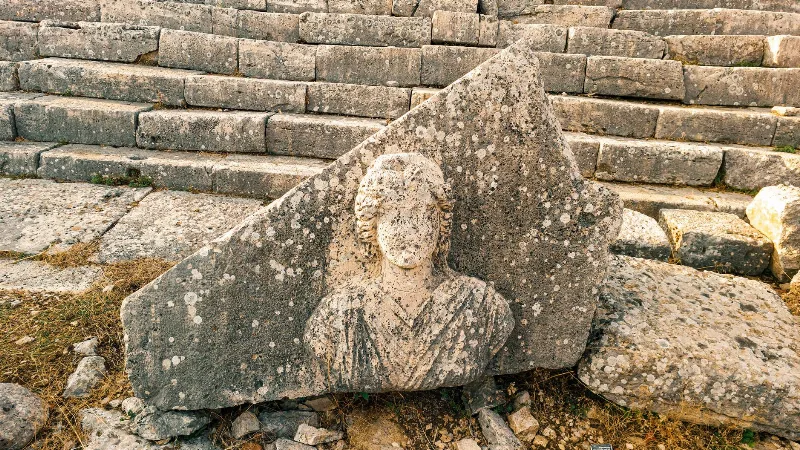
Kibyra
Kibyra is an ancient city on a plateau above Gölhisar in Burdur Province, once the leading city of the Kibyratis. Its theatre, odeon with a Medusa mosaic, and stadium survive in unusual detail.
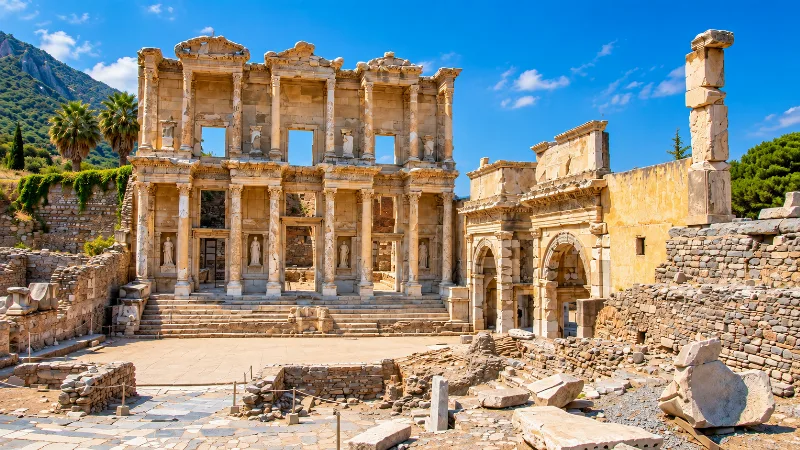
Historic Places
Ancient cities, monuments, castles and archaeological sites across Türkiye.