
Snow Season in Uludağ, Bursa
Uludağ, the mountain rising above Bursa, holds a continuous snowpack that generally runs from December to March, making it one of Turkey's longest-established winter landscapes. The season depends on altitude and annual weather, so exact dates shift from year to year.
Every winter the high plateau of Uludağ, the mountain that rises directly south of Bursa in Turkey's Marmara region, is covered by a snowpack that normally persists from December through March. Uludağ is the country's oldest established ski mountain, and its summit reaches roughly 2,543 metres, high enough to keep snow lying long after the lower slopes and the city below have turned green again. What makes this season distinctive is not simply that it snows, but that a mountain within sight of a large city sustains several months of continuous snow cover at altitude. That combination of elevation, exposure and regional weather is what turns the Uludağ snow season into a predictable annual transformation rather than a random event.
Where the Snow Season Happens on the Mountain
The snow zone covers the upper part of Uludağ, mostly within the boundaries of Uludağ National Park. Below roughly 1,500 metres the cover is thinner and shorter-lived; above about 1,700 metres it becomes deep and durable. The main winter terrain sits in the broad upland basins known as Sarıalan, Çobankaya and Kirazlıyayla, along with the higher slopes and ridges that lead toward the summit. These open meadows are framed by stands of Uludağ fir, a species named for this mountain, mixed with black pine at slightly lower elevations. Because the ski terrain and the walking terrain occupy the same plateaus, the snow does not only affect one resort area: it reshapes the whole upper massif.
What Creates the Seasonal Snow Cover
Uludağ's snow comes from the meeting of cold air with moisture. Weather systems arriving from the Balkans and the Black Sea bring cold air from the north, while the Sea of Marmara and the Aegean supply humid air that is lifted over the mountain. As that air rises along the slopes it cools and releases precipitation, which falls as snow at altitude during the coldest months. Elevation does the rest: temperatures drop by roughly one degree Celsius for every 200 metres climbed, so the summit zone can stay below freezing for weeks while Bursa, only a short distance away, remains mild and often rainy. North-facing hollows and gullies hold snow longest because they receive little direct sun.
When Snow Typically Arrives and Melts
The first light snows often appear on the highest ridges in late November, though they frequently melt during milder spells. Dependable cover usually builds up from late December into January, and the snowpack is generally at its deepest in January and February, when repeated storms add layer upon layer. Melting normally begins in March, first on south-facing slopes and at lower elevations, while shaded high ground can keep patches into April in some years. In practical terms, the reliable window for winter conditions on the mountain is usually December to March, with the middle of that period offering the most consistent snow. These boundaries are not fixed dates: they describe a normal seasonal pattern that shifts depending on how cold and wet each winter turns out to be.
How Weather Varies the Season from Year to Year
Because Uludağ sits in a transition zone between Mediterranean and continental climates, winters differ noticeably from one year to the next. Some seasons deliver early, heavy snowfall; others begin with rain, warm spells and delayed accumulation. A single mild week in January can strip snow from the lower meadows while leaving the upper slopes untouched. Wind also matters, since strong gusts move snow off exposed ridges and pile it into hollows and lee slopes, so depth can vary sharply over short distances. Anyone planning around the season should treat any specific date as approximate and follow current snow-depth and weather reports rather than assuming a fixed opening or closing point.
The Landscape Under Snow
During the season the upper mountain reads as a white, rounded plateau. The dark fir forests stand out sharply against the snow, and the open meadows become broad, gently undulating fields broken by rock outcrops and solitary trees. Streams and small pools freeze over, and in cold, clear conditions hoarfrost forms on branches and grasses. Snow depth on the high ground commonly reaches into the range of one to two metres in midwinter, though it accumulates unevenly across the terrain. On clear days the contrast between the white massif and the green, warmer lowland plain around Bursa is visible from the slopes themselves.
Winter Activity and What Visitors Can Observe
Uludağ has a long history as a winter sports mountain, and during the snow season its slopes carry skiers and snowboarders on marked runs of varying difficulty. Beginner areas lie close to the main plateau settlements, while steeper terrain suits more experienced skiers. Beyond organised skiing, visitors can expect sledding areas, packed walking paths and quiet snow-covered forest tracks. Conditions vary considerably: weekends are busy, midweek days are often much calmer, and the quality of the snow changes with temperature, sun and wind, from dry powder after a cold storm to firmer or wetter snow during thaw periods. A cable car link runs from the lower slopes near Bursa up toward the Sarıalan area, providing a route onto the mountain independent of road conditions.
Cold, Terrain and Practical Conditions
Temperatures on the upper mountain frequently fall below freezing, and wind makes it feel considerably colder on exposed ridges. Icy patches form on paths and roads, and the access road can be affected by snow and ice during storms. At lower elevations near the transition zone, slush and mud are common during melting periods in early and late season. Good boots, warm layers and waterproof outer clothing are normally needed for anything beyond the immediate plateau areas. Daylight is short in December and January, so conditions change quickly through the afternoon.
Related Places Within the Same Snow Zone
The snow season on Uludağ is not confined to a single slope. Sarıalan, Çobankaya and Kirazlıyayla are the main meadow basins where the cover is deepest and most accessible, and each has a slightly different character: Sarıalan is the broader central plateau, while Çobankaya and Kirazlıyayla sit among forest and open ground at comparable altitude. The city of Bursa lies immediately below, offering a sharp seasonal contrast between the snowbound mountain and the mild lowland. Higher up, the ridges leading toward the summit hold snow longest and are usually the last places to lose their cover in spring. Together these areas form one connected winter landscape whose timing depends on altitude, aspect and the weather of each particular year.
EXPLORE BY THEME
All themes →
Historic Places
Ancient cities, monuments, castles and archaeological sites across Türkiye.
Explore →
Seasonal Experiences
Harvests, festivals, natural seasons and local events throughout the year.
Explore →
Routes
Road trips, coastal drives, cultural routes and scenic journeys across Türkiye.
Explore →Related content
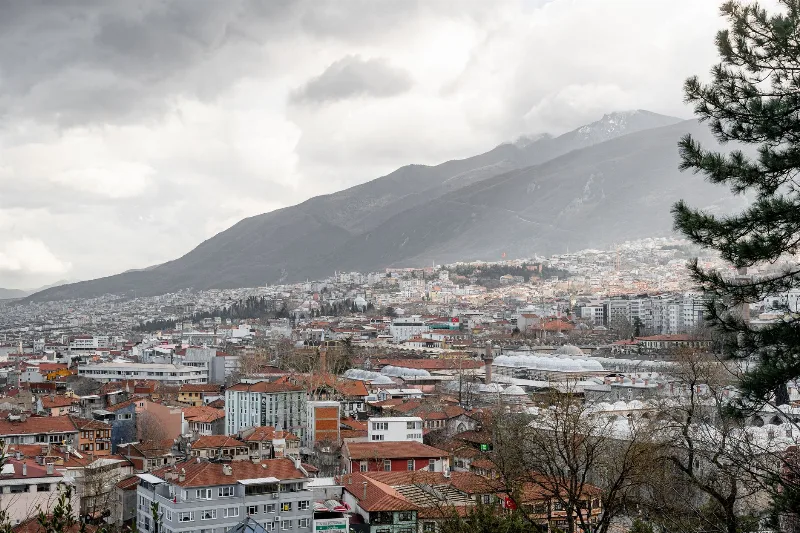
Bursa
Bursa is a major metropolitan city in northwestern Türkiye and the first great capital of the Ottoman Empire, known for its silk heritage, thermal springs and the mountain of Uludağ rising directly behind it.

2-Day Bursa and Uludağ Route
A two-day route through Bursa's Ottoman monuments and up to the Uludağ National Park by cable car, combining city walking with mountain hiking or skiing.
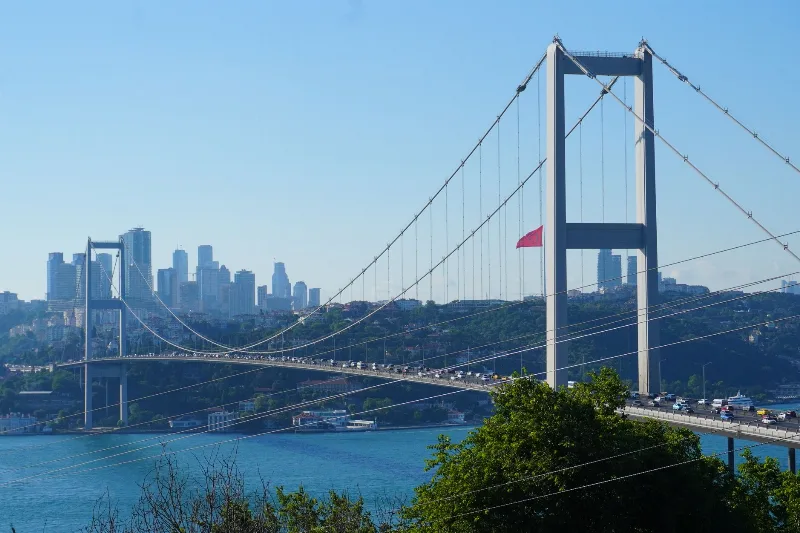
3-Day Istanbul to Bursa Route
Explore the first Ottoman capital on a three-day route from Istanbul to Bursa, combining historic city sites, the mountain landscapes of Uludağ, and the preserved village of Cumalıkızık.
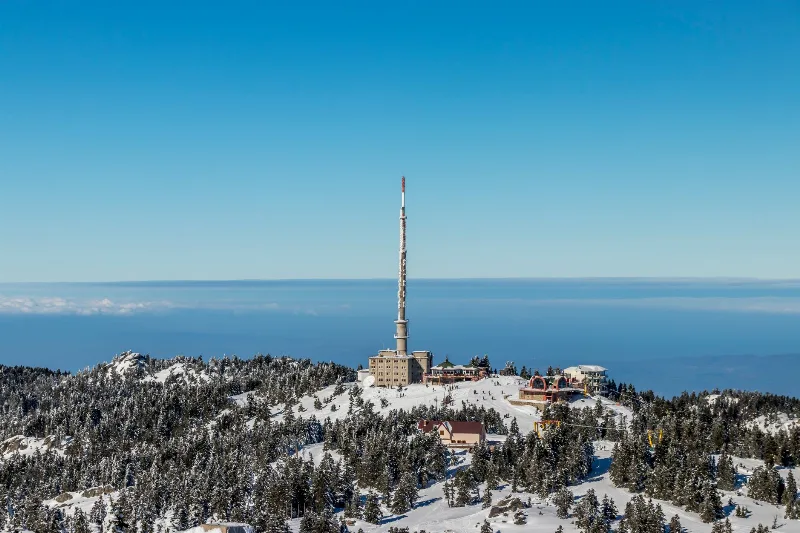
Mount Uludağ
Mount Uludağ is a granite massif rising above Bursa in north-western Türkiye, topped by a 2,543-metre summit and protected as one of the country's oldest national parks. Its forest belts, high meadows, glacial landforms and long snow season shape both its landscape and the way it is visited.
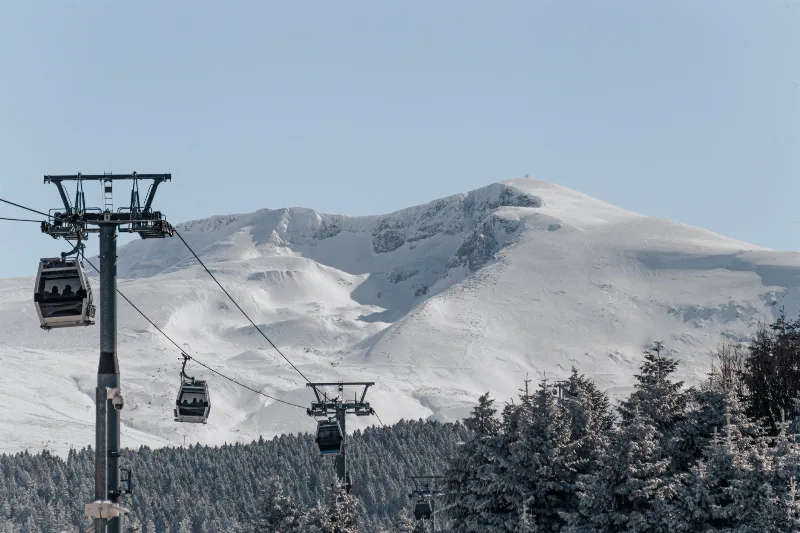
Autumn in Uludağ, Bursa
Uludağ's forests turn gold and copper between roughly late September and early November, with the colour moving down the slopes as temperatures drop. The timing depends heavily on how quickly autumn cold arrives that year.
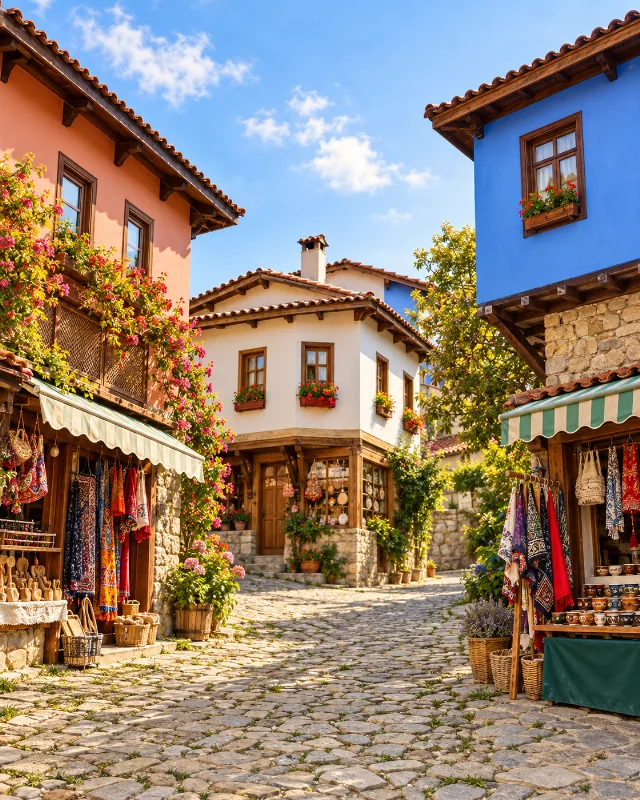
Cumalıkızık
Cumalıkızık is a historic Ottoman village in Bursa, Turkey, known for its well-preserved houses and cobblestone streets. It is part of the UNESCO World Heritage Site 'Bursa and Cumalıkızık: the Birth of the Ottoman Empire'.